
Which is Cheaper: Automatic or Manual Film Die Cutting?
When sourcing film die-cut components, many purchasing managers focus on one question:
Which option is cheaper—automatic film die cutting or manual film die cutting?
At first glance, manual processing appears less expensive because it requires less equipment investment. However, the real cost of a die-cut component involves much more than labor alone.
Production volume, dimensional accuracy, material utilization, lead time, quality consistency, and overall manufacturing efficiency all affect the final cost.
For OEM manufacturers, choosing the wrong production method can significantly increase long-term expenses.
So, which solution actually delivers the best value?
Understanding Manual Film Die Cutting
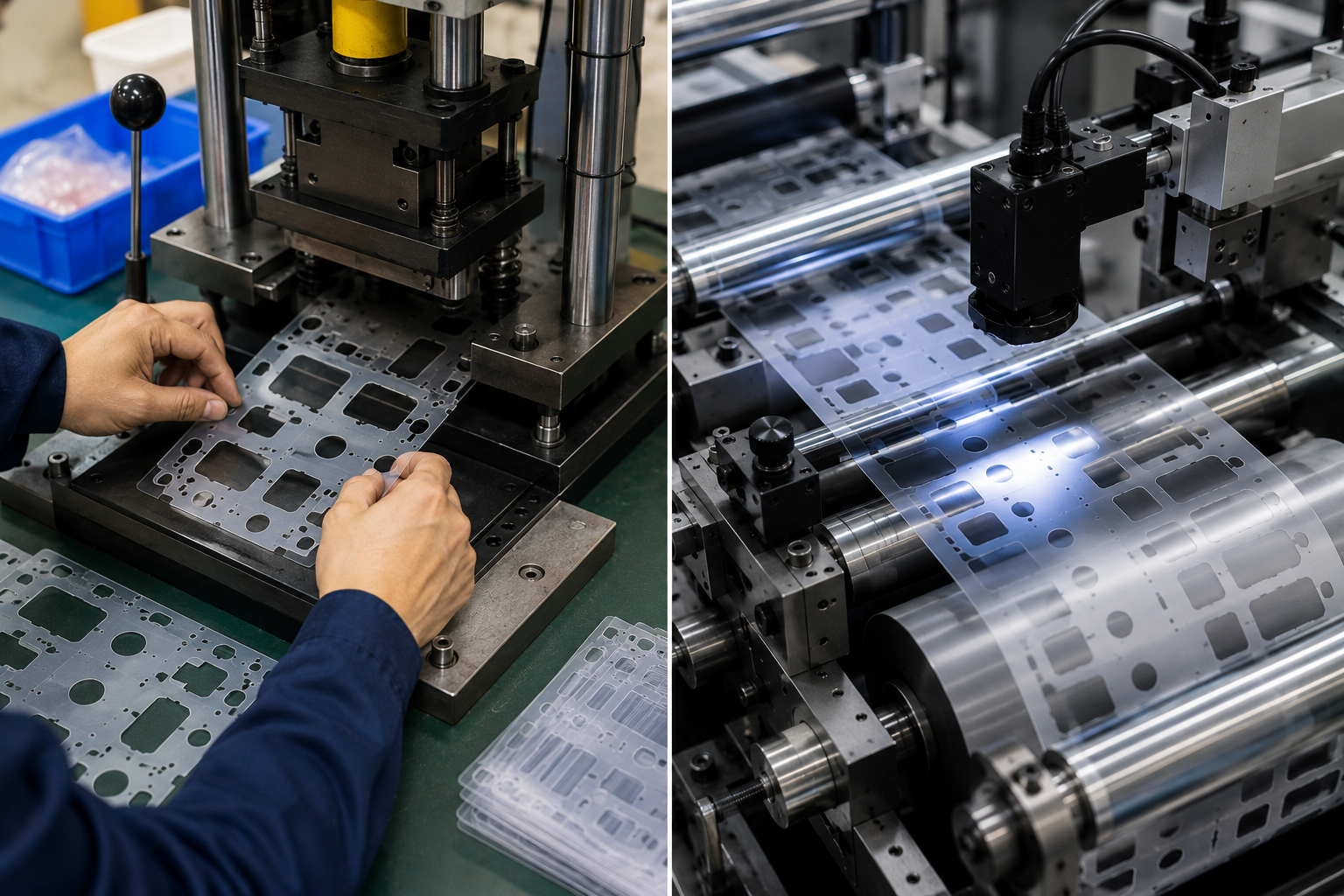
Manual film die cutting typically relies on operators to load materials, position parts, remove finished components, and perform quality inspections.
This method is often used for:
- Prototype development
- Small-volume orders
- Product testing
- Engineering validation
- Short-run production
Because startup costs are relatively low, manual processing can be attractive for limited quantities.
Advantages of Manual Die Cutting
| Advantage | Benefit |
|---|---|
| Low Initial Investment | No expensive automation required |
| Fast Sample Production | Suitable for prototypes |
| Flexible Operation | Easy to adjust designs |
| Small Quantity Friendly | Ideal for low-volume projects |
For early-stage product development, manual processing can be a practical solution.
Understanding Automatic Film Die Cutting
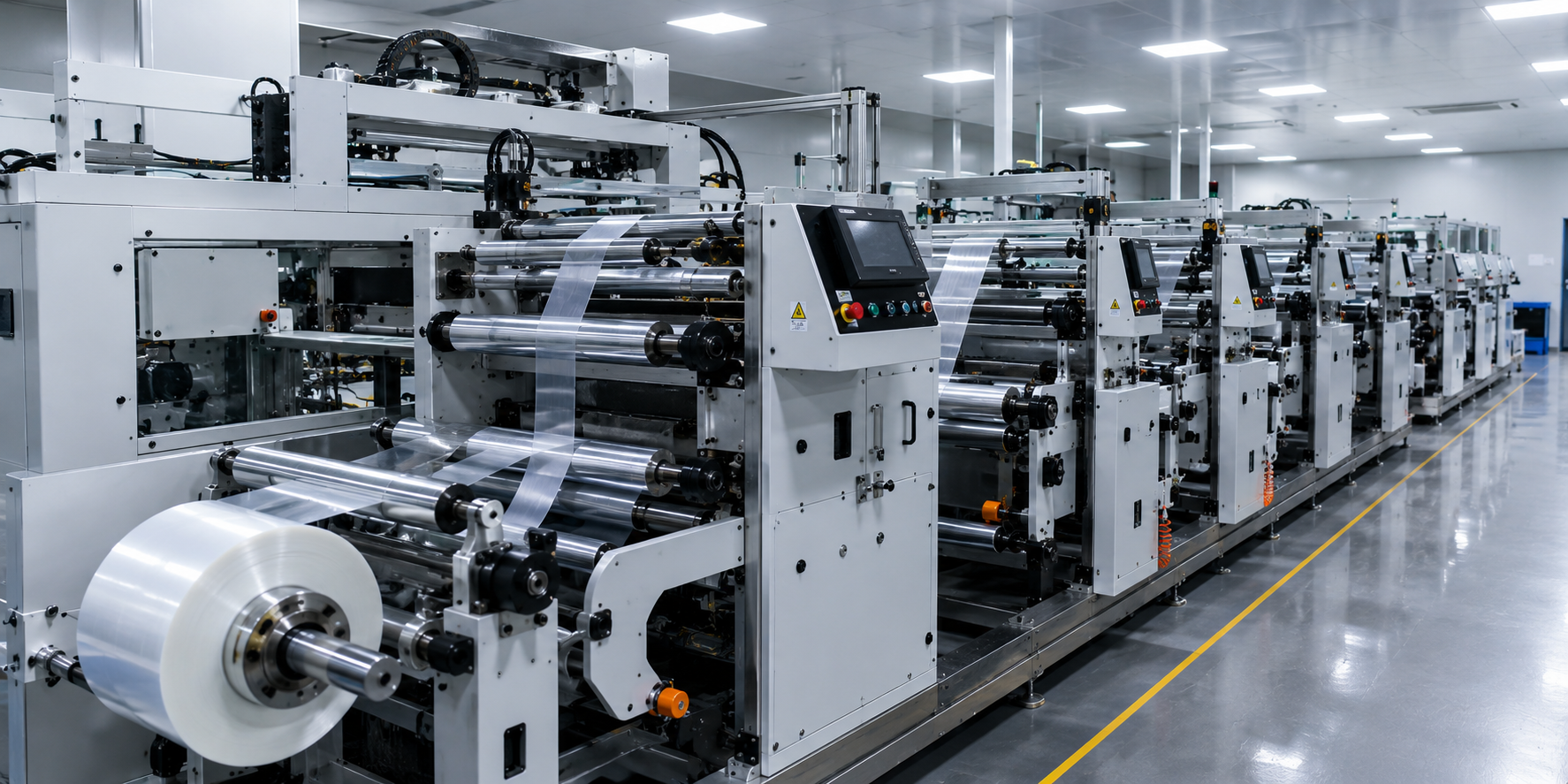
Automatic film die cutting utilizes advanced equipment to perform:
- Material feeding
- Registration control
- Precision cutting
- Waste removal
- Part collection
- Inline inspection
Automation minimizes operator involvement while maximizing consistency and throughput.
This process is commonly used for:
- Consumer electronics
- Automotive components
- Medical devices
- Battery systems
- High-volume OEM production
Advantages of Automatic Die Cutting
| Advantage | Benefit |
|---|---|
| High Productivity | Increased output |
| Consistent Accuracy | Stable tolerances |
| Reduced Labor Costs | Fewer operators required |
| Lower Scrap Rates | Better material utilization |
For mass production, automation often delivers significant cost advantages.
Comparing Labor Costs
Labor is usually the biggest difference between the two methods.
Manual production requires operators for:
- Material loading
- Alignment
- Part removal
- Inspection
- Packaging
As production volume increases, labor costs rise proportionally.
Automatic systems significantly reduce operator requirements.
Cost Comparison Example
| Production Volume | Manual Process | Automatic Process |
|---|---|---|
| 1,000 pcs | Competitive | Similar |
| 10,000 pcs | Higher Cost | Lower Cost |
| 100,000 pcs | Much Higher Cost | Significant Savings |
The larger the order quantity, the greater the advantage of automation.
Comparing Production Efficiency
Manual operations naturally have speed limitations.
Operators can only process a certain number of parts per hour.
Automatic equipment can operate continuously with:
- Stable production speeds
- Consistent output
- Minimal interruptions
This results in:
- Faster delivery
- Increased capacity
- Improved production planning
For OEM projects with tight schedules, efficiency often becomes as important as cost.
Comparing Accuracy and Consistency
Complex film components frequently require:
- Tight tolerances
- Precise registration
- Consistent dimensions
Manual processing can introduce variation due to:
- Operator differences
- Material positioning errors
- Fatigue
- Inspection inconsistencies
Automatic systems utilize:
- Vision alignment systems
- Servo controls
- Registration sensors
- Automated inspection
This improves dimensional consistency significantly.
For applications such as displays, optical films, and electronic assemblies, accuracy directly affects product performance.
Comparing Material Utilization
Material waste has a direct impact on manufacturing costs.
Manual operations often generate higher scrap rates due to:
- Positioning errors
- Inconsistent feeding
- Handling damage
Automatic systems optimize:
- Material nesting
- Registration accuracy
- Cutting consistency
This helps improve yield and reduce waste.
For expensive optical films or specialty materials, even small reductions in scrap can generate substantial savings.
When Manual Die Cutting Is More Economical
Despite the benefits of automation, manual production still makes sense in certain situations.
Prototype Projects
During product development, designs often change frequently.
Manual processing provides greater flexibility without requiring dedicated automation setup.
Small Batch Orders
Orders involving:
- 10 pieces
- 50 pieces
- 100 pieces
- 500 pieces
may not justify automated production costs.
Design Validation
Engineers often need quick samples before approving production tooling.
Manual converting allows rapid adjustments.
For these situations, manual processing can be the most cost-effective option.
When Automatic Die Cutting Is More Economical
Automation becomes increasingly attractive when production volumes rise.
Mass Production Programs
Applications involving:
- Smartphones
- Automotive electronics
- Battery systems
- Medical devices
often require hundreds of thousands or millions of components annually.
In these cases, automation significantly reduces cost per part.
Tight Tolerance Applications
Products requiring consistent precision benefit from automated registration and inspection systems.
Long-Term OEM Programs
For ongoing production, automation provides:
- Lower labor costs
- Better consistency
- Improved scalability
The total manufacturing cost is often substantially lower.
The Hidden Costs Many Buyers Ignore
When evaluating production methods, some buyers focus only on unit price.
However, hidden costs may include:
- Scrap materials
- Quality issues
- Delivery delays
- Customer complaints
- Rework
- Production interruptions
A lower piece price does not always result in a lower overall project cost.
The most economical solution is usually the one that balances quality, efficiency, and consistency.
How Sanken Helps Customers Choose the Right Solution
At Sanken, we evaluate each project based on:
- Annual volume
- Material type
- Tolerance requirements
- Product complexity
- Budget objectives
Our capabilities include:
- Prototype development
- Small-batch production
- Precision die cutting
- Optical film converting
- Multi-layer lamination
- High-volume automated manufacturing
Rather than recommending a single approach for every project, we help customers select the production method that delivers the best overall value.
Conclusion
There is no universal answer to whether automatic or manual film die cutting is cheaper.
For prototypes, engineering samples, and low-volume production, manual processing often provides the lowest upfront cost.
For high-volume OEM manufacturing, automatic die cutting typically delivers lower cost per part, higher productivity, improved accuracy, and better long-term value.
The best choice depends on production volume, quality requirements, material costs, and overall project objectives.
At Sanken, we help customers evaluate these factors and choose the most cost-effective converting solution for their specific application.