
Why Do We Need to Discuss My Die Cut Tolerances? The Costly Problems Hidden Inside “Tiny” Measurement Differences
A customer once told us something we hear surprisingly often:
“The part is only off by 0.2 mm. Does that really matter?”
A few weeks later, their production line stopped.
The issue was not the material itself.
It was not even the machine.
The real problem was tolerance accumulation. That tiny dimensional variation caused adhesive misalignment, inconsistent assembly pressure, sealing failure, and vibration noise inside the final product. What looked like a small measurement issue quietly became a large manufacturing problem.
This is exactly why die cut tolerances must be discussed carefully before mass production begins.
Die cut tolerances define the acceptable dimensional variation allowed during material converting and directly affect assembly stability, product fit, sealing performance, adhesive alignment, acoustic behavior, and long-term manufacturing consistency. Without clear tolerance discussions, even high-quality materials and advanced equipment may fail to deliver reliable OEM production results.
At Sanken, we help customers across automotive, electronics, medical, and industrial industries optimize tolerance strategies because precision converting today is no longer simply about “cutting shapes.” It is about ensuring scalable manufacturing stability under real-world production conditions.
Why Tolerances Matter More Than Most Buyers Realize
Modern products are becoming:
- Smaller
- More integrated
- More lightweight
- More sensitive to variation
That means even tiny dimensional shifts can affect:
- Product assembly
- Adhesive positioning
- Acoustic performance
- Compression sealing
- Thermal insulation behavior
Especially in industries such as:
- Automotive
- Electronics
- EV battery systems
- Medical devices
Tolerance control directly influences product reliability.
What Exactly Is a Die Cut Tolerance?
A tolerance defines how much dimensional variation is acceptable during manufacturing.
For example:
50 mm ± 0.1 mm
This means the final part can legally measure between:
- 49.9 mm
- 50.1 mm
without being considered defective.
The critical point many buyers overlook is this:
Tolerance is not “error.”
Tolerance is controlled manufacturing reality.
No converting process can produce absolutely zero variation.
The goal is stable, repeatable control within acceptable engineering limits.
Why Tight Tolerances Increase Manufacturing Difficulty
Many buyers automatically request extremely tight tolerances.
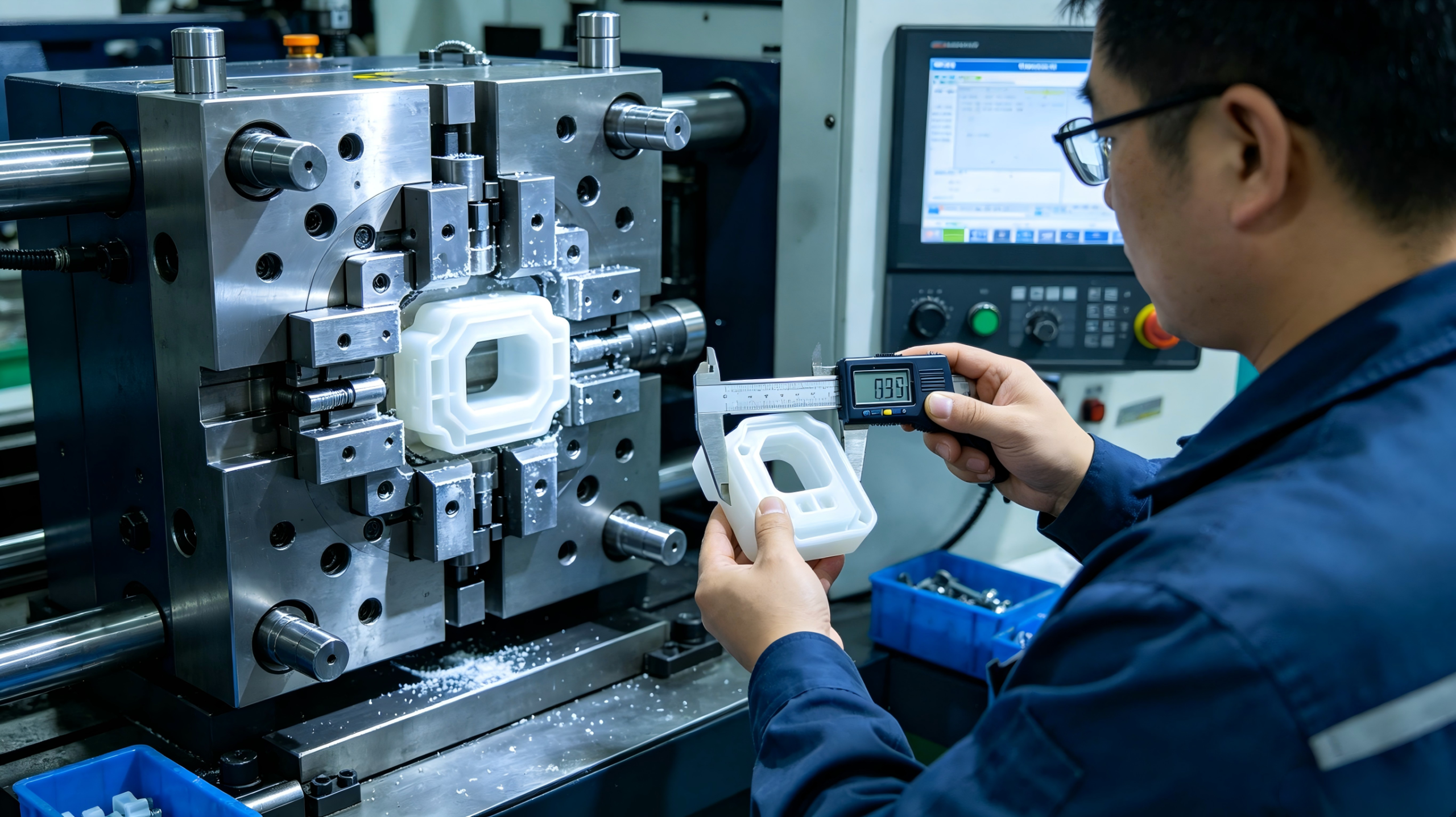
But tighter tolerances require:
- More stable materials
- Better tooling precision
- Slower processing speeds
- More advanced inspection systems
- Higher production control standards
This increases:
- Manufacturing complexity
- Tool wear sensitivity
- Production cost
- Inspection workload
At Sanken, we help customers balance functional requirements with practical manufacturing efficiency.
Because unnecessarily tight tolerances often increase cost without improving product performance.
Why Material Behavior Affects Tolerance Stability
Different materials behave differently during die cutting.
For example:
| Material Type | Tolerance Challenge |
|---|---|
| Foam | Compression recovery variation |
| Rubber | Elastic deformation |
| Adhesive tape | Stretch sensitivity |
| PET film | Thermal expansion |
| Non-woven fabric | Fiber movement |
This is why tolerance discussions must always consider material properties — not just drawing dimensions.
At Sanken, material engineering is deeply integrated into our converting process to improve long-term dimensional stability.
Why Automotive Applications Are Especially Sensitive
Automotive manufacturing is extremely unforgiving regarding tolerance accumulation.
A small dimensional variation may create:
- Wind noise
- Water leakage
- Interior rattling
- Panel misalignment
- Acoustic instability
Especially in EV platforms where cabin quietness exposes even tiny imperfections.
At Sanken, we support automotive OEM customers through precision foam converting, adhesive laminating, and high-consistency die cutting designed for modern vehicle requirements.
Why Adhesive Alignment Depends on Tolerance Control
Many precision die-cut components involve multi-layer adhesive systems.
If tolerances drift:
- Adhesive layers may shift
- Bonding areas become inconsistent
- Edge lifting may occur
- Assembly positioning becomes unstable
This is especially critical for:
- Electronics
- Optical components
- Medical devices
- Automotive sealing systems
At Sanken, precision registration control helps customers maintain consistent multilayer alignment during large-scale production.

Why “Prototype Success” Can Be Misleading
This is one of the biggest industry traps.
A prototype may appear perfect.
But mass production introduces new variables:
- Material batch variation
- Tool wear
- Machine vibration
- Temperature fluctuation
- Operator differences
Without proper tolerance engineering, production stability quickly deteriorates.
At Sanken, we focus heavily on scalability because successful manufacturing depends on repeatability — not isolated sample performance.
Why Tooling Quality Quietly Controls Everything
Tooling directly affects:
- Cutting accuracy
- Edge cleanliness
- Burr formation
- Material stress behavior
- Long-term repeatability
Poor tooling often creates gradual dimensional drift during production runs.
At Sanken, tooling optimization and maintenance are critical parts of our precision manufacturing system.
Because stable tooling equals stable production.
Why Tolerance Stack-Up Creates Hidden Problems
One component alone may stay within specification.
But when multiple parts assemble together, variation accumulates.
This is called tolerance stack-up.
For example:
- Foam variation
- Adhesive shift
- Plastic housing variation
- Assembly positioning offset
Combined together, these small deviations may create major assembly problems.
This is why experienced OEM suppliers discuss tolerance strategy early — before tooling begins.
Why Communication Between Buyer and Supplier Is Critical
Many production issues start because customers and suppliers interpret drawings differently.
Professional tolerance discussions should include:
- Functional critical dimensions
- Material behavior expectations
- Environmental conditions
- Assembly methods
- Inspection standards
At Sanken, we work closely with customers during early-stage engineering to reduce misunderstandings and improve manufacturability.
Why EV and Electronics Industries Demand Even Greater Precision
Modern EV and electronics systems require extremely high dimensional stability because they involve:
- Compact assemblies
- Thermal management systems
- Sensitive electronic interfaces
- Lightweight material integration
Even tiny dimensional inconsistency may affect:
- Heat transfer
- Structural bonding
- Acoustic isolation
- Electrical shielding performance
At Sanken, advanced converting systems help customers maintain precision across demanding applications.
Why One-Stop Manufacturing Improves Tolerance Control
Managing multiple suppliers often creates dimensional inconsistency between processes.
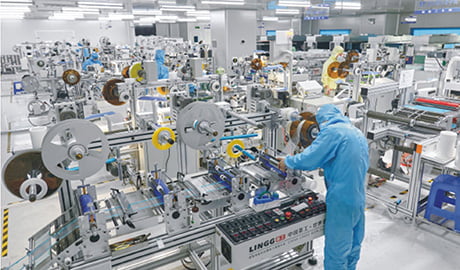
At Sanken, we integrate:
- Precision die cutting
- Foam converting
- Adhesive laminating
- Hot pressing
- Injection molding support
- Material assembly
This integrated manufacturing model helps improve:
- Dimensional consistency
- Assembly stability
- Communication efficiency
- Production scalability
For OEM customers, this greatly reduces manufacturing risk.
So… Why Do We Need to Discuss Die Cut Tolerances?
Because tolerances directly affect whether your product works consistently in real-world manufacturing.
Without proper tolerance planning, even excellent materials and beautiful designs may fail during:
- Assembly
- Long-term use
- Environmental exposure
- Mass production scaling
At Sanken, we believe tolerance discussions are not about creating manufacturing difficulty.
They are about preventing expensive problems before they happen.
Conclusion
Die cut tolerances are essential for ensuring dimensional consistency, adhesive alignment, assembly stability, acoustic performance, and scalable manufacturing reliability. Modern industries such as automotive, electronics, EV systems, and medical devices rely heavily on precise tolerance control to maintain product quality. At Sanken, we help OEM customers optimize tolerance strategies through advanced die cutting, foam converting, laminating, and integrated engineering support designed for stable mass production.