
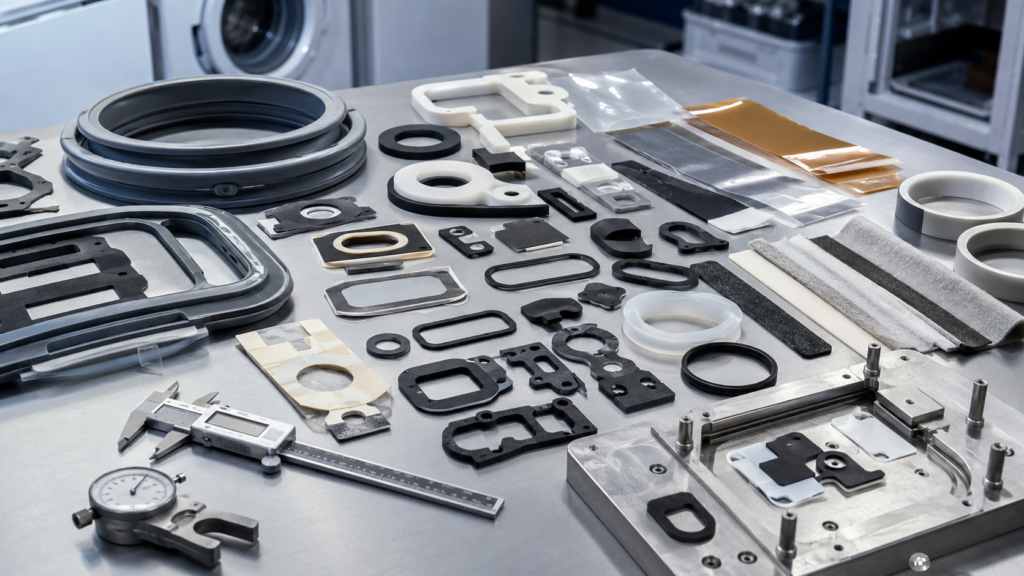
Modern household appliances are expected to be quieter, more energy-efficient, longer lasting, and more reliable than ever before. Whether it is a refrigerator, washing machine, dishwasher, air conditioner, water purifier, coffee machine, or smart home appliance, dozens of precision die cut components work behind the scenes to improve product performance.
Among these components, precision die cut gaskets are especially important. They create effective seals, absorb vibration, reduce operating noise, protect electronic assemblies, improve thermal efficiency, and compensate for manufacturing tolerances.
For OEM engineers and sourcing professionals, selecting the right die cut gasket is not simply choosing a foam or rubber material. The material must provide the correct compression, sealing force, durability, adhesive performance, dimensional accuracy, and long-term reliability throughout the appliance's service life.
At Sanken, we manufacture precision die cut foam gaskets, rubber seals, PET and PI insulation films, adhesive tape components, protective films, non-woven materials, vibration pads, and multilayer laminated parts for global appliance OEM manufacturers.
Why Precision Die Cut Parts Are Essential in Modern Appliances
Today's appliances integrate mechanical systems, electronic controls, sensors, displays, motors, compressors, pumps, fans, and plastic housings into increasingly compact designs.
Precision die cut parts help these different systems work together reliably by providing:
- Air sealing
- Water sealing
- Dust protection
- Thermal insulation
- Electrical insulation
- Vibration isolation
- Noise reduction
- Cushioning
- Assembly positioning
- Component protection
Without properly designed die cut components, appliances may experience:
- Water leakage
- Air leakage
- Increased operating noise
- Excessive vibration
- Reduced energy efficiency
- Loose internal components
- Premature electronic failures
- Customer warranty claims
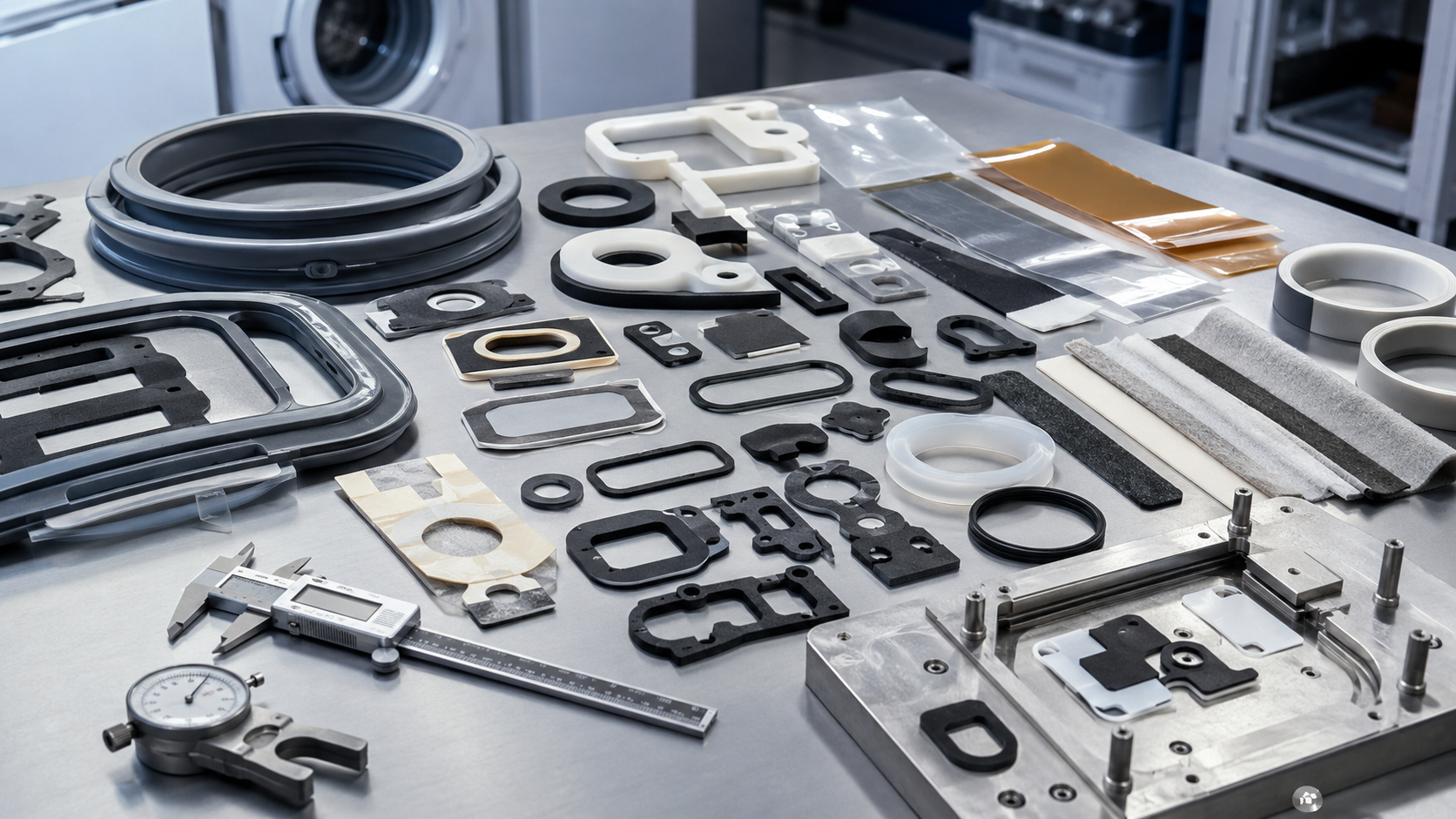
Where Precision Die Cut Components Are Used
Precision die cut components can be found throughout modern household appliances.
Common applications include:
| Appliance | Typical Die Cut Parts |
|---|---|
| Refrigerator | Door gaskets, insulation films, vibration pads |
| Washing Machine | Foam seals, damping pads, adhesive tapes |
| Dishwasher | Waterproof gaskets, rubber seals |
| Air Conditioner | Foam seals, insulation materials, vibration isolators |
| Coffee Machine | Silicone seals, foam gaskets |
| Water Purifier | EPDM sealing gaskets |
| Vacuum Cleaner | Dust seals, felt strips |
| Small Kitchen Appliances | Adhesive films, insulation films, rubber pads |
Although these components are often hidden after assembly, they have a direct impact on product quality and user experience.
Foam Gaskets Create Reliable Air and Water Sealing
Foam gaskets are among the most common die cut parts used in appliance manufacturing.
Their functions include:
- Preventing water leakage
- Blocking dust ingress
- Improving air sealing
- Filling manufacturing gaps
- Providing thermal insulation
- Compensating assembly tolerances
Common foam materials include:
- EVA foam
- PE foam
- PU foam
- EPDM foam
- Cross-linked polyethylene foam
Foam material selection depends on:
- Compression set
- Density
- Recovery performance
- Moisture resistance
- Temperature resistance
- Long-term durability
A properly designed gasket maintains stable compression throughout years of operation, helping the appliance continue performing efficiently.
Rubber Gaskets Improve Long-Term Durability
Rubber gaskets are typically selected where stronger environmental resistance is required.
Common rubber materials include:
- EPDM
- Silicone
- CR rubber
- NBR
- Neoprene
Typical applications include:
- Pump sealing
- Water valves
- Compressor isolation
- Heating systems
- Outdoor HVAC equipment
Compared with foam, rubber generally provides:
- Better weather resistance
- Longer service life
- Excellent compression recovery
- Higher temperature capability
- Better chemical resistance
For appliances exposed to moisture or temperature cycling, rubber often provides the most reliable sealing solution.
Non-Woven Materials Help Reduce Noise and Vibration
Consumer expectations for quiet appliances continue to increase.
Non-woven die cut materials help reduce:
- Plastic rattling
- Metal-to-metal contact
- Motor vibration
- Fan noise
- Cable movement
- Structural resonance
Applications include:
- Washing machine cabinets
- Refrigerator interiors
- Air conditioner housings
- Dishwasher panels
- Small appliance enclosures
Because non-woven materials provide excellent sound absorption while remaining lightweight, they are widely used in modern appliance NVH (Noise, Vibration and Harshness) solutions.
Adhesive Die Cut Parts Improve Assembly Efficiency
Mechanical fasteners are increasingly replaced by precision die cut adhesive components.
Applications include:
- Display mounting
- Decorative panel bonding
- Wire harness fixing
- Sensor mounting
- Plastic housing assembly
- Foam gasket attachment
Common adhesive materials include:
- Acrylic adhesive tapes
- Double-sided tapes
- Foam tapes
- Transfer adhesives
- PET carrier tapes
Proper adhesive selection improves assembly speed while reducing screws, clips, and manual operations.
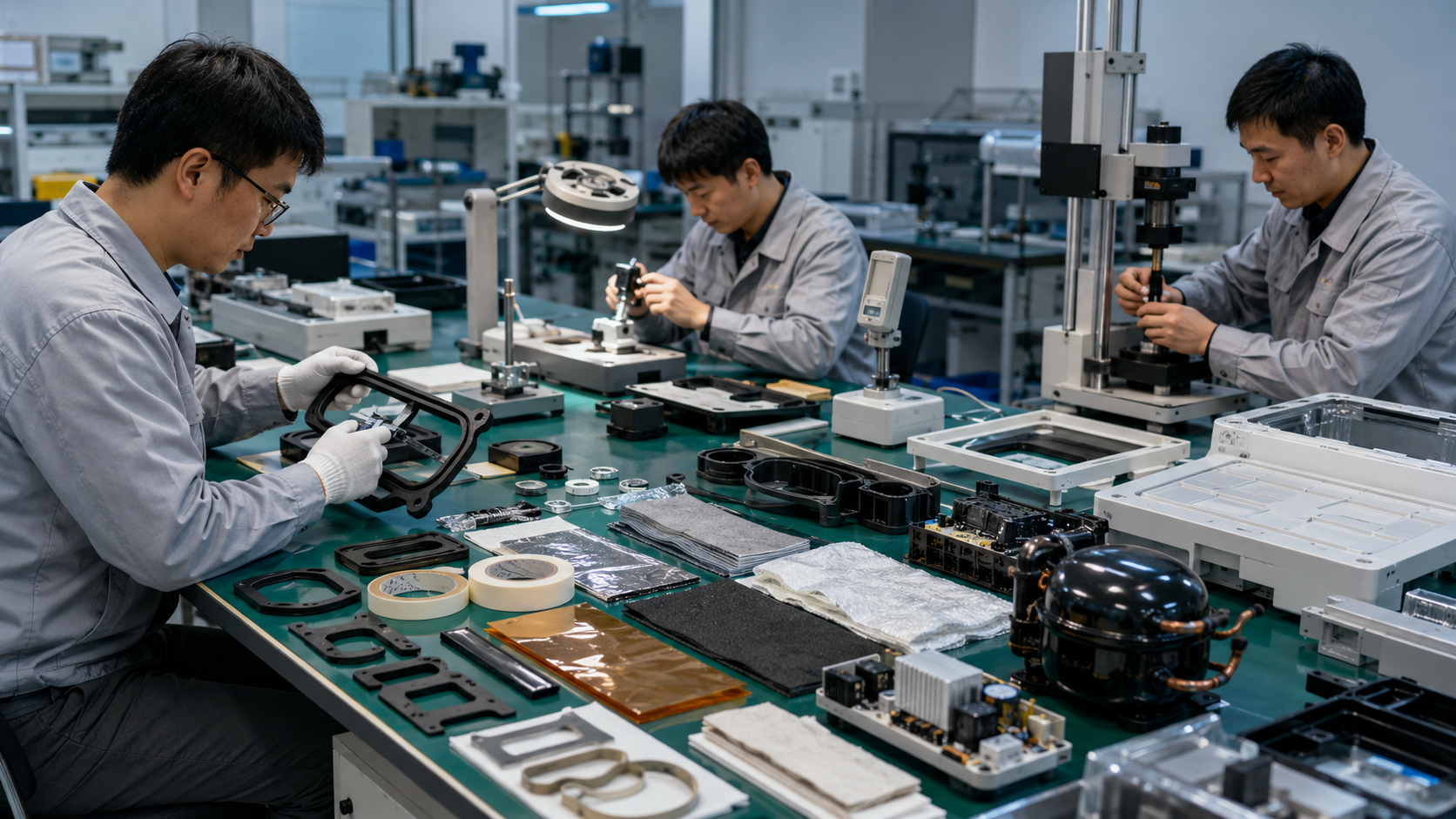
PET and PI Films Protect Electronic Systems
Modern appliances contain sophisticated electronic control systems.
Die cut insulation films help protect:
- PCB assemblies
- Connectors
- Display modules
- Power control boards
- Sensors
- Smart control modules
PET insulation films are commonly used for:
- Electrical insulation
- Component spacing
- PCB protection
PI insulation films are selected when higher operating temperatures require enhanced thermal resistance.
Proper insulation reduces electrical failures while improving long-term reliability.
Vibration Control Extends Product Life
Many appliances generate continuous vibration during operation.
Examples include:
- Washing machine spin cycles
- Compressor operation
- Water pumps
- Cooling fans
- HVAC blowers
Without vibration isolation:
- Fasteners loosen
- Plastic components crack
- Noise increases
- Electronics experience fatigue
- Customer satisfaction decreases
Foam pads, rubber isolators, and damping materials absorb vibration before it spreads through the appliance structure.
Thermal Insulation Improves Energy Efficiency
Energy efficiency has become a major purchasing factor for consumers.
Die cut insulation materials help:
- Reduce heat transfer
- Maintain internal temperatures
- Protect nearby electronics
- Improve HVAC efficiency
- Reduce energy consumption
Applications include:
- Refrigerators
- Freezers
- Air conditioners
- Heat pumps
- Water heaters
- Coffee machines
Thermal management not only improves efficiency but also increases component lifespan.
Material Selection Determines Long-Term Performance
Different appliance applications require different die cut materials.
| Function | Recommended Material |
|---|---|
| Water sealing | EPDM, Silicone |
| Air sealing | PE Foam, EVA Foam |
| Noise reduction | Non-woven Felt, PU Foam |
| Electrical insulation | PET Film, PI Film |
| Surface protection | Protective Film |
| Vibration control | Rubber Pads |
| Bonding | Acrylic Adhesive Tape |
| Thermal insulation | Foam, PET Film |
Selecting materials based solely on price often increases warranty costs later.
Instead, OEM manufacturers evaluate:
- Operating temperature
- Compression performance
- Aging resistance
- Chemical exposure
- Moisture resistance
- Assembly process
- Expected product life
Precision Manufacturing Improves Assembly Consistency
High-quality die cutting improves:
- Assembly speed
- Dimensional consistency
- Automated production compatibility
- Cleaner installation
- Lower scrap rates
- Reduced rework
Precision manufacturing includes:
- Tight dimensional tolerances
- Clean cutting edges
- Accurate adhesive placement
- Stable lamination
- Kiss cutting
- Multi-layer converting
For automated assembly lines, consistency is often more valuable than simply achieving the lowest component price.
Quality Control Throughout Production
Reliable appliance die cut parts require comprehensive inspection.
Typical quality checks include:
| Inspection Item | Purpose |
|---|---|
| Dimensions | Assembly accuracy |
| Thickness | Compression control |
| Adhesive position | Bonding consistency |
| Compression testing | Sealing performance |
| Hardness | Cushioning performance |
| Surface inspection | Appearance quality |
| Edge cleanliness | Prevent contamination |
| Packaging inspection | Prevent transport damage |
Consistent quality inspection reduces assembly defects and improves long-term appliance reliability.
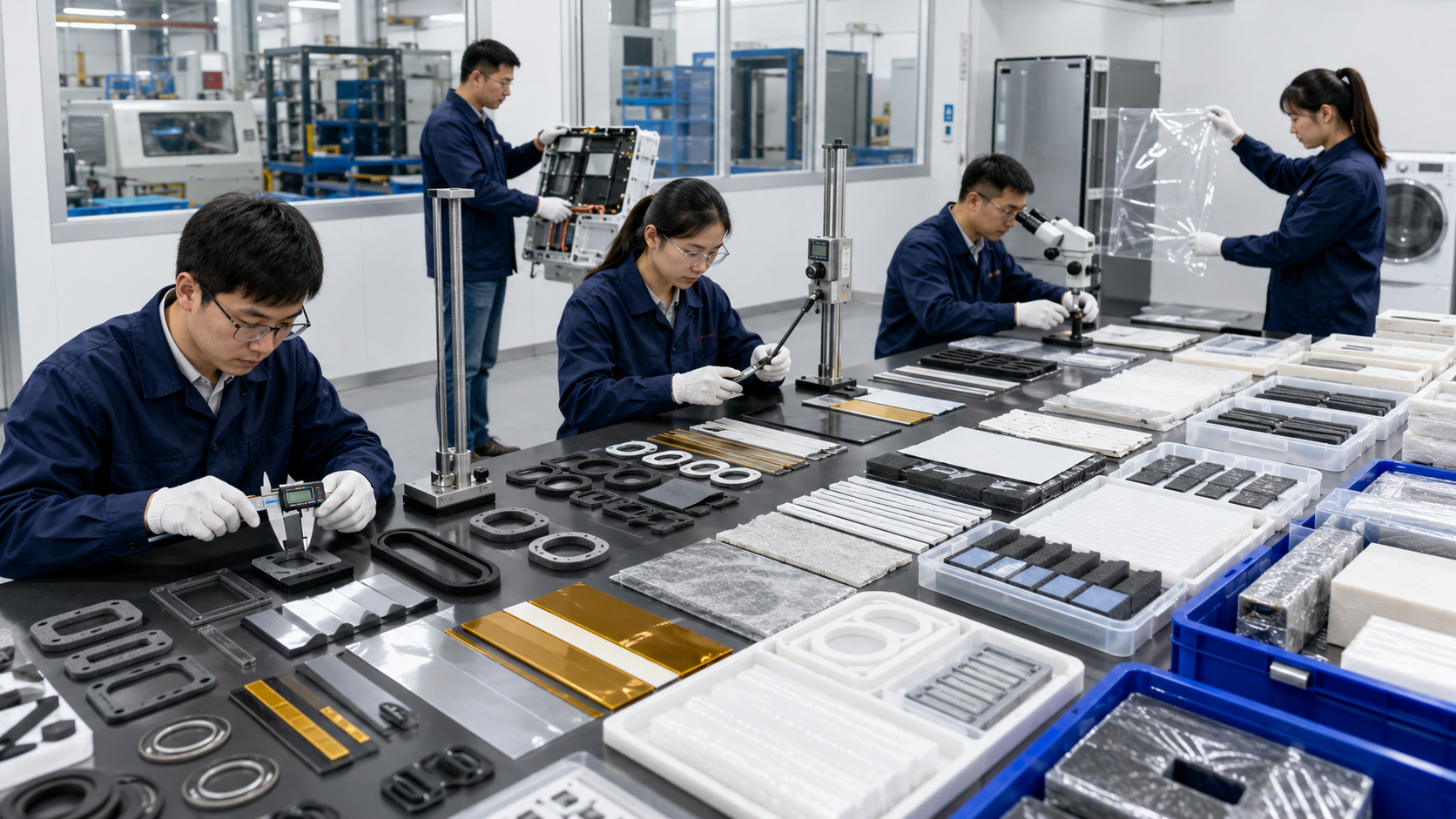
How Sanken Supports Appliance OEM Manufacturers
Sanken provides complete precision die cutting solutions for appliance manufacturers worldwide.
Our capabilities include:
- Foam gasket manufacturing
- Rubber gasket converting
- PET insulation films
- PI insulation films
- Protective films
- Double-sided adhesive tapes
- Non-woven die cut materials
- Vibration isolation pads
- Multi-layer lamination
- Precision die cutting
- Sample development
- Quality inspection
- Assembly-ready packaging
Every project is reviewed based on sealing performance, vibration control, insulation requirements, adhesive compatibility, dimensional tolerance, and mass production efficiency.
Buyer Checklist Before Starting an Appliance Project
To develop reliable die cut appliance components efficiently, OEM buyers should provide:
- 2D drawings
- 3D CAD files (if available)
- Product application
- Material requirements
- Temperature range
- Compression requirements
- Adhesive requirements
- Assembly method
- Annual production volume
- Packaging requirements
- Existing samples if available
Early engineering collaboration helps reduce development time while improving final product performance.
FAQ
What die cut materials are most commonly used in household appliances?
Foam, EPDM rubber, silicone rubber, PET films, PI films, non-woven felt, protective films, adhesive tapes, and multilayer laminated materials.
Why are foam gaskets widely used?
They provide reliable sealing, cushioning, vibration isolation, thermal insulation, and assembly tolerance compensation while remaining lightweight and economical.
When should rubber gaskets be used instead of foam?
Rubber is preferred when higher durability, weather resistance, chemical resistance, or long-term sealing performance is required.
Why are non-woven materials used inside appliances?
They reduce vibration, eliminate rattling, absorb operating noise, and protect contacting components from wear.
Can adhesive tape replace screws in appliance assembly?
Yes. Precision die cut adhesive tapes are widely used for bonding displays, panels, sensors, and housings while improving assembly efficiency.
Can Sanken manufacture custom appliance die cut parts?
Yes. Sanken manufactures precision foam gaskets, rubber seals, insulation films, adhesive tape components, non-woven materials, protective films, and multilayer converted parts for appliance OEM manufacturers.
Conclusion
Precision die cut components are essential for modern household appliances. Foam gaskets, rubber seals, insulation films, adhesive tapes, vibration pads, and non-woven materials work together to improve sealing performance, reduce operating noise, control vibration, protect electronics, and extend appliance lifespan.
Selecting the right materials and manufacturing partner helps OEM manufacturers achieve higher product quality, better assembly efficiency, lower warranty costs, and improved customer satisfaction.
At Sanken, we help appliance manufacturers develop precision die cut solutions that deliver reliable performance from prototype development through high-volume production.