
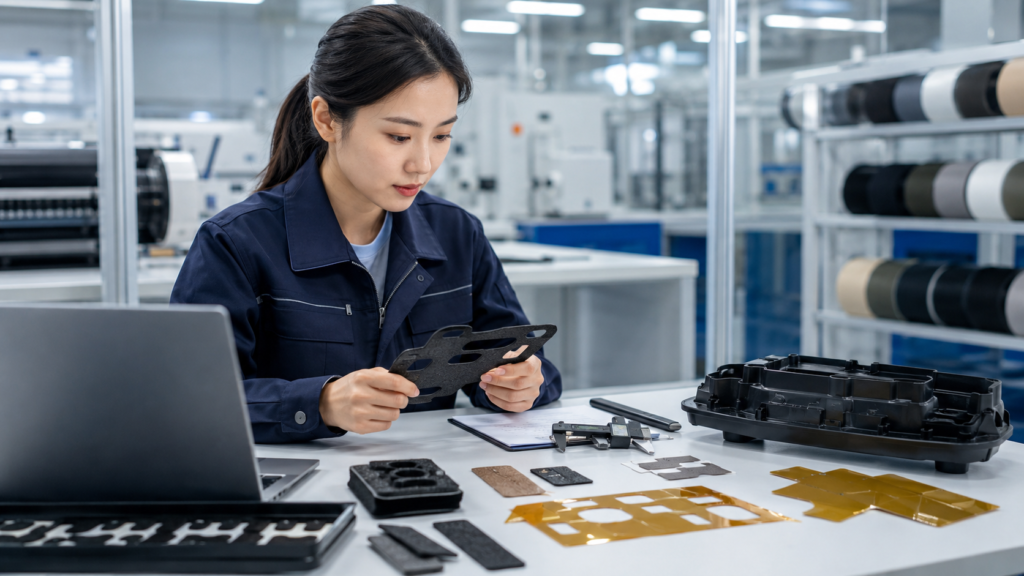
Modern vehicles contain many precision die cut parts hidden behind trim panels, dashboards, electronic modules, lighting systems, HVAC units, wire harnesses and body structures. These parts support sealing, cushioning, insulation, vibration control, noise reduction, bonding, surface protection and assembly efficiency.
For automotive OEMs and Tier suppliers, die cut parts are not just simple cut shapes. Material choice, tolerance, adhesive performance, compression behavior, edge quality and packaging format can directly affect assembly stability and long-term reliability.
At Sanken, we manufacture precision die cut foam gaskets, rubber seals, PET insulation films, adhesive tape components, protective films, light-blocking films, non-woven NVH materials and multilayer laminated components for automotive OEM and Tier supplier applications.
Why Precision Die Cut Parts Are Essential in Modern Vehicles
Today's vehicles integrate thousands of mechanical, electrical, and electronic components into compact assemblies.
Precision die cut components support:
- Water sealing
- Dust sealing
- Air sealing
- Electrical insulation
- Thermal insulation
- Battery protection
- Vibration isolation
- Noise reduction
- EMI shielding
- Structural bonding
- Surface protection
- Component positioning
Without properly engineered die cut parts, vehicles may experience:
- Water leakage
- Wind noise
- Electrical shorts
- Battery safety issues
- Display failures
- Loose interior components
- Increased vibration
- Assembly inconsistencies
- Reduced vehicle durability
Automotive Interior Systems
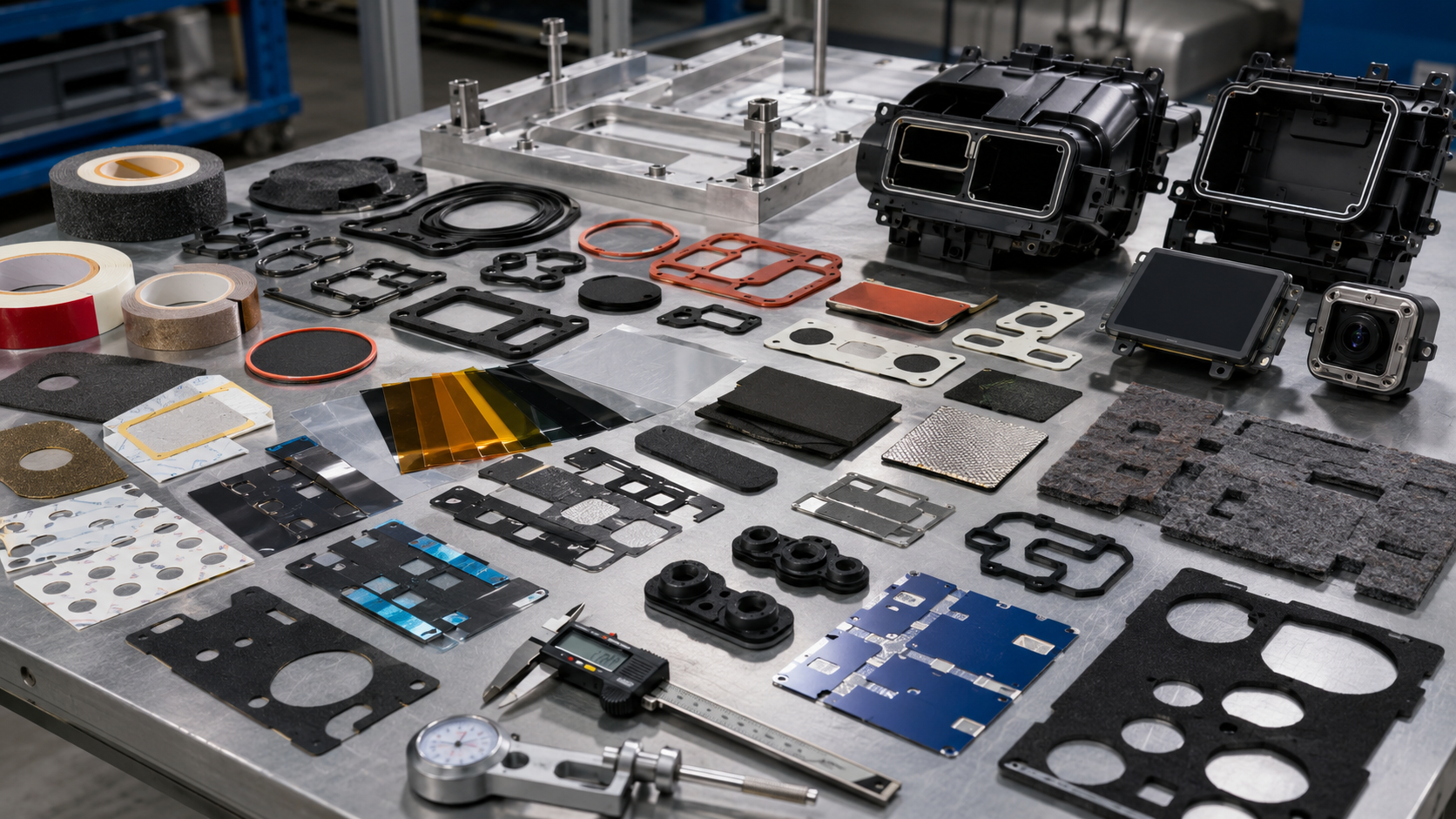
Automotive interiors contain numerous die cut materials designed to improve comfort, appearance, and long-term durability.
Common applications include:
- Instrument panel gaskets
- Dashboard foam pads
- Door panel seals
- Center console cushions
- Interior trim tapes
- Anti-rattle felt strips
- Decorative panel bonding
- Seat component insulation
- Armrest cushioning
- Glove box damping pads
Typical materials include:
- EVA foam
- PU foam
- Non-woven felt
- Double-sided adhesive tapes
- Rubber pads
- PET insulation films
These components eliminate squeaks and rattles while improving overall vehicle NVH performance.
Automotive Display and Infotainment Systems
Modern vehicles now include multiple displays, touchscreens, cameras, and digital instrument clusters.
Die cut parts support:
- Display bonding
- Optical protection
- Light blocking
- Electrical insulation
- Cushioning
- Dust sealing
- Surface protection
Common materials include:
| Component | Function |
|---|---|
| OCA-related adhesive structures | Optical bonding |
| Protective films | Scratch protection |
| PET insulation films | Electrical insulation |
| PI insulation films | Heat-resistant insulation |
| Black light-blocking films | Prevent light leakage |
| Foam spacers | Cushioning |
| Adhesive tape frames | Display bonding |
Display modules require extremely clean die cut components to prevent bubbles, contamination, and optical defects.
Automotive Electronic Control Units (ECUs)
Modern vehicles contain dozens of electronic control units.
Precision die cut parts protect:
- PCB assemblies
- Connectors
- Power modules
- Sensors
- Electronic housings
Typical die cut materials include:
- PET insulation films
- PI insulation films
- Adhesive-backed insulation
- EMI shielding materials
- Foam gaskets
- Rubber seals
These materials improve electrical reliability while protecting electronics from dust, vibration, and moisture.
EV-Related Electronic and Insulation Areas
EV-related automotive assemblies may require die cut materials for insulation support, spacing, cushioning, sealing and surface protection.
Common applications include:
- PET insulation films
- Foam cushioning pads
- Rubber spacers
- Adhesive-backed protective films
- Electronic assembly insulation
- Module-area sealing pads
- Surface protection films
For these applications, material selection should focus on insulation needs, thickness stability, adhesive performance, dimensional accuracy, compression behavior and packaging protection.
Automotive Lighting Systems
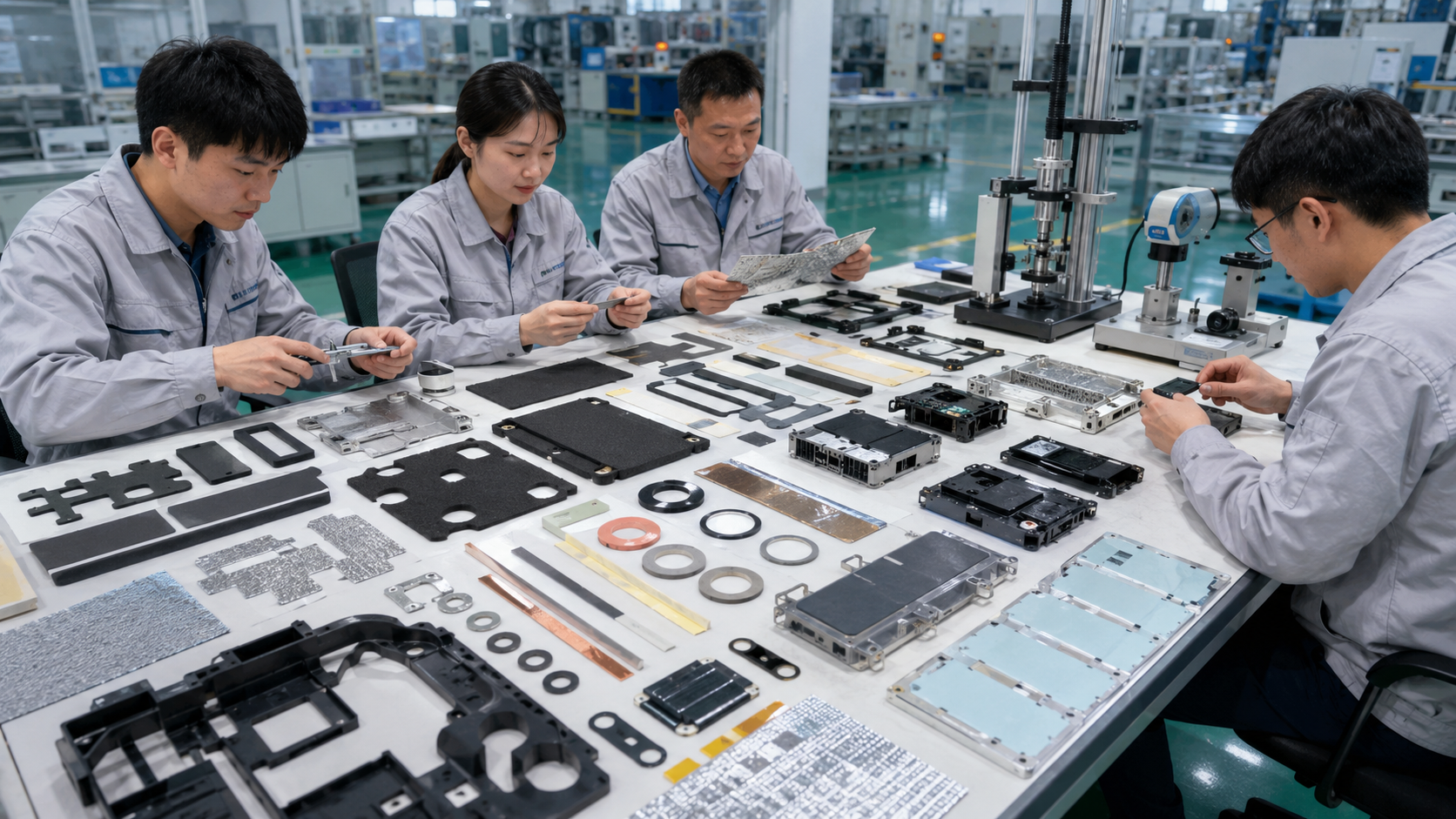
LED headlights, taillights, and interior lighting use precision die cut materials to improve sealing and optical performance.
Applications include:
- Light-blocking films
- Foam seals
- Adhesive tapes
- Rubber gaskets
- Protective films
These components help prevent:
- Water ingress
- Condensation
- Light leakage
- Dust contamination
Automotive Camera and Sensor Modules
ADAS systems continue to expand throughout modern vehicles.
Die cut materials support:
- Camera module sealing
- Radar insulation
- Sensor cushioning
- Dust protection
- Optical window protection
- EMI shielding
Typical applications include:
- Front cameras
- Rear cameras
- Radar modules
- LiDAR components
- Parking sensors
- Driver monitoring systems
Precision tolerance is especially important because sensor alignment directly affects system accuracy.
HVAC Systems
Heating, ventilation, and air conditioning systems require numerous sealing materials.
Common applications include:
- Air duct seals
- Compressor insulation
- HVAC housing gaskets
- Air leakage prevention
- Noise reduction
Typical materials:
- PE foam
- EPDM foam
- Rubber gaskets
- Non-woven felt
- Adhesive tapes
Proper sealing improves airflow efficiency while reducing HVAC operating noise.
Automotive Door Systems
Doors require multiple die cut sealing components.
Applications include:
- Weather sealing
- Water sealing
- Glass guides
- Cable protection
- Anti-rattle pads
- Vibration damping
Materials commonly include:
- EPDM rubber
- Foam seals
- Felt strips
- Adhesive tapes
- Rubber cushions
These components improve cabin comfort while protecting against weather exposure.
Automotive Wire Harness Protection
Vehicles contain several kilometers of electrical wiring.
Die cut materials help protect harnesses from:
- Abrasion
- Vibration
- Moisture
- Heat
- Electrical contact
Typical materials include:
- PET films
- PI films
- Protective tapes
- Foam pads
- Felt strips
- Cable fixing tapes
Proper wire management improves vehicle reliability throughout its service life.
Automotive NVH Applications
Noise, vibration and harshness control has become one of the most important areas for automotive die cut materials.
Applications include:
- Dashboard damping
- Door anti-rattle pads
- Roof insulation
- Floor insulation
- Trunk vibration control
- Seat cushioning
- Interior trim isolation
Materials commonly include:
- Non-woven felt
- PU foam
- EVA foam
- Rubber isolators
- Adhesive damping pads
Effective NVH materials improve both driving comfort and perceived vehicle quality.
Structural Bonding Applications
Modern vehicles increasingly replace mechanical fasteners with structural adhesive solutions.
Applications include:
- Trim attachment
- Display mounting
- Sensor mounting
- Badge attachment
- Decorative panel bonding
- Wire fixing
Common materials include:
- Acrylic adhesive tapes
- Foam tapes
- Transfer adhesives
- PET carrier tapes
Adhesive-backed die cut components simplify assembly while reducing weight.
Material Selection Depends on Application
Different automotive applications require different material characteristics.
| Application | Recommended Material |
|---|---|
| Water sealing | EPDM rubber, silicone |
| Air sealing | PE foam, EVA foam |
| Electrical insulation | PET film, PI film |
| Battery insulation | PI film, PET film |
| Display protection | Protective films |
| Optical bonding | OCA-related adhesive |
| Light blocking | Black PET film |
| Noise reduction | Non-woven felt |
| Vibration isolation | Rubber pads, foam |
| Structural bonding | Acrylic adhesive tape |
Material selection should always consider:
- Operating temperature
- Compression
- Moisture exposure
- Chemical resistance
- Aging resistance
- Assembly process
- Vehicle lifetime requirements
Quality Control Requirements
Automotive OEMs require strict quality standards.
Inspection typically includes:
| Inspection Item | Purpose |
|---|---|
| Dimensions | Assembly accuracy |
| Thickness | Compression consistency |
| Hole alignment | Positioning accuracy |
| Adhesive placement | Bonding quality |
| Surface cleanliness | Appearance |
| Edge quality | Prevent contamination |
| Compression testing | Sealing performance |
| Hardness | Vibration control |
| Packaging | Damage prevention |
Stable production quality helps reduce warranty claims and production interruptions.
How Sanken Supports Automotive OEM Manufacturing
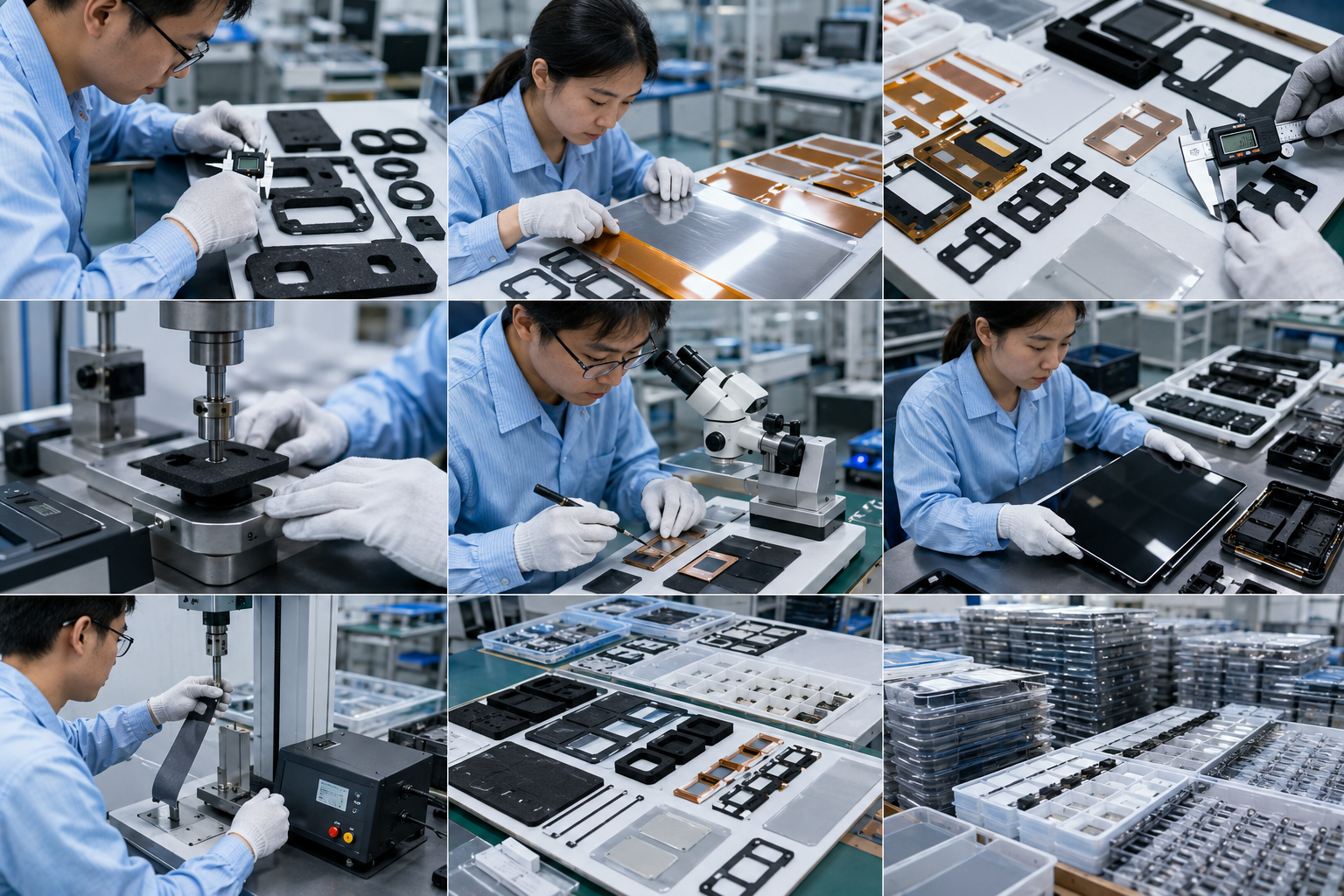
Sanken supports automotive OEM and Tier supplier projects with precision die cutting, adhesive lamination, kiss cutting, material converting, sample development, dimensional inspection and assembly-ready packaging.
Our automotive die cut components include:
- Foam gaskets
- Rubber seals and pads
- PET insulation films
- Protective films
- Black light-blocking films
- Double-sided adhesive tape components
- Foam tape parts
- Non-woven felt NVH parts
- Multilayer laminated components
Every project is reviewed based on application location, material performance, assembly process, tolerance control, adhesive structure and long-term reliability.
Conclusion
Automotive die cut parts are used throughout modern vehicles, including interiors, displays, ECUs, lighting systems, sensors, HVAC units, door systems, wire harnesses, NVH areas and bonding applications.
The right die cut material can improve sealing, cushioning, insulation, vibration control, noise reduction, surface protection and assembly efficiency. The key is to match the material, adhesive structure, tolerance, compression behavior and delivery format to the real vehicle application.
Need automotive die cut parts for an OEM or Tier supplier project?
Send us your drawing, sample, application location, material requirement, adhesive structure, tolerance, annual volume and packaging preference. Sanken can help review material selection, die cutting method, lamination structure, inspection points and delivery format before sampling and mass production.
Related Articles
- What Is Die Cutting in Automotive OEM Manufacturing? Materials, Process, and Applications
- Why Vehicles Have Noise and Vibration Problems and How Die Cut NVH Parts Help
- How Automation Improves Precision Die Cutting for Automotive OEM Parts
- Custom Die Cut Foam Gaskets for Automotive Electronics
- From Foam Rolls to Finished Parts: How Die Cutting Works