
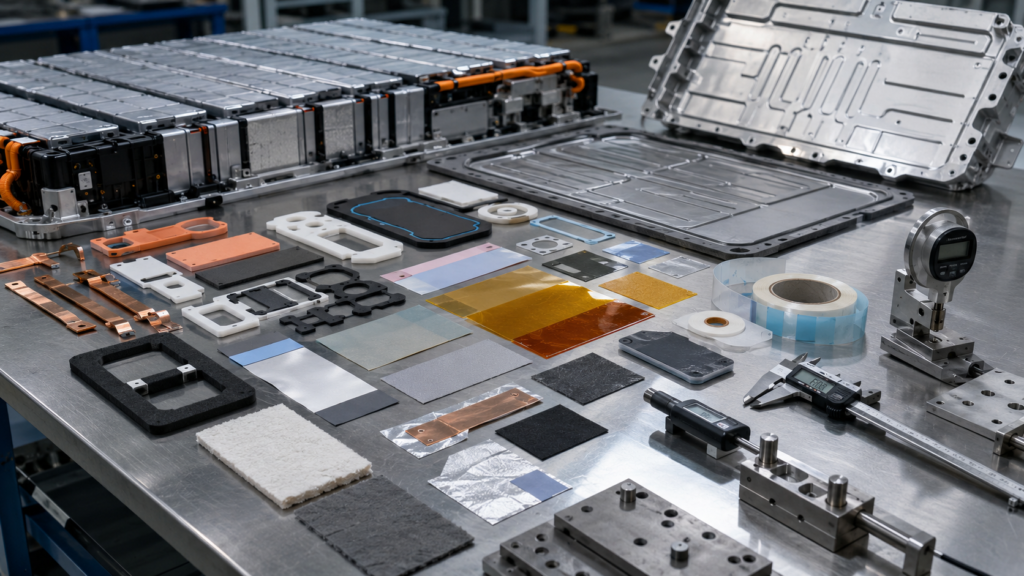
Electric vehicle (EV) battery packs are among the most demanding applications for precision die cut components. Unlike conventional automotive parts, battery systems operate under high voltage, elevated temperatures, vibration, moisture exposure, and long service life requirements. Even a small die cut component can directly influence battery safety, reliability, thermal performance, and manufacturing efficiency.
Modern battery packs contain hundreds of die cut components made from foam, rubber, PET films, PI films, adhesive tapes, thermal interface materials, protective films, insulation materials, and multilayer laminated structures. These materials work together to seal battery enclosures, electrically insulate high-voltage components, manage heat, reduce vibration, and simplify assembly.
For OEM engineers and purchasing teams, selecting the right die cut material requires balancing electrical insulation, flame resistance, compression performance, thermal conductivity, chemical resistance, manufacturing tolerance, and long-term durability.
At Sanken, we manufacture precision die cut components for EV battery systems, including foam gaskets, rubber seals, PET and PI insulation films, thermal insulation materials, adhesive tape components, protective films, non-woven materials, and multilayer laminated solutions for battery packs, battery modules, BMS assemblies, automotive electronics, and charging systems.
Why Die Cut Materials Are Critical in EV Battery Packs
Unlike traditional automotive systems, EV batteries generate heat continuously during charging and discharging while operating under high electrical loads.
Precision die cut materials help provide:
- High-voltage electrical insulation
- Water and dust sealing
- Thermal insulation
- Heat management
- Cell cushioning
- Vibration isolation
- Fire barrier support
- Cable protection
- Module positioning
- Component bonding
Without properly designed die cut materials, battery systems may experience:
- Moisture ingress
- Thermal runaway risk
- Electrical short circuits
- Module vibration
- Cell damage
- Reduced battery life
- Assembly inconsistencies
- Higher warranty costs
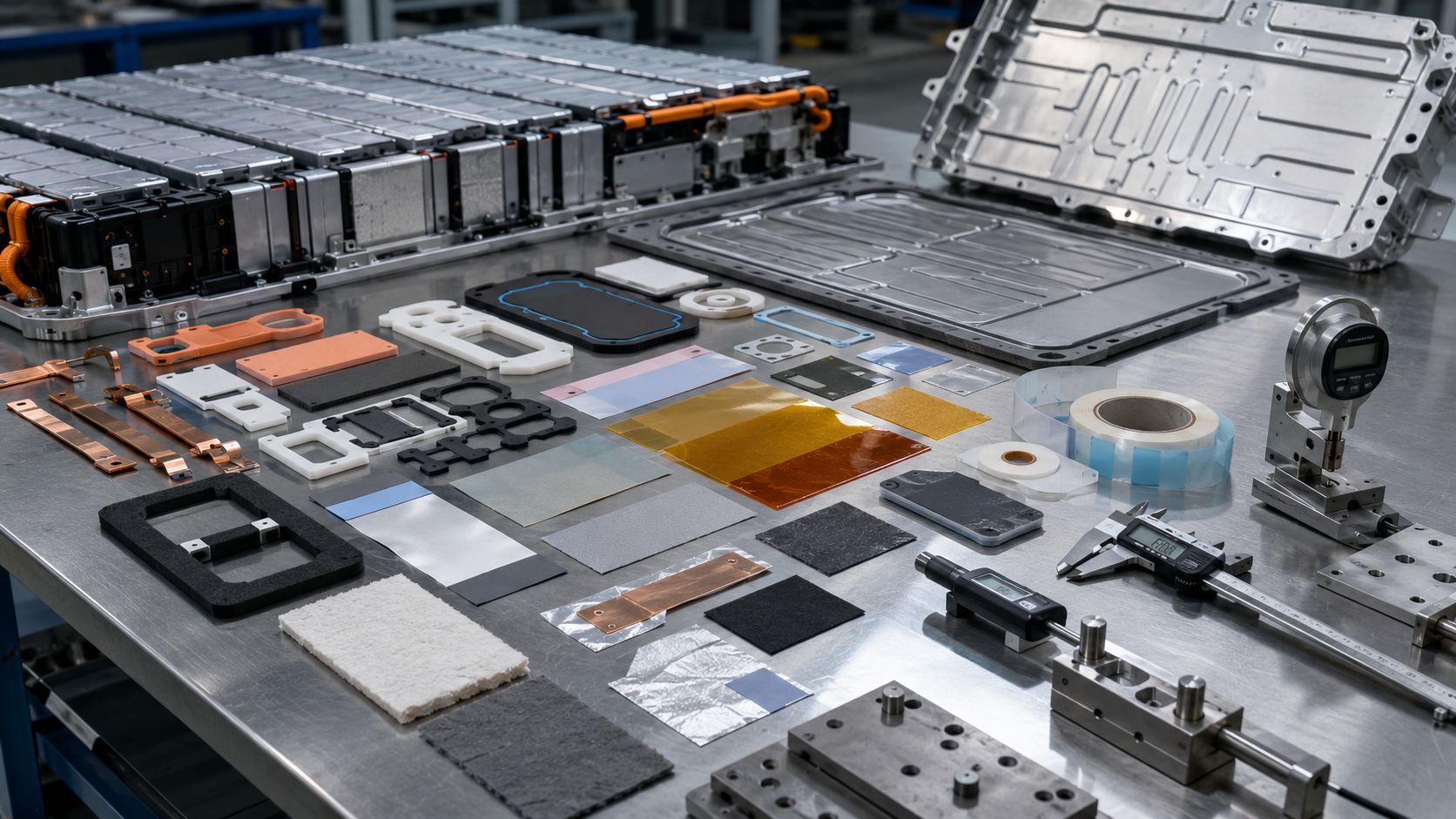
Common Die Cut Materials Used in EV Battery Systems
Modern EV battery packs combine many functional materials.
| Material | Primary Function |
|---|---|
| EVA / PE Foam | Cushioning and sealing |
| EPDM Foam | Waterproof sealing |
| Silicone Foam | High-temperature sealing |
| PET Film | Electrical insulation |
| PI Film | High-temperature electrical insulation |
| Thermal Insulation Film | Heat isolation |
| Thermal Gap Pad | Heat transfer management |
| Double-sided Adhesive Tape | Component bonding |
| Protective Film | Surface protection |
| Rubber Pads | Vibration isolation |
| Non-woven Materials | Cushioning and protection |
| Multilayer Laminates | Combined insulation and sealing |
Each material is selected according to the battery pack's electrical, thermal, and mechanical requirements.
Foam Gaskets Provide Reliable Environmental Sealing
Foam gaskets are widely used throughout EV battery packs.
Typical applications include:
- Battery enclosure sealing
- Module sealing
- Cooling plate sealing
- Connector sealing
- Junction box sealing
- Charging interface sealing
Their primary functions are:
- Dust protection
- Water resistance
- IP sealing
- Compression sealing
- Gap filling
- Vibration isolation
Common foam materials include:
- EVA foam
- PE foam
- EPDM foam
- Silicone foam
- Microcellular polyurethane foam
Material selection depends on:
- Compression set
- Recovery performance
- Density
- Temperature resistance
- Water absorption
- Aging performance
A properly designed gasket maintains stable compression throughout the battery's lifetime while resisting heat, humidity, and vibration.
Rubber Seals Improve Long-Term Reliability
Rubber die cut components are commonly used where higher durability is required.
Typical rubber materials include:
- EPDM
- Silicone
- CR Rubber
- NBR
Applications include:
- Battery housing seals
- Cooling system seals
- Connector seals
- Cable entry seals
- Ventilation sealing
Compared with foam, rubber provides:
- Better weather resistance
- Longer service life
- Improved chemical resistance
- Excellent sealing
- Superior compression recovery
Rubber is especially important for battery packs exposed to moisture, road salt, and harsh outdoor environments.
PET and PI Films Provide Electrical Insulation
High-voltage battery systems require reliable electrical insulation.
PET insulation films are commonly used for:
- Module insulation
- Cell insulation
- PCB protection
- Busbar isolation
- Connector insulation
PI films are selected where higher temperature resistance is required, including:
- Busbar insulation
- Flexible circuits
- BMS electronics
- High-temperature module areas
- Charging electronics
Both materials can be converted into:
- Die cut insulation sheets
- Adhesive-backed insulation parts
- Multi-layer laminated structures
- Precision insulation barriers
Material selection depends on voltage rating, operating temperature, dielectric strength, and assembly method.
Thermal Management Materials Improve Battery Safety
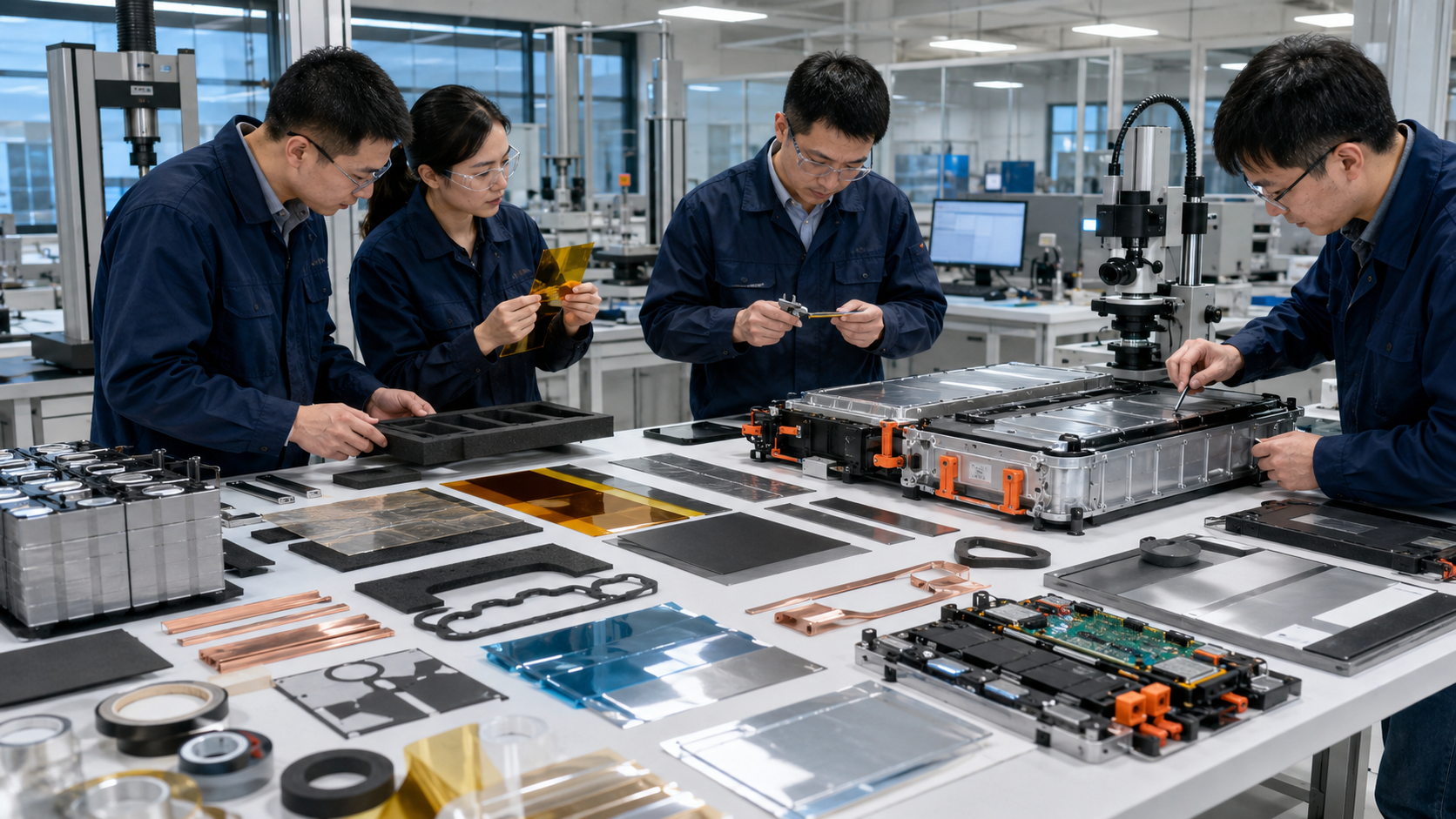
Battery temperature directly affects performance and lifespan.
Die cut thermal materials help:
- Isolate heat
- Transfer heat
- Balance cell temperature
- Protect neighboring components
- Improve charging performance
Typical thermal materials include:
- Thermal insulation films
- Thermal interface materials (TIM)
- Thermal gap pads
- Graphite films
- Ceramic insulation materials
- Silicone thermal pads
The correct material depends on whether the design requires:
- Heat transfer
- Heat isolation
- Temperature balancing
- Fire protection
Thermal management is one of the most important design considerations in modern EV battery systems.
Adhesive Tape Components Simplify Battery Assembly
Precision adhesive tapes are widely used throughout battery production.
Applications include:
- Cell fixing
- Sensor mounting
- Wire harness attachment
- Insulation positioning
- Foam gasket installation
- Thermal pad attachment
Common adhesive systems include:
- Acrylic adhesive
- High-temperature adhesive
- Double-sided tape
- Transfer adhesive
- PET carrier tape
Proper adhesive selection improves assembly speed while maintaining long-term reliability.
Vibration Isolation Protects Battery Modules
Battery packs experience constant vibration during vehicle operation.
Without proper damping:
- Cells experience mechanical stress
- Busbars fatigue
- Electronic components loosen
- Noise increases
- Reliability decreases
Foam cushions and rubber pads absorb vibration before it reaches sensitive battery components.
Typical vibration control parts include:
- Rubber isolators
- Foam cushions
- Damping pads
- Compression spacers
- Module support pads
Protective Films Prevent Assembly Damage
Battery components often require temporary protection during manufacturing.
Protective films are used on:
- Aluminum housings
- Battery covers
- Cooling plates
- Display panels
- Metal frames
- Plastic housings
Proper protective films prevent:
- Scratches
- Surface contamination
- Fingerprints
- Shipping damage
The film should remove cleanly without leaving adhesive residue.
Multi-Layer Laminated Structures Improve Assembly Efficiency
Many battery components combine several materials into one die cut part.
Examples include:
| Multi-layer Structure | Function |
|---|---|
| PET + Adhesive + Liner | Electrical insulation |
| Foam + Adhesive | Cushioning and sealing |
| PI + Adhesive | High-temperature insulation |
| Thermal Pad + Adhesive | Heat transfer |
| Rubber + Adhesive | Vibration isolation |
Multi-layer converting reduces assembly steps while improving consistency.
Precision Manufacturing Improves Battery Quality
Battery pack manufacturing requires extremely tight dimensional control.
Precision die cutting provides:
- Accurate dimensions
- Clean edges
- Stable adhesive positioning
- Consistent compression
- Reliable insulation
- Automated assembly compatibility
Even small dimensional variation can affect battery module fit.
Quality Control for EV Battery Die Cut Parts
Every production batch should be inspected for:
| Inspection Item | Purpose |
|---|---|
| Dimensions | Assembly fit |
| Thickness | Compression control |
| Adhesive location | Position accuracy |
| Dielectric performance | Electrical safety |
| Compression testing | Seal reliability |
| Surface cleanliness | Assembly quality |
| Edge quality | Prevent contamination |
| Packaging | Shipping protection |
For battery applications, traceability and consistent quality are essential.
How Sanken Supports EV Battery Manufacturers
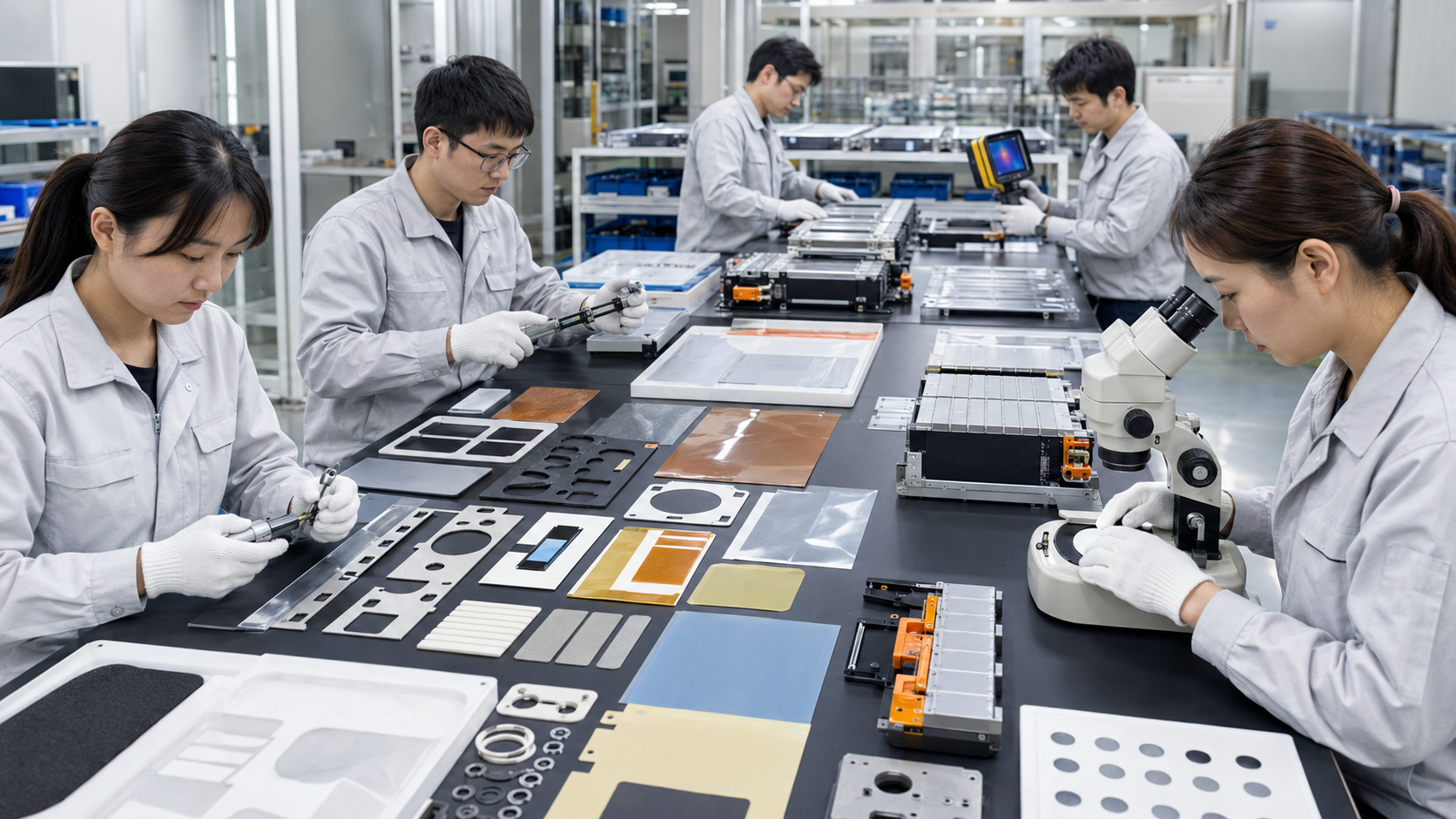
Sanken provides precision die cut solutions for electric vehicle battery systems.
Our capabilities include:
- Foam gasket converting
- Rubber sealing components
- PET insulation films
- PI insulation films
- Thermal insulation materials
- Thermal interface materials
- Double-sided adhesive tape converting
- Protective films
- Non-woven materials
- Multi-layer lamination
- Precision die cutting
- Sample development
- Quality inspection
- Assembly-ready packaging
Every project is reviewed according to electrical insulation, thermal performance, sealing requirements, vibration resistance, assembly process, and production efficiency.
Buyer Checklist Before Starting an EV Battery Project
To accelerate development, OEM buyers should provide:
- 2D drawings
- 3D CAD files (if available)
- Battery application
- Operating voltage
- Temperature range
- Material requirements
- Compression requirements
- Adhesive requirements
- Thermal management requirements
- Assembly method
- Annual production volume
- Packaging requirements
- Existing samples (if available)
Early engineering collaboration reduces development time while improving battery safety and manufacturing consistency.
FAQ
What die cut materials are commonly used in EV battery packs?
Foam gaskets, EPDM rubber, silicone foam, PET insulation films, PI insulation films, thermal insulation materials, thermal pads, adhesive tapes, protective films, and multilayer laminated structures.
Why are PET and PI films used in battery packs?
They provide reliable electrical insulation for battery modules, busbars, connectors, and electronic control systems.
Why is thermal management important?
Proper thermal management improves battery safety, charging efficiency, performance consistency, and service life.
What materials are used for battery sealing?
Common sealing materials include EPDM foam, silicone foam, rubber gaskets, adhesive sealing tapes, and multilayer sealing structures.
Why are foam gaskets widely used in battery packs?
Foam gaskets compensate for manufacturing tolerances while providing environmental sealing, vibration isolation, and compression performance.
Can Sanken manufacture custom EV battery die cut components?
Yes. Sanken manufactures precision die cut foam gaskets, rubber seals, insulation films, thermal materials, adhesive components, protective films, and multilayer laminated parts for EV battery OEM manufacturers.
Conclusion
Precision die cut materials are essential for modern EV battery systems. Foam gaskets, rubber seals, PET and PI insulation films, thermal management materials, adhesive tapes, and multilayer laminated structures work together to improve sealing, electrical insulation, heat management, vibration control, and long-term battery reliability.
By selecting the right material combination and precision manufacturing process, OEM manufacturers can improve battery safety, assembly efficiency, product durability, and overall vehicle performance.
At Sanken, we help EV battery manufacturers develop precision die cut components that meet the demanding requirements of next-generation electric vehicle platforms.