
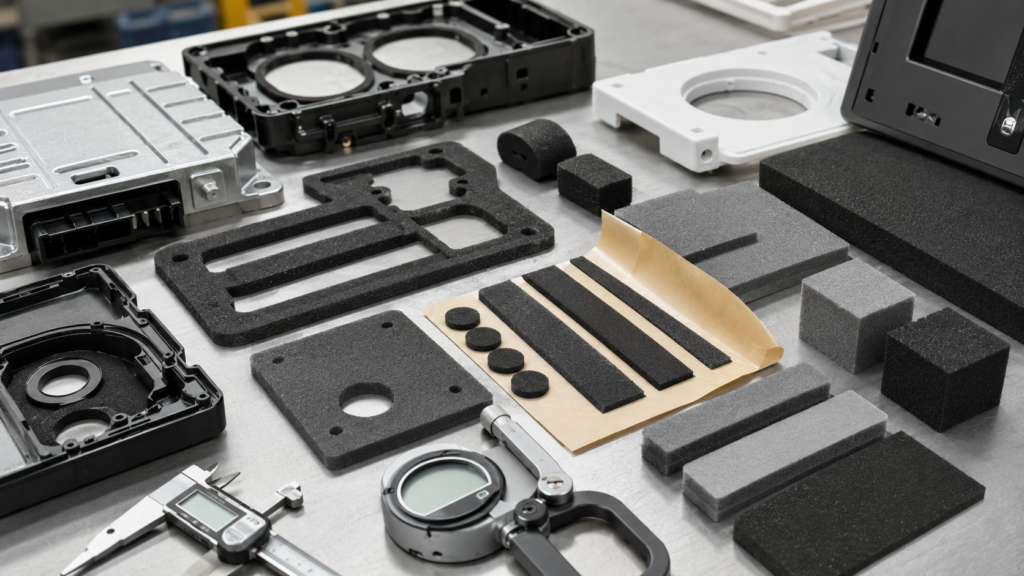
Automotive die cutting services are used to manufacture custom foam, rubber, non-woven felt, adhesive tape and insulation film components for vehicle assembly. These parts support sealing, bonding, vibration damping, acoustic insulation, thermal protection, dust blocking and anti-rattle performance.
For OEM buyers and Tier 1 suppliers, the challenge is not only cutting materials into shapes. The real challenge is choosing the right material, adhesive structure, thickness, tolerance and delivery format so each die-cut component can perform consistently during assembly and long-term vehicle use.
Sanken supports custom automotive die cut parts from material selection and sampling to lamination, precision die cutting, inspection and mass production.
What Is Automotive Die Cutting?
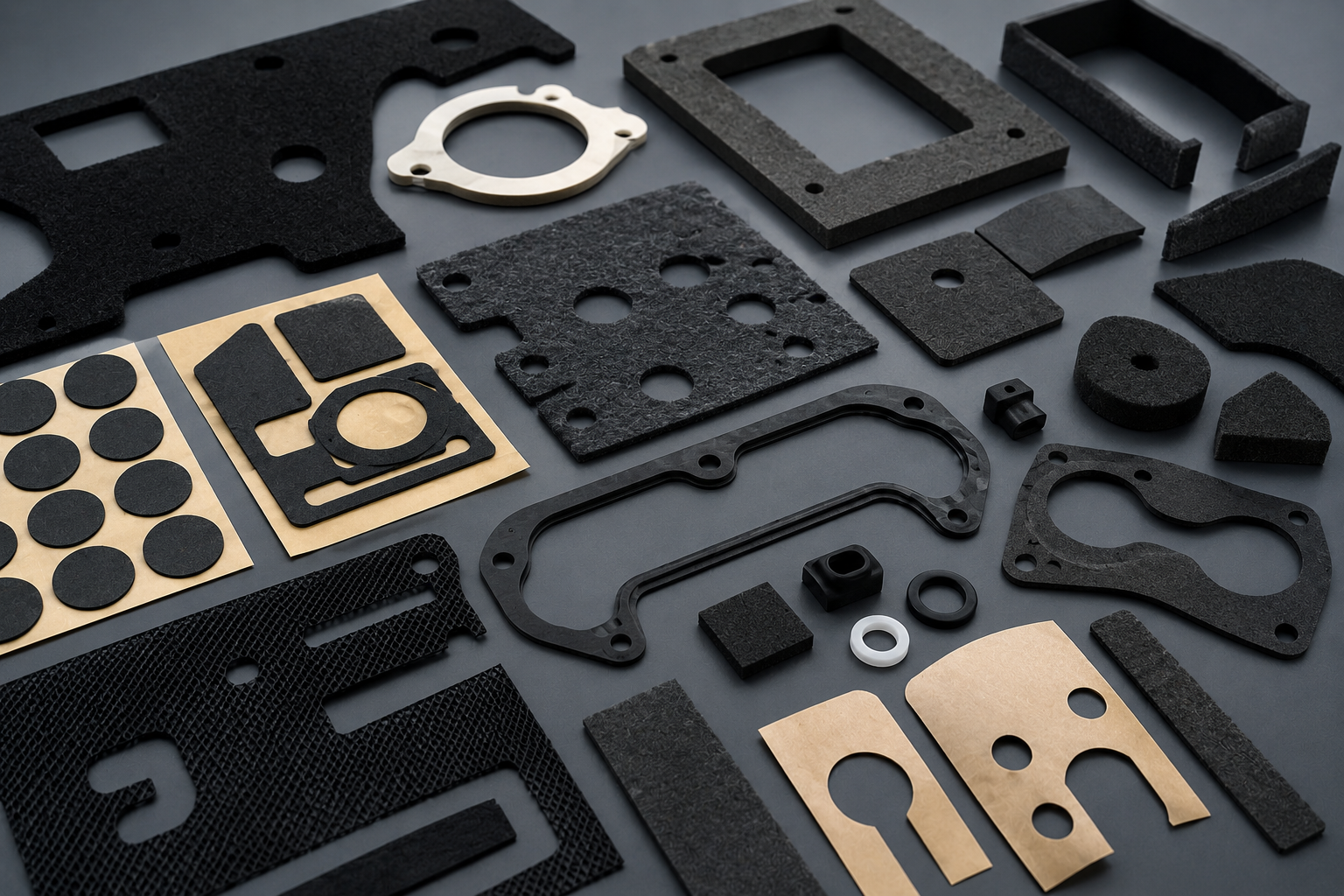
Automotive die cutting is a manufacturing process used to cut, laminate, and convert materials into precise shapes and components for vehicle applications.
Unlike traditional cutting methods, die cutting enables high-volume production while maintaining consistent dimensions and tight tolerances.
Common automotive die-cut products include:
- Gaskets
- Seals
- Vibration damping pads
- Acoustic insulation components
- Thermal management materials
- Adhesive-backed mounting solutions
- Anti-rattle components
- Dust barriers
Because modern vehicles contain hundreds of converted material parts, die cutting has become an essential manufacturing technology across the automotive industry.
Why Are Automotive Die Cutting Services Important?
Vehicle manufacturers face increasing challenges:
- Lightweight design requirements
- Stricter NVH standards
- Electric vehicle thermal management
- Faster production cycles
- Improved durability expectations
Many of these challenges are solved through engineered die-cut components.
A properly designed die-cut part can perform multiple functions simultaneously:
- Sealing
- Insulation
- Noise reduction
- Vibration control
- Assembly positioning
This helps reduce part count, simplify assembly, and improve long-term reliability.
Common Materials Used In Automotive Die Cuts
Material selection is often the most important step in a successful die-cut project.
Popular materials include:
Non-Woven Felt
Widely used for:
- Acoustic insulation
- Trunk floor systems
- Fender liners
- Interior NVH applications
Polyurethane Foam
Commonly used for:
- Vibration damping
- Gap filling
- Anti-rattle solutions
EPDM Rubber
Ideal for:
- Weather sealing
- Water resistance
- Outdoor automotive applications
Adhesive Tapes
Used for:
- Component mounting
- Bonding applications
- Simplified assembly processes
Thermal Insulation Materials
Increasingly important for:
- EV battery systems
- Electronic modules
- Heat management applications
Choosing the correct material is critical because long-term performance depends on environmental conditions, compression behavior, temperature exposure, and assembly requirements.
Where Are Custom Automotive Die Cuts Used?
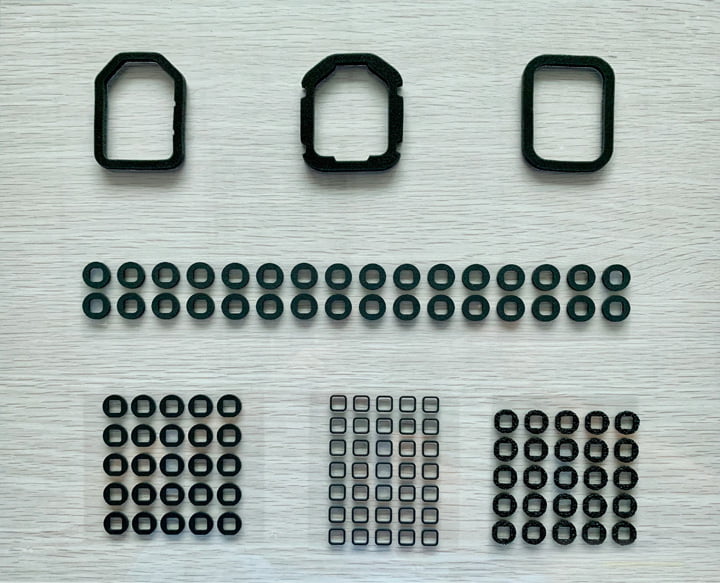
Die-cut components can be found throughout virtually every vehicle.
Interior Applications
- Door panels
- Instrument panels
- Headliners
- Sunroof systems
- Center consoles
Exterior Applications
- Fender liners
- Underbody shields
- Weather sealing systems
Powertrain Applications
- Engine compartment insulation
- Dust covers
- Thermal barriers
Electric Vehicle Applications
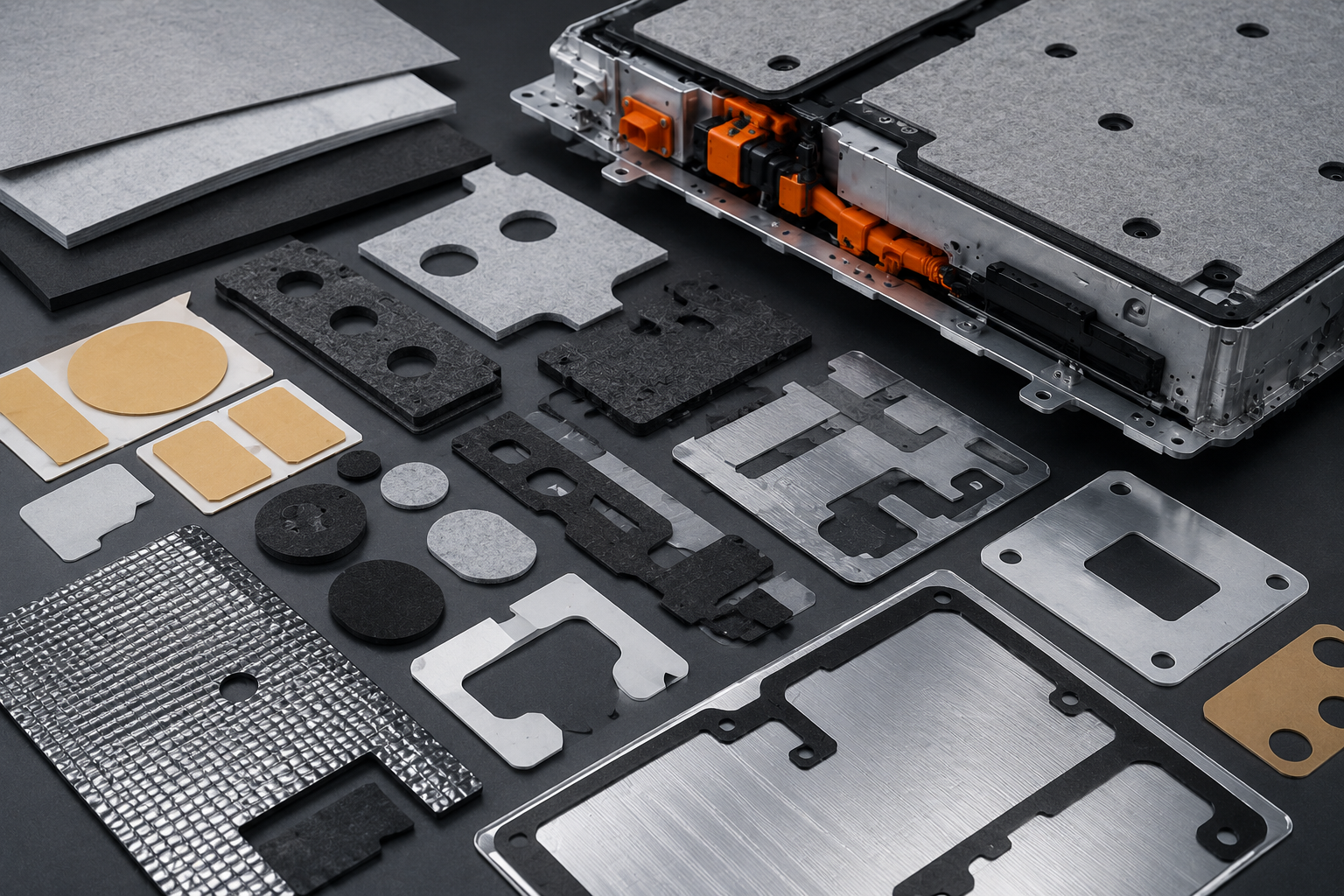
- Battery pack insulation
- Thermal interface materials
- Electrical isolation components
As vehicle technology evolves, the number of die-cut components continues to increase.
Why Custom Die Cuts Outperform Standard Components
Every vehicle platform has unique requirements.
Standard parts often create issues such as:
- Poor fit
- Assembly interference
- Excessive material waste
- Reduced performance
Custom die cuts solve these challenges by providing:
- Exact geometry
- Optimized material utilization
- Improved assembly efficiency
- Better long-term durability
For OEMs and Tier 1 suppliers, this often results in lower production costs and fewer quality-related issues.
How to Choose an Automotive Die Cutting Supplier
When evaluating an automotive die cutting supplier, OEM buyers and engineers should check:
- Can the supplier process foam, rubber, felt, adhesive tape, film and multi-layer materials?
- Can they support drawing-based or sample-based custom parts?
- Can they provide lamination, adhesive backing, kiss cutting and waste removal?
- Can they control thickness, tolerance, compression and adhesive performance?
- Can they support prototype validation before mass production?
- Can they provide inspection records, traceability and stable batch production?
Why Automotive Manufacturers Work With Sanken
At Sanken, we specialize in precision die cutting and material converting for automotive applications.
Our capabilities include:
- Precision die cutting
- Multi-layer lamination
- Foam converting
- Non-woven material processing
- Adhesive tape converting
- Thermal insulation solutions
- Automotive acoustic components
Rather than simply producing parts, we help customers optimize material selection, improve manufacturability, and reduce long-term production risks.
By combining engineering support with manufacturing expertise, we help OEMs and Tier 1 suppliers develop reliable die-cut solutions for modern vehicle platforms.
Conclusion
Automotive die cutting services are no longer just a manufacturing process. They have become a critical part of vehicle design, helping OEMs improve sealing, insulation, vibration control, and assembly efficiency.
As automotive systems become more advanced, custom die cuts provide the flexibility and performance required to meet modern engineering challenges.
For manufacturers seeking reliable automotive die-cut solutions, choosing an experienced converting partner can make the difference between a successful program and an expensive production problem.