
Can Custom Die-Cut Films Prevent Phone Screen Scratches?
Few things frustrate smartphone users more than discovering a scratch on a perfectly good screen.
Whether it's caused by keys in a pocket, dust particles trapped during installation, or daily wear and tear, screen scratches can reduce visual clarity, affect touch performance, and negatively impact the user experience.
As smartphone displays become larger, thinner, and more expensive, manufacturers are investing heavily in protective solutions.
One increasingly important solution is the use of custom die-cut protective films.
But can custom die-cut films truly prevent phone screen scratches?
The short answer is yes—when designed, converted, and applied correctly.
At Sanken, we help manufacturers convert precision optical films into customized protective components that safeguard sensitive display surfaces throughout manufacturing, transportation, and end-user operation.
Let's explore how custom die-cut films help protect modern smartphone screens.
What Causes Phone Screen Scratches?
Before discussing protection, it is important to understand the causes of screen damage.
Most scratches originate from:
- Dust particles
- Sand particles
- Metal objects
- Improper storage
- Poor installation practices
- Repeated surface friction
Many consumers assume coins and keys are the biggest threat.
In reality, microscopic particles such as quartz dust often cause the most damage because they can be harder than display glass surfaces.
This means even advanced display technologies require additional protection.
What Are Custom Die-Cut Films?
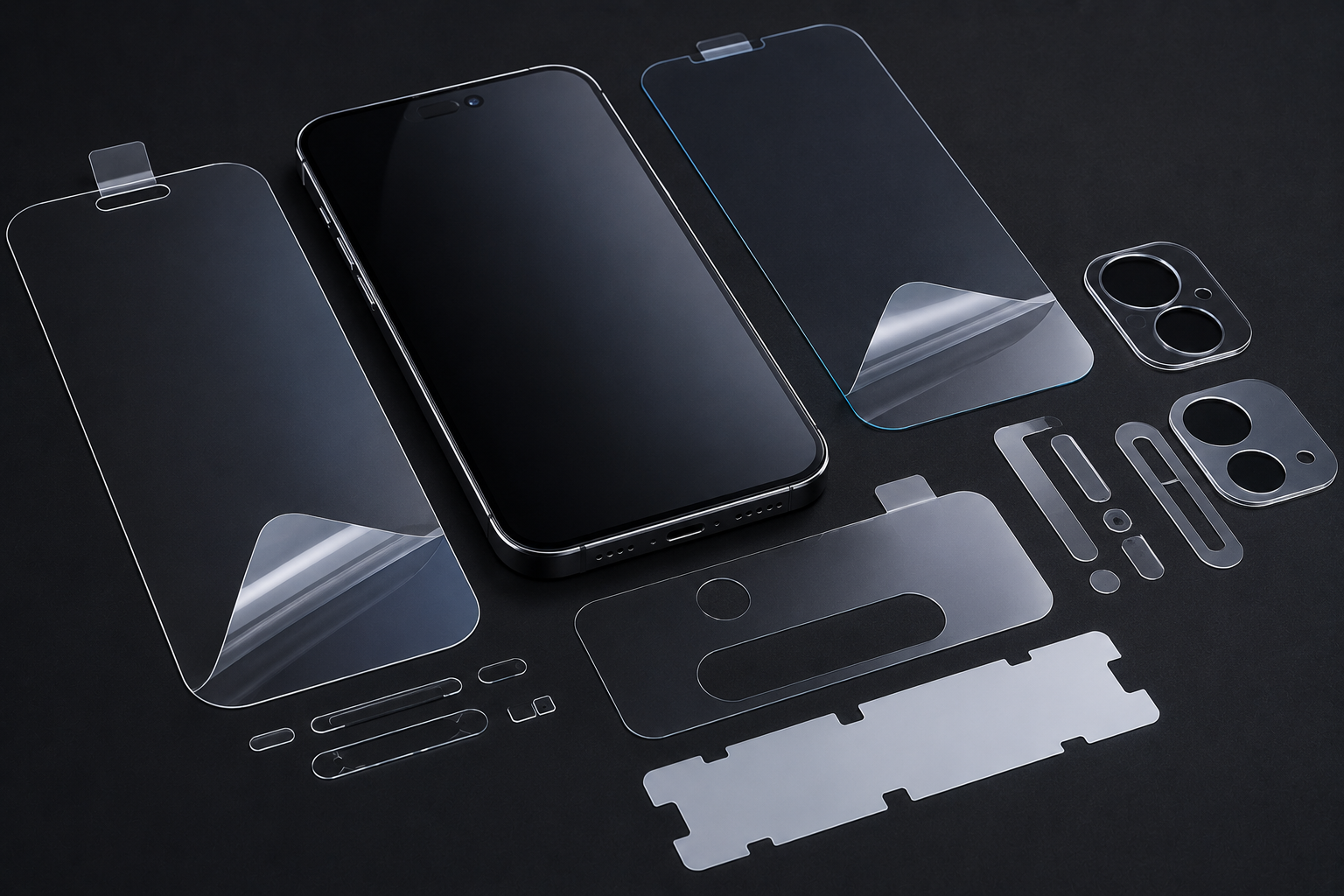
Custom die-cut films are precision-converted film materials manufactured to match the exact dimensions and geometry of a specific device.
Unlike generic screen protectors, custom die-cut films are designed around:
- Display shape
- Sensor locations
- Camera openings
- Speaker cutouts
- Curved edges
- Functional zones
Using precision die cutting, manufacturers can create highly accurate film components that fit seamlessly onto modern smartphone displays.
How Do Die-Cut Films Protect Screens?
The primary purpose of a protective film is simple:
Create a sacrificial layer between the display surface and external hazards.
When contact occurs, the film absorbs damage that would otherwise affect the screen itself.
Protection mechanisms include:
Surface Scratch Resistance
Protective films shield display glass from:
- Dust particles
- Fingernails
- Keys
- Daily abrasion
Impact Buffering
Some films help distribute minor impact forces across a larger surface area.
Contamination Protection
Films reduce exposure to:
- Fingerprints
- Oils
- Cosmetic residues
- Environmental contaminants
The result is longer-lasting display quality and improved user satisfaction.
Why Custom Die Cutting Matters
Not all protective films perform equally.
Even a high-quality material may fail if it does not fit correctly.
Poorly fitted films often create:
- Edge lifting
- Bubble formation
- Dust intrusion
- Reduced durability
Custom die-cut films solve these problems by providing:
- Accurate dimensions
- Precise alignment
- Consistent installation
- Better edge coverage
For premium smartphones, precision fit has become a critical requirement.
Types of Films Used for Screen Protection
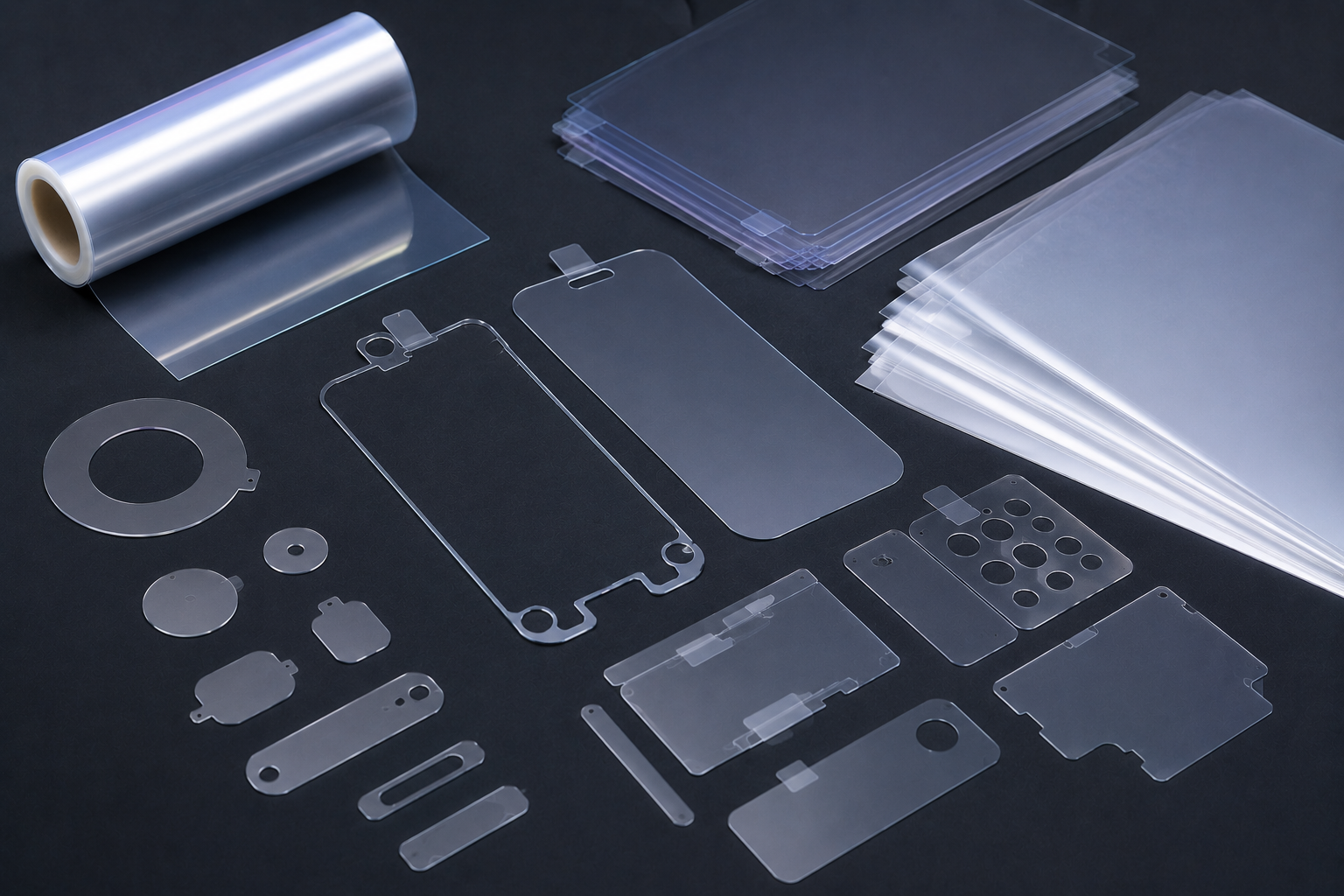
Several film technologies are commonly used in smartphone applications.
PET Films
Polyester films offer:
- Good optical clarity
- Cost-effective protection
- Stable dimensions
Commonly used for:
- Temporary protection
- Manufacturing protection
- Entry-level screen protection
TPU Films
Thermoplastic polyurethane films provide:
- Flexibility
- Self-healing properties
- Enhanced impact resistance
These films are particularly useful for curved displays.
Multi-Layer Optical Films
Advanced film structures may combine:
- Hard coating layers
- Optical layers
- Adhesive systems
- Release liners
This approach improves both durability and user experience.
Protection During Manufacturing Is Equally Important
Most people think about screen protection only after purchasing a phone.
However, many display scratches occur before the device ever reaches consumers.
Risks exist during:
- Display manufacturing
- Module assembly
- Device assembly
- Packaging
- Transportation
Temporary die-cut protective films help prevent:
- Surface damage
- Dust contamination
- Handling marks
- Assembly-related defects
For manufacturers, preventing scratches before shipment can significantly improve production yield.
The Role of Optical Quality
A protective film should not interfere with display performance.
High-quality die-cut films must maintain:
- Optical clarity
- Touch sensitivity
- Color accuracy
- Brightness performance
Poor-quality materials may introduce:
- Haze
- Rainbow effects
- Distortion
- Reduced screen responsiveness
This is why material selection is just as important as the die-cutting process itself.
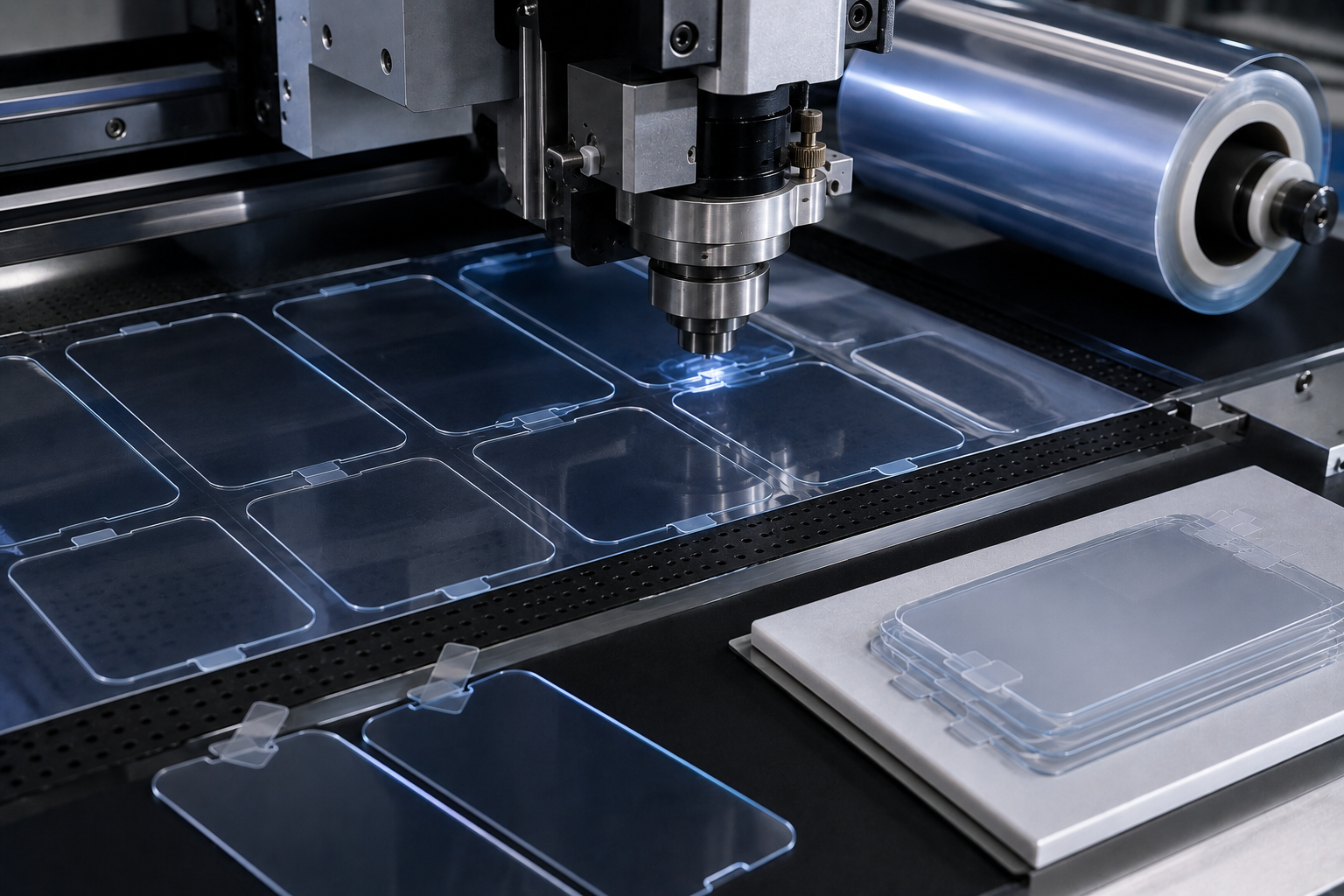
Why Precision Converting Matters
Protective films may appear simple.
In reality, converting optical materials requires significant expertise.
Challenges include:
- Tight dimensional tolerances
- Clean edge quality
- Dust-free processing
- Consistent adhesive application
Even minor converting defects can affect:
- Installation quality
- Product appearance
- Long-term durability
Precision die cutting helps ensure that each film performs exactly as intended.
Can Custom Die-Cut Films Replace Tempered Glass?
This depends on the application.
Protective films excel at:
- Scratch prevention
- Surface protection
- Fingerprint resistance
- Manufacturing protection
Tempered glass generally provides:
- Greater impact resistance
- Better drop protection
Many manufacturers and consumers use both solutions together.
A film protects against everyday scratches, while tempered glass helps resist more severe impacts.
Rather than competing, the two technologies often complement each other.
How Sanken Supports Optical Film Applications
At Sanken, we specialize in converting optical and protective film materials into precision die-cut components.
Our capabilities include:
- Optical film die cutting
- Multi-layer lamination
- Protective film converting
- Precision kiss cutting
- Clean processing environments
- Custom packaging solutions
We help customers develop film components for:
- Smartphones
- Tablets
- Automotive displays
- Consumer electronics
- Optical modules
By combining material expertise with precision converting technology, we help manufacturers reduce defects and improve product reliability.
Conclusion
Custom die-cut films are one of the most effective ways to prevent phone screen scratches.
By providing a precisely fitted protective barrier, they help protect displays from abrasion, contamination, and handling damage throughout both manufacturing and everyday use.
When combined with high-quality optical materials and precision converting processes, custom die-cut films deliver reliable protection without compromising display performance.
At Sanken, we help manufacturers transform advanced optical materials into precision die-cut protection solutions that keep modern displays looking and performing their best.