
No. Duct tape should not be used in place of electrical tape when an application requires electrical insulation.
Duct tape is designed mainly for temporary mechanical repairs, bundling and general sealing. Electrical tape is manufactured and evaluated for specific electrical uses, but even electrical tape must have the correct voltage, temperature, flame and environmental ratings for the application.
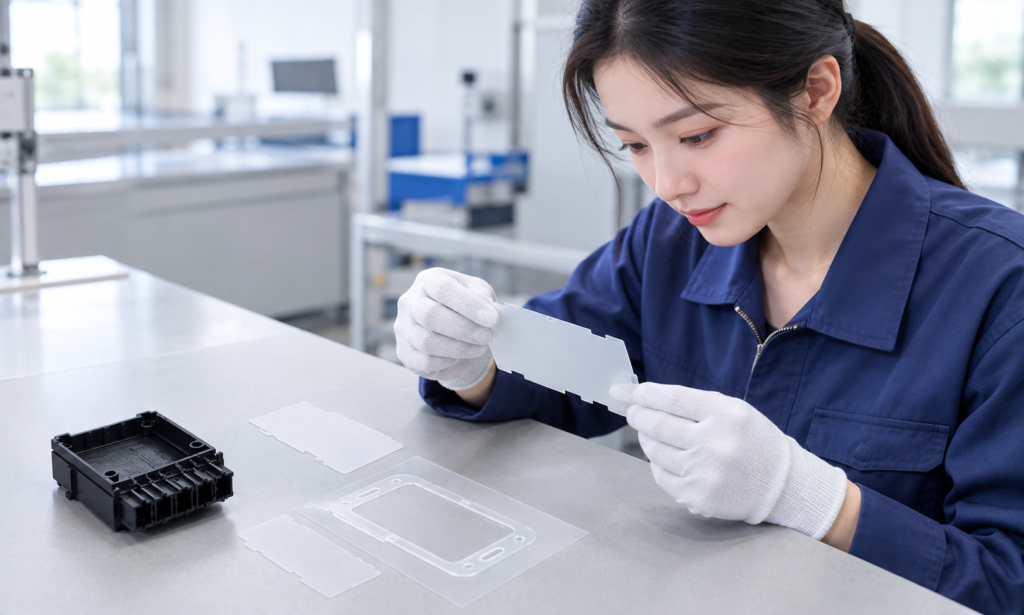
For equipment manufacturers, the question extends beyond choosing one roll of tape. Insulation may require customer-specified electrical tape, die-cut PET film or an adhesive-backed insulation component produced through precision die cutting.
The material, geometry, adhesive, thickness and insulation coverage must be evaluated as part of the complete assembly.
Why Duct Tape and Electrical Tape Are Not Interchangeable
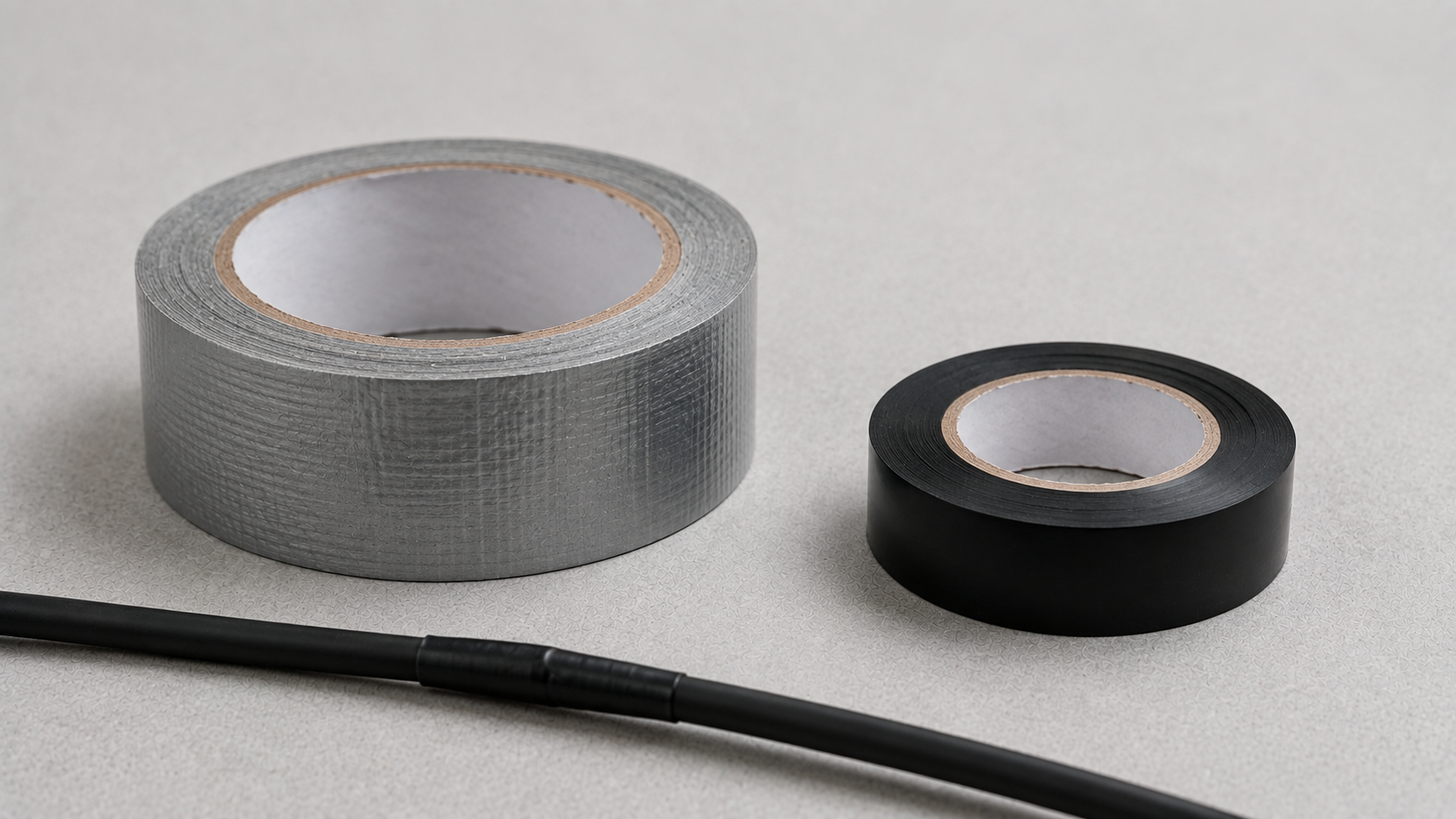
Both products use pressure-sensitive adhesive, but their intended functions and constructions are different.
Duct tape commonly contains:
- A polyethylene-coated surface
- Cloth or scrim reinforcement
- A pressure-sensitive adhesive
Its construction provides mechanical strength for temporary repairs, bundling and general maintenance. That does not mean it has been evaluated as electrical insulation.
Vinyl electrical tape commonly uses a flexible PVC backing with an adhesive formulated for wrapping wires, cables and electrical connections. Depending on the exact product, it may be rated for defined voltage, temperature, flame, moisture and environmental conditions.
The important distinction is not simply appearance. It is whether the exact product has been evaluated and marked for the intended electrical use.
| Comparison | Electrical tape | Duct tape |
|---|---|---|
| Primary purpose | Electrical insulation, protection or identification, depending on its rating | General repair, bundling and mechanical holding |
| Backing | Commonly flexible vinyl or another electrical-grade construction | Commonly cloth-reinforced polyethylene |
| Electrical rating | Available on appropriately evaluated products | Not normally intended as primary electrical insulation |
| Conformability | Designed to wrap around wires and irregular profiles | Thicker and less suitable for controlled wire wrapping |
| Temperature performance | Defined by the exact tape specification | General-purpose performance varies |
| Flame performance | Some products carry applicable flame and certification markings | Should not be assumed to meet electrical requirements |
| OEM use | Wiring, cable and component applications within product limitations | Non-electrical maintenance or temporary mechanical use |
A strong adhesive does not make duct tape electrically suitable. Bonding strength and electrical insulation performance are different properties.
Not Every Electrical Tape Has the Same Rating
The term “electrical tape” covers multiple product grades. A low-cost general-purpose vinyl tape and a premium listed insulating tape may have different:
- Voltage ratings
- Operating-temperature ranges
- Flame performance
- Backing thickness
- Elongation
- Adhesion
- Weathering resistance
- Certification status
- Intended applications
The product data and markings should be checked before use. For example, 3M’s vinyl electrical tape range includes products with different operating conditions and certification information.
Do not assume that any black vinyl tape is suitable simply because it is sold as electrical tape.
For manufacturing applications, the engineering drawing, bill of materials and applicable safety requirements should specify the exact approved tape or material standard.
Can Electrical Tape Repair a Damaged Cord?
Electrical tape should not automatically be treated as a method for restoring a damaged power cord.
If damage is limited to a superficial mark on the outer jacket, the appropriate action depends on the equipment, workplace requirements and inspection result. If the jacket is deeply penetrated, the cord bends abnormally at the damaged area, or internal insulation or conductors are affected, tape alone generally cannot restore the cord’s original strength, flexibility and approved construction.
OSHA has explained that significant cord damage may require proper repair or replacement rather than simply covering the damaged area with electrical tape.
Therefore:
- Disconnect power before inspection.
- Do not touch exposed conductors.
- Do not cover damage before its depth is assessed.
- Follow the equipment manufacturer’s instructions.
- Use a qualified person for electrical repair.
- Replace or properly repair significantly damaged cords as required.
Duct tape should not be described as an acceptable emergency electrical-insulation repair. That wording can encourage unsafe use.
When Can Duct Tape Still Be Used?
Duct tape may be useful for non-electrical mechanical tasks, such as:
- Temporary bundling of non-energized items
- Holding protective packaging
- General maintenance away from exposed electrical conductors
- Temporary identification or positioning where permitted
- Sealing non-critical packaging
It should not be relied on as the primary insulation for live conductors, splices, terminals or damaged power cables.
Even cable bundling requires care. Covering a cable can hide damage, trap heat or make later inspection more difficult. The intended use and environment should be reviewed before applying any tape.
Electrical Insulation in Manufactured Products
Industrial electronic assemblies often require more controlled insulation than manually wrapped tape can provide.
Custom insulation components may be used to:
- Separate conductive areas
- Cover defined contact zones
- Prevent accidental contact
- Protect surfaces from abrasion
- Maintain controlled insulation coverage
- Support repeatable assembly positioning
- Fit around holes, slots, connectors and housing features
Depending on the design, manufacturers may use:
- Customer-specified electrical tape
- PET insulation film
- Adhesive-backed PET film
- Insulation pads
- Protective films
- Multilayer film-and-adhesive structures
PET film is not a direct substitute for electrical tape in every application. It is a different material form that can provide thin, dimensionally stable insulation coverage when specified and validated for the assembly.
For more information, see Custom Die-Cut PET Insulation Films for Electronics Assembly.
Why Die-Cut Insulation Parts May Be Better for Repeated Assembly
Wrapping electrical tape by hand can introduce variation in overlap, position, pressure and final thickness.
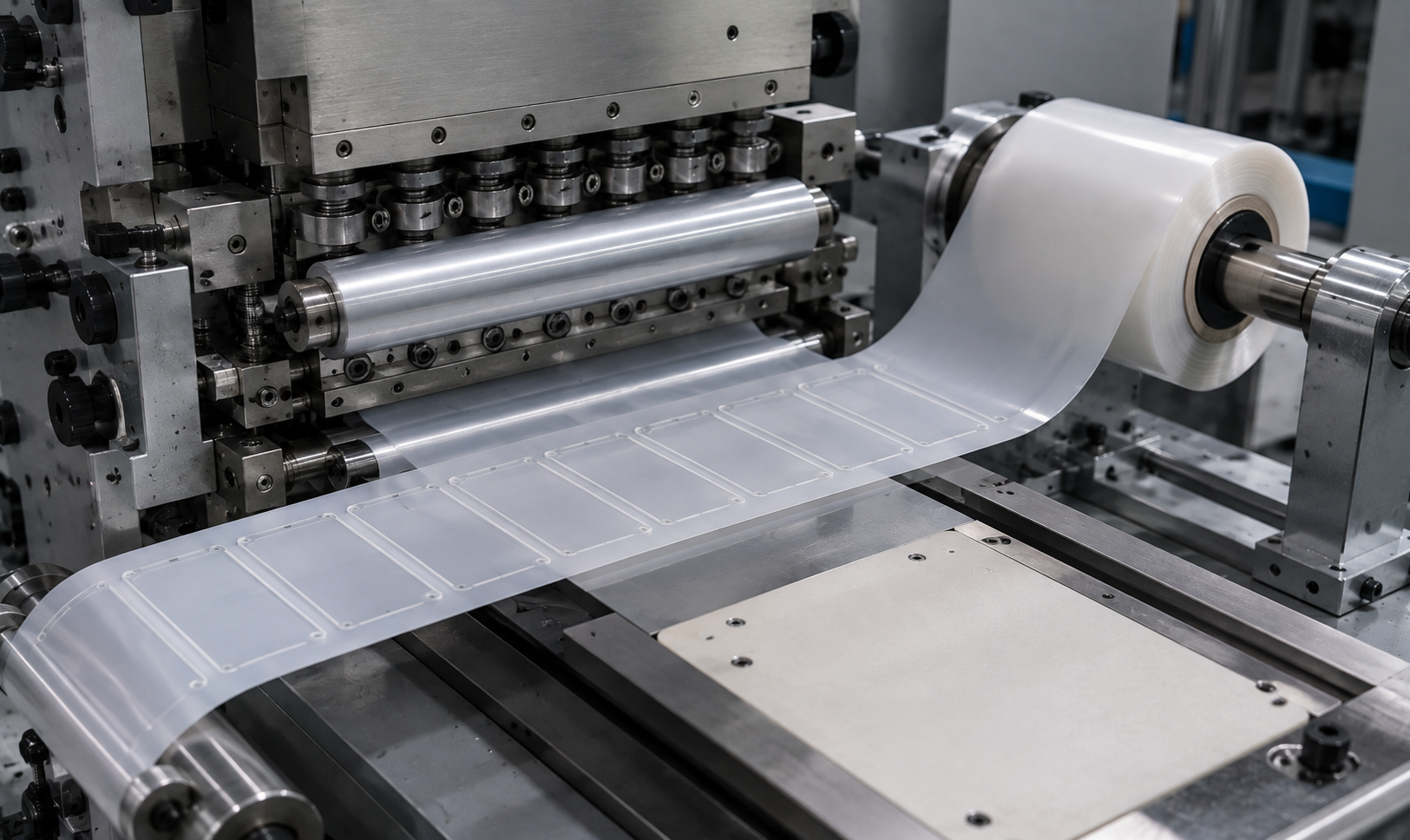
A custom die-cut insulation part can be designed around a defined area and supplied in a controlled shape. Depending on the application, this may support:
- More consistent coverage
- Repeatable positioning
- Controlled holes and clearances
- Lower assembly variation
- Easier liner peeling
- Reduced manual trimming
- Sheet or roll presentation
- Compatibility with assembly fixtures
However, die cutting does not create electrical performance that the raw material does not already possess.
The customer must specify or approve a material suitable for the electrical, thermal and environmental requirements. Sanken’s role is to convert that customer-specified material into the required geometry and delivery format.
What Must Be Confirmed for a Die-Cut Insulation Part?
Before converting PET film or electrical insulation tape, review:
| Requirement | Why it matters |
|---|---|
| Insulation area | Determines the required coverage and clearances |
| Material specification | Confirms the approved film or tape construction |
| Thickness | Affects insulation, flexibility and assembly stack height |
| Voltage requirement | Must be addressed by the approved material and system design |
| Operating temperature | Affects film, adhesive and long-term stability |
| Adhesive type | Must match the bonding surface and environment |
| Part geometry | Controls holes, slots, edge distance and positioning |
| Tolerance | Determines whether the part covers the required area consistently |
| Release liner | Affects peeling and placement |
| Application method | Determines sheet, roll or individual-piece presentation |
| Environmental exposure | May include heat, humidity, chemicals or abrasion |
| Applicable standards | Must be defined by the customer or product requirement |
UL notes that insulating tapes can be tested and certified against applicable electrical-code and safety requirements. This reinforces why a generic adhesive tape should not be substituted for a specified insulation material based only on appearance or stickiness. See UL Solutions’ insulating tape certification information.
Adhesive and Liner Selection Also Matter
When insulation film is supplied with adhesive backing, the complete structure may include:
- PET insulation film
- Pressure-sensitive adhesive
- Release liner
The adhesive must bond to the actual housing, coating or component surface. A material that adheres well to clean metal may behave differently on textured plastic or a surface containing mould-release residue.
The release liner must also support the part during storage and assembly. Excessive release force can stretch or curl a thin insulation film. Very low release force may allow parts to lift prematurely.
Kiss-cutting depth is equally important. The tool should cut the insulation and adhesive structure while leaving the supporting liner usable.
A shallow cut may prevent clean peeling. An excessive cut may weaken the liner and cause tearing. These differences are explained in Die Cut vs Kiss Cut: What Buyers Should Know for Adhesive Parts and Protective Films.
Common Problems in Die-Cut Insulation Components
| Problem | Possible cause | What to review |
|---|---|---|
| Incomplete insulation coverage | Incorrect shape, tolerance or placement | Drawing, datum and assembly method |
| Part shifting | Adhesive mismatch or insufficient pressure | Surface, adhesive and application process |
| Edge lifting | Contamination, sharp corners or continuous stress | Cleaning, geometry and bonding conditions |
| Film curling | Lamination tension or liner mismatch | Material handling and release structure |
| Difficult peeling | Excessive liner release or incorrect cutting depth | Liner and kiss-cut control |
| Liner tearing | Tool penetrates too deeply | Cutting depth and liner strength |
| Adhesive overflow | Soft adhesive or excessive converting pressure | Adhesive construction and process settings |
| Insulation failure | Material or system not suitable for the requirement | Approved specification and application validation |
Electrical insulation should be evaluated as a system. Material thickness alone does not confirm performance, and a clean-looking part is not necessarily electrically suitable.
How Sanken Supports Customer-Specified Insulation Materials
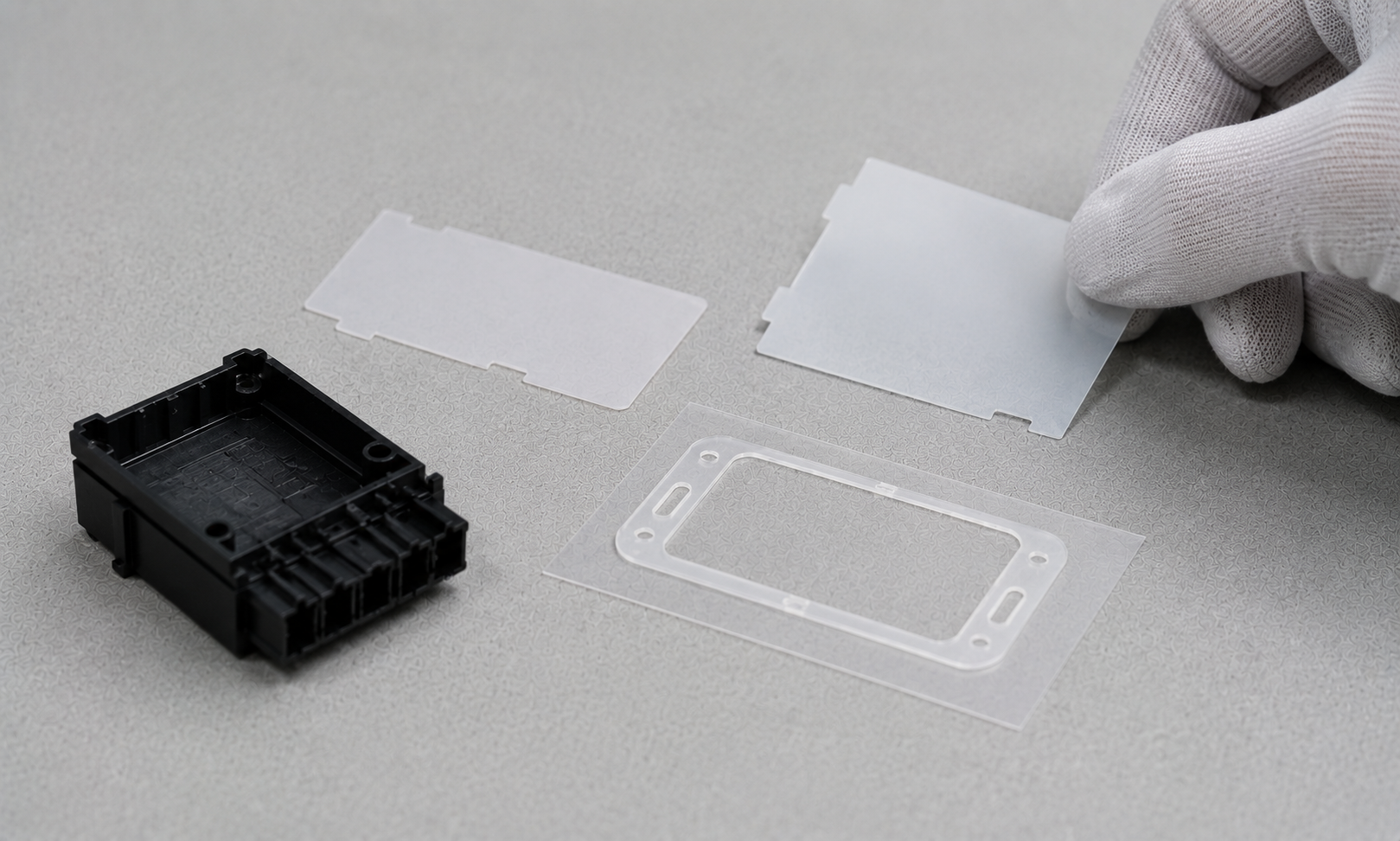
Sanken converts customer-specified PET insulation films, adhesive-backed PET films and industrial tape materials into custom components for electronic and electrical assemblies.
Our relevant processing support includes:
- Material lamination
- Precision die cutting
- Kiss cutting
- Hole and slot cutting
- Release-liner configuration
- Waste-matrix removal
- Prototype sampling
- Dimensional inspection
- Sheet and roll presentation
We review the drawing, material structure, adhesive, liner, geometry and assembly format before production.
Sanken does not determine electrical safety from the appearance of a material. The customer should provide the approved material specification, applicable ratings and validation requirements for the finished assembly.
Conclusion
Duct tape should not be used as a substitute for electrical tape when electrical insulation is required.
Duct tape is intended mainly for general mechanical repairs and bundling. Appropriately rated electrical tape is designed for defined electrical uses, but its voltage, temperature, flame and certification information must still match the application.
Electrical tape should also not be assumed to restore every damaged cord. Significant damage may require proper repair or replacement rather than being covered with tape.
For manufactured electronic assemblies, customer-specified electrical tape or custom die-cut PET insulation film may provide controlled, repeatable insulation coverage. Final approval should be based on the complete insulation system, applicable requirements and representative product testing.