
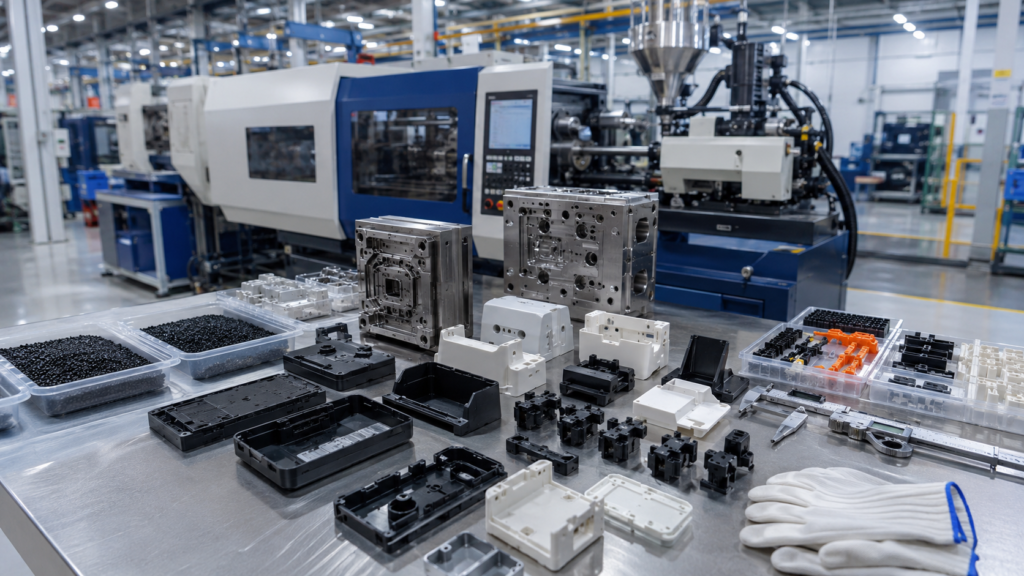
Custom injection molding services help OEM manufacturers turn plastic part designs into stable, repeatable, and production-ready components. From early prototype review to mold development, trial samples, quality inspection, and mass production, injection molding is widely used for automotive electronics, consumer electronics, medical devices, appliances, EV battery-related parts, and industrial equipment.
For OEM engineers and purchasing teams, a custom plastic part is rarely used alone. It often needs to work with foam gaskets, adhesive tape components, PET insulation films, rubber pads, protective films, sealing strips, non-woven felt parts, and other die cut auxiliary materials. If these related parts are not considered early, the final assembly may face poor fit, sealing failure, adhesive lifting, warpage, or repeated sampling.
At Sanken, we support OEM customers with custom injection molded plastic parts, precision die cut foam gaskets, adhesive tape parts, PET and PI insulation films, rubber pads, protective films, non-woven felt components, sealing parts, and multilayer material converting for automotive, electronics, battery, appliance, medical device, and industrial applications.
What Are Custom Injection Molding Services?
Custom injection molding services include the full process of designing, tooling, producing, inspecting, and delivering plastic parts based on customer drawings, 3D models, samples, or application requirements.
The process usually includes:
- Product design review
- Material selection
- Mold design
- Tooling development
- Trial molding
- Sample inspection
- Assembly fit testing
- Mold modification if needed
- Mass production
- Final inspection
- Packaging and delivery
The goal is not only to make a plastic shape. The goal is to manufacture a functional part that fits the final product, supports assembly, and remains stable in repeated production.
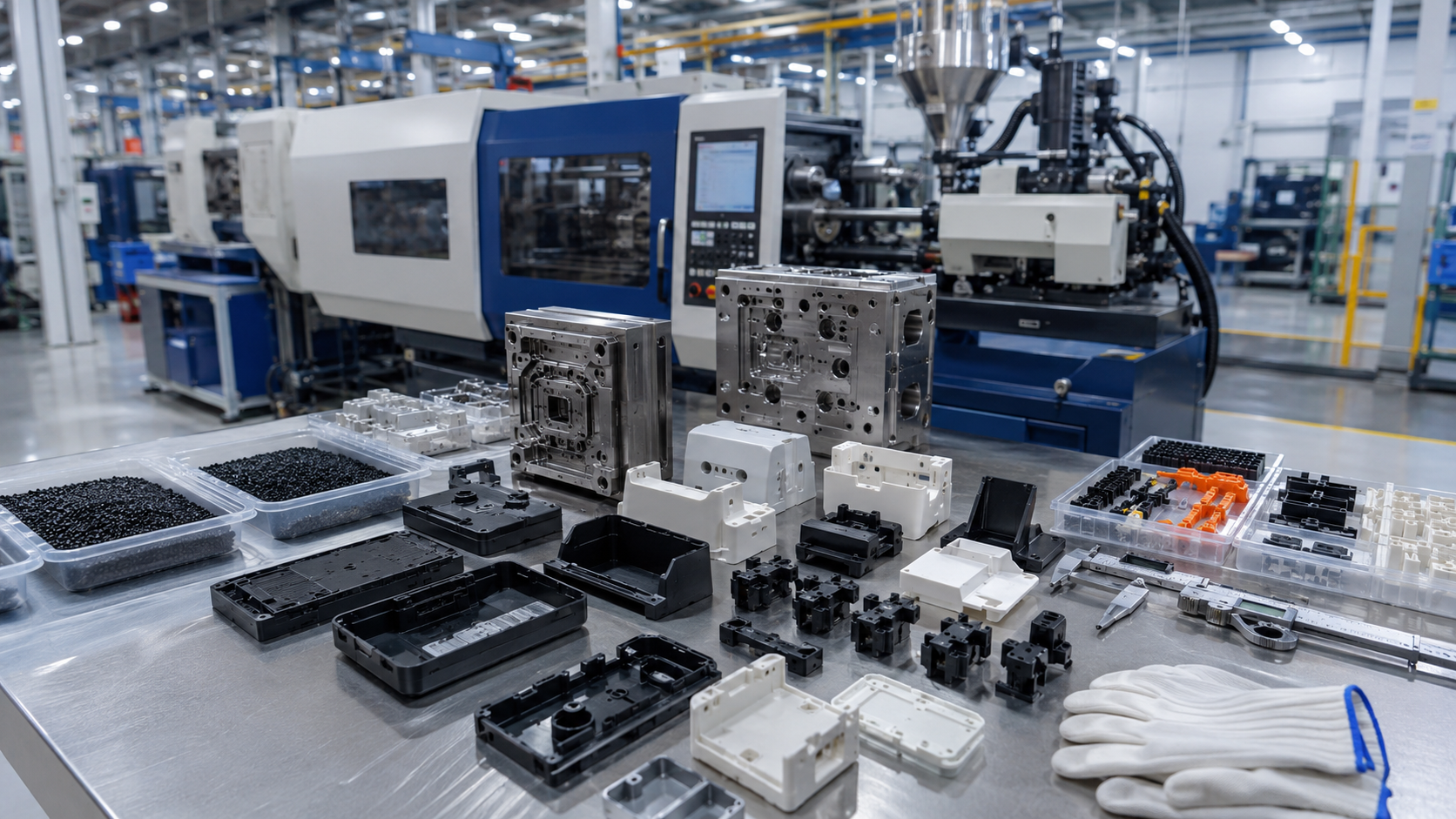
Common OEM Plastic Parts Made by Injection Molding
Injection molding is suitable for many custom plastic parts used in OEM manufacturing.
Common parts include:
| Plastic Part Type | Typical Application |
|---|---|
| Plastic housings | Electronics, automotive modules, sensors, appliances |
| Covers and shells | Medical devices, consumer electronics, industrial products |
| Brackets and clips | Assembly support, fastening, positioning |
| Frames and panels | Displays, appliances, control modules |
| Connectors and supports | Electronics and industrial assemblies |
| Battery-related plastic parts | Covers, holders, protection structures |
| Custom enclosures | Automotive, industrial, medical, and electronic devices |
These molded parts may need related custom components, such as foam sealing gaskets, PET insulation films, adhesive tape pads, rubber damping parts, or protective films.
From Prototype to Mass Production
A strong OEM injection molding project should move through clear development stages.
1. Prototype and Design Review
Before opening a mold, the supplier should review the design carefully. 3D printed prototypes, CNC samples, or soft tooling samples may be used to check product shape and assembly space.
Important review points include:
- Wall thickness
- Rib structure
- Screw posts
- Clips and snap-fit areas
- Draft angle
- Hole position
- Surface finish
- Shrinkage risk
- Gasket groove design
- Adhesive bonding area
- Assembly clearance
This stage helps prevent expensive mold changes later.
For example, if a molded plastic housing will use a foam gasket, the groove depth and compression gap should be reviewed before tooling. If a PET insulation film must align with screw posts, the post location and film tolerance should be considered together.
2. Plastic Material Selection
Material selection affects strength, surface quality, dimensional stability, heat resistance, chemical resistance, shrinkage, and assembly performance.
Common injection molding materials include ABS, PC, PP, PA, POM, PE, TPE, TPU, and other engineering plastics.
| Material | General Feature | Common Use |
|---|---|---|
| ABS | Good toughness and appearance | Housings, covers, appliance parts |
| PC | High impact resistance | Electronics, protective covers, structural parts |
| PP | Lightweight and chemical resistant | Clips, automotive parts, containers |
| PA / Nylon | Strong and wear resistant | Brackets, connectors, mechanical parts |
| POM | Low friction and stable | Precision moving parts |
| TPE / TPU | Flexible and soft-touch | Seals, grips, flexible components |
The right material should be selected based on the final product environment, not only cost. A plastic housing used in automotive electronics may require heat resistance and dimensional stability. A visible appliance panel may require smooth appearance. A part bonded with adhesive tape may need surface compatibility testing.
3. Mold Design and Tooling Development
The mold determines the final part shape, quality, cycle time, and production stability.
Mold design should consider:
- Gate location
- Runner design
- Cooling channels
- Venting
- Ejection system
- Shrinkage compensation
- Parting line position
- Surface texture
- Tool steel selection
- Cavity layout
Poor mold design can cause warpage, sink marks, flash, short shots, weld lines, poor appearance, and unstable dimensions.
Tooling cost may seem high at the beginning, but good tooling helps reduce rejection, rework, and long-term production risk.
4. Trial Molding and Sample Approval
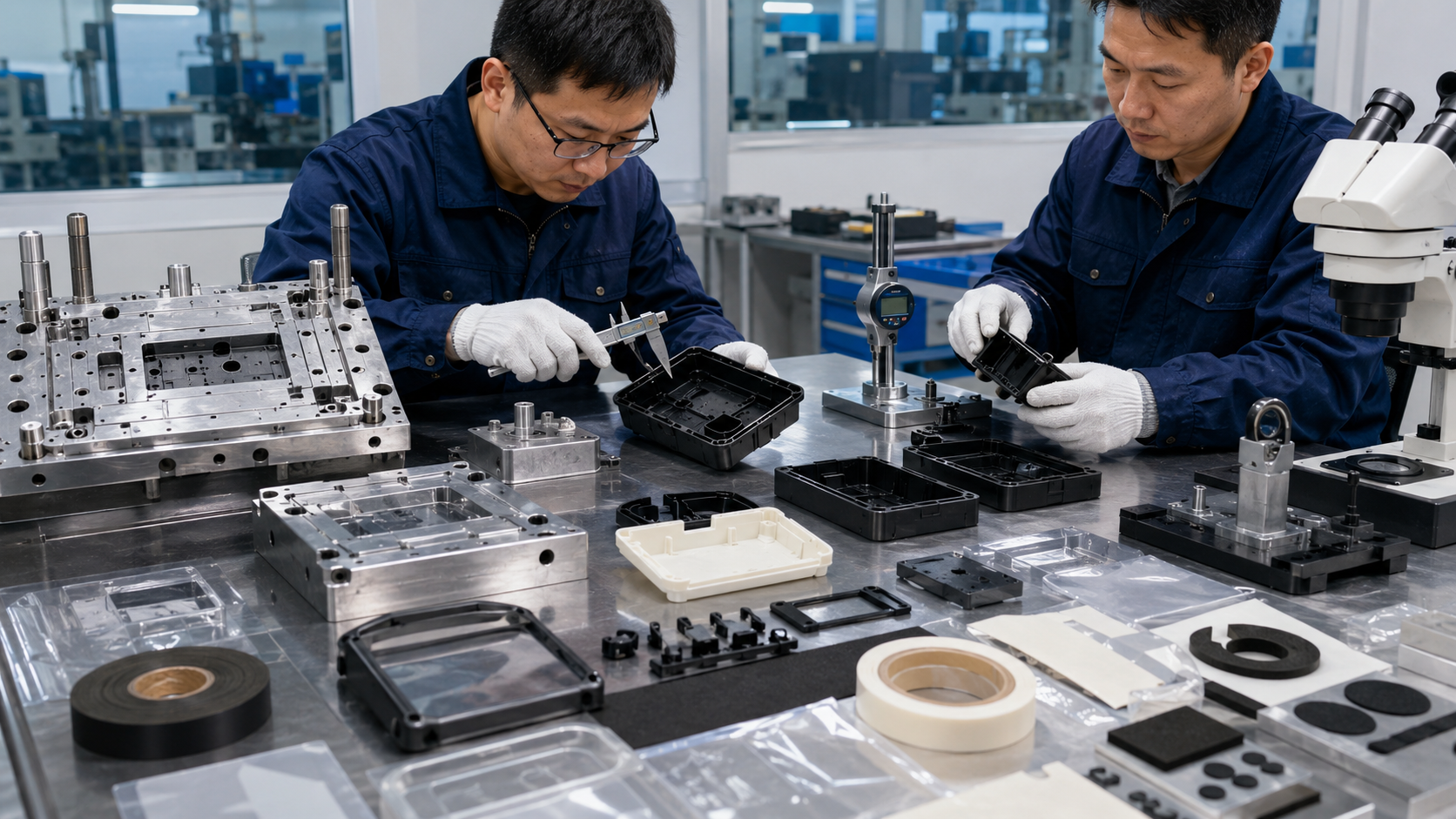
After the mold is completed, trial molding is used to produce the first samples. These samples should be checked before mass production.
Sample approval should include:
- Dimensional inspection
- Surface appearance review
- Warpage check
- Flash and burr check
- Clip or snap-fit test
- Screw hole alignment
- Assembly fit testing
- Gasket groove confirmation
- Adhesive bonding surface review
- Packaging trial
A sample should not only look good on the table. It should be tested with the real product or assembly fixture whenever possible.
At Sanken, injection molded parts can be reviewed together with related die cut components, such as foam gaskets, PET films, adhesive tapes, rubber pads, and protective films. This helps reduce final assembly mismatch.
5. Mass Production Control
Once the sample is approved, the project enters mass production. At this stage, consistency becomes more important than making one perfect sample.
Important process controls include:
- Resin drying condition
- Melt temperature
- Mold temperature
- Injection pressure
- Injection speed
- Holding pressure
- Cooling time
- Ejection timing
- Cycle time
- In-process inspection
Stable process control helps reduce batch variation and quality problems.
Quality Control for OEM Injection Molded Parts
Quality control should cover material, tooling, molding process, dimensions, appearance, assembly fit, and packaging.
Common inspection items include:
| Inspection Item | Why It Matters |
|---|---|
| Outer dimensions | Controls product fit |
| Hole position | Prevents assembly mismatch |
| Wall thickness | Reduces shrinkage and warpage risk |
| Surface appearance | Supports visible product quality |
| Flash and burrs | Prevents assembly interference |
| Warpage | Protects housing fit and sealing |
| Clip strength | Ensures reliable locking |
| Gasket groove size | Supports foam gasket compression |
| Adhesive bonding area | Prevents tape lifting |
| Packaging condition | Prevents scratches and deformation |
For OEM parts, inspection should focus on critical-to-quality areas. These are the dimensions and surfaces that directly affect function, sealing, bonding, or assembly.
Common Injection Molding Problems
Injection molded plastic parts may fail when design, tooling, material, or process control is weak.
Common problems include:
- Warpage
- Sink marks
- Flash
- Short shots
- Weld lines
- Flow marks
- Burn marks
- Color variation
- Surface scratches
- Poor hole alignment
- Weak clips
- Poor fit with related parts
Many problems can be prevented through early design review, suitable material selection, proper mold design, stable molding parameters, and real assembly testing.
Why Die Cut Components Should Be Considered Early
Many OEM plastic parts require flexible die cut components to complete the final product.
Examples include:
| Injection Molded Part | Related Die Cut Component | Function |
|---|---|---|
| Automotive electronic housing | Foam gasket | Dust sealing and vibration reduction |
| Battery cover | PET or PI insulation film | Electrical insulation |
| Display frame | Double-sided tape | Bonding and positioning |
| Sensor housing | Light-blocking film | Optical shielding |
| Appliance panel | Rubber pad | Cushioning and damping |
| Medical device shell | Protective film | Surface protection |
| Interior plastic trim | Non-woven felt strip | Anti-rattle control |
If these parts are developed separately, problems may appear during final assembly. A foam gasket may not match the groove. A PET film may not align with posts. Adhesive tape may not bond to the plastic surface. A rubber pad may create too much compression force.
A supplier with both molding and die cutting experience can review the complete assembly earlier.
Cost Factors in Custom Injection Molding
The cost of custom injection molding depends on many factors.
| Cost Factor | Impact |
|---|---|
| Plastic material | Engineering plastics usually cost more |
| Part size and weight | Larger parts use more material |
| Mold complexity | Complex tooling increases mold cost |
| Number of cavities | Affects production efficiency |
| Tolerance requirement | Tight tolerance needs stronger control |
| Surface finish | Cosmetic parts require better tooling and handling |
| Production quantity | Higher volume usually lowers unit cost |
| Secondary operations | Assembly, inserts, printing, or packaging add cost |
| Quality requirements | More inspection increases quality cost |
For OEM buyers, the best cost decision is not always the lowest quotation. A slightly higher tooling or process cost may reduce rework, assembly delay, and long-term quality problems.
How Sanken Supports Custom Injection Molding Projects
Sanken Manufacturing Co., Ltd. supports OEM customers from prototype review to mass production with custom injection molding and related die cut component support.
Our services include:
- Custom injection molded plastic parts
- Plastic housings, covers, clips, brackets, and enclosures
- Mold feasibility review
- Material selection support
- Prototype and sample review
- Precision die cut foam gaskets
- Adhesive tape components
- PET and PI insulation films
- Rubber pads and sealing parts
- Protective films
- Non-woven felt parts
- Multilayer material converting
- Assembly-ready packaging
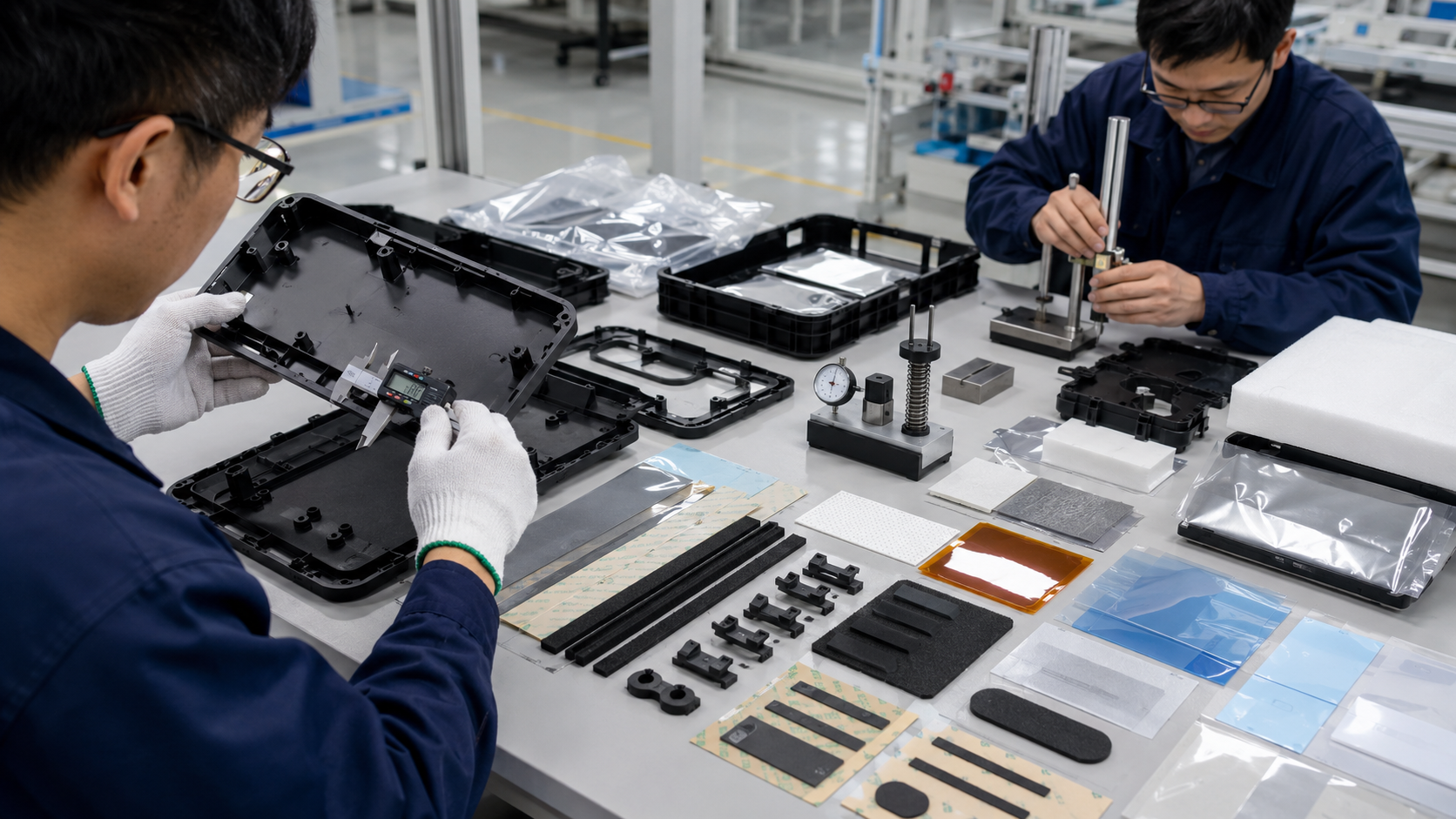
For each project, we review plastic material, mold feasibility, part tolerance, surface quality, foam gasket fit, adhesive bonding surface, PET film alignment, rubber compression, protective film coverage, packaging, and final assembly method.
Our goal is to help customers reduce repeated samples, mold changes, poor fit, adhesive lifting, gasket mismatch, film misalignment, inspection failure, and unstable mass production.
What Buyers Should Provide Before Starting a Project
To make the project smoother, buyers should provide:
- 2D drawing
- 3D model
- Material requirement
- Surface finish requirement
- Color requirement
- Critical dimensions
- Assembly location
- Related components
- Gasket or adhesive tape requirement
- PET film or insulation requirement
- Rubber pad contact area
- Testing requirement
- Packaging preference
- Estimated production quantity
Complete information helps the supplier make better recommendations and reduce development risk.
FAQ
What are custom injection molding services?
Custom injection molding services include design review, material selection, mold development, trial molding, sample approval, mass production, inspection, and packaging for custom plastic parts.
What OEM plastic parts can be made by injection molding?
Common parts include plastic housings, covers, brackets, clips, enclosures, frames, panels, connectors, appliance components, automotive electronic shells, and industrial plastic parts.
How does injection molding move from prototype to mass production?
The process usually starts with design review and prototype checking, then mold development, trial molding, sample approval, process control, mass production, inspection, and packaging.
Why should molded plastic parts be reviewed with die cut components?
Molded parts often work with foam gaskets, adhesive tapes, PET films, rubber pads, protective films, and felt strips. Reviewing them together helps prevent assembly mismatch.
What affects injection molding cost?
Cost is affected by material, part size, mold complexity, number of cavities, tolerance, surface finish, production quantity, secondary operations, inspection level, and packaging.
Can Sanken support custom injection molding and die cutting together?
Yes. Sanken supports custom injection molded plastic parts together with precision die cut foam gaskets, adhesive tape parts, PET and PI films, protective films, rubber pads, non-woven felt parts, and multilayer components.
Conclusion
Custom injection molding services help OEM manufacturers turn plastic part designs into stable, repeatable, and production-ready components. A successful project requires more than a mold. It requires design review, material selection, tooling control, trial molding, inspection, packaging, and final assembly validation.
For many OEM products, injection molded parts must also work with die cut foam, rubber, film, tape, felt, and protective components. Reviewing these parts together helps reduce poor fit, sealing failure, adhesive problems, repeated samples, and mass production risk.
At Sanken, we support OEM customers from prototype to mass production with custom injection molded plastic parts and related die cut components that are accurate, clean, assembly-ready, and reliable.