
Die Cutting & Molding Presses for Automotive: Why Modern Vehicles Depend on Precision Manufacturing More Than Ever
A few years ago, an automotive customer came to us with a frustrating problem.
Their vehicle platform looked perfect during development.
But once mass production started, assembly instability appeared everywhere:
- Foam seals shifted during installation
- Interior gaps became inconsistent
- Acoustic performance fluctuated between batches
- Compression parts failed after thermal cycling
At first glance, these looked like simple component issues.
But the real problem was much deeper: the customer’s die cutting and molding press systems were not optimized for modern automotive manufacturing complexity.
Today’s vehicles are no longer simple mechanical products. They are highly integrated systems combining electronics, lightweight materials, acoustic engineering, thermal management, and structural precision. That evolution dramatically increased the importance of advanced die cutting and molding press technologies.
Automotive die cutting and molding presses are essential manufacturing systems used to produce precision foam parts, acoustic insulation materials, thermal barriers, sealing components, adhesive assemblies, interior structures, and lightweight functional materials for modern vehicles. These systems directly affect vehicle quality, assembly consistency, NVH performance, durability, and large-scale production stability.
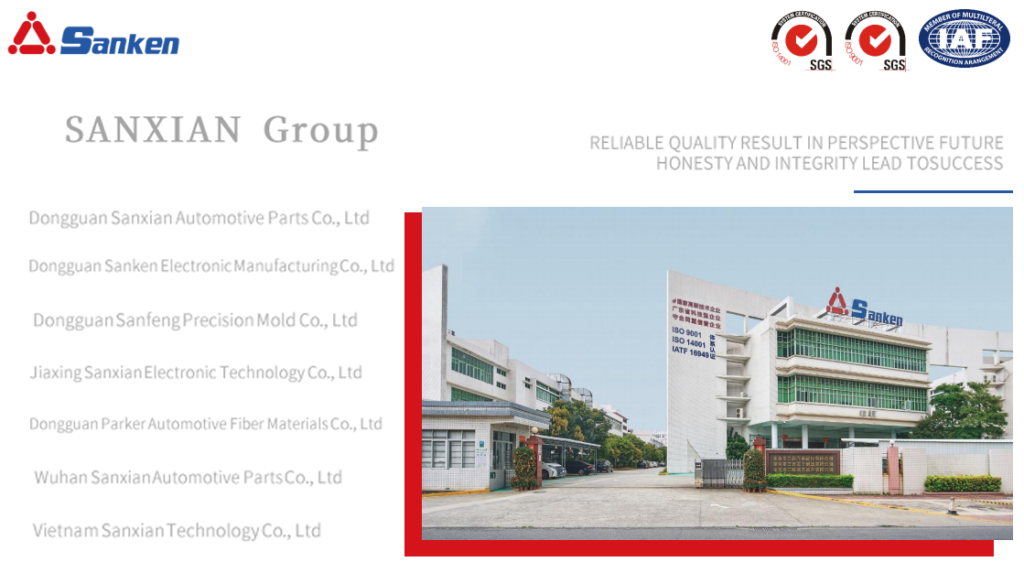
At Sanken, we help automotive OEM customers solve these challenges through precision die cutting, advanced material converting, hot pressing, laminating, and integrated manufacturing solutions designed for scalable automotive production environments.
Why Automotive Manufacturing Became So Much More Difficult
Modern vehicles contain significantly more functional materials than older generations.
Especially in:
- Electric vehicles
- Smart cockpit systems
- Lightweight platforms
- Advanced driver assistance systems
Automotive engineers now face enormous pressure to improve:
- Cabin quietness
- Thermal efficiency
- Structural weight reduction
- Passenger comfort
- Electronic integration
Every one of those goals increases dependence on precision-converted materials.
That means die cutting and molding presses are no longer “secondary processes.”
They became core manufacturing technologies.
What Are Automotive Die Cutting Systems?
Automotive die cutting systems convert raw materials into functional precision components.
These materials include:
| Material Type | Common Automotive Function |
|---|---|
| Foam | Vibration damping |
| Felt | Acoustic insulation |
| Adhesive tape | Structural bonding |
| Rubber | Sealing |
| PET film | Electrical insulation |
| Thermal materials | Heat management |
| Non-woven materials | Interior comfort |
These materials are transformed into highly engineered parts used throughout the vehicle.
Most drivers never see them.
But they affect nearly everything drivers feel.
Why Molding Presses Matter So Much
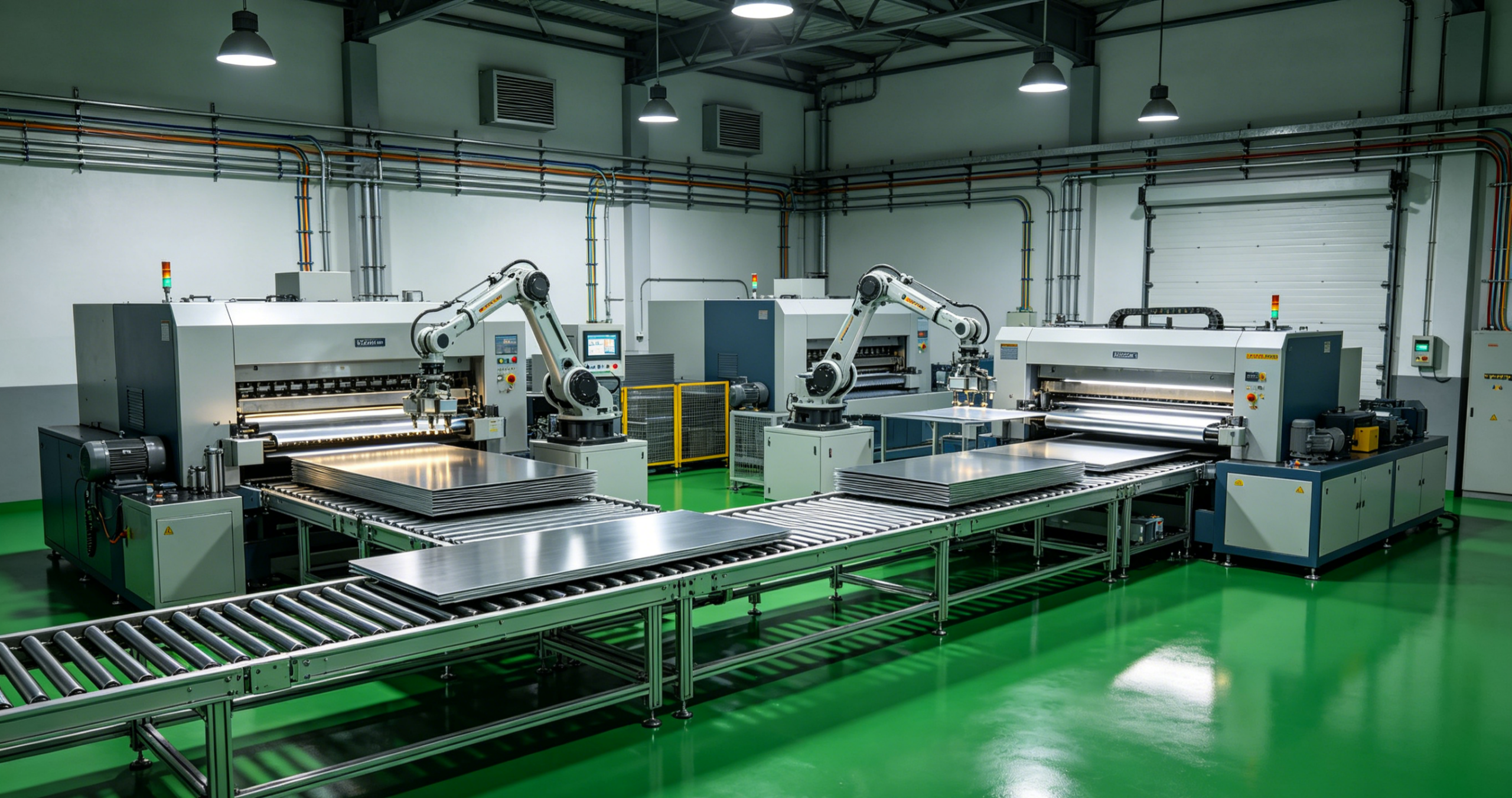
Molding presses are critical for shaping and stabilizing automotive materials.
Especially for:
- Interior insulation systems
- NVH components
- Thermal barriers
- Lightweight structural materials
At Sanken, our hot pressing systems support large-format processing and complex material shaping required by modern automotive applications.
The challenge is not simply “forming materials.”
The challenge is maintaining:
- Compression consistency
- Dimensional stability
- Long-term durability
- Repeatable mass production quality
That is where many suppliers struggle.
Why Automotive Buyers Face So Much Pressure Today
Automotive OEM buyers are dealing with impossible expectations.
They must simultaneously achieve:
- Lower production cost
- Faster launch timing
- Better cabin quality
- Lighter vehicle weight
- Higher durability standards
Meanwhile, vehicle architectures are becoming more complicated every year.
This creates enormous pressure on suppliers to provide:
- Stable material quality
- Faster engineering support
- Multi-process integration
- Scalable manufacturing systems
At Sanken, we understand these pressures because we support customers across automotive interior, acoustic, sealing, and insulation applications.
Why Precision Matters More Than Ever
In automotive manufacturing, tiny dimensional variations create massive downstream problems.
A small foam tolerance issue may cause:
- Panel misalignment
- Wind noise
- Vibration resonance
- Water leakage
- Assembly instability
Modern vehicles require extremely tight process control.
Especially in EV platforms where cabin silence exposes even small defects.
That is why precision die cutting systems must control:
- Material tension
- Cutting pressure
- Tool wear
- Adhesive alignment
- Compression recovery
At Sanken, manufacturing repeatability is one of our biggest priorities because automotive customers depend on long-term production stability.
Why Material Engineering Became a Competitive Advantage
Not all foam or insulation materials behave the same way.
Two materials may look identical visually while performing completely differently under automotive operating conditions.
At Sanken, we help customers evaluate:
- Density stability
- Thermal resistance
- Flame retardancy
- Compression set behavior
- Acoustic absorption performance
- Adhesive compatibility
This engineering support helps customers avoid expensive warranty risks later.
Why Integrated Manufacturing Is Changing the Industry
Many automotive buyers are tired of managing fragmented supplier networks.
One supplier handles foam.
Another handles laminating.
Another handles die cutting.
Another handles molding.
That creates:
- Communication delays
- Quality inconsistency
- Longer development cycles
- Increased project risk
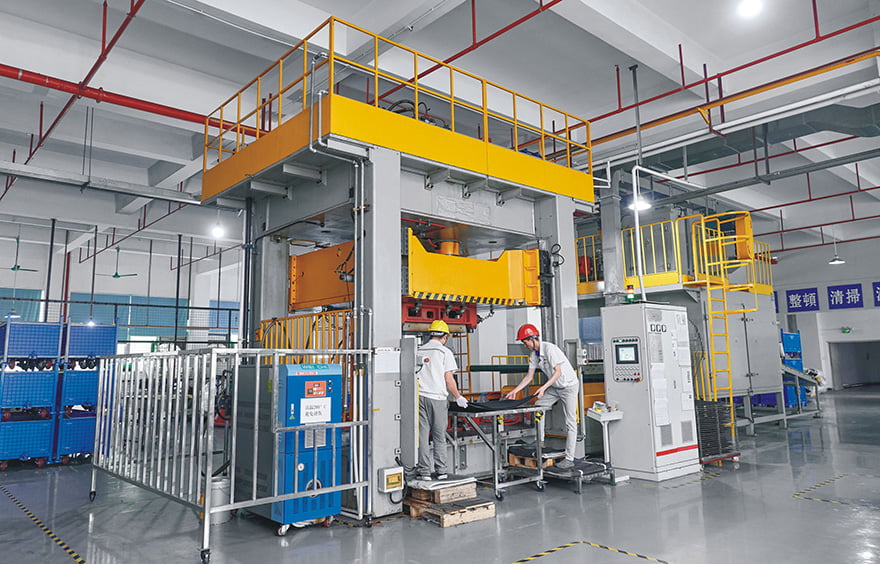
At Sanken, we integrate:
- Precision die cutting
- Hot pressing
- Adhesive laminating
- Foam converting
- Spraying and gluing
- Silk screen printing
- Injection molding support
This one-stop manufacturing model helps customers simplify supply chain management significantly.
Why Automotive NVH Depends on Converting Technology
Many people associate vehicle quality with engine performance.
But customers immediately notice poor NVH performance.
NVH refers to:
- Noise
- Vibration
- Harshness
Modern vehicles rely heavily on precision-converted materials to control:
- Road noise
- Wind turbulence
- Structural resonance
- Cabin vibration
Without properly engineered die-cut acoustic systems, even premium vehicles may feel cheap during real-world driving.
At Sanken, we help OEM customers improve NVH performance through precision foam and insulation converting technologies.
Why Tooling Expertise Still Matters
Machines alone do not guarantee quality.
Tooling engineering remains one of the most overlooked aspects of automotive die cutting.
Tooling affects:
- Edge quality
- Production speed
- Compression behavior
- Material waste
- Long-term repeatability
Poor tooling design often creates unstable production even with advanced machines.
At Sanken, tooling optimization plays a major role in maintaining scalable manufacturing consistency.
Why EVs Are Accelerating Manufacturing Demands
Electric vehicles completely changed automotive material requirements.
EVs demand:
- Better thermal management
- Improved flame resistance
- More lightweight structures
- Higher acoustic refinement
- Greater battery protection
This dramatically increased demand for advanced converting and hot pressing systems.
At Sanken, we support EV-related applications through precision material processing designed for modern vehicle platforms.
Why Automotive Customers Choose Sanken
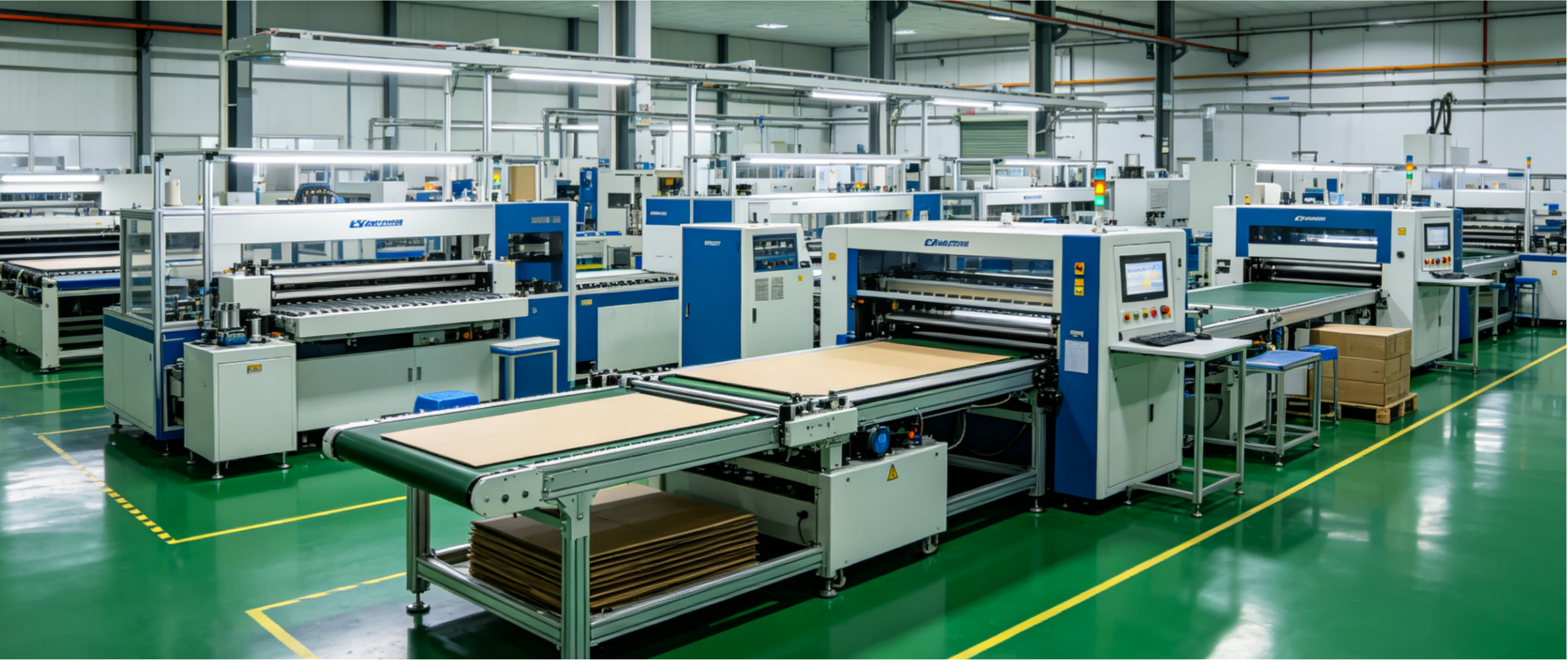
Automotive manufacturers choose us because we understand that stable production requires more than equipment.
It requires:
- Material expertise
- Process integration
- Engineering responsiveness
- Manufacturing repeatability
- Quality traceability
Our systems operate under:
- IATF 16949
- ISO 9001
- ISO 14001
We support global automotive OEM customers with scalable die cutting and molding solutions designed for long-term production stability.
What Separates Great Automotive Manufacturing Partners?
Many suppliers can make parts.
Far fewer understand automotive production pressure deeply.
The best manufacturing partners help customers:
- Reduce assembly risk
- Improve production efficiency
- Simplify supplier management
- Enhance vehicle quality
- Accelerate product launches
At Sanken, our goal is not simply to manufacture components.
Our goal is to help automotive customers build more stable and competitive manufacturing systems.
Conclusion
Automotive die cutting and molding presses are essential for producing precision acoustic, thermal, sealing, and structural components used throughout modern vehicles. As automotive manufacturing becomes increasingly complex, stable converting systems and material engineering become critical competitive advantages. At Sanken, we help OEM customers solve these challenges through advanced die cutting, hot pressing, laminating, and integrated manufacturing solutions designed for scalable automotive production.