
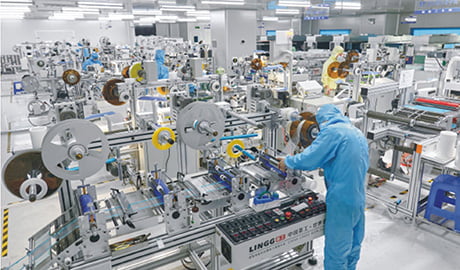
Is Laser Cut the Same as Die Cut? The Manufacturing Difference OEM Buyers Cannot Afford to Ignore
A customer once sent us a prototype made with laser cutting and confidently said:
“Great — now we can directly move this into mass production.”
Unfortunately, it was not that simple.
The prototype looked excellent. Clean edges. Sharp geometry. Fast turnaround. But once we analyzed the real production requirements, serious problems appeared immediately: material deformation, adhesive discoloration, unstable edge quality, and production speed limitations. This happens constantly in manufacturing because many buyers assume laser cutting and die cutting are interchangeable processes.
Laser cutting and die cutting are not the same manufacturing process. While both methods shape materials into custom parts, they operate very differently in terms of cutting mechanism, production speed, scalability, edge quality, material compatibility, tooling requirements, and cost efficiency. Laser cutting uses focused thermal energy to vaporize material, while die cutting uses physical tooling pressure to mechanically convert materials into repeatable production components.
At Sanken, we help OEM customers choose the correct converting process because selecting the wrong manufacturing method can quietly create major problems during mass production.
Why So Many Buyers Confuse Laser Cutting and Die Cutting
Honestly, the confusion makes sense.
Both processes can produce:
- Custom shapes
- Complex geometries
- Precision components
- Industrial prototypes
From the outside, the finished parts may even look similar.
But internally, the manufacturing logic is completely different.
And that difference becomes critical during large-scale OEM production.
What Is Laser Cutting?
Laser cutting uses concentrated laser energy to remove material through heat.
The machine follows a digital cutting path with extremely high precision.
Laser cutting is commonly used for:
- Prototype development
- Small production runs
- Intricate geometries
- Rapid design revisions
It works especially well when flexibility matters more than production speed.
Common laser-cut materials include:
- Acrylic
- Thin plastics
- Paper
- Wood
- Films
- Thin foam materials
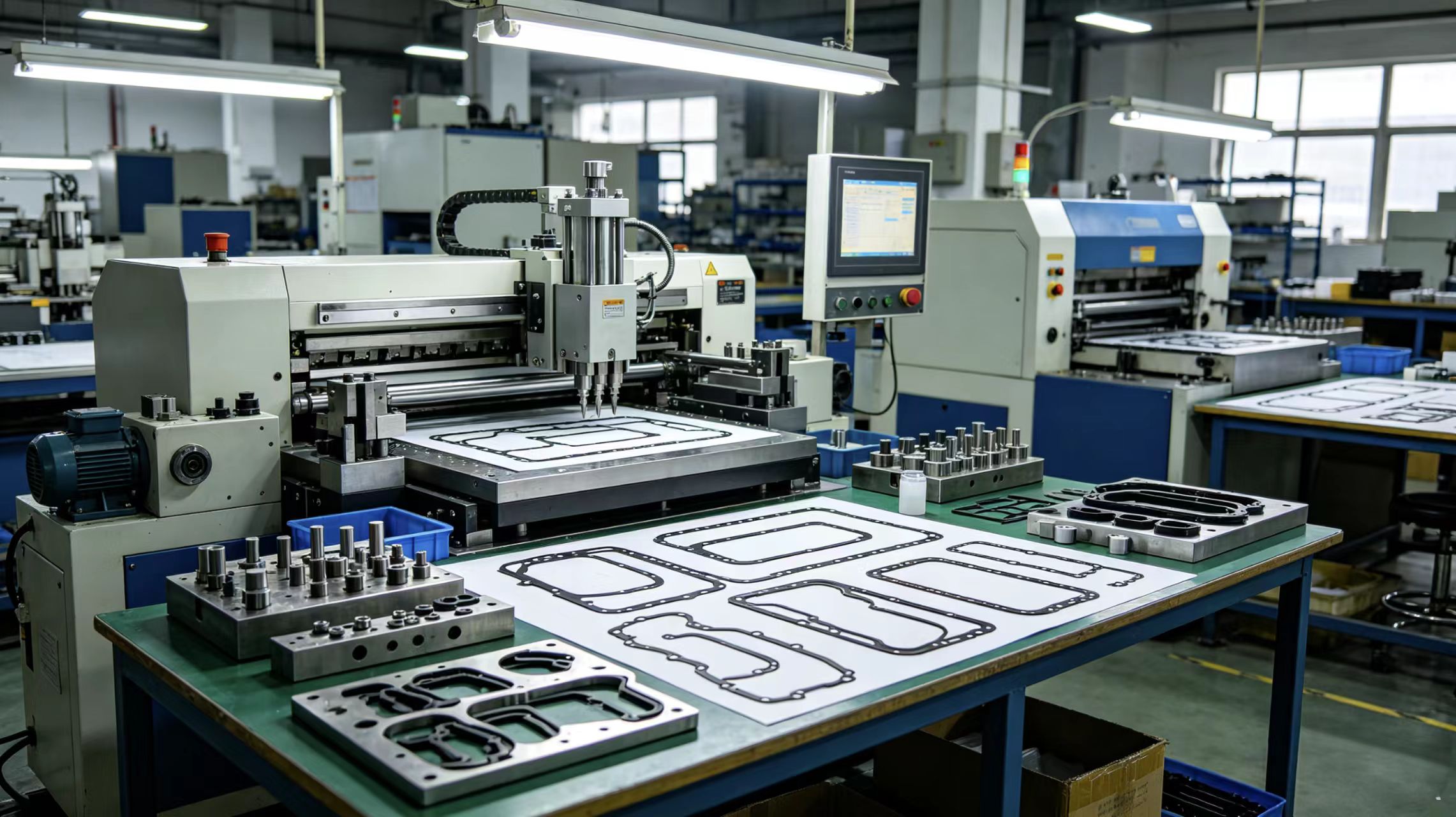
What Is Die Cutting?
Die cutting uses a physical cutting tool called a die.
The die applies controlled pressure to mechanically cut material into precise shapes.
Unlike laser cutting, die cutting is designed primarily for:
- High-volume manufacturing
- Repeatable production
- Faster processing speed
- Material converting scalability
Modern die cutting is widely used in:
- Automotive manufacturing
- Electronics
- Medical devices
- EV battery systems
- Industrial sealing applications
At Sanken, precision die cutting is one of our core manufacturing strengths because large-scale OEM production demands both consistency and efficiency.
The Biggest Difference: Heat vs Pressure
This is the most important distinction.
Laser cutting uses heat.
Die cutting uses mechanical force.
That single difference changes everything.
Laser cutting may create:
- Heat-affected edges
- Material discoloration
- Adhesive melting
- Burn marks
- Thermal deformation
Die cutting avoids most thermal damage because it mechanically converts the material instead of vaporizing it.
This becomes extremely important for sensitive materials such as:
- Foam
- Adhesive tapes
- Optical films
- Medical materials
- Thermal insulation layers
Why Die Cutting Dominates High-Volume Manufacturing
Laser cutting is flexible.
But flexibility is not always the priority in OEM manufacturing.
Automotive and electronics customers often require:
- Millions of identical parts
- Stable tolerances
- Fast production speed
- Lower per-unit cost
- Long-term consistency
This is where die cutting becomes far more efficient.
Once tooling is developed, die cutting can produce components extremely quickly with excellent repeatability.
That scalability is difficult for laser systems to match economically.
Why Laser Cutting Is Still Extremely Valuable
Laser cutting is not “inferior.”
It simply serves different manufacturing goals.
Laser systems are excellent for:
- Engineering validation
- Low-volume customization
- Fast prototyping
- Intricate design testing
At Sanken, laser cutting often helps customers accelerate product development before transitioning into large-scale die-cut production.
That combination shortens development cycles significantly.
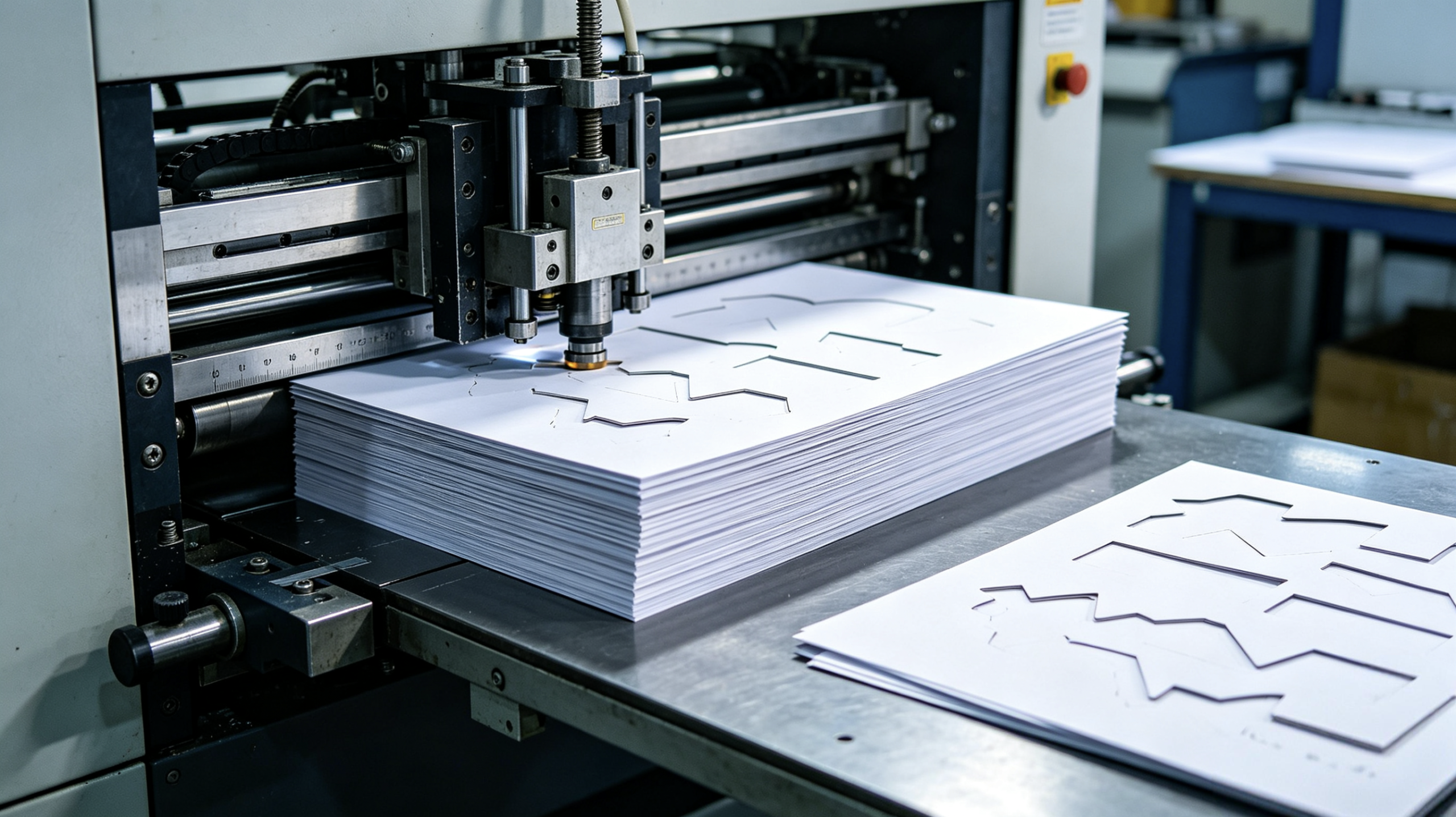
Why Material Selection Changes Everything
Different materials behave very differently during cutting.
For example:
| Material Type | Laser Cutting Behavior | Die Cutting Behavior |
|---|---|---|
| Foam | Possible edge melting | Clean compression cut |
| Adhesive tape | Glue discoloration risk | Stable edge quality |
| PET film | Thermal stress possible | Excellent repeatability |
| Rubber | Burn risk | Better structural integrity |
| Thick composites | Slower processing | High-speed conversion |
This is why professional material evaluation is critical before choosing a manufacturing method.
At Sanken, we help customers analyze material compatibility early to avoid expensive production problems later.
Why Edge Quality Matters More Than Buyers Expect
Many industrial components require extremely clean edges.
Poor edge quality may create:
- Adhesive lifting
- Assembly misalignment
- Particle contamination
- Optical distortion
- Sealing instability
Laser cutting sometimes creates micro-level thermal effects invisible during prototyping but problematic during long-term use.
Die cutting often provides more stable edge performance for mass-production applications.
Especially in:
- Automotive sealing systems
- Electronics assembly
- Medical adhesive components
Why Tooling Investment Scares Some Buyers
One reason some buyers initially prefer laser cutting is simple:
No tooling cost.
Laser cutting allows immediate production without die manufacturing.
However, many buyers overlook long-term economics.
For high-volume production, die cutting often becomes dramatically more cost-efficient over time because:
- Faster cycle times
- Lower labor cost
- Higher throughput
- Better material utilization
At Sanken, we help customers evaluate total production cost — not just initial setup expense.
Why Precision Converting Is More Than “Cutting”
Modern die cutting is actually advanced material engineering.
Today’s OEM components often involve:
- Multi-layer laminating
- Foam assemblies
- Adhesive systems
- Thermal materials
- EMI shielding structures
- Acoustic insulation systems
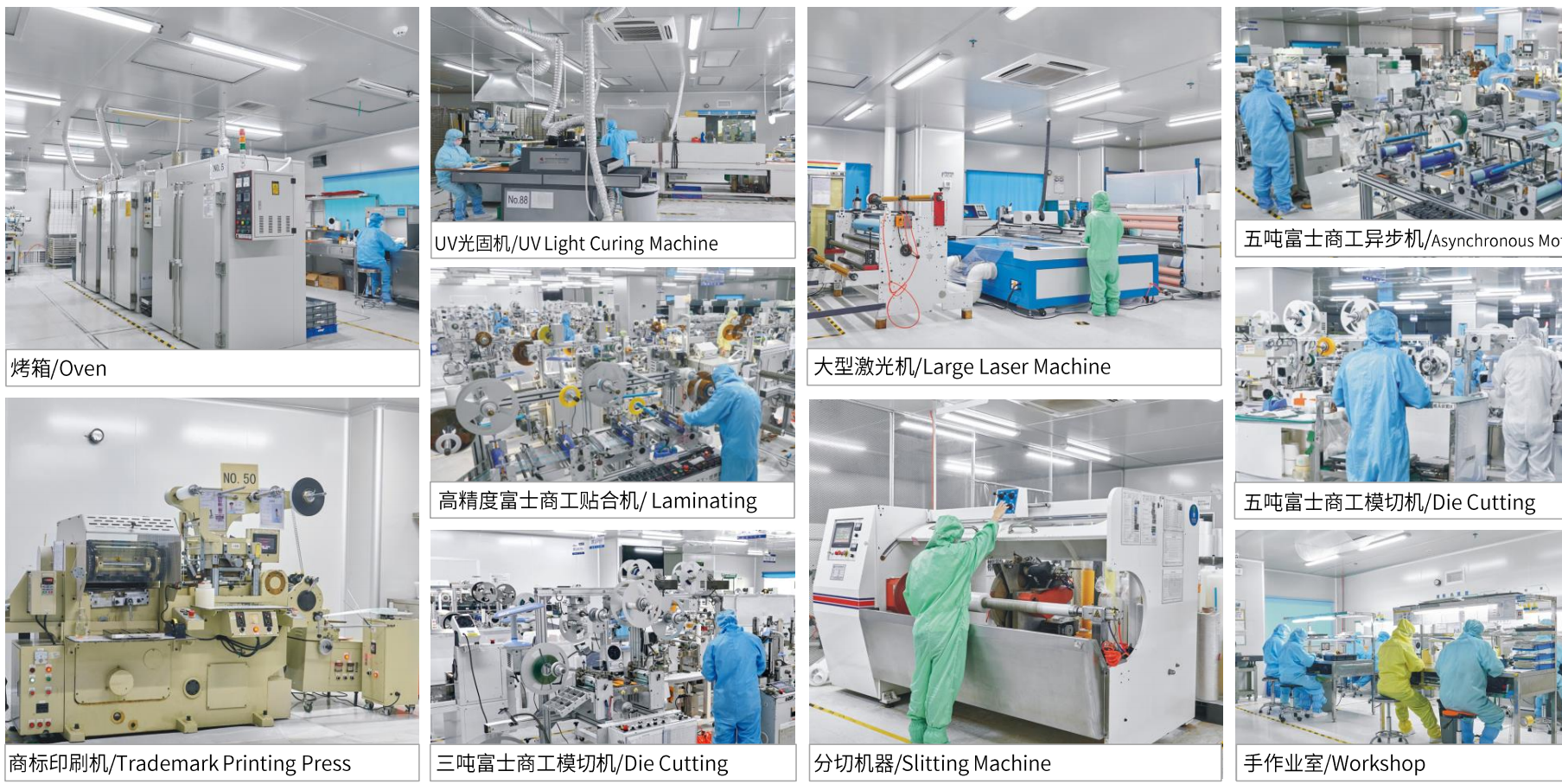
At Sanken, we integrate:
- Precision die cutting
- Rotary converting
- Foam laminating
- Adhesive processing
- Hot pressing
- Multi-material assembly
This one-stop manufacturing capability helps customers simplify supply chains while improving production consistency.
Why OEM Buyers Must Think Beyond Prototypes
This is where many sourcing mistakes happen.
A prototype may succeed beautifully with laser cutting.
But mass production introduces entirely different challenges:
- Material consistency
- Throughput requirements
- Tool wear
- Adhesive behavior
- Production repeatability
At Sanken, we focus heavily on scalability because true manufacturing success depends on stable long-term production — not just attractive prototypes.
So… Is Laser Cut the Same as Die Cut?
Absolutely not.
They solve different manufacturing problems.
Laser cutting is ideal for:
- Fast prototyping
- Flexible customization
- Complex short-run production
Die cutting is ideal for:
- High-volume OEM manufacturing
- Precision repeatability
- Faster throughput
- Long-term production efficiency
The smartest buyers choose the process based on production goals — not assumptions.
Conclusion
Laser cutting and die cutting are fundamentally different manufacturing technologies. Laser cutting uses thermal energy for flexible, low-volume precision work, while die cutting uses mechanical tooling for scalable, high-speed production. At Sanken, we help OEM customers choose the right converting process through advanced material engineering, precision die cutting, and integrated manufacturing solutions designed for stable, large-scale production environments.