
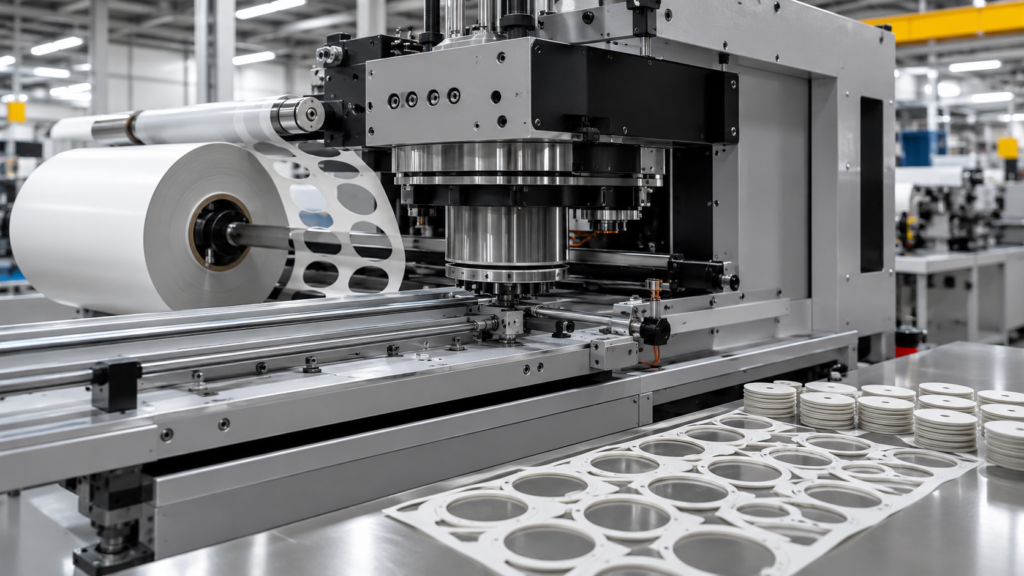
In OEM manufacturing, I often see customers underestimate one simple question: how is a part actually shaped?
Many custom die cut parts are hidden inside final products, but they support sealing, bonding, insulation, cushioning, protection, and assembly efficiency.
At Sanken Manufacturing, we work with materials that don’t behave like rigid metal parts. Foam, rubber, non-woven fabric, adhesive tapes, and multilayer composites all respond differently under pressure.
Die cutting is where geometry meets material behavior.
And when it goes wrong, the whole assembly line feels it.
Die cutting is a manufacturing process that uses a custom-shaped steel tool (a die) to cut, shape, or form materials into precise designs under pressure. It works by pressing material through or against a sharp die profile, creating repeatable parts with tight tolerances. The process is widely used for foams, rubber, adhesives, films, and insulation materials because it delivers high-speed, high-precision, and scalable production. At Sanken, we treat die cutting as a controlled engineering system—not just a cutting method—because every variable, from pressure to material compression, directly impacts final performance.
It sounds simple.
Press. Cut. Done.
But in real production, it is much more like controlled material physics.
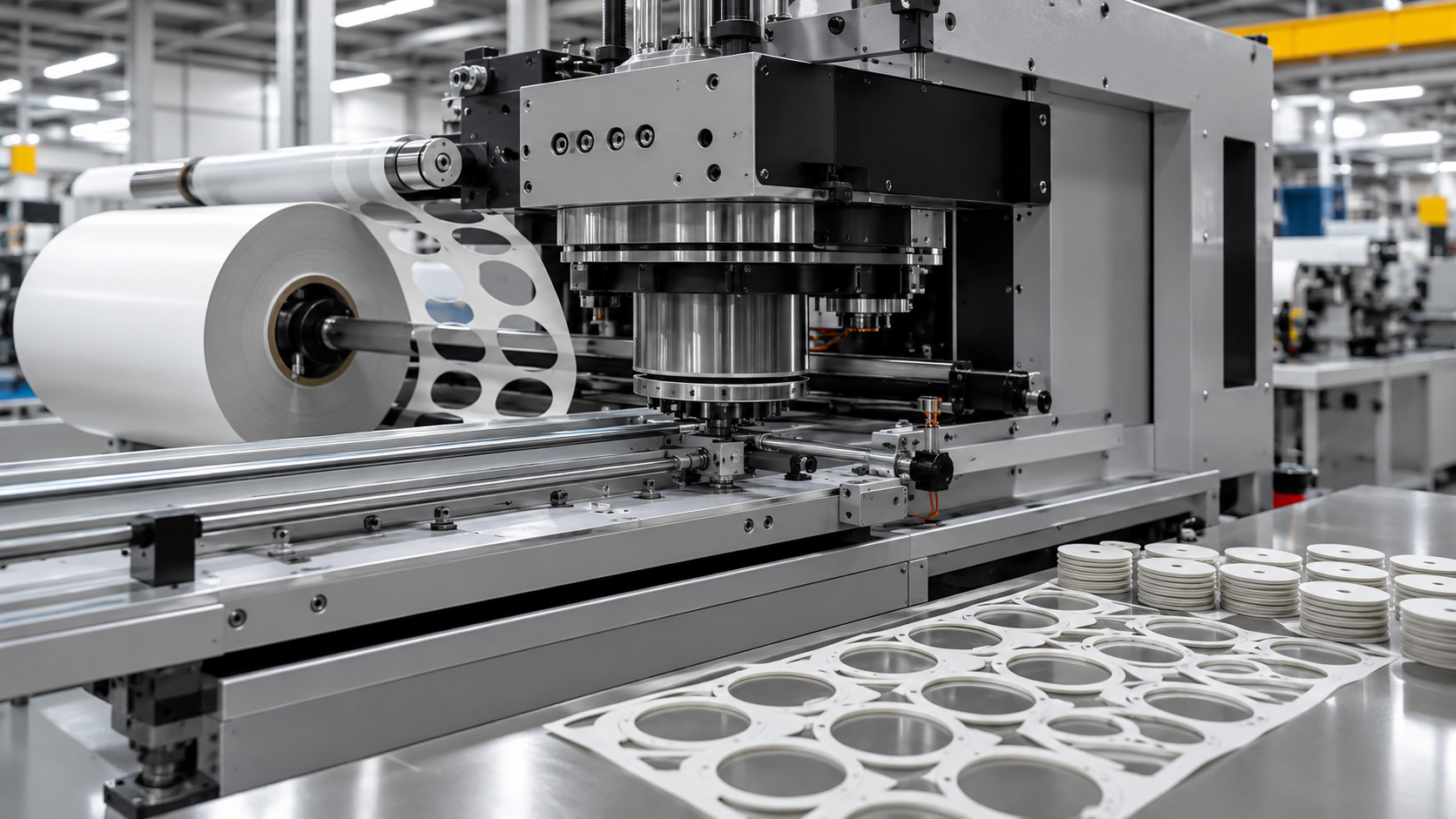
What exactly is die cutting?
Die cutting uses a shaped steel tool called a “die.”
This die acts like a cookie cutter—but in an industrial environment.
Instead of dough, we process:
- Foam sheets
- Rubber materials
- Adhesive tapes
- Non-woven fabrics
- Plastic films
- Composite laminates
Each material reacts differently under pressure.
That is why die design matters as much as material selection.
| Material | Common Die Cut Product | Typical Function |
|---|---|---|
| Foam | Gaskets, pads, spacers | Sealing, cushioning, gap filling |
| Rubber | Seals, pads, vibration parts | Sealing and shock absorption |
| Adhesive tape | Tape frames, bonding parts | Mounting and assembly |
| PET / PI film | Insulation films, protective parts | Electrical insulation and protection |
| Non-woven felt | NVH pads, acoustic parts | Noise reduction and anti-rattle |
| Conductive materials | EMI shielding gaskets | Electronic shielding |
| Protective film | Surface protection parts | Scratch and dust protection |
How does the die cutting process actually work?
At Sanken Manufacturing, we typically break it down into four controlled steps:
1. Material feeding
Raw material sheets are loaded into the machine.
Consistency here is critical.
Even small thickness variation affects final accuracy.
2. Tool alignment
The die is aligned with the material layer.
Misalignment at this stage leads to:
- Edge burrs
- Dimensional drift
- Uneven compression
3. Pressing and cutting
Hydraulic or mechanical pressure forces the die into the material.
This is where physics takes over:
- Pressure distribution
- Material compression
- Elastic recovery behavior
4. Ejection and separation
Finished parts are separated from waste material.
At scale, waste removal efficiency becomes a productivity factor.
Why is die cutting so widely used in OEM industries?
Because it solves three major manufacturing problems:
1. Repeatability
Every part is identical—cycle after cycle.
2. Scalability
Once the die is built, production can scale quickly.
3. Material flexibility
It works with soft, flexible, and layered materials.
At Sanken, we often use die cutting for:
- Automotive NVH insulation parts
- Electronic shielding pads
- Medical device sealing components
- Industrial adhesive assemblies
What determines die cutting quality?
Many buyers think quality depends only on the machine.
In reality, it depends on a system.
Key factors include:
- Die sharpness and design
- Material thickness stability
- Compression behavior
- Machine pressure control
- Temperature sensitivity
- Operator calibration
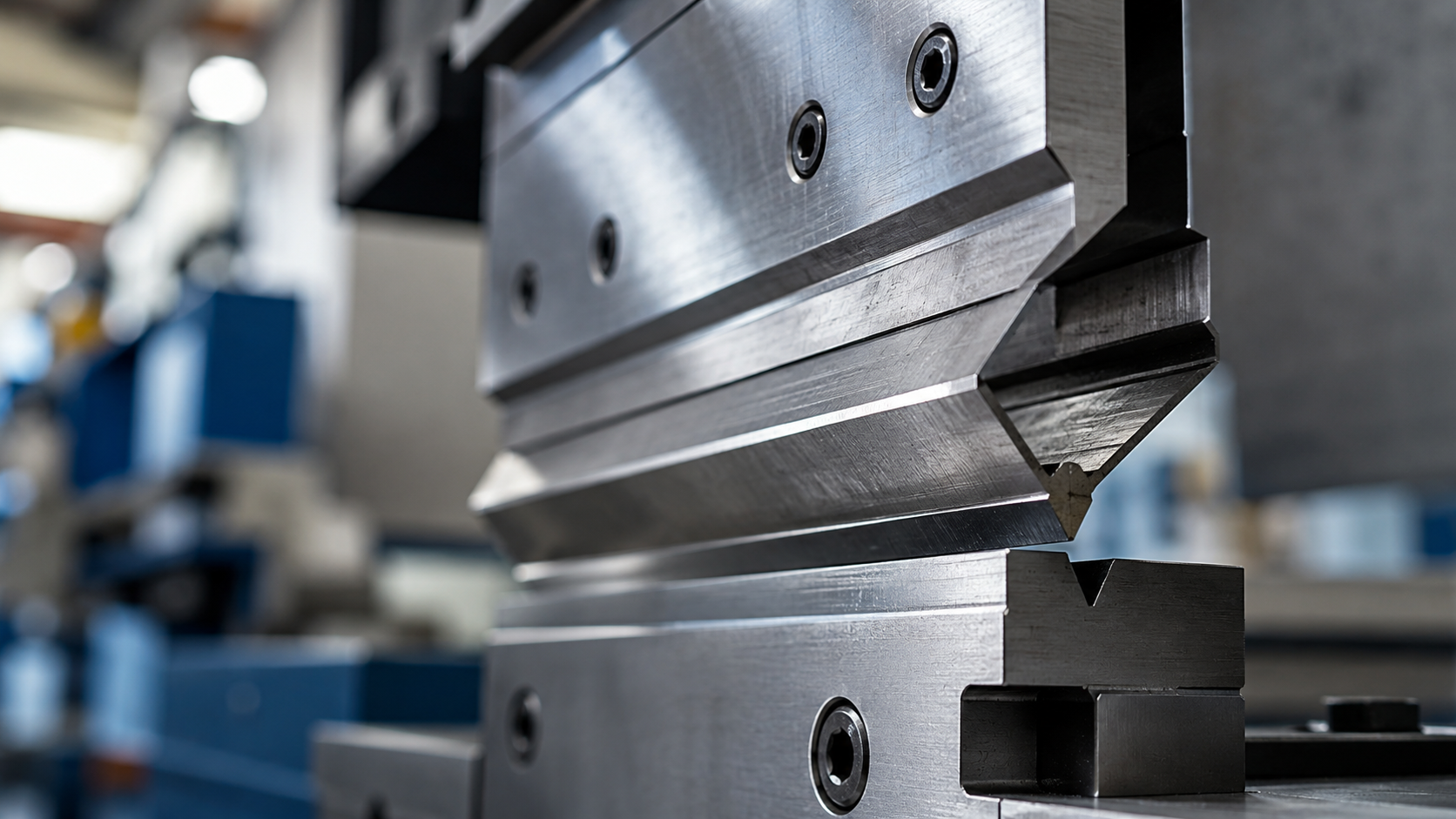
Even a perfectly designed die will fail if material behavior is not understood.
That is why engineering experience matters more than equipment alone.
Why do defects happen in die cutting?
In most cases, defects are not random.
They come from predictable causes:
- Material rebound after cutting
- Incorrect pressure settings
- Tool wear over long production runs
- Adhesive flow issues in layered structures
- Inconsistent material batches
At Sanken Manufacturing, we see one recurring pattern:
Most “quality problems” are actually process mismatches.
Not machine failures.
Different types of die cutting methods
Depending on application, we use different approaches:
Flatbed die cutting
- High precision
- Suitable for thicker materials
- Common in industrial parts
Rotary die cutting
- High-speed production
- Ideal for continuous materials
- Used in tape and label industries
Laser die cutting (special cases)
- No physical tool wear
- Flexible for prototyping
- Slower for mass production
Each method has trade-offs between speed, precision, and cost.
Why die cutting is not just “cutting”
In engineering terms, die cutting is a controlled deformation process.
It involves:
- Stress distribution
- Elastic recovery
- Adhesive behavior
- Multi-layer interaction
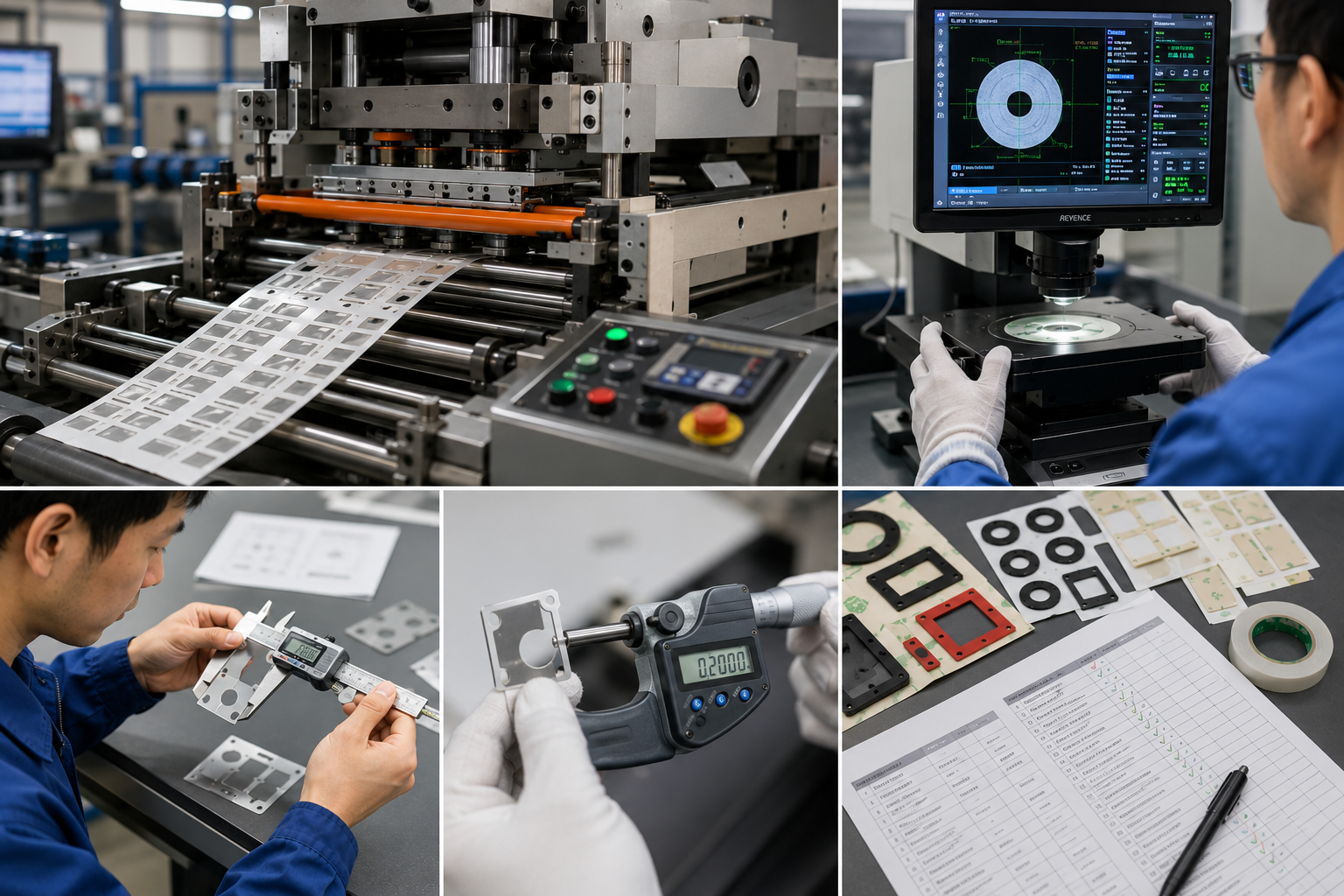
How we approach die cutting at Sanken
We don’t start with the machine.
We start with the application.
We ask:
- Where will this part be used?
- What pressure or heat will it face?
- Is it part of a sealing system or structural support?
- Does it need lamination or multi-layer bonding?
Then we design:
- Material selection strategy
- Die geometry optimization
- Pressure control parameters
- Post-processing and inspection flow
Because die cutting is not a standalone process.
It is part of a system that includes:
- Material conversion
- Adhesive lamination
- Precision assembly
- Quality validation
That is where real manufacturing stability comes from.
Conclusion
Die cutting is not just a cutting method.
It is a precision-controlled manufacturing system that transforms raw materials into functional components at scale.
When properly engineered, it delivers consistency, speed, and reliability that modern OEM production depends on.
At Sanken Manufacturing, we see die cutting as the bridge between material science and real-world industrial performance.