

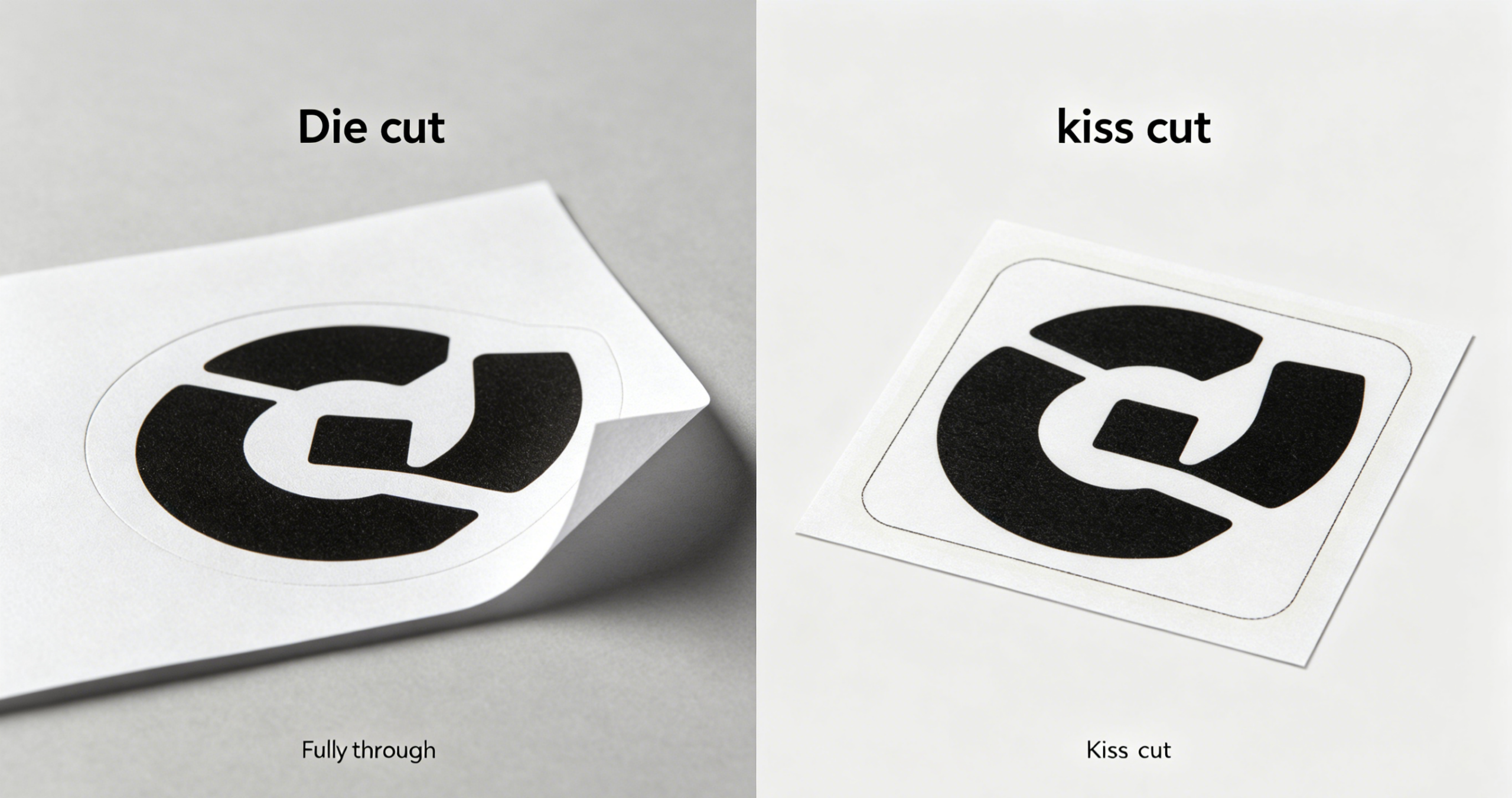
What is the difference between die cut and kiss cut stickers?
Many OEM buyers and product engineers ask me this question surprisingly often.
At Sanken Manufacturing, we deal with adhesive materials, tapes, and precision die-cut components every day.
And I always say the same thing: this is not just a “sticker question.”
It is a manufacturing and application design decision.
Because the cutting method changes how the product is used, handled, and assembled.
Die cut stickers are fully cut through both the material and the backing layer, creating individual custom-shaped pieces. Kiss cut stickers, on the other hand, are only cut through the top layer while leaving the backing intact. The result is very different in usability, packaging, and application speed. Die cut is cleaner and more premium for standalone shapes, while kiss cut is more efficient for peeling, handling, and batch application. At Sanken, we choose between these two based on assembly flow, labor efficiency, and end-use environment—not just appearance.
In simple terms:
- Die cut = fully separated custom shapes
- Kiss cut = peelable stickers on a sheet
But in real production, the decision goes much deeper.
Why does cutting method matter in industrial applications?
In consumer products, stickers are visual.
In industrial applications, stickers are functional components.
At Sanken Manufacturing, we often use adhesive die-cut parts for:
- Electronics insulation layers
- Automotive NVH damping assemblies
- Medical device surface bonding
- Industrial sealing applications
Reference concept: https://www.3m.com/3M/en_US/industrial-adhesives-tapes-us/
In these cases, cutting accuracy directly affects performance.
A misaligned cut is not cosmetic—it is functional failure.
What is a die cut sticker?
A die cut sticker is cut completely through:
- Top material layer
- Adhesive layer
- Release liner (backing)
This creates individual standalone pieces in the exact shape of the design.
Key characteristics:
- Fully separated pieces
- Custom shapes with no extra border
- Cleaner presentation
- Easier for final product branding
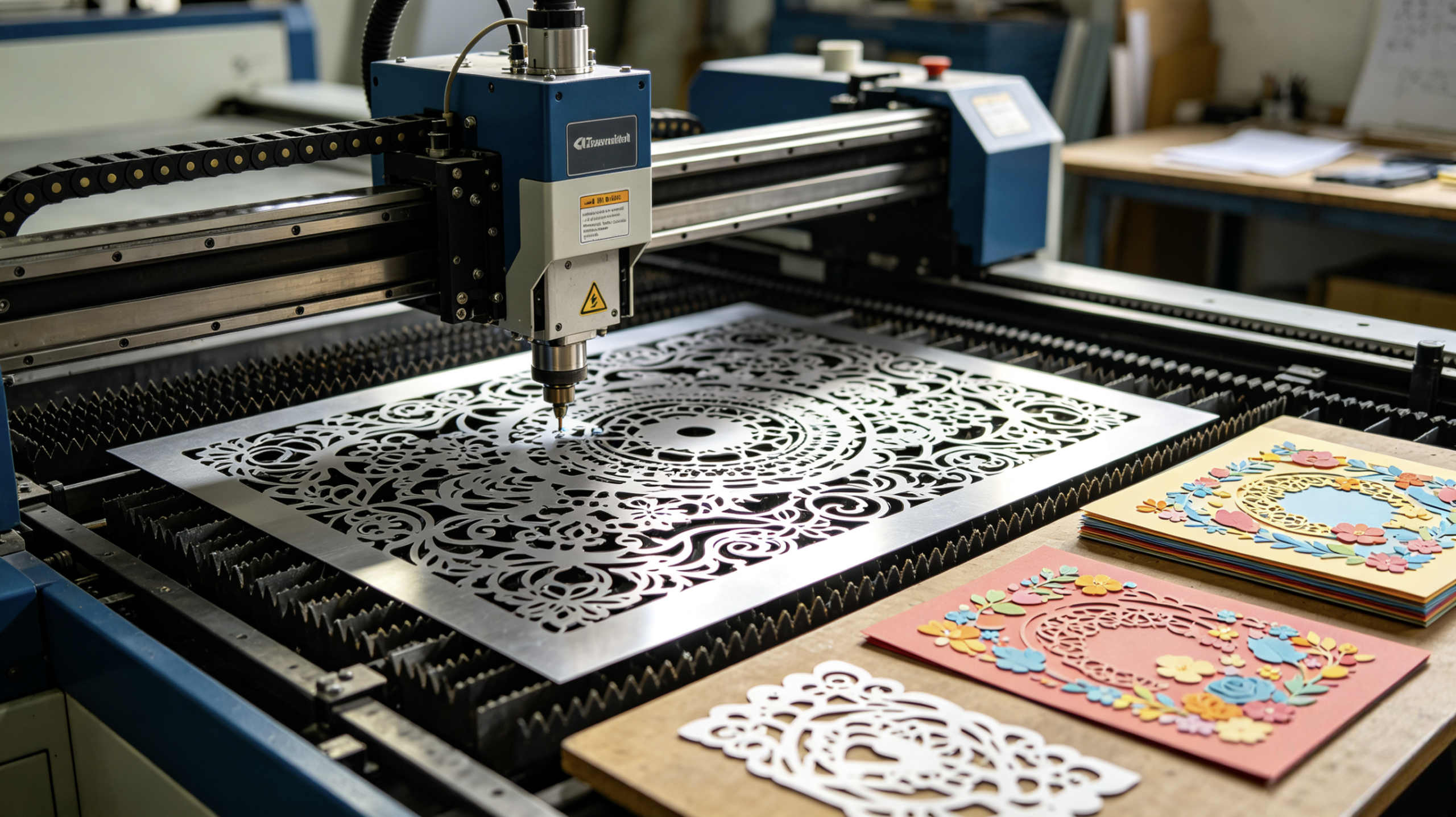
In industrial use, die cutting is also applied to:
- Foam gaskets
- Rubber sealing pads
- Thermal insulation pads
- EMI shielding materials
At Sanken, die cutting is not just “cutting.”
It is dimensional control engineering.
What is a kiss cut sticker?
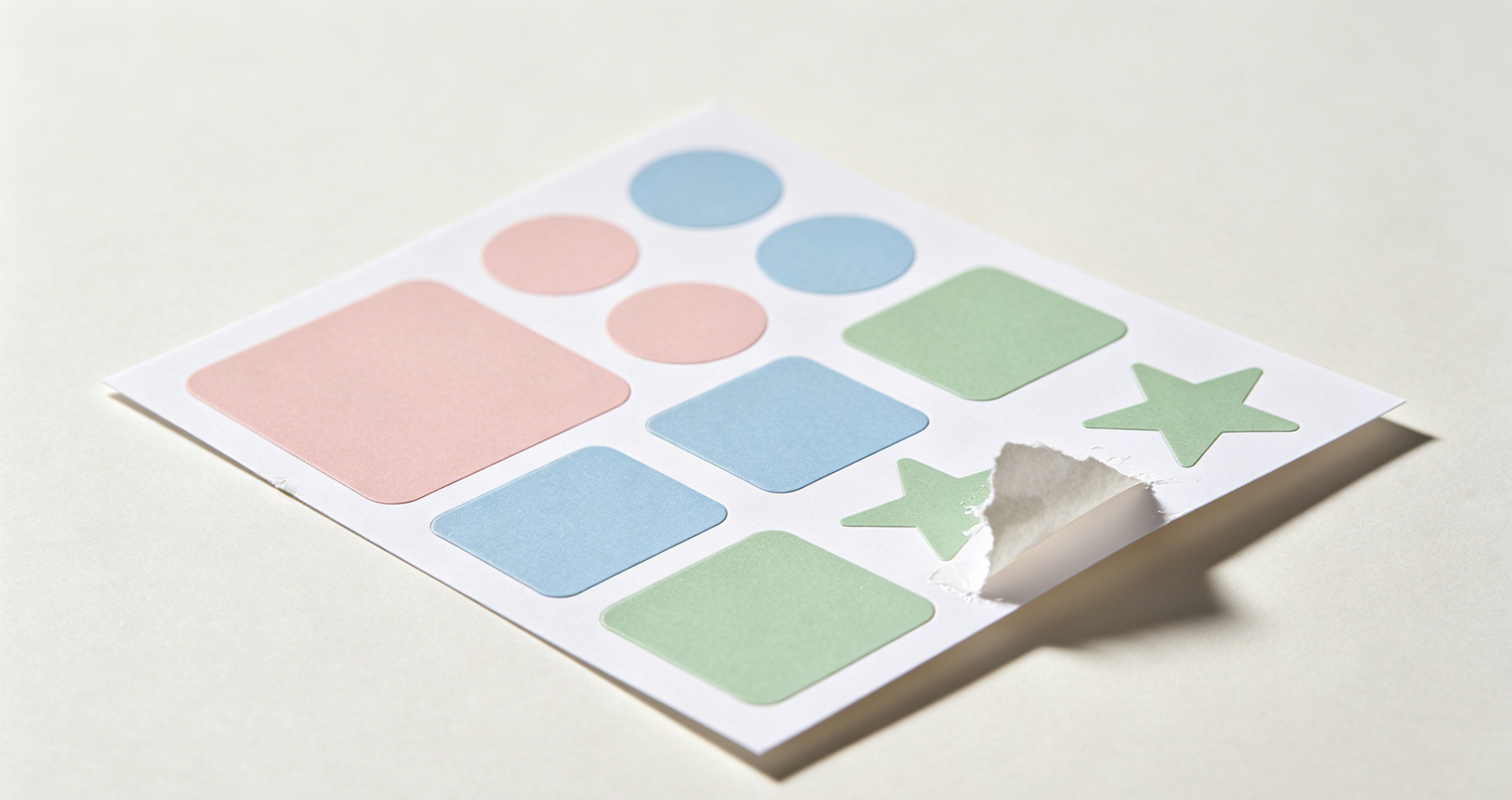
Kiss cutting only cuts through the top layer.
The backing sheet remains intact, holding all stickers in place.
This creates a sheet of peelable parts.
Reference concept: https://www.sciencedirect.com/topics/engineering/adhesive-bonding
Key characteristics:
- Easy peeling from sheet
- Multiple designs on one liner
- Better for batch application
- Reduced handling damage
Kiss cut is often preferred when:
- Speed matters
- Assembly lines require quick application
- Small parts must stay organized
In production environments, efficiency often beats aesthetics.
Die cut vs kiss cut: which one is better?
There is no universal “better” option.
Only application-driven selection.
Die cut is better when:
- Final product appearance matters
- Individual packaging is required
- Parts are used one-by-one
- Premium branding is important
Kiss cut is better when:
- High-speed assembly is needed
- Multiple parts are applied in sequence
- Worker handling efficiency matters
- Parts must stay aligned before use
At Sanken, we always ask one question first:
How will the operator actually use this part on the line?
That answer decides everything.
How does precision die cutting affect performance?
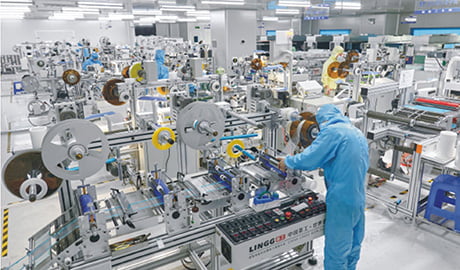
In industrial adhesive components, cutting accuracy affects:
- Edge lifting
- Adhesive exposure
- Alignment tolerance
- Assembly repeatability
Reference insight: https://www.dupont.com/
Even a 0.1 mm deviation can cause:
- Air gaps in bonding
- Poor sealing performance
- Reduced adhesion strength
That is why we treat die cutting as a precision engineering process, not a finishing step.
Why OEM customers care about this decision more than they expect
For many buyers, die cut vs kiss cut seems like packaging detail.
But in real production:
- It affects labor cost
- It affects assembly speed
- It affects defect rate
- It affects end-user experience
A wrong choice can multiply cost across millions of units.
At Sanken Manufacturing, we often help customers redesign not just the part, but the handling method.
Because manufacturing efficiency is not only about making parts faster.
It is about making assembly smoother.
How we approach die cut vs kiss cut at Sanken
We don’t start with “what do you want.”
We start with:
- Application environment
- Assembly process flow
- Operator behavior
- Material characteristics
- End-use stress conditions
Then we design:
- Cutting method
- Adhesive structure
- Release liner system
- Tolerance control strategy
This is where one-stop manufacturing matters.
Because die cutting, material conversion, and adhesive lamination are not separate processes.
They are one system.
Conclusion
Die cut and kiss cut stickers are not just two cutting styles.
They represent two different production philosophies.
One prioritizes final presentation.
The other prioritizes assembly efficiency.
At Sanken, we choose based on how the product will live inside your real production line—not just how it looks on paper.