
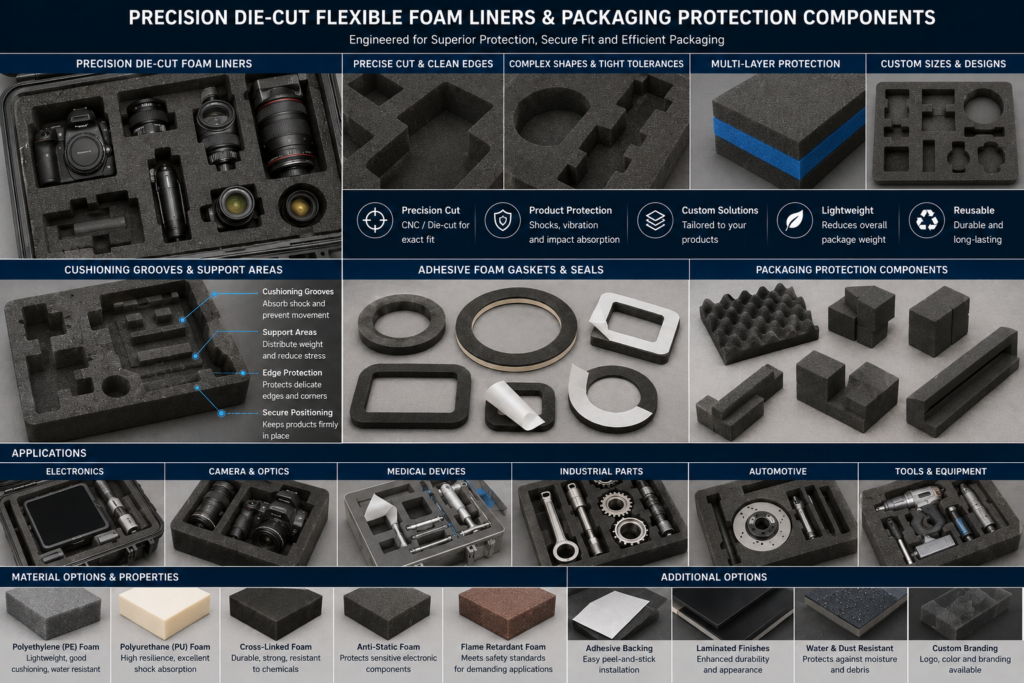
How Die Cut Cushion Pads Protect Sensitive Components During Transport
Transportation is one of the most overlooked causes of product damage. A component may pass every production inspection, yet arrive at the customer with scratches, cracks, deformation, or functional failure due to vibration, impact, and compression during shipping. For manufacturers of electronics, automotive parts, medical devices, and precision equipment, protecting products during transport is just as important as manufacturing them correctly.
Die cut cushion pads protect sensitive components during transport by absorbing impact energy, reducing vibration, preventing surface damage, maintaining positioning, and minimizing stress on fragile parts. By converting foam, rubber, felt, and other cushioning materials into custom shapes, manufacturers can create packaging and protection solutions tailored to specific products and shipping conditions.
Custom die-cut cushioning is widely used because it provides reliable protection without adding excessive weight or packaging complexity.
Why Transport Damage Occurs
Products experience various forces during transportation.
Common risks include:
- Shock from drops
- Continuous vibration
- Compression loads
- Surface friction
- Component movement
- Stacking pressure
Even small impacts can damage delicate parts if they are not properly supported.
This is particularly important for products with:
- Glass surfaces
- Electronic assemblies
- Precision sensors
- Optical components
- Medical devices
Theme: Precision Die Cut Cushion Pads
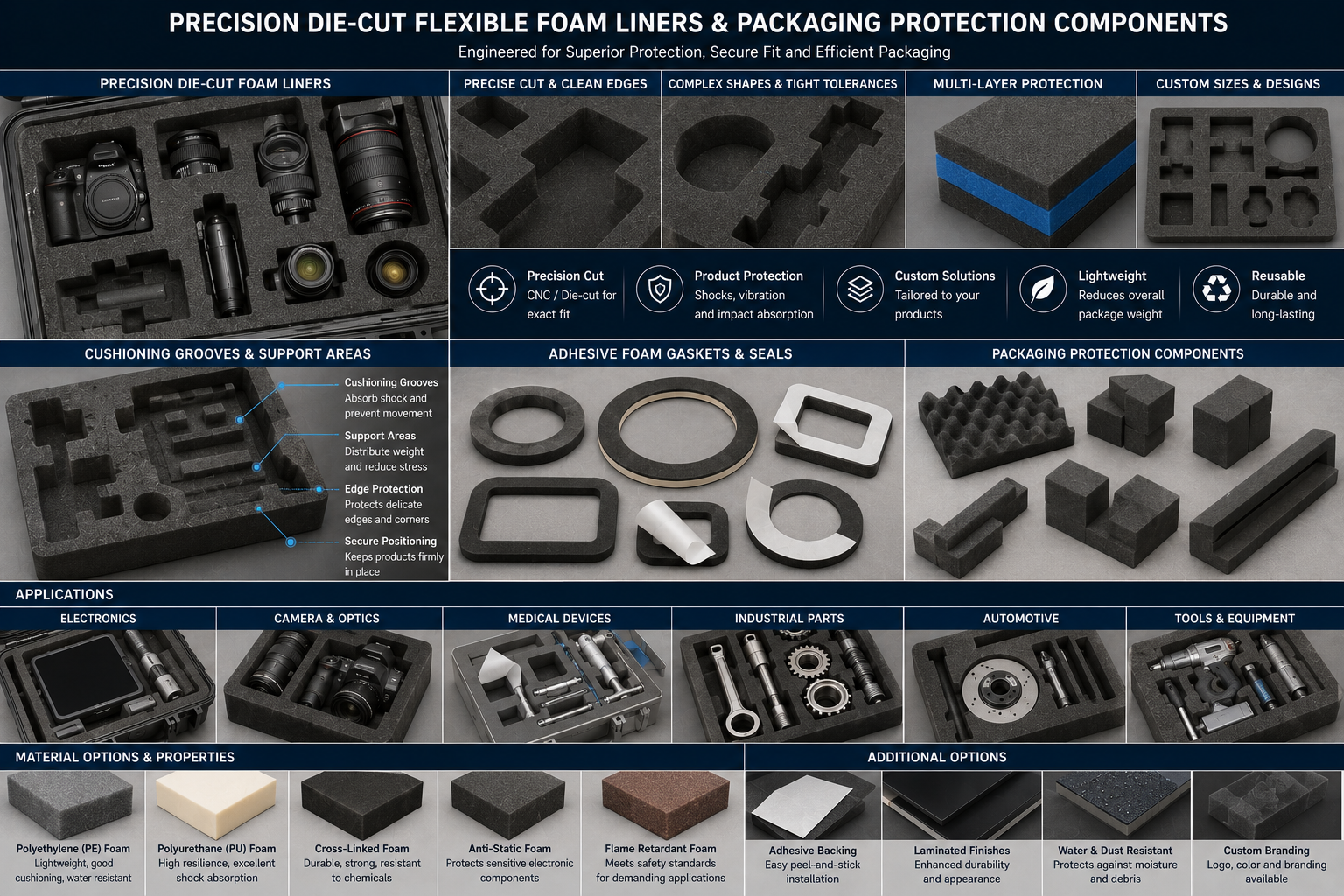
What Are Die Cut Cushion Pads?
Die cut cushion pads are protective components manufactured from cushioning materials that are converted into custom shapes through precision die cutting.
Common materials include:
- EVA foam
- PE foam
- PU foam
- Silicone foam
- EPDM foam
- Non-woven felt
- Rubber materials
The pads are designed to fit specific product geometries and provide targeted protection.
Unlike generic packaging materials, custom die-cut pads support the product exactly where protection is needed.
How Cushion Pads Absorb Impact
When a product experiences shock, the cushioning material compresses and absorbs energy.
Instead of transferring the full force directly to the product, the foam disperses the energy throughout its cellular structure.
Benefits include:
- Reduced impact stress
- Lower risk of cracking
- Improved product survival during drops
This is especially important for fragile electronic and optical components.
How Cushion Pads Reduce Vibration
Products often experience continuous vibration during transportation.
Sources include:
- Trucks
- Aircraft
- Ships
- Conveyors
Repeated vibration can cause:
- Connector loosening
- Surface wear
- Component movement
- Internal damage
Die-cut cushion pads act as vibration isolators, reducing energy transfer and helping components remain stable throughout transit.
Theme: Protective Foam Packaging Components
Preventing Surface Damage
Sensitive products often require protection from scratches and abrasion.
Examples include:
- Displays
- Optical lenses
- Decorative panels
- Painted surfaces
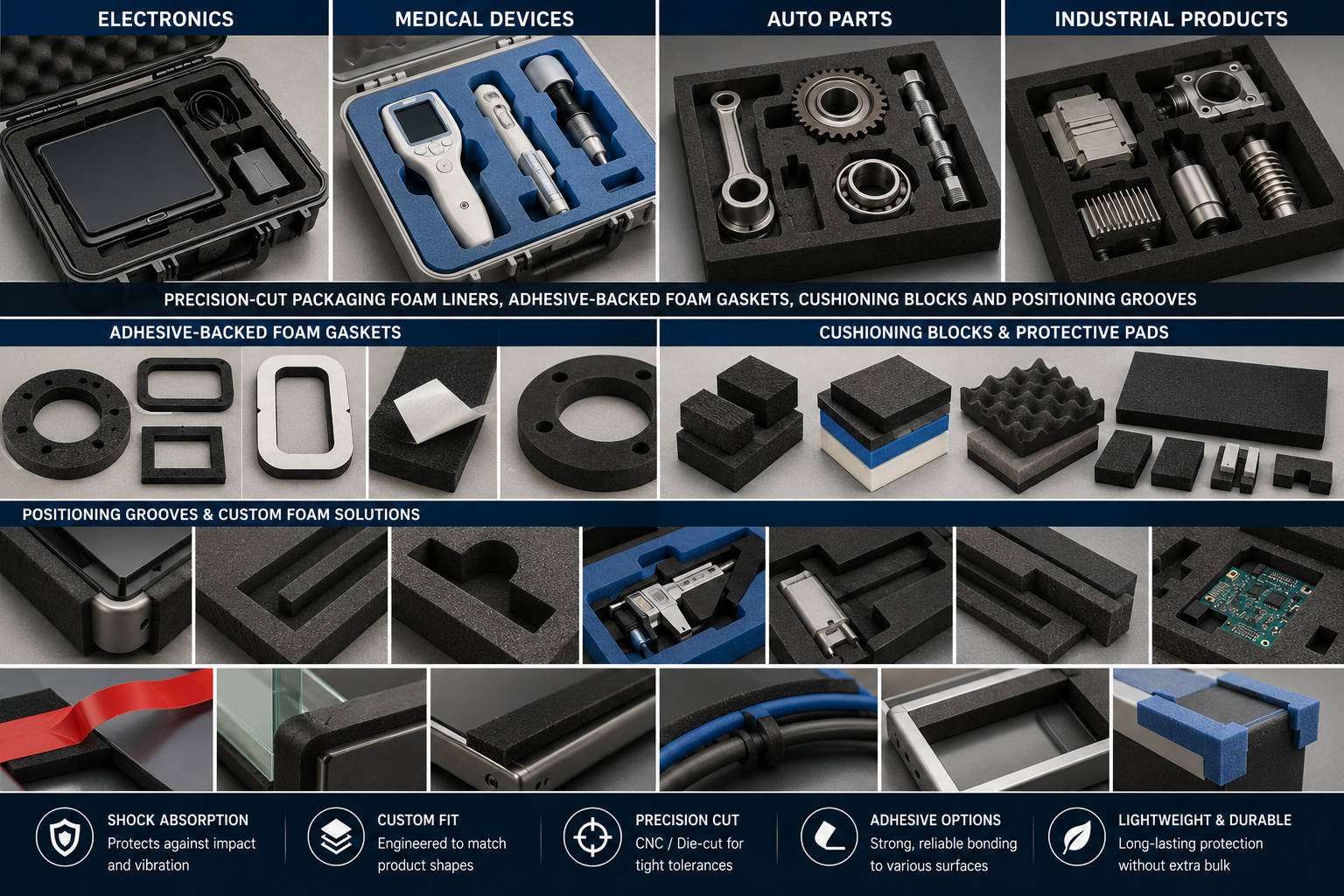
Custom die-cut pads create separation between surfaces, preventing direct contact during transportation.
This helps maintain product appearance and reduces cosmetic defects.
Maintaining Product Positioning
One of the most important functions of a die-cut cushion pad is maintaining precise positioning.
Without proper support, products may:
- Shift inside packaging
- Collide with other components
- Experience uneven loading
Custom foam inserts and cushion pads hold products securely in place.
This improves both protection and packaging presentation.
Common Materials Used for Cushion Pads
EVA Foam
Advantages:
- Excellent shock absorption
- Lightweight
- Good durability
Applications:
- Electronics
- Medical devices
- Consumer products
PE Foam
Advantages:
- Closed-cell structure
- Water resistance
- Consistent cushioning
Applications:
- Automotive parts
- Industrial equipment
- Packaging inserts
PU Foam
Advantages:
- Soft cushioning
- Excellent energy absorption
Applications:
- Fragile components
- Precision instruments
Non-Woven Felt
Advantages:
- Surface protection
- Noise reduction
- Wear resistance
Applications:
- Automotive interiors
- Decorative surfaces
Theme: Custom Foam Packaging Solutions
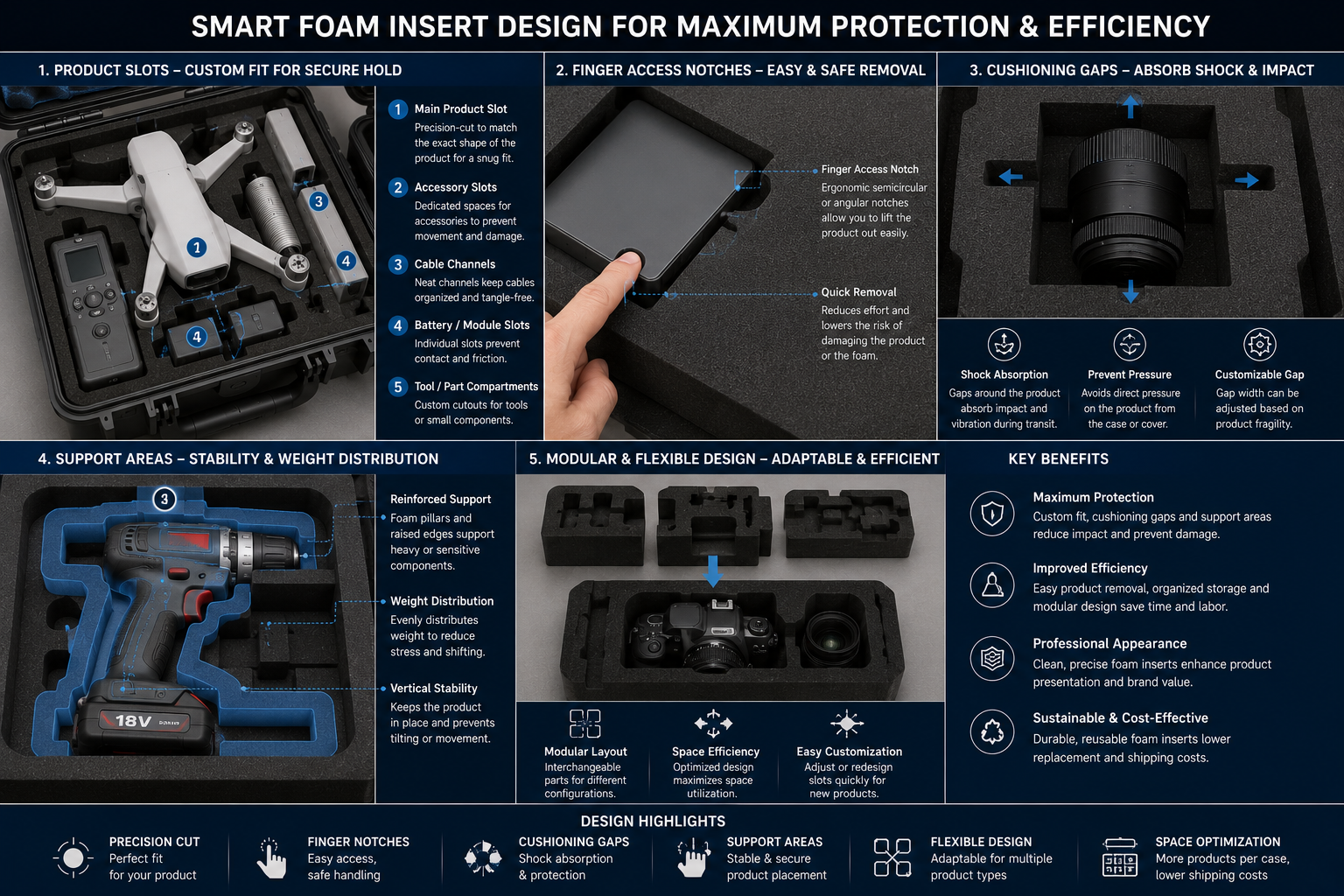
Applications Across Industries
Consumer Electronics
Used for:
- Smartphones
- Tablets
- Laptops
- Wearable devices
Die-cut cushion pads help prevent display damage and internal component movement.
Automotive Industry
Applications include:
- Electronic modules
- Sensors
- Interior trim parts
- Lighting systems
Protection during shipping helps reduce warranty risks.
Medical Devices
Used for:
- Diagnostic equipment
- Monitoring devices
- Precision instruments
Reliable cushioning helps maintain calibration and functionality.
Industrial Equipment
Applications include:
- Control systems
- Precision assemblies
- Sensitive mechanical components
Custom foam inserts improve transport reliability.
Why Custom Die Cutting Is Better Than Generic Foam
Generic foam sheets often create:
- Inconsistent support
- Product movement
- Excess packaging volume
Custom die-cut designs provide:
- Precise fit
- Repeatable protection
- Faster packaging operations
- Reduced material waste
The result is improved protection and lower overall packaging costs.
How Sanken Manufacturing Supports Cushioning Solutions
Dongguan Sanken Electronics Manufacturing Co., Ltd. specializes in custom die-cut foam and cushioning solutions for OEM manufacturers worldwide.
Our capabilities include:
- Precision die cutting
- EVA foam converting
- PE foam converting
- Non-woven felt processing
- Adhesive laminating
- Protective packaging solutions
- Custom rubber components
Key Advantages
- OEM and ODM customization
- ISO 9001 certified quality management
- RoHS and REACH compliant materials
- Domestic and overseas production bases
- Cleanroom precision manufacturing
- Tool development from drawings or samples
We support automotive, consumer electronics, medical devices, industrial equipment, and custom packaging applications.
Featured Snippet Summary
Die-cut cushion pads protect sensitive components during transport by absorbing shock, reducing vibration, preventing surface damage, and maintaining product positioning. Common materials include EVA foam, PE foam, PU foam, and felt, which can be custom die cut to fit specific products and packaging requirements.
Conclusion
Transportation can expose products to impact, vibration, compression, and abrasion that may cause costly damage. Custom die-cut cushion pads provide targeted protection by combining engineered materials with precise geometry.
For OEM manufacturers, die-cut cushioning solutions improve product safety, reduce shipping damage, enhance customer satisfaction, and help ensure that products arrive in the same condition they left the factory.