
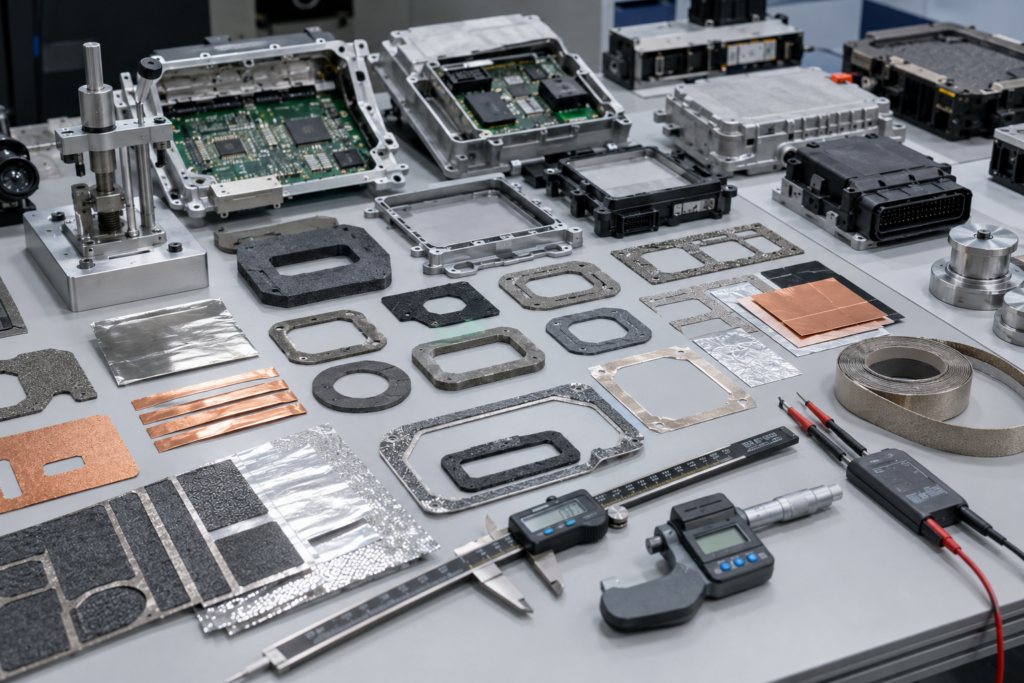
Modern vehicles contain more electronic systems than ever before. Advanced driver assistance systems (ADAS), battery management systems (BMS), infotainment displays, radar modules, cameras, electronic control units (ECUs), wireless charging modules, and high-speed communication networks all operate simultaneously inside a compact vehicle environment.
As electronic density increases, electromagnetic interference (EMI) becomes a growing challenge. Without proper EMI shielding, electronic signals can interfere with each other, causing unstable communication, sensor errors, display problems, or reduced system reliability.
Precision die cut EMI gaskets provide an effective solution by creating conductive shielding paths between enclosures while maintaining reliable electrical grounding and environmental sealing.
At Sanken, we manufacture precision die cut conductive foam gaskets, conductive fabric-over-foam gaskets, EMI shielding tapes, conductive adhesive components, conductive PET films, insulation films, protective films, and multilayer laminated EMI shielding components for automotive electronic modules, EV battery systems, ADAS sensors, displays, ECUs, and communication devices.
Why EMI Shielding Is Critical in Automotive Electronics
Today's vehicles contain dozens or even hundreds of electronic modules communicating through high-speed data networks.
Potential sources of electromagnetic interference include:
- High-voltage battery systems
- Electric drive motors
- Inverters
- DC/DC converters
- On-board chargers
- ECUs
- Radar sensors
- Cameras
- Wireless communication modules
- Display systems
Without proper EMI protection, interference may lead to:
- Signal instability
- Communication errors
- Sensor malfunction
- Display flickering
- Data transmission failure
- Reduced ADAS accuracy
- Increased electromagnetic emissions
- Lower system reliability
Precision die cut EMI gaskets help isolate sensitive electronic systems while maintaining stable signal performance.
Where Die Cut EMI Gaskets Are Used
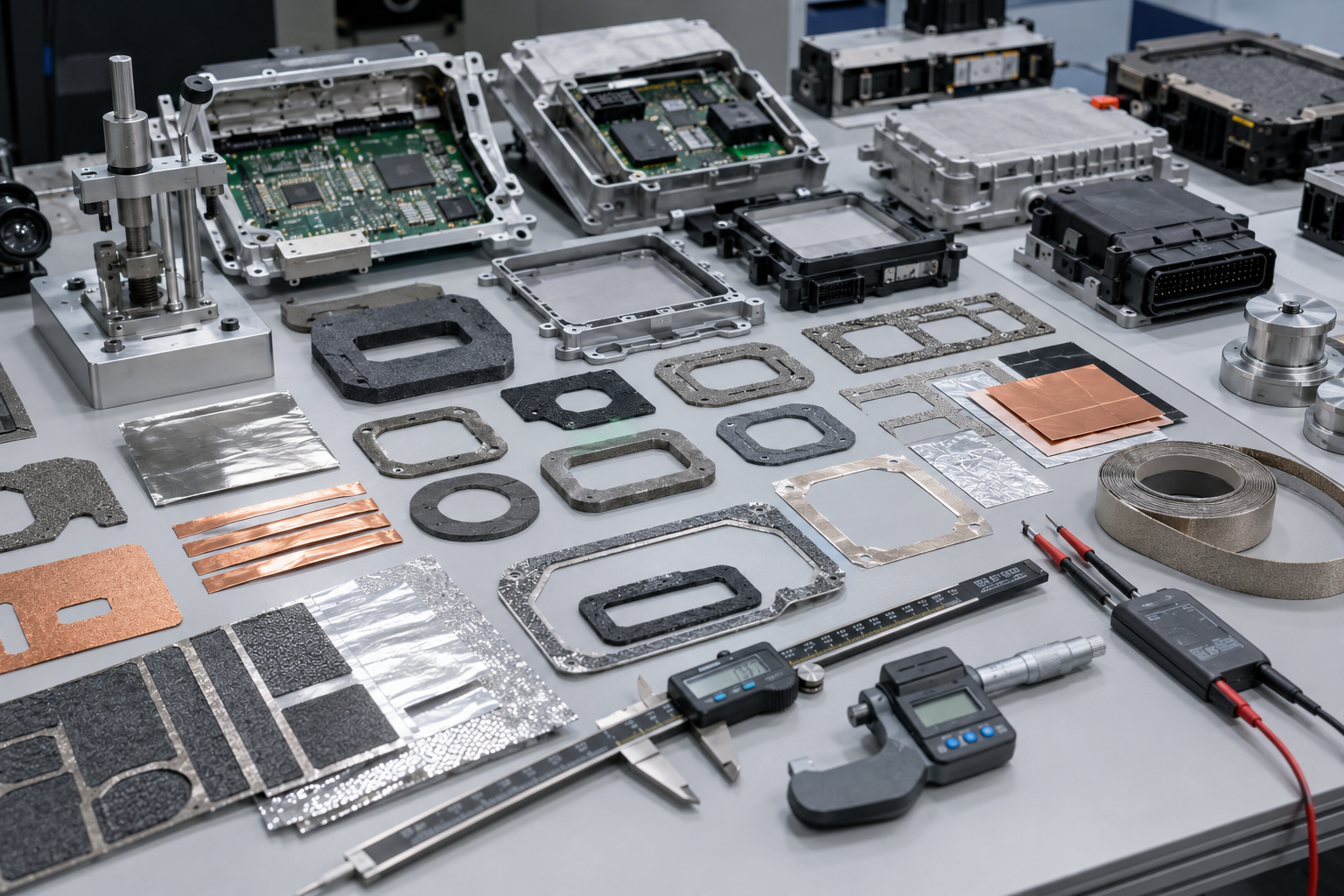
Automotive electronic systems require EMI shielding in many locations.
Typical applications include:
| Automotive Component | EMI Shielding Function |
|---|---|
| Electronic Control Units (ECUs) | Shield electronic circuits |
| Battery Management Systems (BMS) | Reduce electrical interference |
| Radar Modules | Maintain signal accuracy |
| Camera Modules | Protect image transmission |
| Infotainment Displays | Reduce display interference |
| Instrument Clusters | Improve communication stability |
| Telematics Units | Shield wireless communication |
| Charging Controllers | Minimize EMI emissions |
| Power Electronics | Reduce electromagnetic noise |
Each application requires different shielding effectiveness, compression characteristics, and installation methods.
Common Die Cut EMI Materials
Different electronic systems require different shielding materials.
| Material | Primary Function |
|---|---|
| Conductive Fabric over Foam | EMI shielding and compression |
| Conductive Foam | Electrical grounding and shielding |
| Conductive Silicone Rubber | EMI shielding with environmental sealing |
| Copper Foil Tape | High-conductivity shielding |
| Aluminum Foil Tape | Lightweight EMI shielding |
| Conductive PET Film | Thin shielding layer |
| Conductive Adhesive Tape | Bonding and electrical continuity |
| Conductive Mesh | High-frequency shielding |
| Multilayer Shielding Laminates | Combined EMI protection |
Material selection depends on shielding effectiveness, compression force, grounding design, operating temperature, and installation space.
Conductive Foam Gaskets
Conductive foam gaskets are one of the most widely used automotive EMI shielding solutions.
They provide:
- Electromagnetic shielding
- Compression sealing
- Electrical grounding
- Gap compensation
- Lightweight construction
- Easy assembly
Typical applications include:
- ECU housings
- BMS enclosures
- Communication modules
- Display housings
- Power control units
Selection factors include:
- Conductivity
- Compression recovery
- Thickness
- Shielding effectiveness
- Operating temperature
- Environmental durability
Proper compression ensures continuous electrical contact throughout the vehicle's service life.
Conductive Fabric over Foam
Conductive fabric-over-foam combines conductive textile with resilient foam.
Advantages include:
- Excellent EMI shielding
- Low compression force
- High flexibility
- Lightweight design
- Stable electrical contact
- Long compression life
Applications include:
- Display modules
- Instrument clusters
- Infotainment systems
- ADAS electronics
- Telematics units
The conductive fabric maintains shielding while the foam compensates for mechanical tolerances.
Conductive Adhesive Components
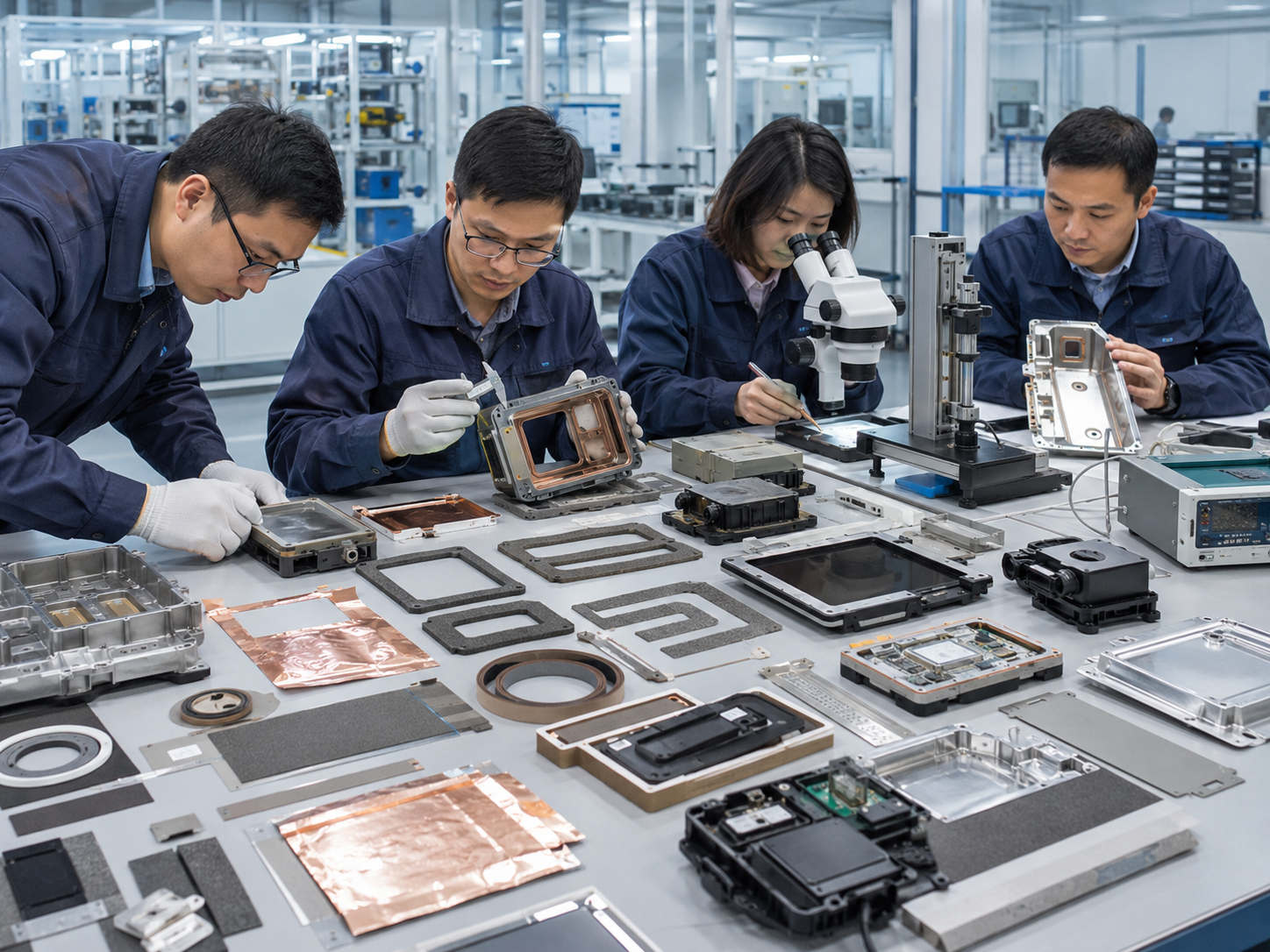
Conductive adhesive die cut parts help establish electrical continuity while simplifying assembly.
Typical applications include:
- Shield grounding
- PCB shielding
- Connector grounding
- Metal enclosure bonding
- Display shielding
- Antenna assemblies
Common materials include:
- Conductive acrylic adhesive
- Copper foil tape
- Aluminum foil tape
- Conductive transfer adhesive
- Conductive PET tape
Proper adhesive selection ensures reliable bonding without interrupting electrical conductivity.
EMI Shielding for EV Battery Systems
Electric vehicles generate higher electromagnetic noise than conventional vehicles due to high-voltage electrical systems.
EMI shielding materials are commonly used in:
- Battery Management Systems
- High-voltage connectors
- Power distribution units
- DC/DC converters
- On-board chargers
- Inverters
- Motor controllers
These shielding components help improve communication stability while protecting nearby electronic modules.
Compression Design Affects Shielding Performance
An EMI gasket must maintain continuous electrical contact throughout its service life.
Important design factors include:
| Factor | Why It Matters |
|---|---|
| Gasket thickness | Determines contact pressure |
| Compression ratio | Maintains electrical continuity |
| Conductivity | Improves shielding effectiveness |
| Material recovery | Supports long-term reliability |
| Housing flatness | Ensures uniform contact |
| Mounting pressure | Prevents signal leakage |
Insufficient compression may reduce shielding effectiveness, while excessive compression may permanently deform the gasket.
Precision Die Cutting Improves EMI Performance
Accurate manufacturing is essential for reliable EMI shielding.
Precision die cutting provides:
- Tight dimensional tolerances
- Clean cutting edges
- Accurate hole positioning
- Stable gasket thickness
- Precise adhesive placement
- Assembly-ready components
Poor converting may result in:
- Incomplete grounding
- Shield gaps
- Adhesive lifting
- Signal leakage
- Assembly misalignment
Consistent manufacturing quality directly affects EMI shielding performance.
Quality Control for EMI Gaskets
Automotive EMI shielding components require strict inspection.
Important inspection items include:
| Inspection Item | Purpose |
|---|---|
| Material verification | Confirms approved shielding material |
| Conductivity | Verifies electrical performance |
| Dimensions | Ensures assembly accuracy |
| Thickness | Controls compression |
| Adhesive position | Improves installation |
| Compression recovery | Maintains shielding contact |
| Edge cleanliness | Prevents contamination |
| Surface condition | Protects conductivity |
| Packaging condition | Prevents deformation |
Stable quality helps maintain reliable shielding throughout vehicle production.
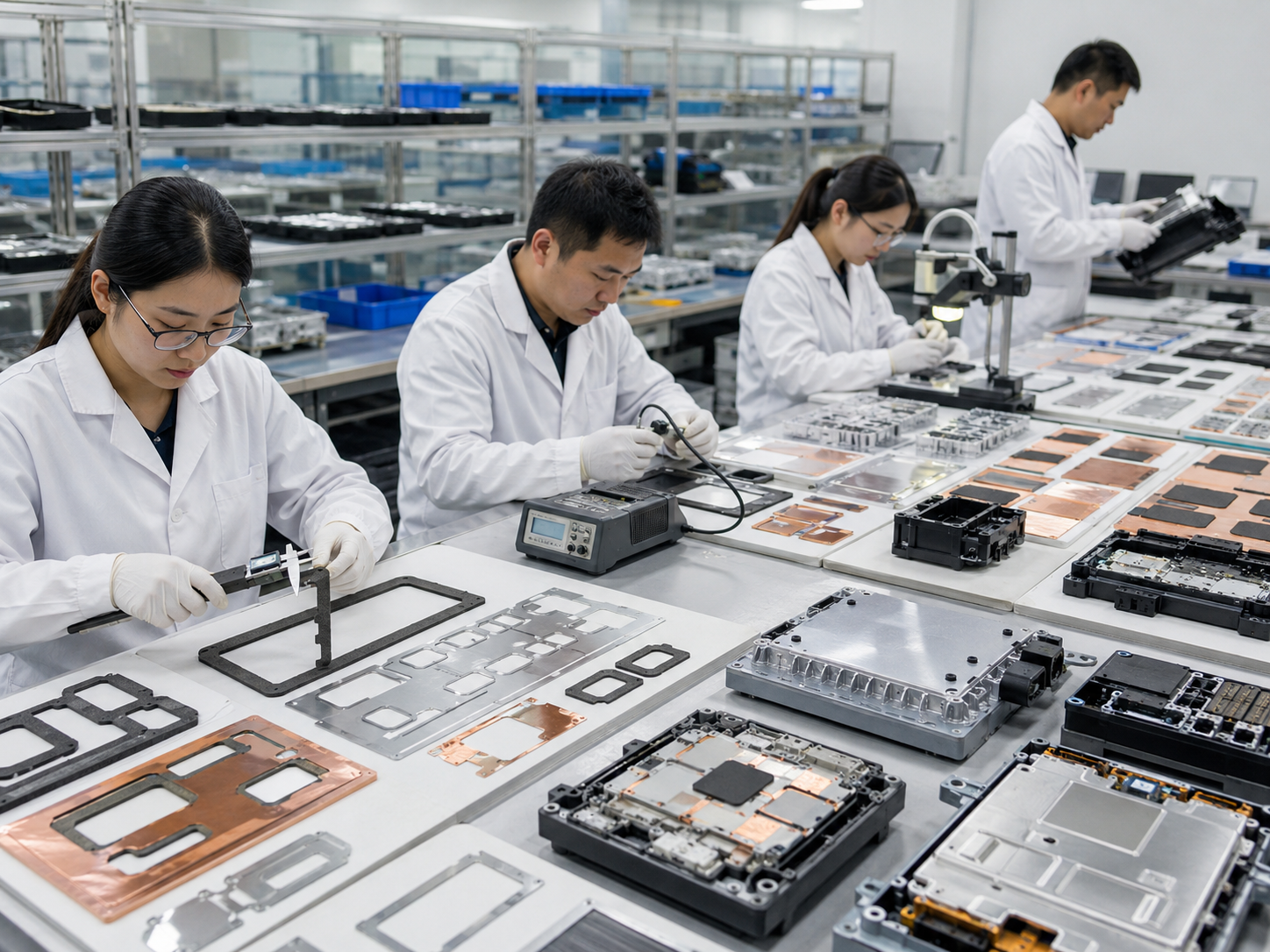
How Sanken Supports Automotive EMI Shielding Projects
Sanken provides precision die cut EMI shielding solutions for automotive OEMs and Tier 1 suppliers.
Our capabilities include:
- Conductive foam gasket converting
- Conductive fabric-over-foam converting
- Conductive adhesive tape converting
- Copper foil die cutting
- Aluminum foil die cutting
- Conductive PET film converting
- PET and PI insulation films
- Protective films
- Multilayer lamination
- Precision die cutting
- Sample development
- Quality inspection
- Assembly-ready packaging
Every project is reviewed according to shielding effectiveness, electrical conductivity, compression characteristics, environmental resistance, adhesive compatibility, dimensional tolerance, and production efficiency.
Our goal is to help customers reduce electromagnetic interference, improve signal stability, simplify assembly, and achieve reliable high-volume production.
Buyer Checklist Before Requesting Samples
To develop effective automotive EMI shielding components, buyers should provide:
- 2D drawing
- 3D CAD model (if available)
- Vehicle application
- Electronic module type
- Shielding effectiveness requirement
- Material preference
- Thickness requirement
- Compression requirement
- Operating temperature
- Adhesive requirement
- Grounding method
- Environmental testing requirement
- Packaging format
- Expected annual volume
- Existing sample (if available)
Providing complete engineering information helps optimize material selection while reducing development time.
FAQ
What are die cut EMI gaskets?
Die cut EMI gaskets are precision shielding components made from conductive materials that reduce electromagnetic interference while maintaining electrical grounding between electronic assemblies.
What materials are commonly used for automotive EMI shielding?
Common materials include conductive foam, conductive fabric-over-foam, conductive silicone rubber, copper foil, aluminum foil, conductive PET films, and conductive adhesive tapes.
Why are conductive foam gaskets widely used?
They combine electromagnetic shielding, compression recovery, electrical grounding, and lightweight construction, making them suitable for automotive electronic modules.
Why are EMI gaskets important in electric vehicles?
Electric vehicles generate higher electromagnetic noise from high-voltage systems. EMI gaskets help protect sensitive electronics such as BMS units, inverters, radar modules, cameras, and communication systems.
Why is compression important for EMI shielding?
Proper compression ensures continuous electrical contact between conductive surfaces, maintaining effective shielding throughout the product's service life.
Can Sanken manufacture custom automotive EMI shielding components?
Yes. Sanken manufactures custom conductive foam gaskets, conductive fabric-over-foam gaskets, conductive adhesive components, copper and aluminum foil parts, conductive PET films, insulation films, and multilayer EMI shielding solutions for automotive electronic systems.
Conclusion
As vehicles become increasingly electronic, effective EMI shielding has become essential for system stability and reliability. Precision die cut conductive foam, conductive fabric-over-foam, conductive tapes, and multilayer shielding components help protect automotive electronics from electromagnetic interference while supporting efficient assembly and long-term durability.
By combining suitable conductive materials with precision die cutting and optimized compression design, automotive manufacturers can improve communication stability, protect sensitive electronic systems, and reduce warranty risks.
At Sanken, we help automotive OEMs and Tier suppliers develop precision die cut EMI shielding solutions that deliver reliable performance from prototype development through high-volume production.