
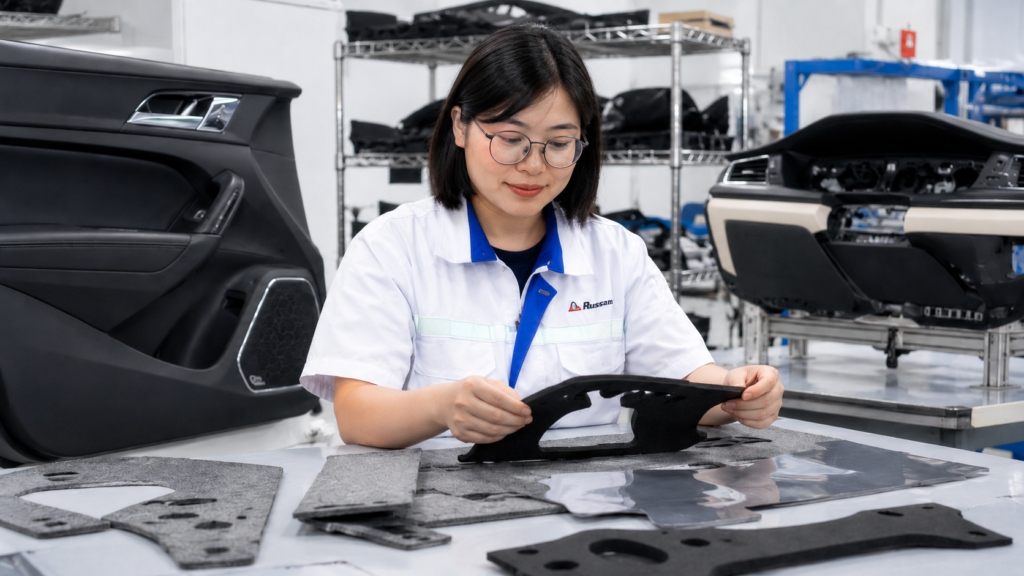
Automotive interior modules are becoming more complex every year. Modern vehicles require better noise control, improved comfort, lighter structures, and higher integration of electronic functions. To achieve this, manufacturers rely heavily on precision materials such as foam, felt, and film-based components.
However, these materials only deliver full performance when they are converted into precise shapes using die cutting technology.
At Sanken (三肯), we see automotive interior systems not as single materials, but as multi-layer functional assemblies where foam, felt, and film parts work together to achieve performance, comfort, and durability.
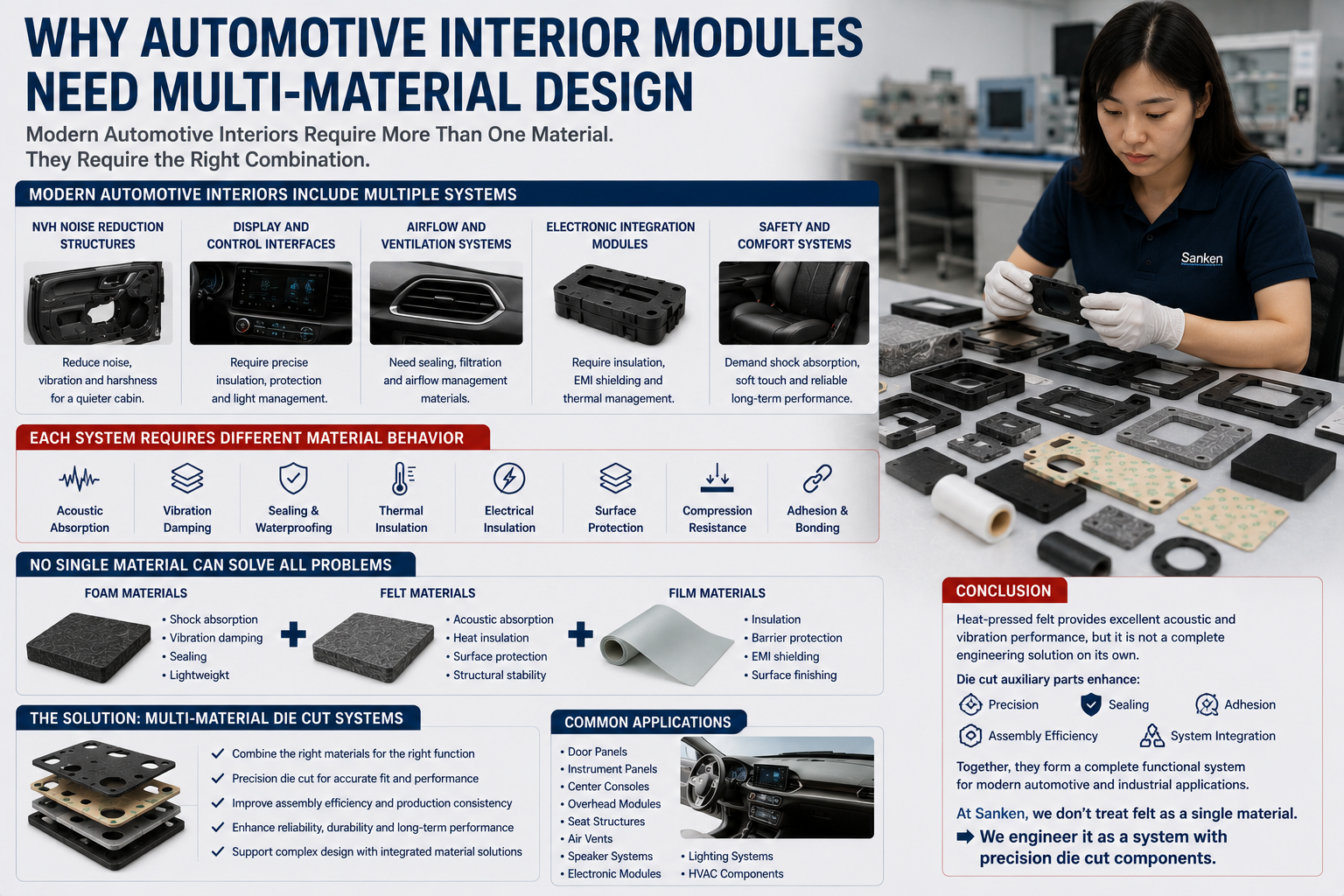
Why Automotive Interior Modules Need Multi-Material Design
Automotive interiors are no longer just decorative systems.
They now include:
- NVH noise reduction structures
- Display and control interfaces
- Airflow and ventilation systems
- Electronic integration modules
- Safety and comfort systems
Each system requires different material behavior.
No single material can solve all problems.
That is why foam, felt, and film components are combined together.
Theme: Automotive Interior Die Cut Material Systems
1. Die Cut Foam: Cushioning and Vibration Control
Foam is one of the most important materials in automotive interiors.
It is widely used for:
- vibration damping
- impact absorption
- gap filling
- structural support
Common foam types include:
- PE foam
- EVA foam
- PU foam
- EPDM foam
Why die cutting matters
Foam must be precisely shaped to:
- fit tight interior spaces
- control compression force
- maintain uniform thickness
- avoid assembly deformation
Without die cutting, foam cannot achieve repeatable performance in mass production.
2. Die Cut Felt: NVH and Acoustic Performance
Felt materials are essential for noise, vibration, and harshness (NVH) control.
They are commonly used in:
- door panels
- dashboards
- floor insulation
- roof liners
- trim structures
Key functions of felt:
- sound absorption
- vibration reduction
- surface protection
- thermal insulation
Die cut felt ensures:
- precise fit to interior geometry
- stable acoustic performance
- reduced installation variation
Theme: Automotive NVH Felt and Foam Structures
3. Die Cut Film Parts: Protection and Functional Layers
Film materials provide precision and functional protection inside interior modules.
Common materials include:
- PET films
- PC films
- TPU films
- protective films
- adhesive films
Their functions include:
- electrical insulation
- surface protection
- light control
- moisture barrier
- structural reinforcement
Film components are especially important in:
- display modules
- control panels
- sensor-integrated interiors
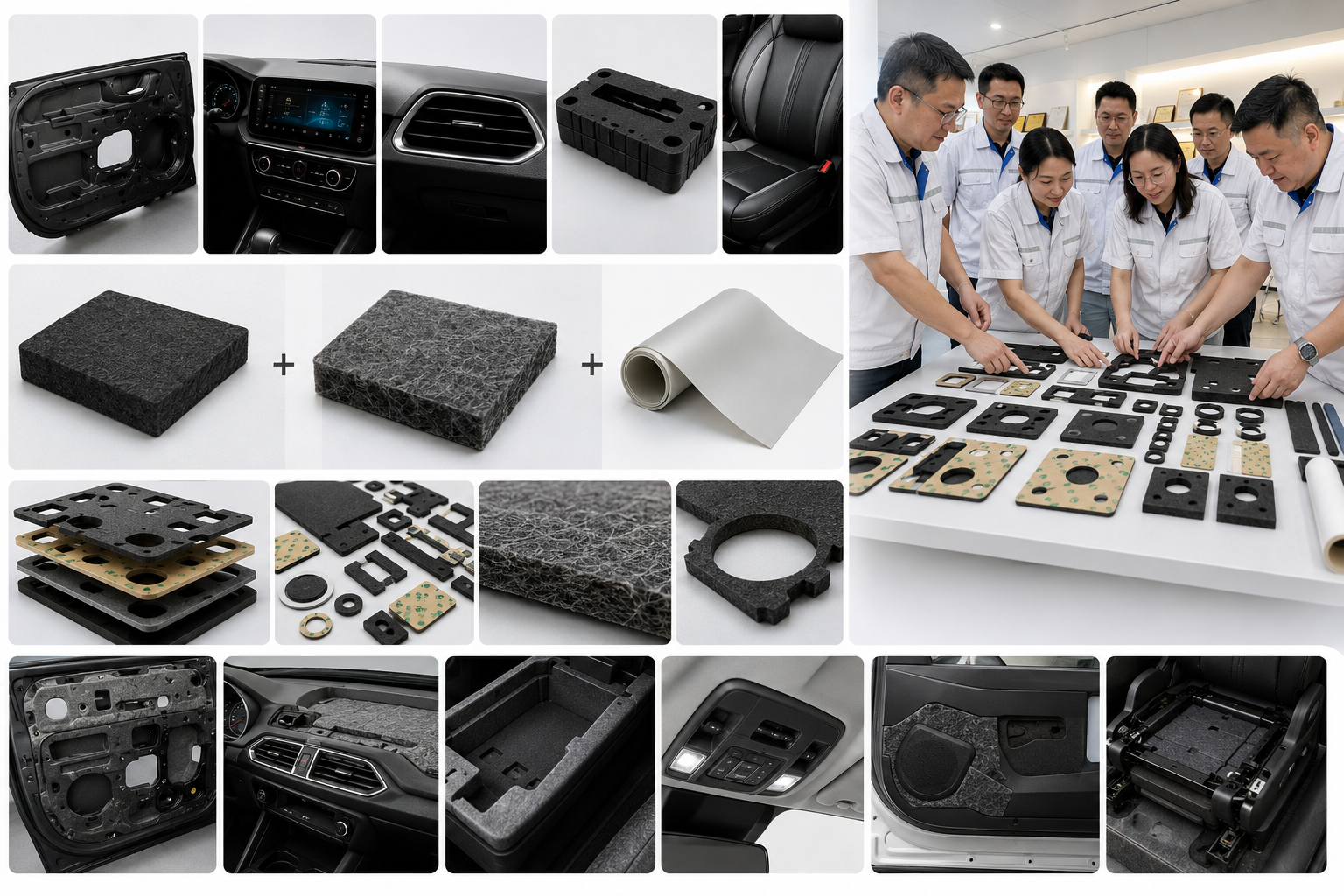
4. Multi-Layer Integration: Foam + Felt + Film
Modern automotive interior systems rarely use single materials.
Instead, they combine layers:
- foam + felt → cushioning + NVH
- felt + film → acoustic + insulation
- foam + adhesive film → structural fixation
- film + foam + felt → multi-functional modules
Benefits of integration:
- fewer parts
- easier assembly
- higher consistency
- improved performance
Die cutting makes this integration possible with high precision.
5. Improving Assembly Efficiency in Interior Modules
Without die cut parts, assembly requires:
- manual trimming
- positioning adjustments
- multiple installation steps
With die cut components:
- faster installation
- fewer assembly errors
- stable positioning
- reduced labor cost
This is critical for automotive mass production lines.
6. Enhancing NVH Performance in Vehicle Interiors
NVH performance is one of the most important metrics in modern vehicles.
Die cut foam and felt improve NVH by:
- absorbing vibration energy
- reducing panel resonance
- blocking noise transmission
- filling structural gaps
Combined systems provide:
- quieter cabins
- improved ride comfort
- premium vehicle feel
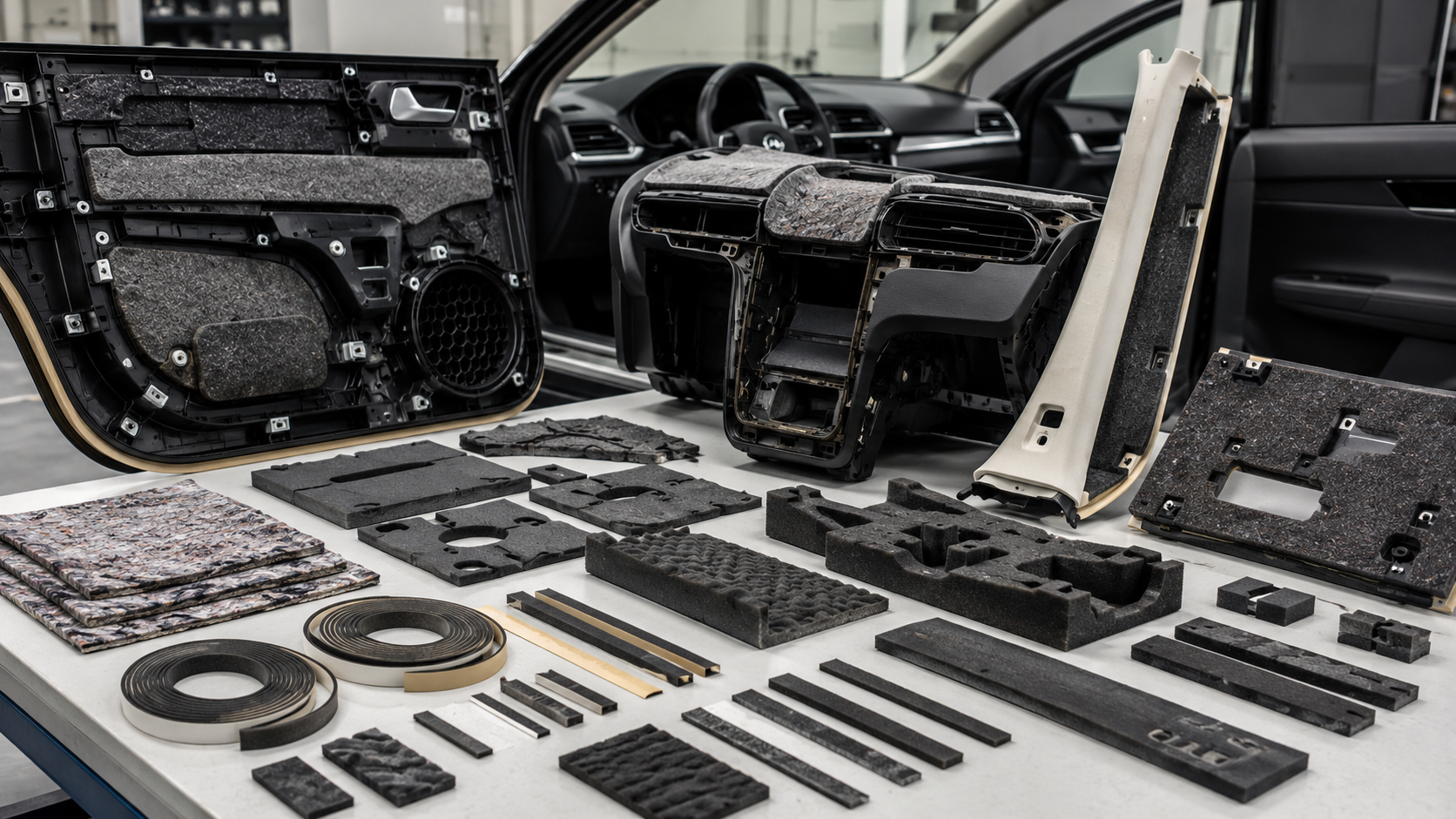
Theme: Automotive Interior Module Assembly Components
7. Supporting Lightweight Automotive Design
Weight reduction is a key trend in automotive engineering.
Die cut foam, felt, and film parts help reduce weight by:
- replacing metal brackets
- integrating multiple functions
- eliminating unnecessary fasteners
This supports:
- fuel efficiency
- EV battery range
- structural optimization
8. Improving Long-Term Durability and Stability
Interior components must withstand:
- temperature changes
- vibration exposure
- humidity
- long-term compression
Die cut materials ensure:
- stable geometry over time
- consistent performance
- reduced material fatigue
Proper material selection is critical for durability.
Common Applications in Automotive Interior Modules
Die cut foam, felt, and film components are widely used in:
Door Systems
- NVH damping pads
- sealing layers
- vibration isolation
Dashboard Systems
- cushioning layers
- display protection
- acoustic insulation
Roof & Floor Systems
- sound absorption felt
- thermal insulation layers
Electronic Interior Modules
- display protection films
- sensor insulation layers
- adhesive mounting layers
How Sanken Manufacturing Supports Automotive Interior Systems
At Sanken (三肯), we provide integrated solutions for automotive interior modules:
- precision die cutting
- foam and felt converting
- film processing and lamination
- multi-layer assembly solutions
- adhesive integration systems
- cleanroom production capability
We support:
- automotive OEMs
- Tier 1 suppliers
- interior system manufacturers
- EV platform developers
Featured Snippet Summary
Die cut foam, felt, and film parts support automotive interior modules by providing cushioning, noise reduction, insulation, vibration control, surface protection, and multi-layer structural integration for improved comfort and assembly efficiency.
Conclusion
Automotive interior modules rely on more than just design—they depend on material engineering.
Die cut foam, felt, and film components work together to deliver:
- comfort
- noise reduction
- lightweight structure
- assembly efficiency
- long-term durability
At Sanken, we don’t just supply materials.
👉 We engineer interior systems through precision die cutting and multi-material integration.