
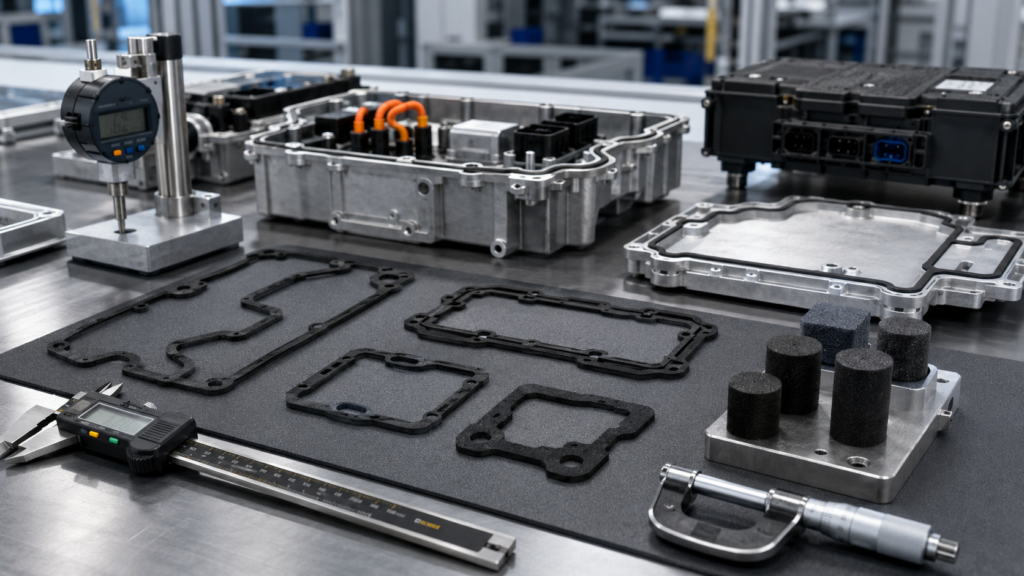
How Die Cut Foam Parts Protect Products from Shock and Vibration
Products are exposed to shock and vibration throughout their lifecycle. Components may experience drops during transportation, vibration during vehicle operation, repeated impacts during industrial use, or movement during assembly. Without proper protection, these forces can lead to cosmetic damage, component failure, reduced product lifespan, and costly warranty claims.
Die cut foam parts protect products from shock and vibration by absorbing impact energy, isolating moving components, reducing stress concentration, cushioning sensitive parts, and preventing unwanted movement. By converting foam materials into precise custom shapes, manufacturers can provide targeted protection exactly where it is needed without increasing product size or weight.
From automotive electronics and consumer devices to industrial equipment and medical products, die-cut foam has become one of the most effective solutions for shock and vibration management.
Why Shock and Vibration Damage Products
Shock and vibration generate forces that travel through a product structure.
Common sources include:
- Transportation drops
- Vehicle movement
- Road vibration
- Industrial machinery
- Repeated user handling
- Shipping impacts
These forces can cause:
- Cracked housings
- Loose connectors
- Damaged displays
- Sensor failures
- Wire wear
- Component misalignment
As products become lighter and more compact, they often become more sensitive to these forces.
Theme: Precision Die Cut Foam Components
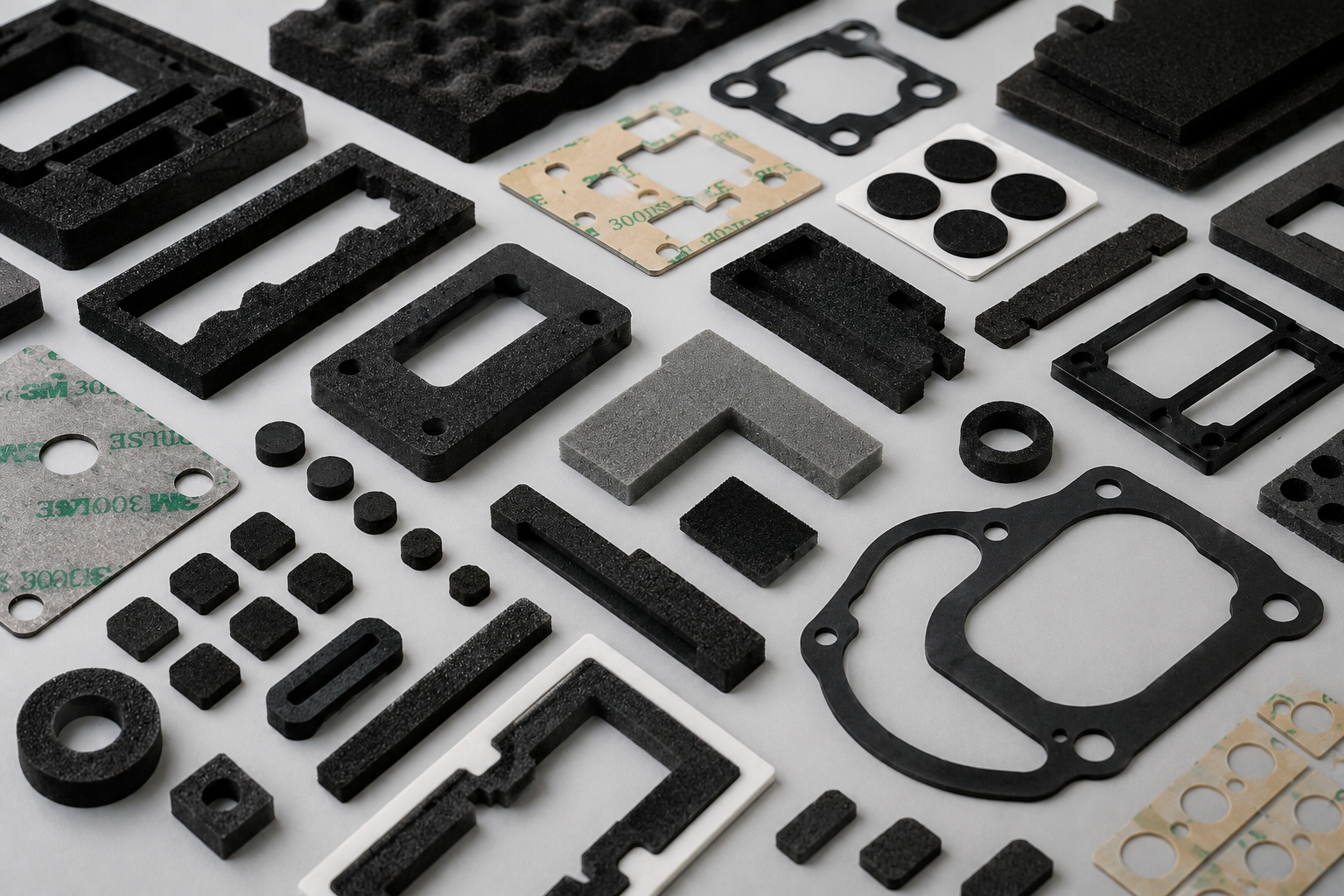
How Foam Absorbs Shock Energy
Foam contains a cellular structure filled with air.
When an impact occurs, the foam compresses and absorbs part of the energy before it reaches the protected component.
Instead of transmitting the full force directly to the product, the foam:
- Compresses
- Distributes the load
- Dissipates energy
- Reduces peak impact force
This cushioning effect helps prevent damage to fragile components.
Typical Applications
- Electronic displays
- Camera modules
- Battery systems
- Sensors
- Medical devices
How Foam Reduces Vibration
Unlike shock, vibration occurs continuously over time.
Small vibrations may seem harmless, but repeated cycles can cause:
- Fastener loosening
- Connector wear
- Wire fatigue
- Noise generation
- Component movement
Die-cut foam acts as a vibration isolator.
The foam separates components and absorbs vibration energy before it can travel through the product structure.
Benefits include:
- Improved durability
- Reduced wear
- Better reliability
- Lower noise levels
Theme: Foam Vibration Isolation Applications
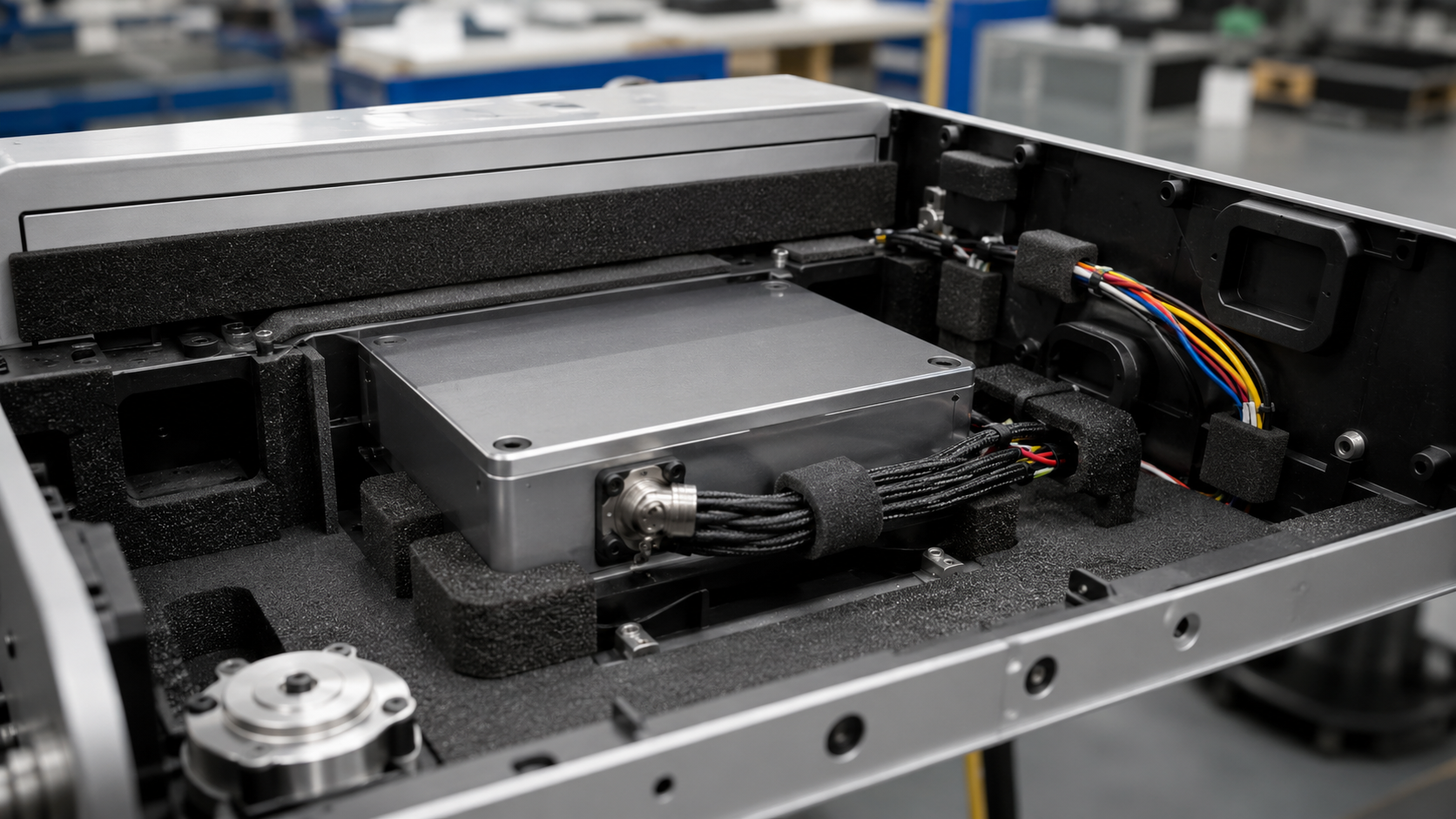
Preventing Component Movement
One common cause of product failure is uncontrolled component movement.
Examples include:
- Batteries shifting inside housings
- Electronic modules vibrating
- Displays moving during impact
- Internal parts rubbing together
Custom die-cut foam fills gaps and maintains controlled compression.
This helps:
- Stabilize components
- Prevent impact damage
- Reduce assembly variation
- Improve long-term reliability
Even a small foam pad can dramatically improve product performance.
Protecting Sensitive Electronics
Modern electronics contain delicate components that are highly sensitive to shock and vibration.
Applications include:
- Smartphones
- Tablets
- Wearable devices
- Automotive electronics
- Medical equipment
Die-cut foam helps protect:
- Circuit boards
- Sensors
- Cameras
- Battery packs
- Connectors
This protection is especially important during transportation and field use.
Reducing Noise and Rattles
Foam not only protects against physical damage but also improves user experience.
Vibration often creates:
- Buzzing
- Squeaking
- Rattling
- Clicking sounds
Die-cut foam reduces these issues by:
- Eliminating gaps
- Preventing friction
- Absorbing vibration
- Maintaining compression force
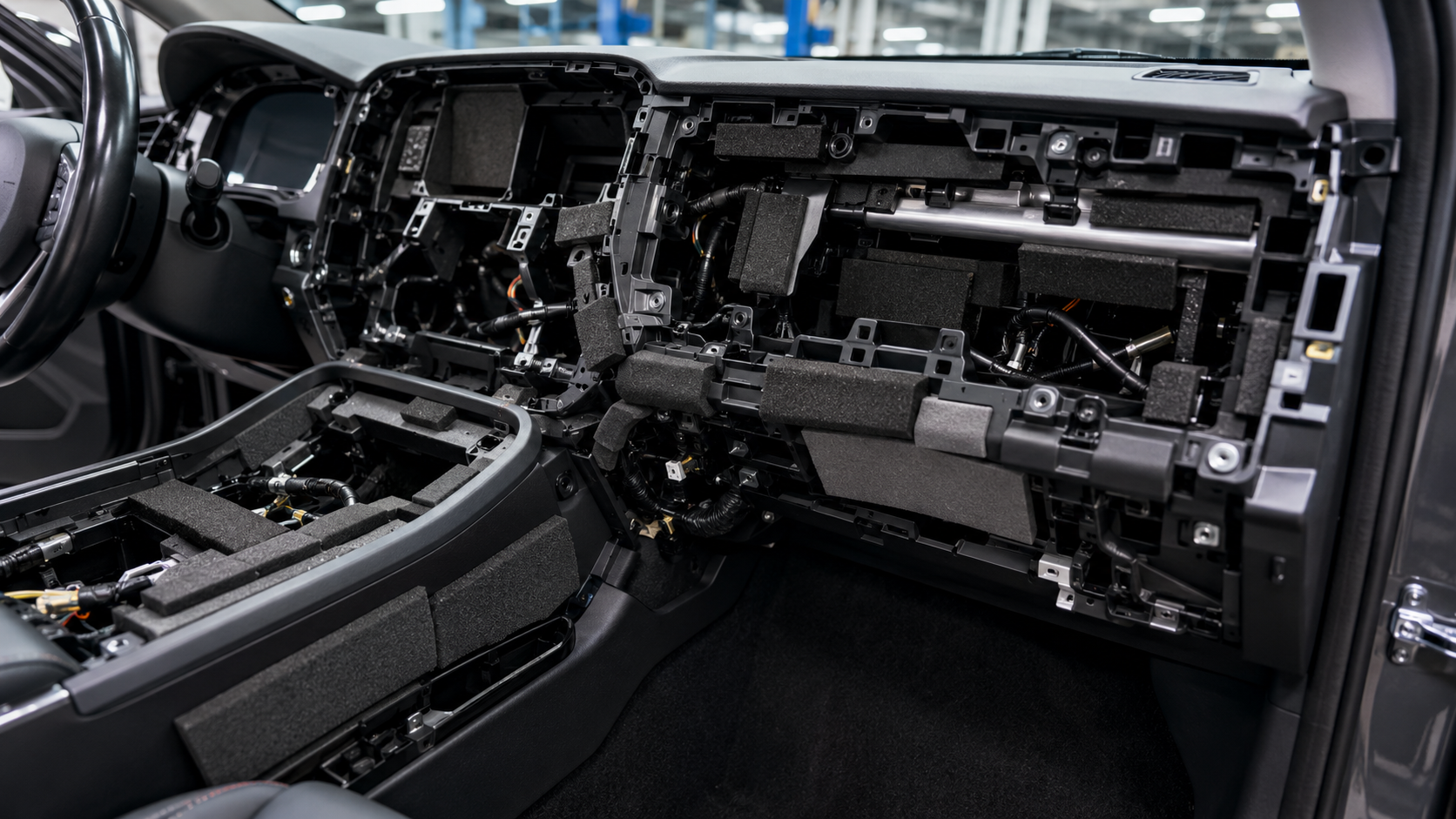
This is why foam is widely used in automotive NVH applications.
Theme: Automotive Foam Cushioning Solutions
Common Foam Materials Used for Shock Protection
EVA Foam
Advantages:
- Excellent cushioning
- Good durability
- Long service life
Applications:
- Electronics
- Packaging
- Automotive parts
PE Foam
Advantages:
- Lightweight
- Consistent performance
- Moisture resistance
Applications:
- Packaging inserts
- Industrial products
- Electronic assemblies
PU Foam
Advantages:
- Superior energy absorption
- Soft cushioning
Applications:
- Sensitive instruments
- Medical devices
- Precision electronics
Silicone Foam
Advantages:
- High-temperature resistance
- Long-term compression stability
Applications:
- Automotive electronics
- Industrial equipment
- Battery systems
Why Precision Die Cutting Matters
Foam protection works best when it fits correctly.
Poorly designed foam may:
- Leave unsupported areas
- Create excessive compression
- Interfere with assembly
- Reduce protection performance
Precision die cutting ensures:
- Accurate dimensions
- Consistent thickness
- Reliable positioning
- Repeatable production quality
Custom shapes provide protection exactly where it is needed.
Applications Across Industries
Automotive Industry
Used for:
- Battery cushioning
- Electronic module protection
- NVH control
- Sensor isolation
Consumer Electronics
Used for:
- Display protection
- Camera cushioning
- Battery support
- Impact absorption
Medical Devices
Used for:
- Instrument protection
- Vibration control
- Sensitive component isolation
Industrial Equipment
Used for:
- Shock protection
- Noise reduction
- Equipment stabilization
How Sanken Manufacturing Supports Foam Protection Solutions
Dongguan Sanken Electronics Manufacturing Co., Ltd. specializes in custom die-cut foam and precision material converting solutions.
Our capabilities include:
- Precision die cutting
- EVA foam converting
- PE foam converting
- PU foam processing
- Non-woven felt manufacturing
- Adhesive laminating
- Multi-layer assembly solutions
Key Advantages
- OEM and ODM customization
- ISO 9001 certified quality management
- RoHS and REACH compliant materials
- Domestic and overseas production bases
- Cleanroom precision manufacturing
- Tool development from drawings or samples
We support automotive NVH applications, consumer electronics, wearable devices, industrial equipment, and custom protective packaging projects.
Featured Snippet Summary
Die-cut foam parts protect products from shock and vibration by absorbing impact energy, isolating moving components, preventing unwanted movement, reducing stress concentration, and cushioning sensitive parts. Common materials include EVA foam, PE foam, PU foam, and silicone foam, which can be custom die cut for precise protection.
Conclusion
Shock and vibration can significantly reduce product reliability if sensitive components are left unprotected. Custom die-cut foam parts provide an efficient solution by absorbing impact energy, reducing vibration transfer, and stabilizing internal components.
By combining the right foam material with precision die-cutting technology, manufacturers can improve product durability, reduce warranty risks, enhance user experience, and protect valuable components throughout transportation and everyday use.