
How Die Cut Light Blocking Materials Improve Optical Performance?
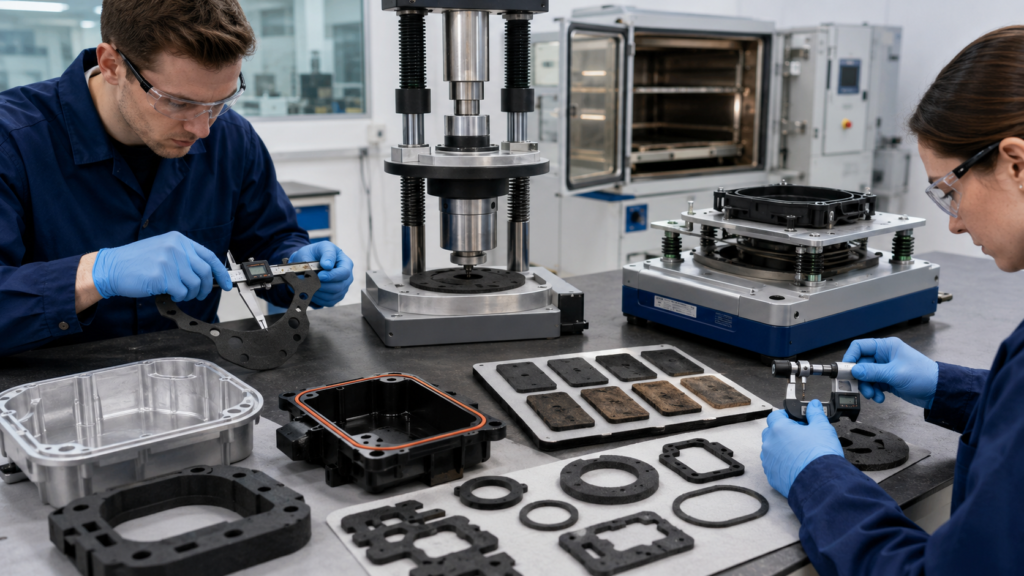
As displays, cameras, sensors, and wearable devices become smaller and more advanced, controlling unwanted light has become a critical part of product design. Even a tiny amount of stray light can reduce image quality, create display defects, interfere with sensors, and negatively impact user experience.
Die cut light blocking materials improve optical performance by preventing light leakage, reducing internal reflections, increasing image contrast, protecting sensor accuracy, and improving display uniformity. By converting light-shielding materials into precise custom shapes, manufacturers can control light exactly where it matters without changing the main product design.
Today, die-cut light-blocking components are widely used in smartphones, automotive displays, cameras, wearable devices, AR/VR systems, and optical sensors.
Why Stray Light Is a Problem
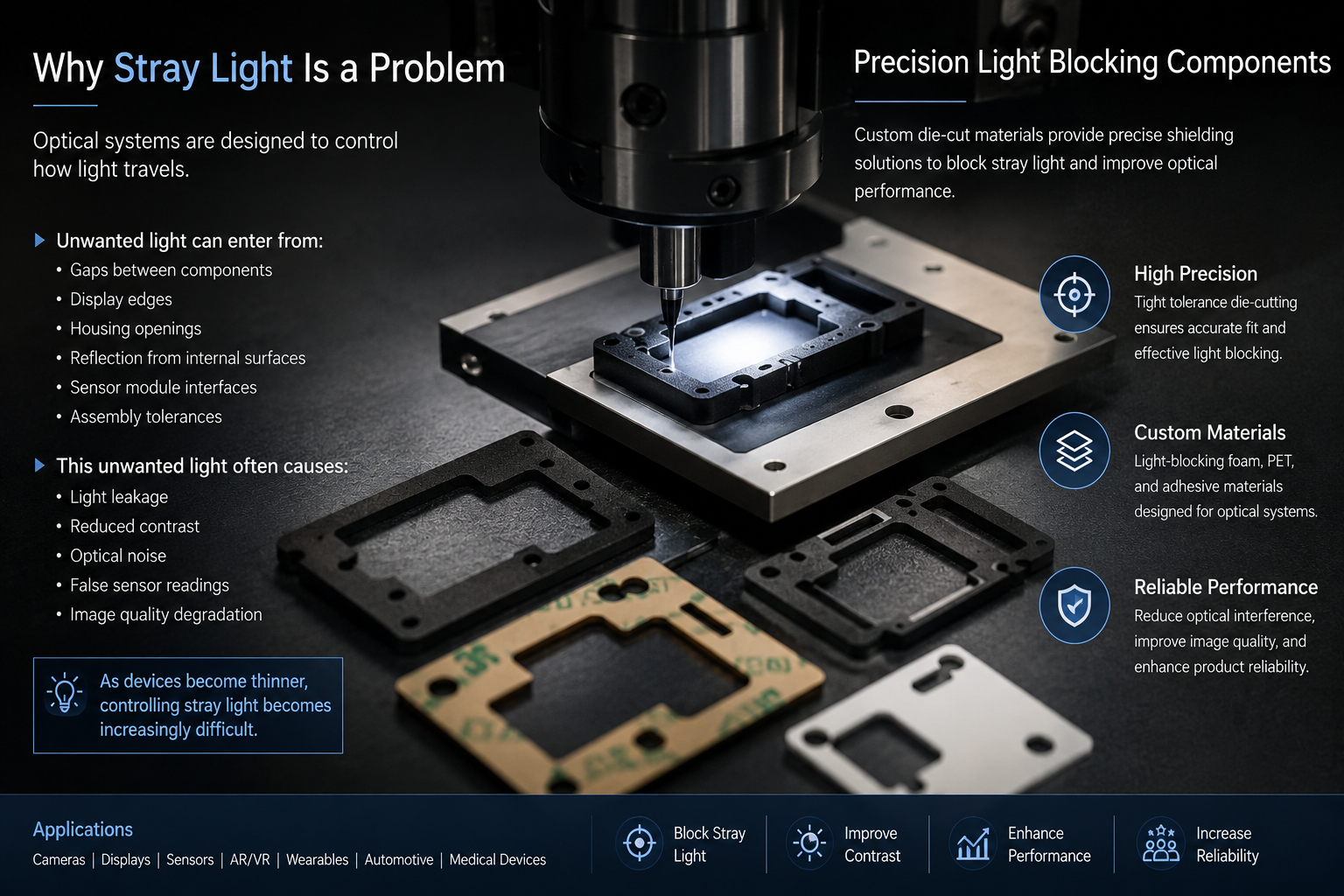
Optical systems are designed to control how light travels.
However, unwanted light can enter from:
- Gaps between components
- Display edges
- Housing openings
- Reflection from internal surfaces
- Sensor module interfaces
- Assembly tolerances
This unwanted light often causes:
- Light leakage
- Reduced contrast
- Optical noise
- False sensor readings
- Image quality degradation
As devices become thinner, controlling stray light becomes increasingly difficult.
Theme: Precision Light Blocking Components
What Are Light Blocking Materials?
Light blocking materials are engineered materials designed to absorb or block visible and infrared light.
Common materials include:
- Black PET films
- Black foam materials
- Light-blocking adhesive tapes
- Flocked materials
- Black non-woven fabrics
- Conductive light-shielding materials
Many of these materials are converted into custom die-cut shapes for precise installation.
The goal is simple:
Prevent unwanted light from reaching areas where it should not exist.
How Die Cutting Improves Light Control
Optical systems often contain:
- Camera openings
- Sensor windows
- Display frames
- Light guides
- Lens assemblies
Standard sheet materials cannot provide the precision required.
Die cutting allows manufacturers to create:
- Precise apertures
- Narrow frames
- Complex contours
- Micro openings
- Multi-layer assemblies
This ensures light-blocking materials fit perfectly around optical components.
Reducing Display Light Leakage
Display light leakage is one of the most common optical quality problems.
It occurs when light escapes from:
- Display edges
- Assembly gaps
- Internal openings
Users may notice:
- Bright spots
- Uneven brightness
- Reduced black levels
- Poor display appearance
Die-cut light-blocking foam and PET components create barriers that prevent light from escaping.
This improves:
- Display uniformity
- Visual quality
- Customer satisfaction
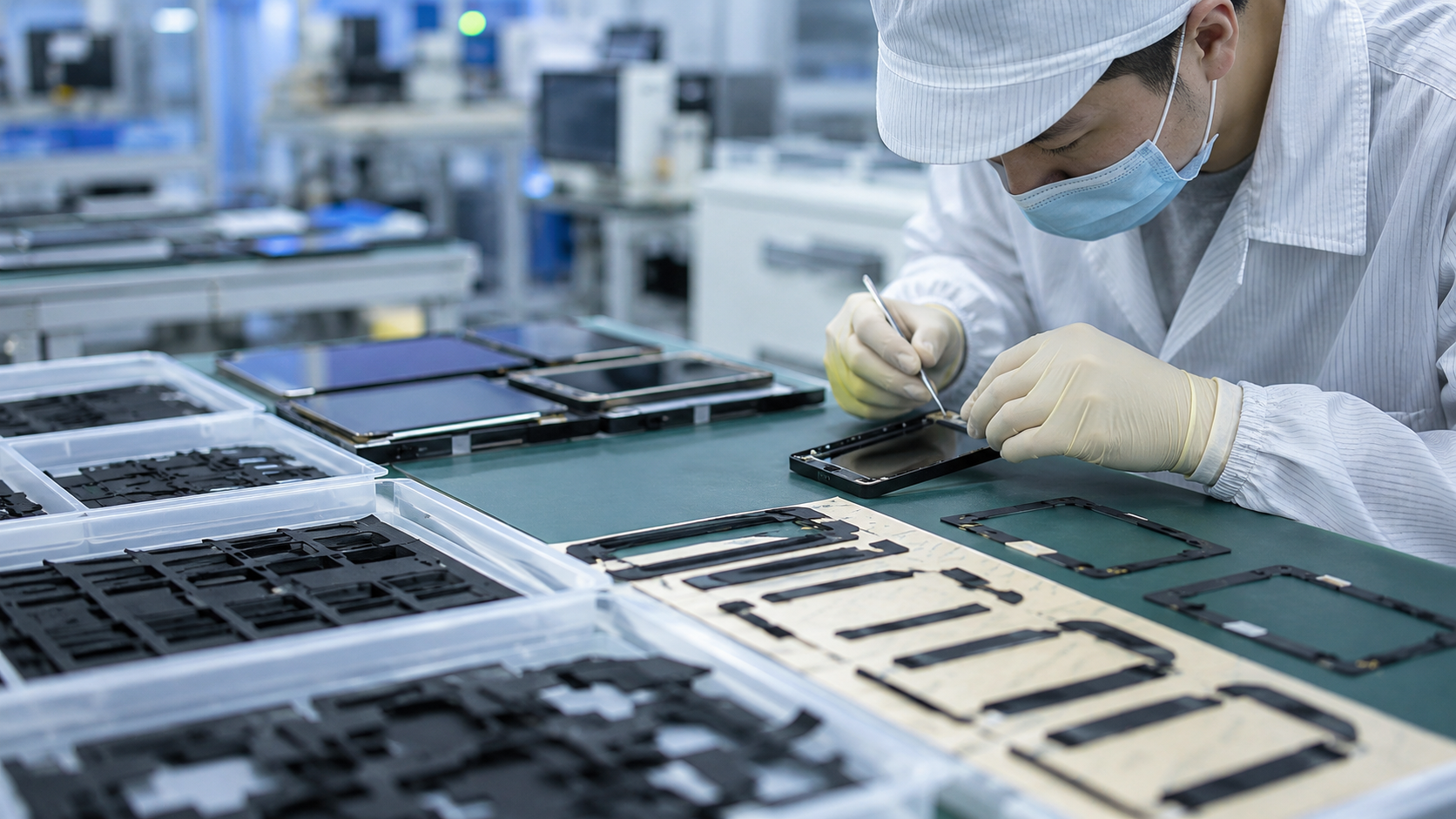
Theme: Optical Display Light Blocking Solutions
Improving Camera Module Performance
Camera systems are highly sensitive to stray light.
Uncontrolled reflections can cause:
- Lens flare
- Ghost images
- Reduced contrast
- Image artifacts
Custom die-cut light-blocking components help isolate optical paths and prevent reflected light from reaching the image sensor.
Applications include:
- Smartphone cameras
- Automotive cameras
- Security cameras
- Industrial vision systems
Even small light leaks can significantly reduce image quality.
Enhancing Sensor Accuracy
Many electronic devices use optical sensors.
Examples include:
- Proximity sensors
- Ambient light sensors
- Heart-rate monitors
- Face recognition systems
- LiDAR modules
These sensors require controlled light conditions.
Stray light may create:
- False readings
- Reduced sensitivity
- Inconsistent performance
Die-cut light-blocking materials help isolate the sensing area and improve measurement accuracy.
Why Wearable Devices Require Light Blocking
Wearable devices often combine:
- Optical sensors
- Displays
- LEDs
- Transparent covers
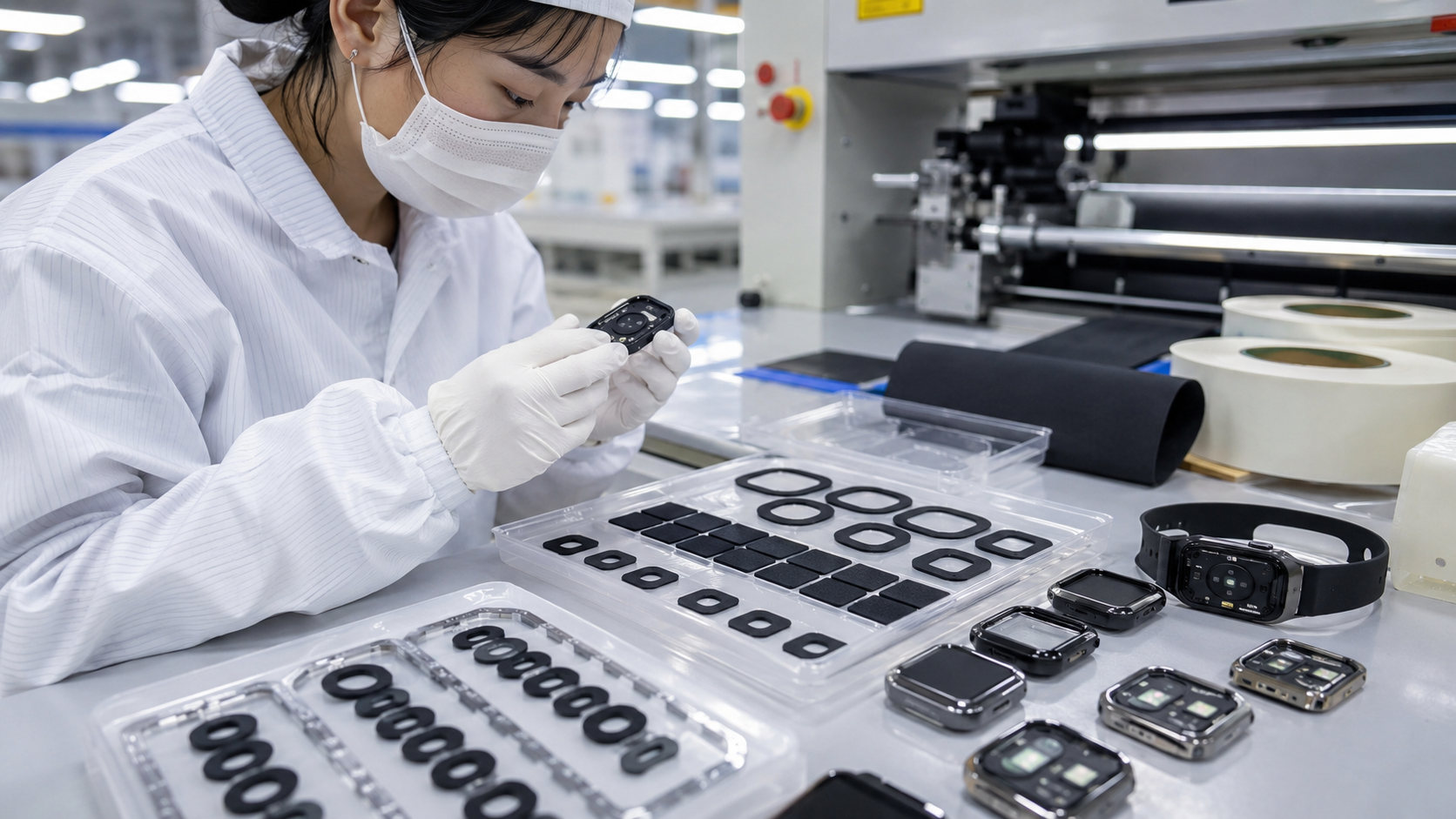
Space constraints increase the risk of light interference.
Custom die-cut light-shielding materials help:
- Improve sensor reliability
- Reduce optical cross-talk
- Enhance battery efficiency
- Improve user experience
This is particularly important for smartwatches and health-monitoring devices.
Theme: Optical Sensor Light Shielding Components
Common Light Blocking Materials Used in Electronics
Black PET Film
Advantages:
- Thin profile
- Excellent dimensional stability
- Clean die cutting
Applications:
- Display assemblies
- Camera modules
- Sensor components
Light Blocking Foam
Advantages:
- Gap filling
- Compression sealing
- Light absorption
Applications:
- Display edges
- Camera housings
- Sensor modules
Black Non-Woven Materials
Advantages:
- Good light absorption
- Flexible design options
Applications:
- Optical isolation
- Interior light management
Light Blocking Adhesive Tapes
Advantages:
- Easy installation
- Multi-functional performance
Applications:
- Display bonding
- Sensor isolation
- Camera assembly
Why Precision Die Cutting Is Critical
Optical assemblies often require tolerances measured in fractions of a millimeter.
Poorly cut parts can result in:
- Light leakage
- Misalignment
- Assembly difficulties
- Reduced optical performance
Precision die cutting ensures:
- Accurate apertures
- Clean edges
- Consistent dimensions
- Reliable installation
For high-volume electronics manufacturing, repeatability is essential.
How Sanken Manufacturing Supports Optical Applications
Dongguan Sanken Electronics Manufacturing Co., Ltd. specializes in precision optical die-cut materials and custom converting solutions.
Our capabilities include:
- Precision die cutting
- Black PET film converting
- Light-blocking foam manufacturing
- Optical adhesive laminating
- Multi-layer material assembly
- Cleanroom precision production
Key Advantages
- OEM and ODM customization
- ISO 9001 certified quality management
- RoHS and REACH compliant materials
- Domestic and overseas production bases
- Cleanroom manufacturing environment
- Tool development from drawings or samples
We support consumer electronics, automotive displays, wearable devices, camera systems, optical sensors, and industrial imaging applications.
Featured Snippet Summary
Die-cut light-blocking materials improve optical performance by preventing light leakage, reducing reflections, improving display uniformity, enhancing camera image quality, and increasing sensor accuracy. Common materials include black PET films, light-blocking foam, non-woven materials, and optical adhesive tapes converted into precision custom shapes.
Conclusion
As electronic and optical devices continue to become smaller and more sophisticated, controlling unwanted light is increasingly important. Die-cut light-blocking materials provide an effective solution by creating precise barriers that prevent light leakage and optical interference.
By combining advanced light-shielding materials with precision die-cutting technology, manufacturers can improve display quality, camera performance, sensor accuracy, and overall product reliability without changing the main product design.