
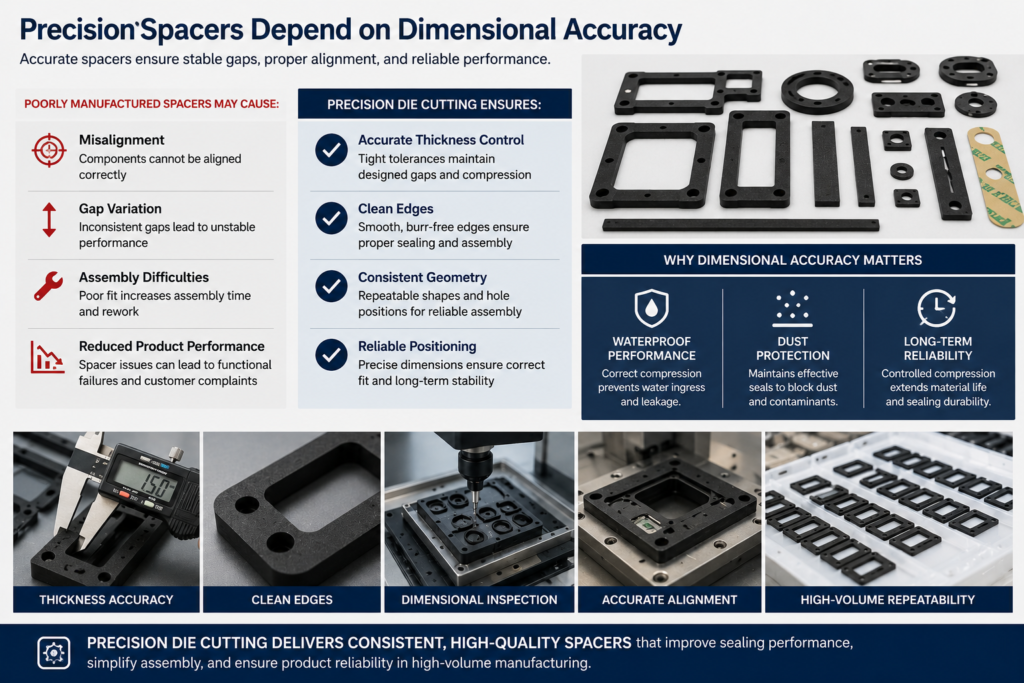
In modern manufacturing, even a gap difference of a few tenths of a millimeter can affect product performance. Displays may develop pressure marks, sensors may lose accuracy, batteries may move inside housings, and sealing components may fail to compress correctly. As products become smaller and more compact, maintaining consistent assembly gaps has become increasingly important.
Die cut spacers improve assembly gap control by creating precise separation distances between components, maintaining alignment, controlling compression, preventing unwanted contact, and ensuring consistent assembly dimensions. By converting foam, PET film, rubber, and other materials into custom spacer shapes, manufacturers can improve product quality without changing the main design.
Die-cut spacers are widely used in consumer electronics, automotive electronics, wearable devices, optical modules, and industrial equipment where dimensional consistency is critical.
Why Gap Control Matters
Many products contain multiple components assembled within limited space.
Examples include:
- Display modules
- Battery packs
- Camera assemblies
- Optical sensors
- Electronic housings
- Automotive control units
If assembly gaps vary, manufacturers may experience:
- Light leakage
- Component movement
- Excessive compression
- Poor sealing performance
- Vibration noise
- Cosmetic defects
Consistent gap control helps eliminate these issues.
Theme: Precision Die Cut Spacer Components
What Are Die Cut Spacers?
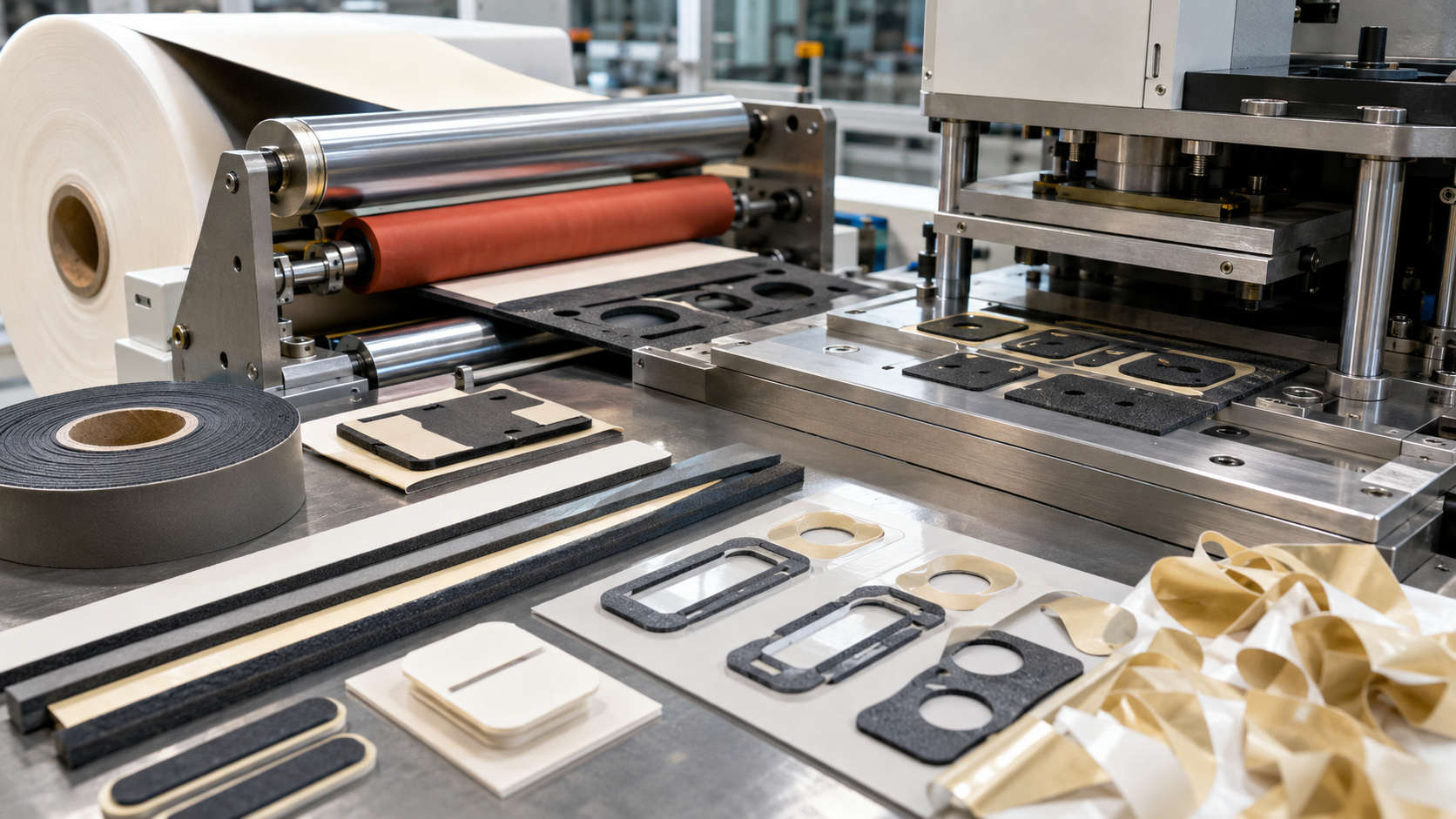
Die-cut spacers are precision-cut materials used to create controlled spacing between components.
Common spacer materials include:
- PET films
- Polycarbonate films
- Foam materials
- Silicone foam
- Rubber sheets
- Acrylic adhesive materials
- Non-woven materials
They can be manufactured with:
- Adhesive backing
- Positioning holes
- Complex geometries
- Multi-layer constructions
This allows spacers to integrate directly into assembly processes.
Maintaining Display Assembly Gaps
Display modules require highly controlled spacing.
Too much compression can cause:
- Display distortion
- Pressure marks
- Optical defects
Too little compression can create:
- Light leakage
- Poor sealing
- Reduced structural stability
Die-cut spacers help maintain precise distances between:
- LCD panels
- OLED displays
- Touch sensors
- Cover lenses
This improves both appearance and reliability.
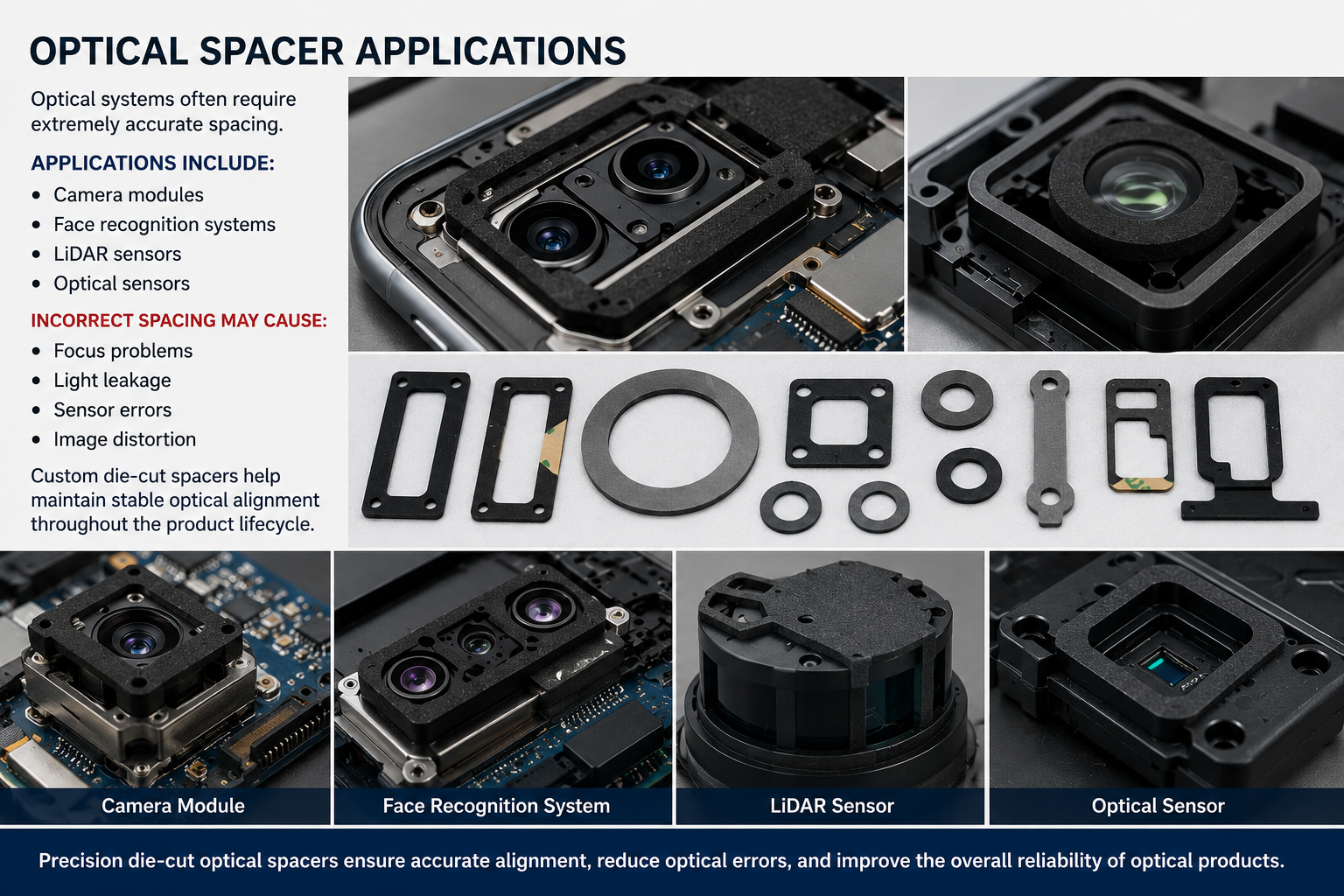
Improving Optical Module Performance
Optical systems often require extremely accurate spacing.
Applications include:
- Camera modules
- Face recognition systems
- LiDAR sensors
- Optical sensors
Incorrect spacing may cause:
- Focus problems
- Light leakage
- Sensor errors
- Image distortion
Custom die-cut spacers help maintain stable optical alignment throughout the product lifecycle.
Theme: Optical Spacer Applications
Controlling Battery Assembly Dimensions
Battery systems require careful spacing control.
Common objectives include:
- Preventing battery movement
- Managing compression forces
- Providing vibration isolation
- Protecting surrounding components
Die-cut foam spacers are frequently used in:
- Smartphones
- Tablets
- Wearable devices
- Automotive battery systems
Proper gap management improves both safety and reliability.
Preventing Component Contact
Many electronic products contain components that should never touch directly.
Examples include:
- Circuit boards
- Displays
- Sensors
- Battery cells
- Metal housings
Die-cut spacers create physical separation between components.
Benefits include:
- Reduced wear
- Improved insulation
- Lower vibration transfer
- Better reliability
This is particularly important for compact electronic assemblies.
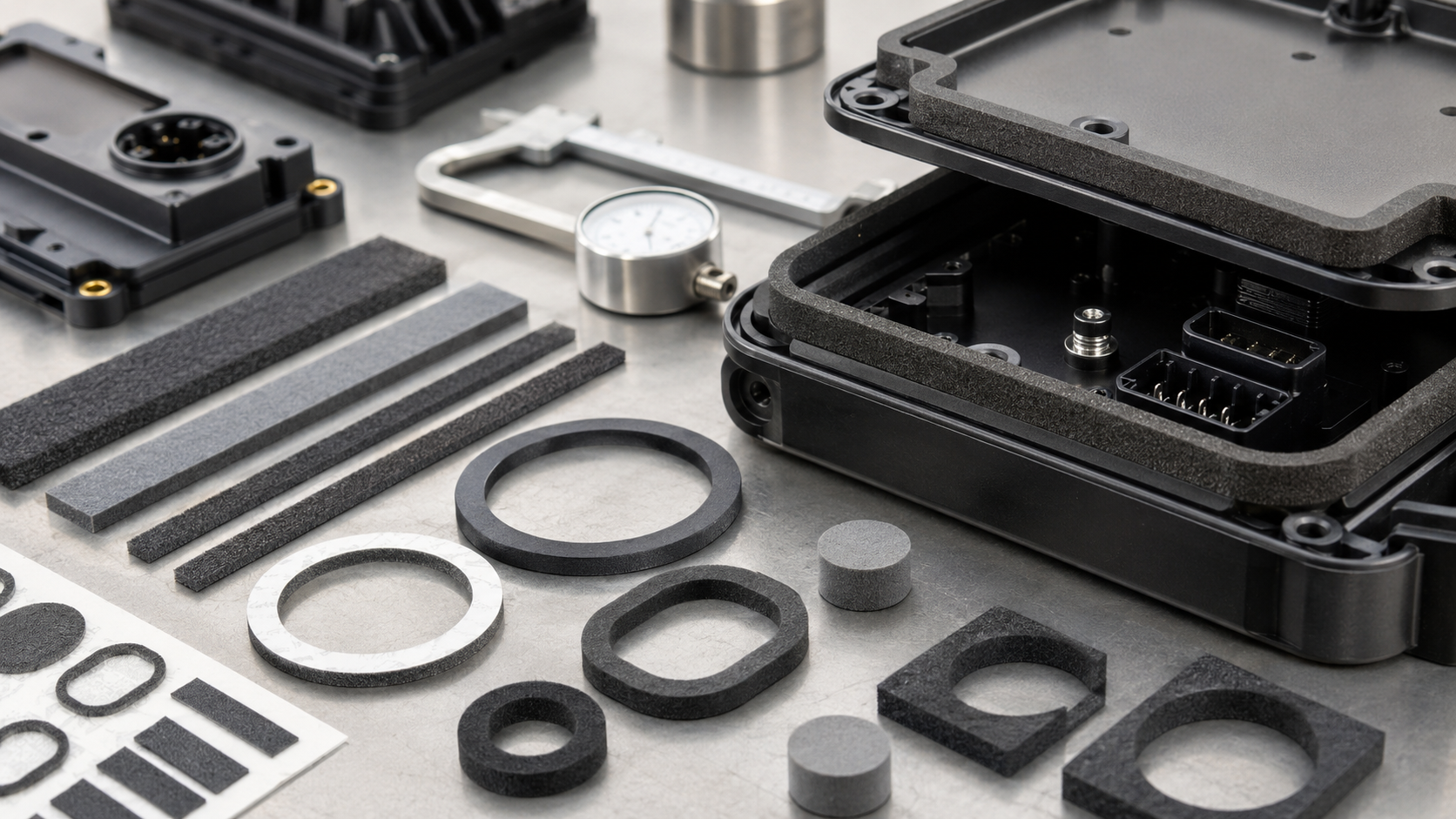
Supporting Sealing Performance
Sealing systems often depend on controlled compression.
If the gap is too large:
- Water may enter
- Dust protection decreases
If the gap is too small:
- Gaskets may be over-compressed
- Material life may be reduced
Die-cut spacers help maintain the correct compression range.
This improves:
- Waterproof performance
- Dust protection
- Long-term sealing reliability
Theme: Foam Spacer and Sealing Components
Reducing Assembly Variation
One of the biggest advantages of die-cut spacers is repeatability.
Without spacers, assembly dimensions may depend on:
- Operator technique
- Component tolerance variation
- Material deformation
Precision spacers create a fixed reference point.
This results in:
- More consistent assemblies
- Higher production yield
- Reduced rework
- Improved quality control
Common Materials Used for Die Cut Spacers
PET Film
Advantages:
- Excellent dimensional stability
- Thin profile
- Precise thickness control
Applications:
- Displays
- Optical systems
- Electronics
Foam Materials
Advantages:
- Gap filling
- Vibration damping
- Compression control
Applications:
- Batteries
- Automotive electronics
- Consumer electronics
Silicone Foam
Advantages:
- Temperature resistance
- Long-term compression stability
Applications:
- Automotive systems
- Industrial electronics
Rubber Materials
Advantages:
- Durability
- Shock absorption
Applications:
- Sealing systems
- Mechanical assemblies
Why Precision Die Cutting Matters
Spacer performance depends heavily on dimensional accuracy.
Poorly manufactured spacers may cause:
- Misalignment
- Gap variation
- Assembly difficulties
- Reduced product performance
Precision die cutting ensures:
- Accurate thickness control
- Clean edges
- Consistent geometry
- Reliable positioning
For high-volume manufacturing, repeatability is essential.
Applications Across Industries
Consumer Electronics
Used for:
- Display spacing
- Battery positioning
- Sensor alignment
Wearable Devices
Applications include:
- Optical sensor spacing
- Waterproof assemblies
- Compact electronic modules
Automotive Electronics
Used for:
- Camera systems
- Radar modules
- Display assemblies
- Battery systems
Industrial Equipment
Applications include:
- Sensor mounting
- Component isolation
- Precision assembly control
How Sanken Manufacturing Supports Spacer Applications
Dongguan Sanken Electronics Manufacturing Co., Ltd. specializes in precision die-cut spacer solutions for electronics, automotive, wearable devices, and industrial products.
Our capabilities include:
- Precision die cutting
- PET film converting
- Foam spacer manufacturing
- Adhesive laminating
- Multi-layer assembly solutions
- Rubber and silicone converting
- Cleanroom precision production
Key Advantages
- OEM and ODM customization
- ISO 9001 certified quality management
- RoHS and REACH compliant materials
- Domestic and overseas production bases
- Cleanroom manufacturing environment
- Tool development from drawings or samples
We support display modules, battery systems, optical components, automotive electronics, and custom sealing applications worldwide.
Featured Snippet Summary
Die-cut spacers improve assembly gap control by maintaining precise distances between components, controlling compression, preventing unwanted contact, improving alignment, and reducing assembly variation. They are commonly used in displays, batteries, optical modules, automotive electronics, and sealing systems.
Conclusion
Precise gap control is essential for modern product performance and reliability. Die-cut spacers provide a simple but highly effective solution for maintaining consistent assembly dimensions while reducing variation and improving quality.
By combining the right spacer material with precision die-cutting technology, manufacturers can improve assembly consistency, enhance product reliability, and achieve better performance without redesigning the main product structure.