

How Do Engine Dust Covers Lower Engine Bay Noise? A Practical NVH Engineering View
Engine dust covers are often underestimated.
Most people see them as simple protective plastic panels under the engine.
But in automotive NVH engineering, they are actually multi-functional acoustic and airflow control components.
They don’t just block dust.
They help shape how noise behaves inside the engine bay.
At Sanken (Dongguan Sanken Electronics Co., Ltd.), we treat these components as part of a larger noise management system, especially in modern lightweight and EV-oriented platforms.
So the real question is:
How do engine dust covers actually reduce engine bay noise in real driving conditions?
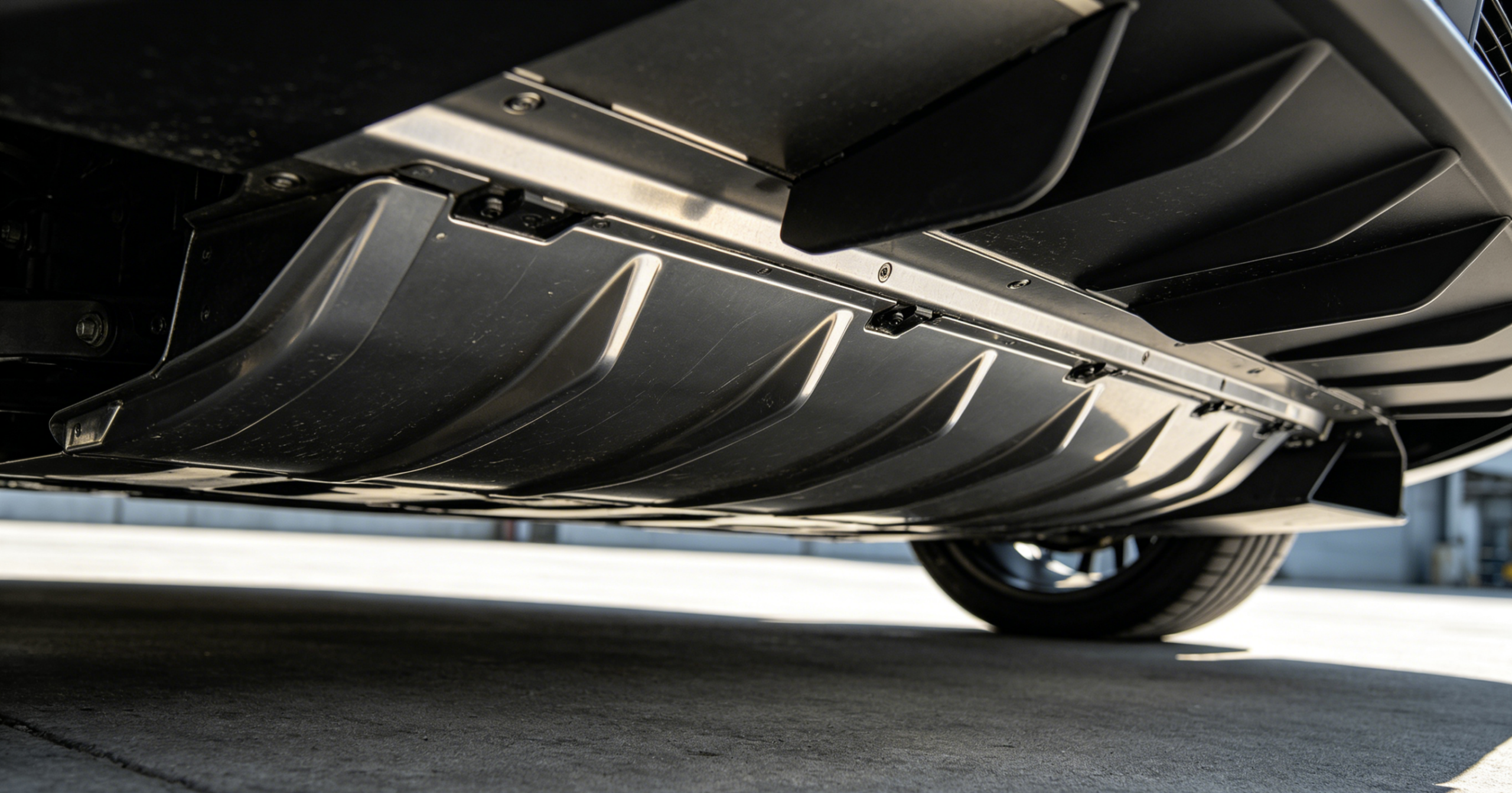
)
1. Blocking direct noise radiation paths
Engine bays generate multiple noise sources:
- combustion vibration (ICE vehicles)
- mechanical friction noise
- belt and pulley noise
- airflow turbulence
Without a dust cover, noise can escape directly downward and reflect into the road surface.
The dust cover acts as a physical barrier, reducing:
- direct sound radiation
- underbody noise leakage
- reflected road echo amplification
Even a basic cover already improves baseline NVH performance.
2. Reducing aerodynamic turbulence noise
At higher speeds, airflow under the vehicle becomes chaotic.
This turbulence creates:
- wind roar
- pressure fluctuations
- resonance inside cavities
A properly designed dust cover smooths airflow, helping:
- stabilize underbody aerodynamics
- reduce vortex formation
- lower wind-induced noise
In EVs, this effect becomes even more important because there is no engine noise masking background sounds.
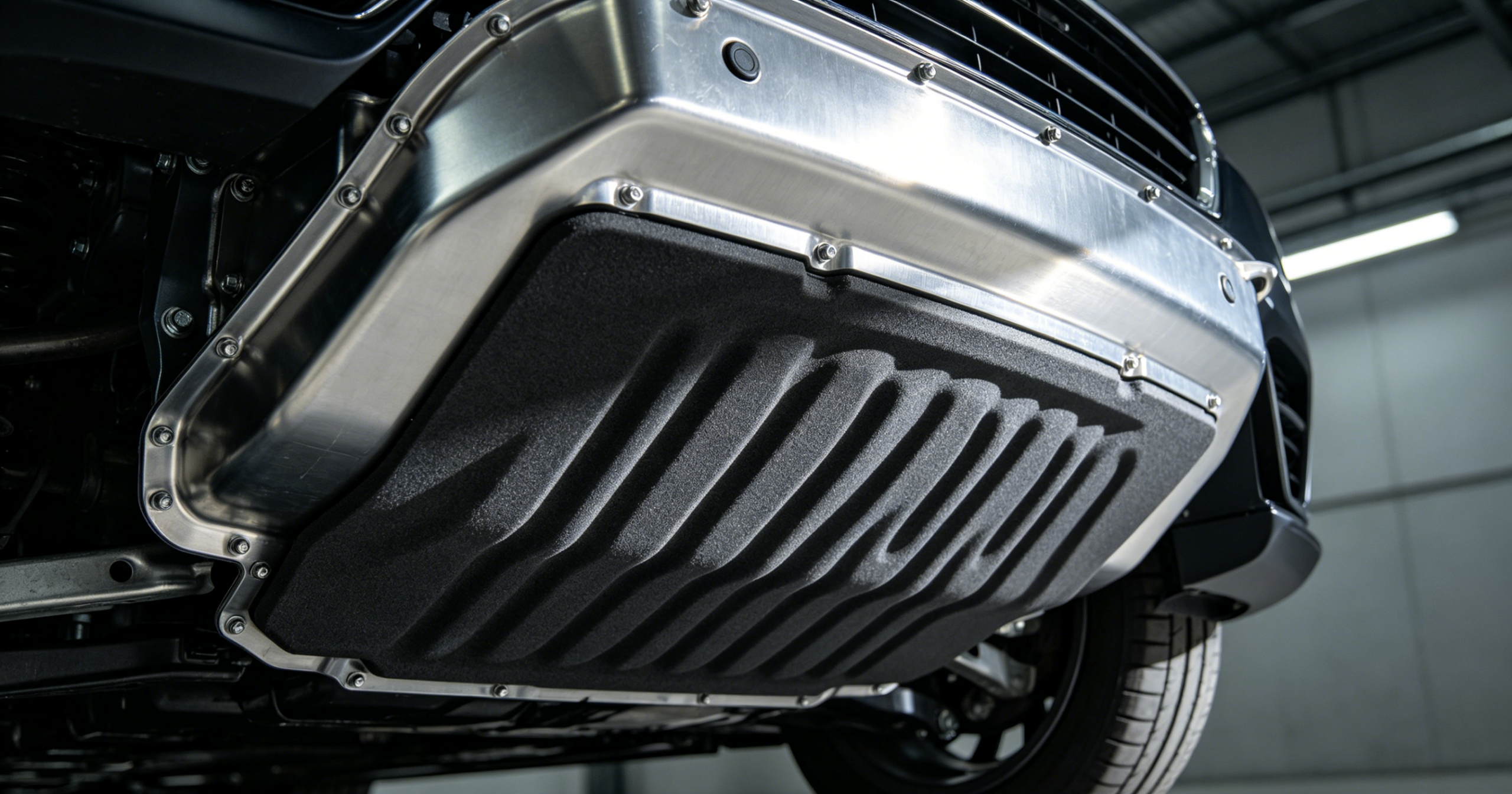
3. Damping structural vibration transmission
Engine dust covers are not just barriers—they are also vibration interaction surfaces.
When engine vibration travels through mounts and subframes, it can excite large flat panels underneath.
If untreated, these panels act like:
- acoustic amplifiers
- resonance plates
- vibration radiators
By using engineered material systems, dust covers can:
- absorb vibration energy
- reduce panel resonance
- break vibration transmission paths
This is where material choice becomes critical.
4. Material selection matters more than shape
Modern engine dust covers are no longer just rigid plastic.
They are often composite structures combining:
- polymer base panels
- acoustic nonwoven layers
- foam damping inserts
- reinforcement ribs
One widely used material system is:
This material helps:
- absorb mid-frequency noise
- reduce cavity resonance
- improve broadband damping performance
Used for:
- lightweight reinforcement
- moisture resistance
- cost-efficient structural support
These materials are often laminated or die-cut into functional acoustic zones rather than used as full-sheet coverage.
5. Sealing and gap control effects
Noise often escapes through small gaps.
Engine dust covers help by:
- closing airflow leakage paths
- covering structural openings
- reducing pressure-driven sound escape
Even small improvements in sealing can significantly reduce perceived cabin noise.
This is especially noticeable in:
- highway driving
- rough road conditions
- cold start engine operation
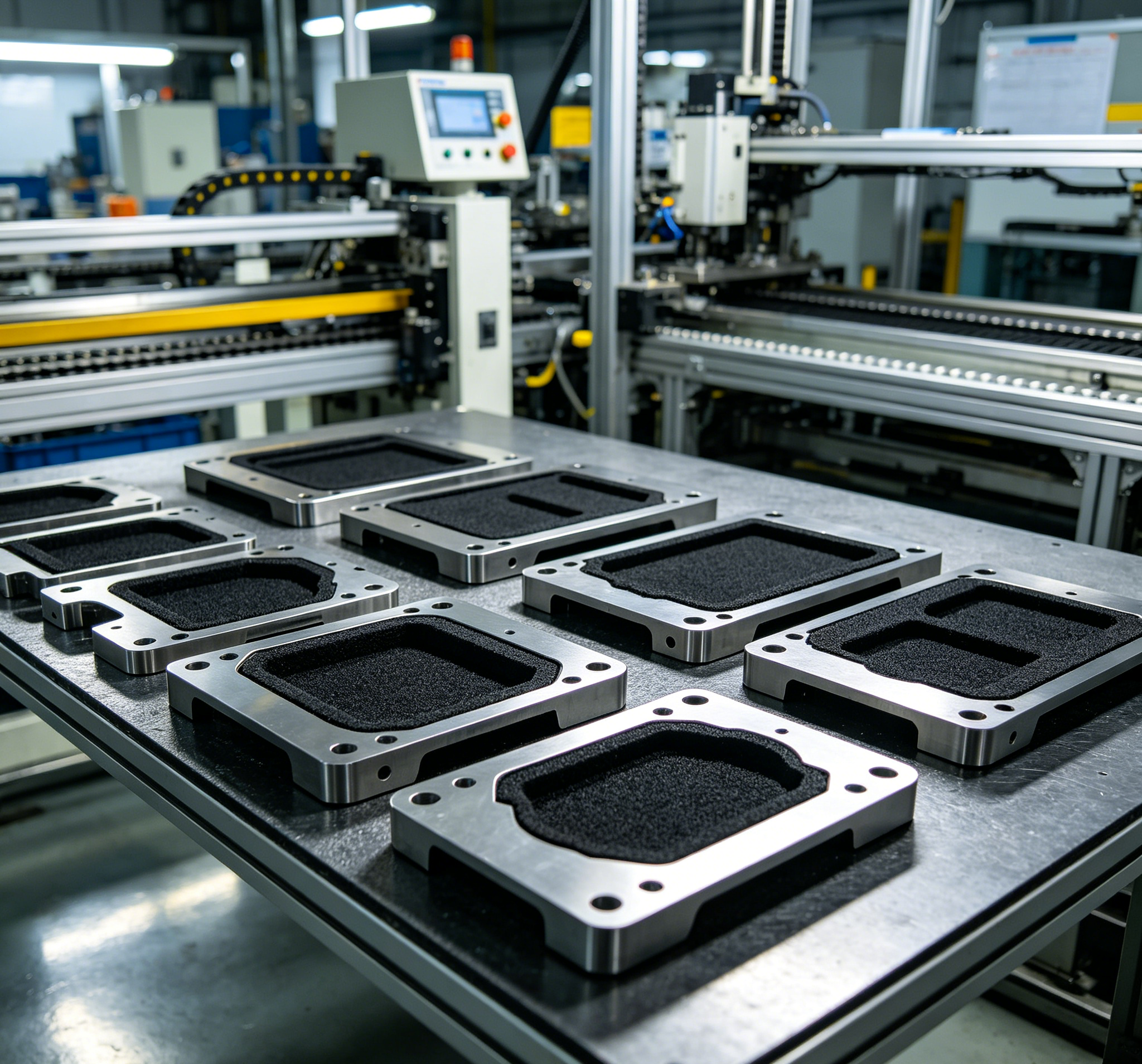
6. Why design and manufacturing precision matters
A dust cover only works if it fits perfectly.
Poor design leads to:
- vibration rattling
- airflow leakage
- uneven acoustic performance
- durability issues over time
That is why manufacturing processes like:
- precision die-cutting
- multi-layer lamination
- controlled compression forming
are critical for consistent NVH performance.
At Sanken, we focus on converting acoustic materials into stable, production-ready engine bay components that perform reliably under real road conditions.
Where Sanken fits into engine bay noise solutions
We support OEMs with:
- acoustic material selection
- multi-layer dust cover design support
- precision die-cutting for complex geometries
- lightweight composite integration
Our goal is not just to supply parts.
It is to help engineers reduce noise at system level, not just component level.
Conclusion
Engine dust covers play a much larger role than most people expect.
They reduce noise through:
- airflow control
- vibration damping
- sound blocking
- structural sealing
When properly designed with acoustic materials and precision manufacturing, they become a key part of vehicle NVH optimization.
At Sanken, we help OEMs turn these “simple covers” into engineered acoustic systems that improve real-world driving comfort.