
Why Do Honda Tier 1 Suppliers Choose Chinese Auto Die Cut Factories? A Real Supply Chain Perspective
At first glance, this looks like a simple sourcing question.
But inside the automotive supply chain, it is actually about something deeper:
cost, precision, scalability, and risk control at the same time.
Tier 1 suppliers supporting Honda don’t choose a die-cut factory casually.
They choose based on whether the supplier can survive automotive-grade reality.
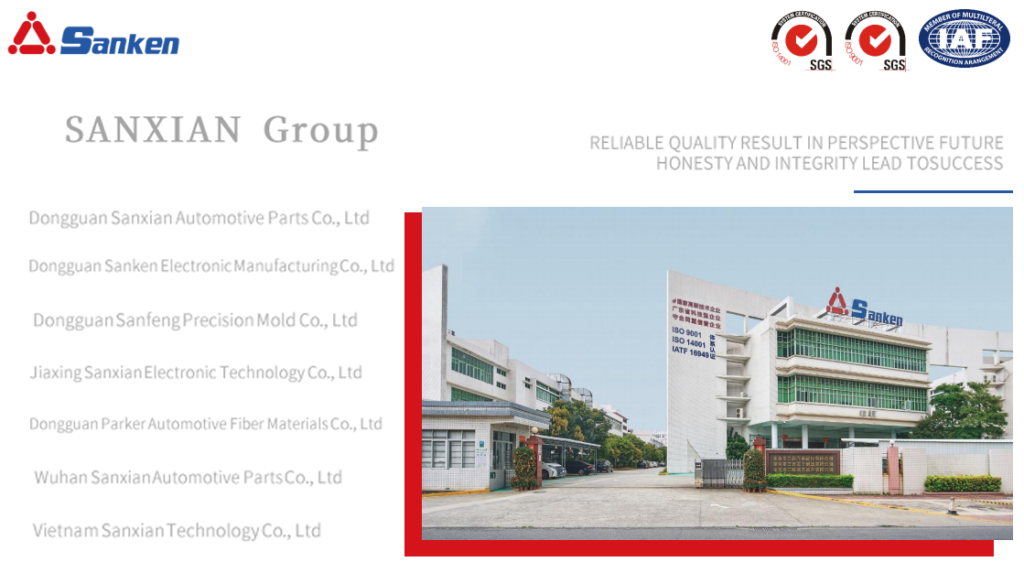
At Sanken (Dongguan Sanken Electronics Co., Ltd.), we often see the same pattern: Japanese and global Tier 1s increasing their dependence on qualified Chinese die-cut and material conversion partners.
So why is this happening?
Let’s break it down in a practical way.
1. Massive cost pressure without sacrificing quality
Automotive programs are extremely cost-sensitive.
Tier 1 suppliers are under pressure from OEMs like Honda to:
- reduce BOM cost
- maintain stable quality
- avoid requalification risk
Chinese die-cut factories can offer:
- lower labor and operational cost
- optimized material sourcing
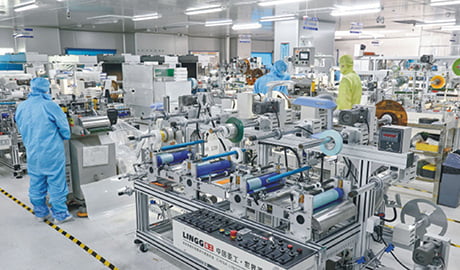
- high-volume production efficiency
But here is the key point:
Cost advantage alone is not enough. It must come with process stability.
That is where advanced Chinese factories have improved significantly.
2. Strong capability in precision die-cutting and material conversion
Modern automotive die-cut parts are no longer simple shapes.
They involve:
- multi-layer laminations
- foam + adhesive integration
- acoustic nonwoven conversion
- tight tolerance structural parts
are now capable of delivering:
- high-precision cutting
- stable compression behavior
- consistent batch performance
This level of capability was once concentrated in Japan or Europe.
Now it is widely available in China’s automotive supply chain clusters.
3. Fast development speed and engineering flexibility
Tier 1 suppliers don’t just buy parts.
They buy problem-solving speed.
Chinese die-cut factories are known for:
- rapid prototyping cycles
- flexible tooling adjustment
- fast engineering feedback loops
- quick material substitution testing
In Honda programs, where timelines are strict, this speed is critical.
A delay in validation can delay an entire vehicle program.
So responsiveness becomes a competitive advantage.
4. Mature automotive supply chain ecosystem
One of China’s biggest advantages is not a single factory.
It is the ecosystem.
Within short geographic clusters, suppliers can access:
- foam manufacturers
- adhesive tape converters
- nonwoven producers
- mold and tooling shops
- testing labs
This reduces:
- logistics time
- development iteration cycles
- coordination complexity
For Tier 1 suppliers, this means faster scaling from prototype → mass production.
5. Ability to integrate multi-material solutions
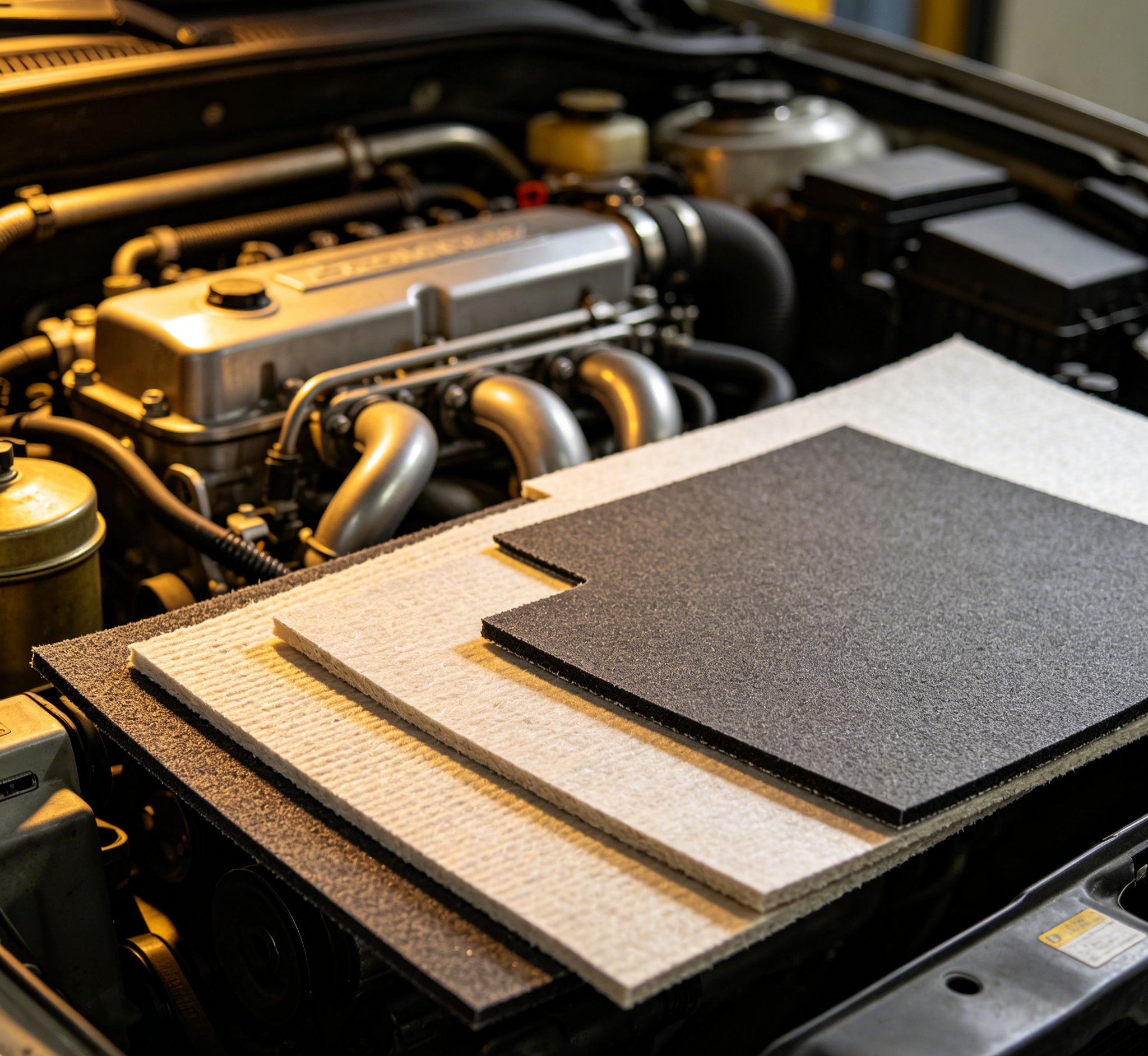
Modern automotive die-cut parts are rarely single-material components.
They are systems such as:
- foam + adhesive laminates
- acoustic + structural composites
- vibration + sealing hybrid parts
Factories working with:
:contentReference[oaicite:2]{index=2}
can integrate multiple functions into one part:
- sealing
- damping
- mounting
- insulation
This reduces assembly steps for Tier 1 suppliers and OEMs.
Fewer parts = lower assembly cost + lower failure risk.
6. Continuous quality system improvement
Another reason Tier 1 suppliers trust Chinese factories is the improvement in quality systems.
Many suppliers now operate under:
- ISO-based systems
- IATF automotive requirements
- strict process documentation
- traceable batch control
More importantly, quality is no longer inspection-based.
It is process-controlled.
That shift is critical for automotive trust.
7. Scalability for global programs
Honda Tier 1 suppliers often need:
- pilot production
- ramp-up production
- full mass production
Chinese die-cut factories are structured for:
- rapid capacity expansion
- multi-line production scaling
- flexible manpower adjustment
This makes them suitable for global platform launches.
Where Sanken fits into this ecosystem
At Sanken, we operate inside this exact supply chain logic.
We support Tier 1 suppliers with:
- precision die-cutting for automotive components
- multi-layer material conversion
- acoustic and sealing system integration
- stable mass production control
Our focus is not just manufacturing.
It is helping Tier 1 suppliers reduce risk while improving efficiency.
Because in automotive supply chains, consistency is more valuable than complexity.
Conclusion
Honda Tier 1 suppliers choose Chinese die-cut factories because of a combination of:
- cost efficiency
- engineering capability
- fast development cycles
- strong supply chain integration
- scalable production systems
But the real deciding factor is simple:
Can the supplier deliver stable, automotive-grade parts at production speed?
At Sanken, we focus on exactly that—turning advanced materials into reliable die-cut solutions that support global automotive programs from prototype to mass production.