
What Lightweight Nonwoven Materials For Auto Trunk Floor Covers? A Practical OEM Guide for Weight Reduction and NVH Performance
The trunk floor cover looks like a simple interior panel.
But in modern automotive engineering, it is actually a multi-functional structural system that affects weight, noise, durability, and user experience at the same time.
OEMs today are under three constant pressures:
- reduce vehicle weight
- improve NVH performance
- maintain cost competitiveness
So trunk floor materials are no longer “just boards.”
They are engineered solutions.
At Sanken (Dongguan Sanken Electronics Co., Ltd.), we focus on how nonwoven materials can be converted into lightweight, stable, and production-ready trunk floor systems.
So the real question is:
What lightweight nonwoven materials actually work for automotive trunk floor covers in real production environments?
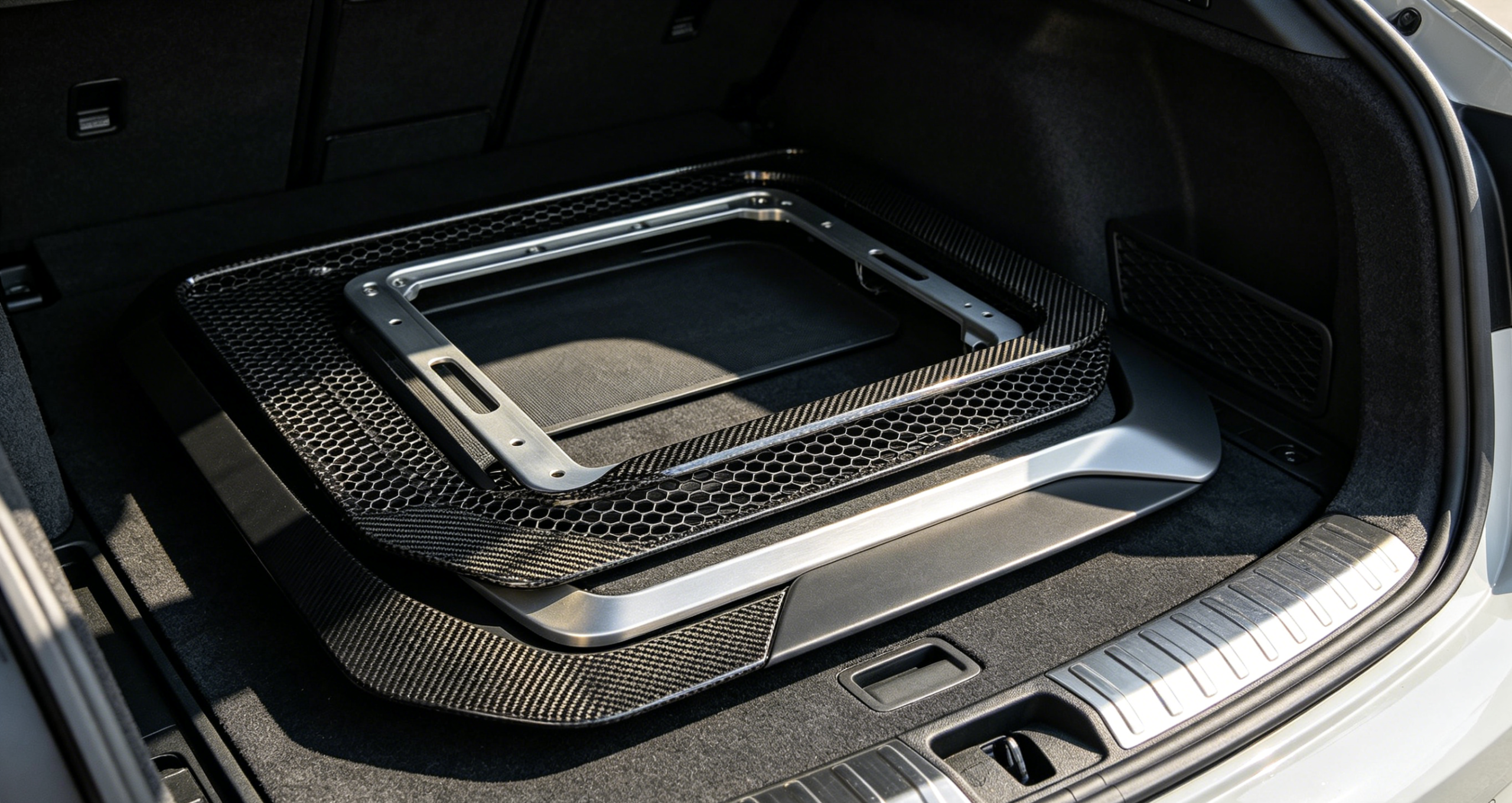
Why trunk floor covers matter more than most engineers think
The trunk area is constantly exposed to real-world stress:
- luggage impact loads
- road vibration from rear suspension
- acoustic transmission from wheel arches
- temperature cycling in enclosed space
- long-term static pressure deformation
If the material system is weak, the issues appear quickly:
- floor sinking or deformation
- increased cabin noise
- poor perceived quality
- rattling during driving
This is why OEMs are shifting from rigid-only structures to lightweight nonwoven composite systems.
What makes nonwoven materials suitable for trunk floor systems?
Nonwoven materials are engineered fiber structures, not woven textiles.
They are formed through:
- fiber bonding
- thermal fusion
- mechanical entanglement
- composite layering
This gives engineers control over:
- density
- stiffness
- acoustic behavior
- compression performance
- weight optimization
Unlike traditional hard boards, nonwoven systems can be tuned for both lightweight design and functional performance.
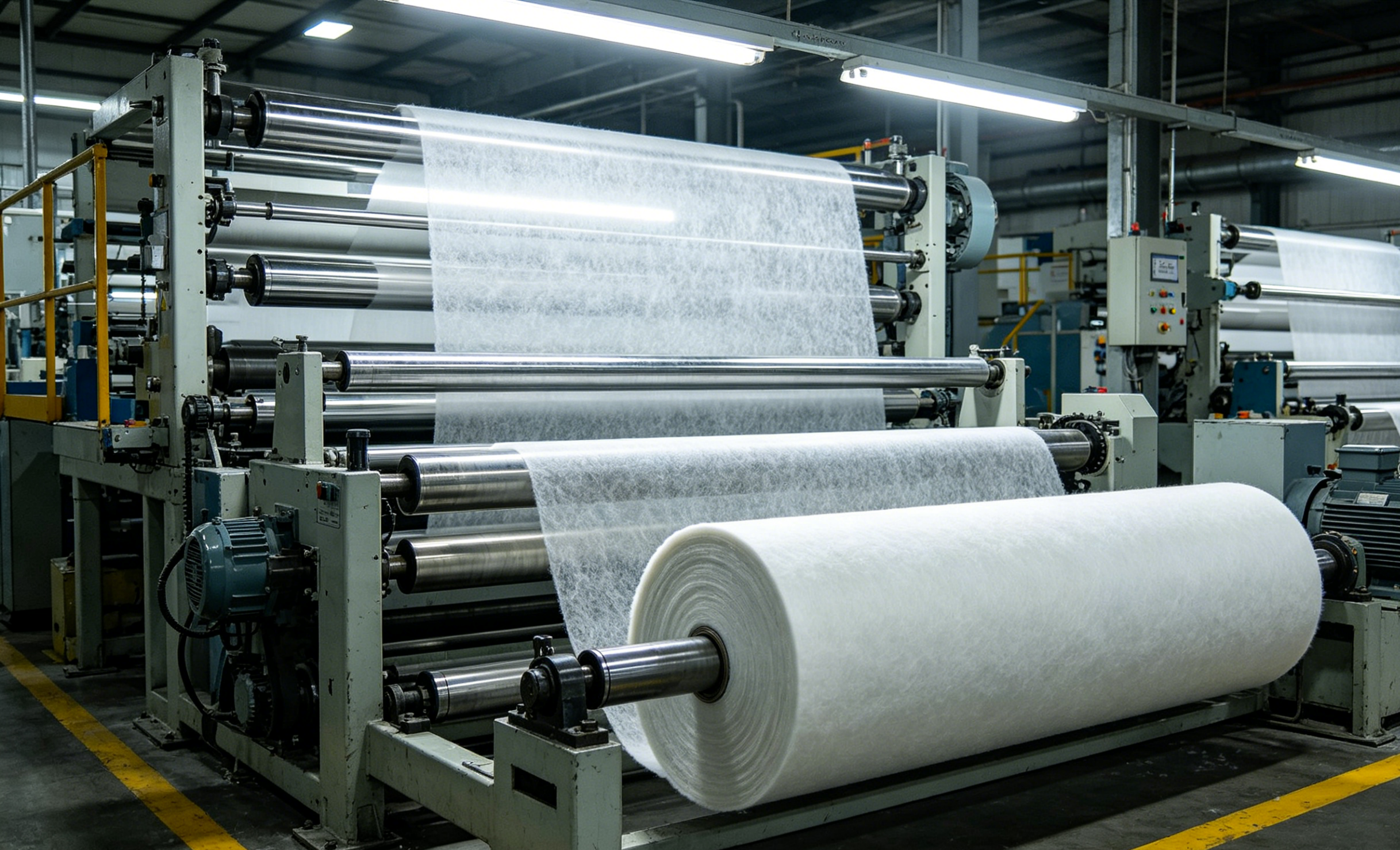
1. Recycled PET nonwoven boards (core lightweight structure)
This is one of the most widely used materials in modern trunk floor systems.
Key advantages:
- very low weight density
- stable mechanical strength
- good dimensional stability
- sustainable material profile
In OEM applications, PET nonwoven is often used as the core structural layer of the trunk floor.
It replaces heavier fiber boards while maintaining sufficient rigidity for daily load conditions.
Especially in EV platforms, it helps reduce overall vehicle mass without sacrificing usability.
2. Needle-punched nonwoven felt layers (acoustic + damping function)
Needle-punched structures provide stronger fiber interlocking, which improves energy absorption.
Main benefits:
- effective vibration damping
- improved acoustic control
- stable compression recovery
- good durability under repeated load
In trunk systems, this material is often used as a noise and vibration control layer.
It helps reduce:
- rear wheel noise transmission
- trunk cavity resonance
- road-induced vibration peaks
This is especially important in modern quieter cabins.
3. Polypropylene (PP) nonwoven support layers
PP nonwoven materials are commonly used as supporting or backing layers.
Key characteristics:
- extremely lightweight
- moisture resistant
- cost efficient
- easy to laminate with other materials
In trunk floor systems, PP nonwoven is rarely used alone.
Instead, it acts as:
- reinforcement substrate
- structural balancing layer
- cost optimization layer
It helps maintain structure without adding unnecessary weight.
4. Multi-layer composite trunk floor systems
Modern trunk floor covers are no longer single-material structures.
They are engineered composites combining:
- PET structural layer
- foam damping layer
- nonwoven acoustic layer
- adhesive bonding system
This combination allows:
- better vibration absorption
- improved load distribution
- enhanced acoustic performance
- higher dimensional stability
The foam layer absorbs impact energy, while nonwoven layers distribute stress and stabilize structure.
This is especially important in EV platforms, where cabin silence makes trunk noise more noticeable.
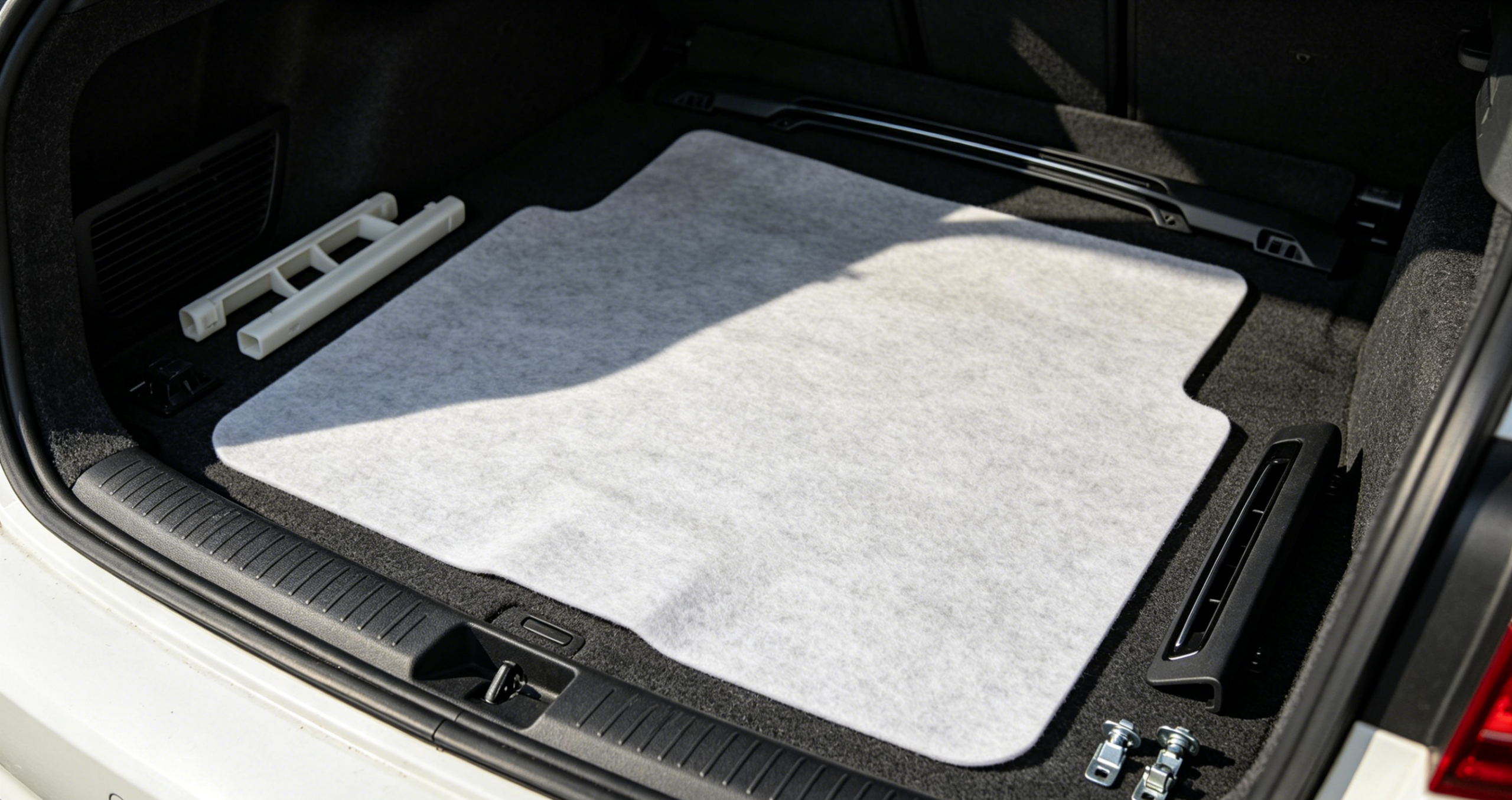
Why lightweight alone is not enough
Many OEM programs focus heavily on weight reduction.
But trunk floor systems must balance four key requirements:
1. Load-bearing stability
Must support luggage and dynamic impact loads.
2. Acoustic performance
Must reduce vibration and road noise transmission.
3. Dimensional accuracy
Must fit complex trunk cavity geometries.
4. Long-term durability
Must resist deformation over the vehicle lifecycle.
A material that is too light may deform.
A material that is too rigid may increase noise transmission.
The real challenge is system balance, not material selection alone.
Where Sanken fits into trunk floor material solutions
At Sanken, we do not treat nonwoven materials as raw inputs.
We convert them into precision functional trunk floor components.
Our core capabilities include:
1. Precision die-cutting for complex geometries
Trunk floor designs vary across platforms, requiring high accuracy.
We ensure:
- stable dimensional tolerance
- clean edge quality
- repeatable mass production performance
2. Multi-material lamination systems
We integrate:
- PET structural boards
- PP reinforcement layers
- needle-punched acoustic felts
- foam damping materials
into unified engineered systems.
3. Lightweight optimization support
We help OEMs reduce weight while maintaining:
- structural integrity
- acoustic performance
- long-term stability
4. Automotive-grade production consistency
We control:
- batch-to-batch material uniformity
- compression stability
- assembly fit reliability
Because trunk floor components must perform consistently across thousands of vehicles.
Industry trend: trunk floor systems are becoming functional platforms
Trunk floor covers are no longer passive panels.
They are evolving into:
- acoustic control layers
- lightweight structural modules
- vibration damping systems
- integrated interior platforms
Nonwoven materials play a central role in this transformation because they are adaptable across multiple performance requirements.
Conclusion
Lightweight nonwoven materials are becoming the foundation of modern automotive trunk floor systems.
They enable:
- weight reduction
- acoustic optimization
- structural balance
- design flexibility
But real performance comes from system engineering, not material alone.
At Sanken, we help OEMs convert nonwoven materials into precision trunk floor components that deliver stable performance, reduced weight, and improved NVH behavior in real driving conditions.