
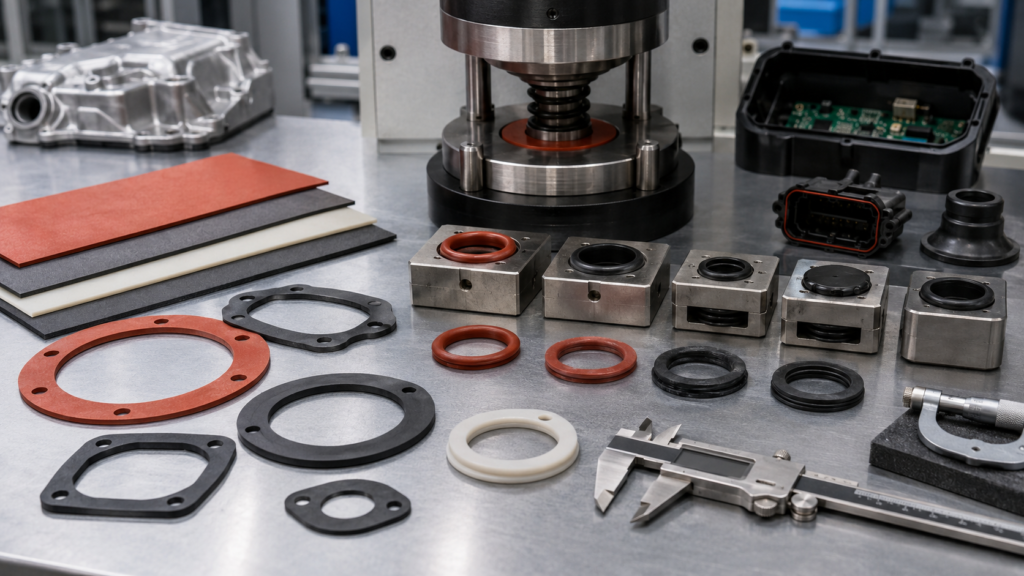
Rubber gaskets must stay elastic to keep a stable seal. When a gasket is compressed for a long time and cannot return to its original thickness, this is called compression set. It can cause water leakage, dust entry, air leakage, vibration noise, and long-term sealing failure.
To avoid compression set in die cut rubber gaskets, manufacturers should choose the correct rubber material, control compression ratio, design proper gasket geometry, validate temperature and chemical exposure, and use precision die cutting to maintain consistent thickness and dimensions.
Theme: Precision Die Cut Rubber Gaskets
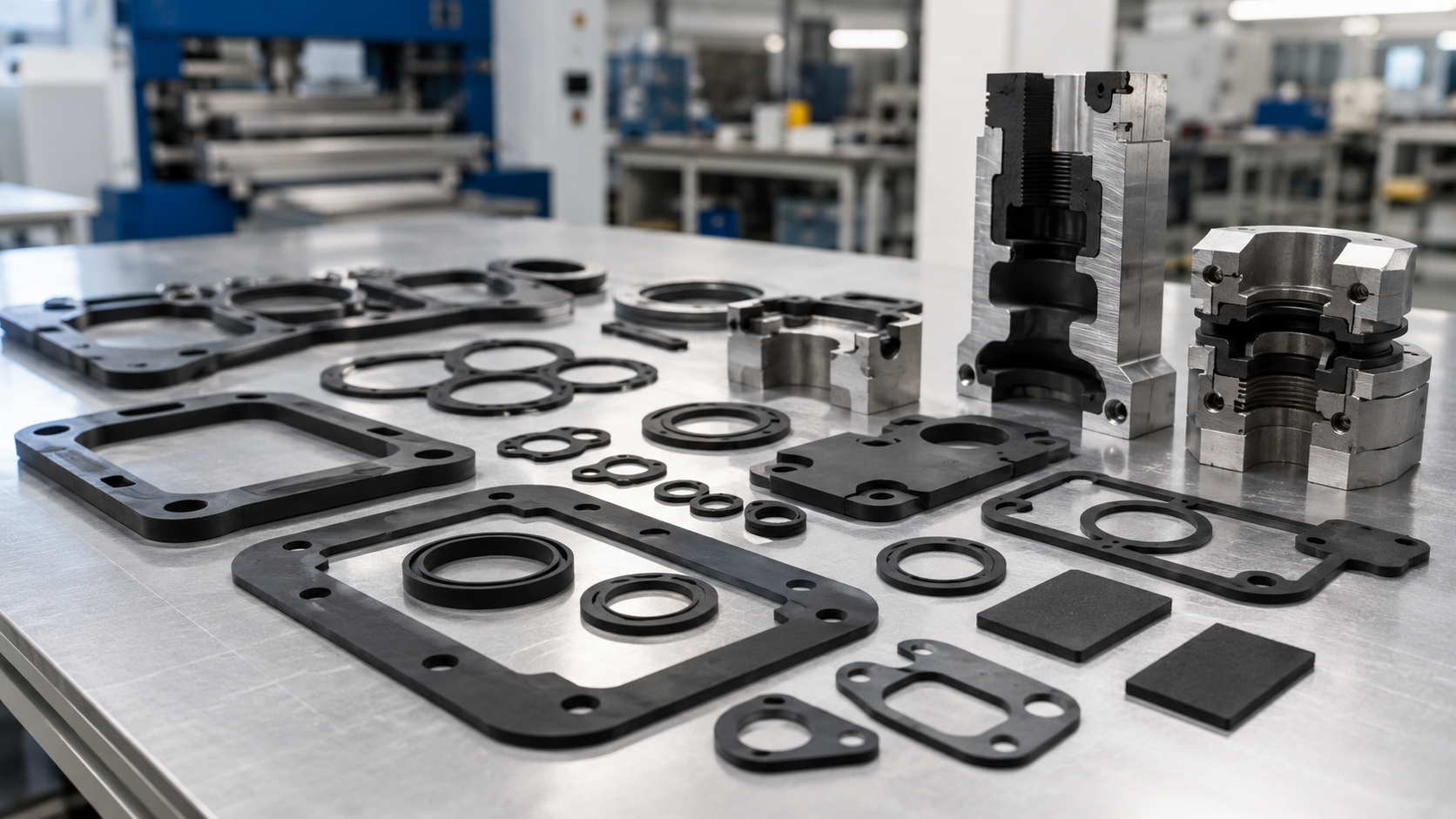
What Causes Compression Set?
Compression set usually happens because the gasket is under too much pressure for too long.
Common causes include:
- Wrong rubber material
- Excessive compression
- High temperature
- Chemical exposure
- UV or ozone aging
- Poor gasket design
- Inconsistent material thickness
Once the gasket loses recovery, sealing pressure drops and leakage risk increases.
Choose the Right Rubber Material
Material selection is the first step.
Common gasket materials include:
- Silicone rubber for high-temperature sealing
- EPDM rubber for weather, UV, and ozone resistance
- NBR rubber for oil and fuel resistance
- Neoprene rubber for general industrial sealing
For automotive, electronics, and outdoor applications, EPDM and silicone are often better choices when long-term compression recovery is important.
Control the Compression Ratio
More compression does not always mean better sealing.
Over-compression can damage the rubber structure and accelerate compression set.
A good gasket design should control:
- Gasket thickness
- Compression percentage
- Contact area
- Assembly gap
- Surface pressure
The goal is enough compression to seal, but not so much that the gasket loses elasticity.
Improve Gasket Design
Good geometry helps distribute pressure evenly.
Recommended design practices include:
- Avoid very thin sealing walls
- Add proper corner radius
- Keep sealing width consistent
- Avoid sharp internal corners
- Match gasket thickness with assembly gap
- Consider spacer features if compression needs control
Poor design can create local stress points, causing early deformation.
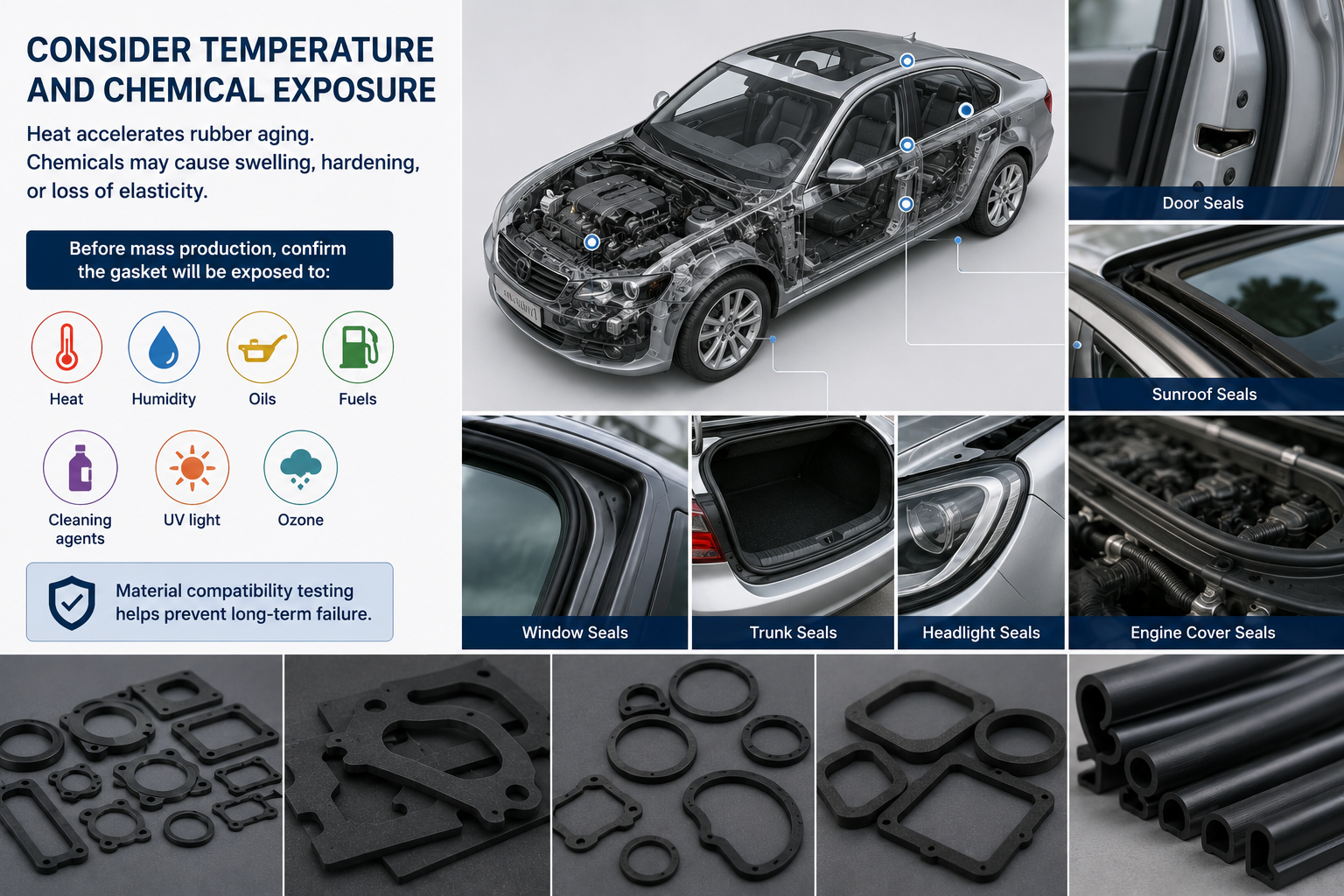
Consider Temperature and Chemical Exposure
Heat accelerates rubber aging.
Chemicals may cause swelling, hardening, or loss of elasticity.
Before mass production, confirm the gasket will be exposed to:
- Heat
- Humidity
- Oils
- Fuels
- Cleaning agents
- UV light
- Ozone
Material compatibility testing helps prevent long-term failure.
Theme: Automotive Rubber Gasket Applications
Use Precision Die Cutting
Precision die cutting improves gasket consistency.
It helps ensure:
- Accurate dimensions
- Clean edges
- Stable thickness
- Consistent sealing width
- Repeatable compression performance
For OEM manufacturing, consistency is critical. A small thickness variation can change compression force and affect sealing reliability.
Validate Before Mass Production
Testing should include:
- Compression set testing
- Heat aging
- Humidity aging
- Chemical resistance testing
- Assembly compression checks
- Leakage testing
- Long-term durability testing
Validation helps identify risks before tooling and mass production.
How Sanken Supports Rubber Gasket Projects
Dongguan Sanken Electronics Manufacturing Co., Ltd. provides custom die cut rubber gasket solutions for OEM and ODM customers.
Our capabilities include:
- Precision die cutting
- Rubber gasket converting
- Silicone and EPDM gasket processing
- Foam gasket manufacturing
- Adhesive laminating
- Custom sealing component production
- Tool development from drawings or samples
Key advantages include:
- ISO 9001 quality management
- RoHS and REACH compliant materials
- OEM/ODM customization
- Domestic and overseas production bases
- Cleanroom precision production
- Support for automotive, electronics, industrial, and medical applications
Featured Snippet Summary
Compression set in die cut rubber gaskets can be reduced by selecting the right rubber material, controlling compression ratio, improving gasket geometry, validating operating conditions, and using precision die cutting for consistent thickness and dimensions.
Conclusion
Compression set is a major reason rubber gaskets lose sealing performance over time. It cannot always be eliminated completely, but it can be controlled through proper material selection, compression design, environmental testing, and precision manufacturing.
For OEM products that require long-term sealing reliability, working with an experienced die cut gasket manufacturer helps reduce leakage risk, improve durability, and extend product service life.