
How To Reduce Road Noise With Die-Cut Fender Liners? A Smarter Approach to Vehicle NVH Control
Road noise is one of the biggest challenges facing modern vehicle manufacturers.
As engines become quieter and electric vehicles continue to gain market share, drivers are becoming increasingly sensitive to sounds that were once masked by engine noise. Tire roar, gravel impact, water spray, and vibration transmitted through the wheel wells can significantly affect the driving experience.
Many automakers invest heavily in floor insulation, door panels, and dashboard acoustic materials. Yet one critical area is often overlooked:
The fender liner.
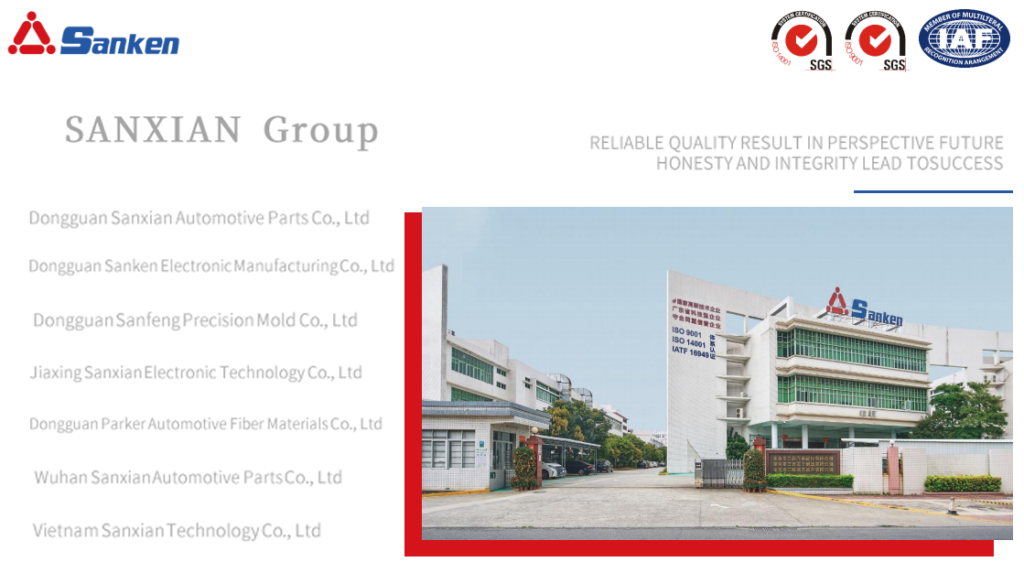
At Sanken (Dongguan Sanken Electronics Co., Ltd.), we have seen how properly engineered die-cut fender liner solutions can make a measurable difference in vehicle noise reduction while improving overall NVH (Noise, Vibration, and Harshness) performance.
The question is not whether fender liners matter.
The question is how to design them correctly.
Why Do Fender Liners Affect Road Noise?
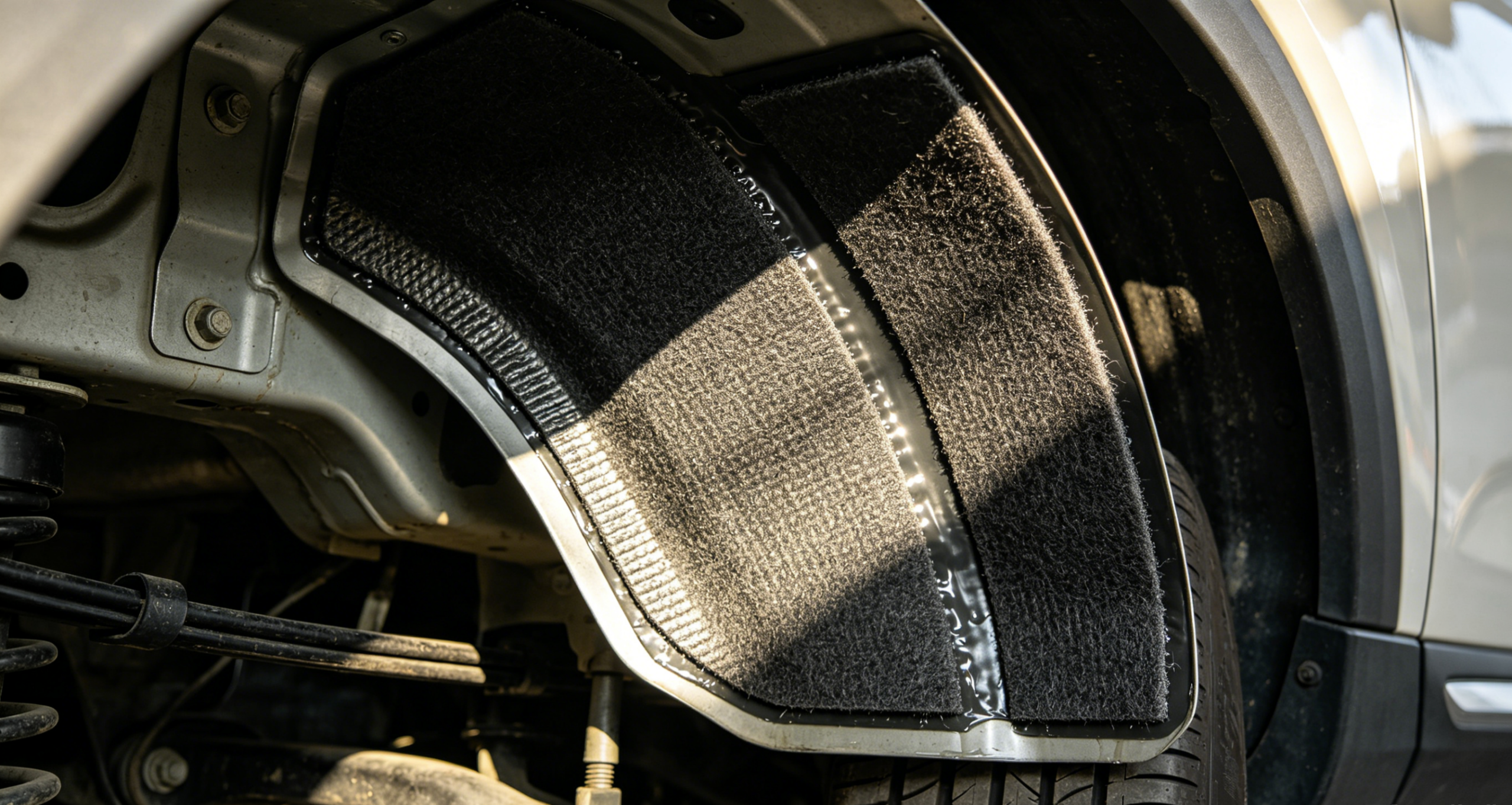
The wheel well is one of the noisiest areas of any vehicle.
Every time a vehicle moves, the tires generate noise from:
- Tire tread interaction with the road
- Water spray during wet conditions
- Gravel and debris impact
- Air turbulence around rotating wheels
- Suspension vibration
Without proper acoustic treatment, these noises travel through the wheel arch and into the passenger cabin.
Traditional plastic fender liners provide basic protection against mud and debris, but they do little to absorb sound energy.
This is why many OEMs are increasingly adopting die-cut acoustic fender liner systems that combine structural protection with sound absorption.
How Do Die-Cut Fender Liners Reduce Road Noise?
The principle is surprisingly simple.
Instead of reflecting sound waves back into the wheel well, acoustic die-cut liners absorb and dissipate sound energy before it reaches the vehicle structure.
This is typically achieved through engineered materials such as:
- Needle-punched non-woven felt
- PET acoustic fiber materials
- Recycled fiber composites
- Multi-layer acoustic laminates
These materials contain microscopic air pockets that trap and weaken sound waves.
The result is:
- Reduced tire noise
- Lower road vibration transmission
- Less splash noise during rain
- Improved cabin comfort
For drivers, the difference is often felt immediately, especially on highways and rough road surfaces.
Why Is Die Cutting Important for Fender Liner Performance?
Many people focus only on the material.
In reality, the converting process is equally important.
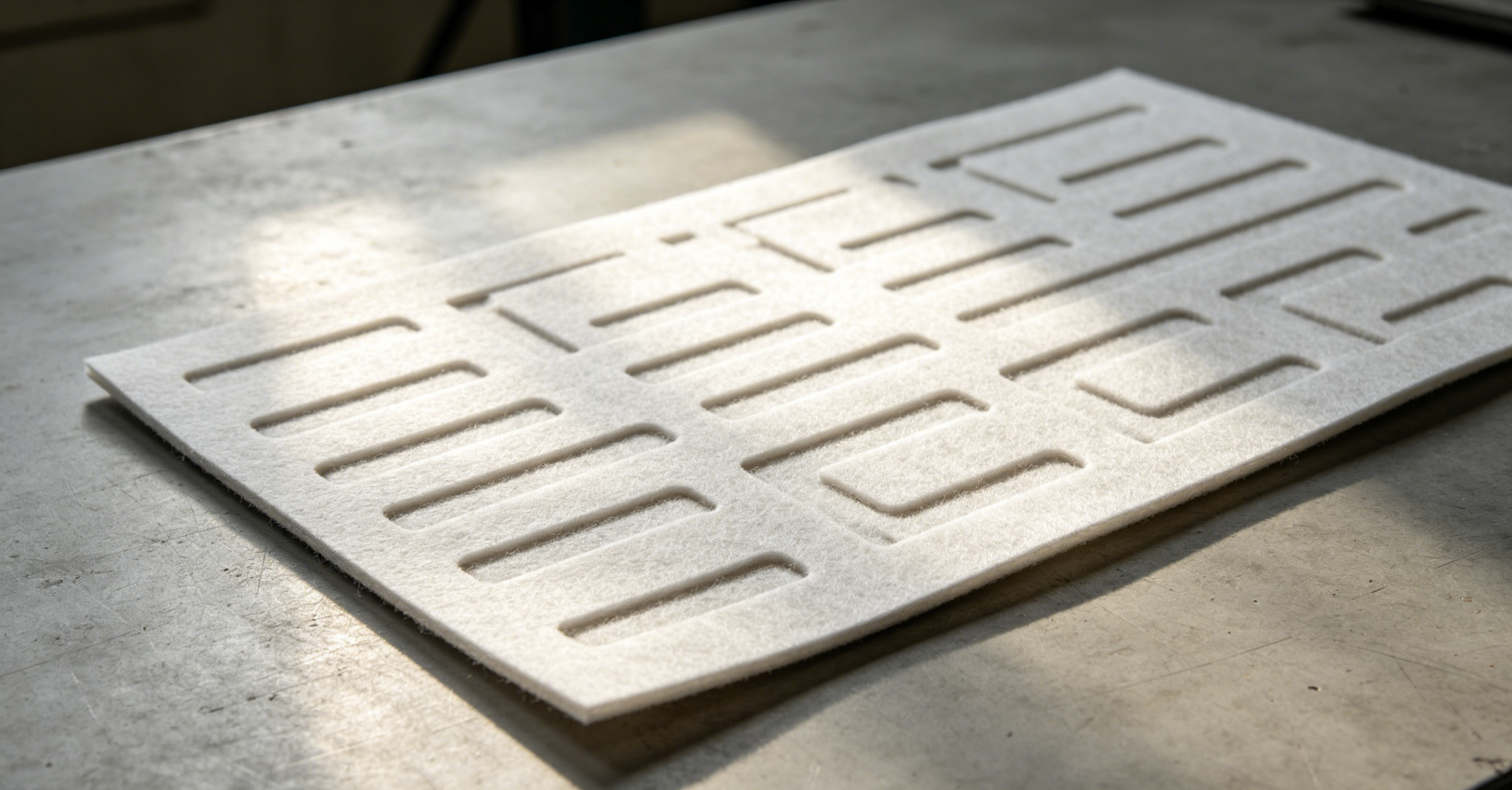
A poorly fitting acoustic liner creates gaps, weak points, and inconsistent coverage.
That means noise can still pass through the wheel well structure.
Precision die cutting allows manufacturers to:
- Match complex wheel arch geometries
- Maintain consistent installation quality
- Improve assembly efficiency
- Reduce material waste
- Integrate multiple functional layers
At Sanken, we often tell customers that the best acoustic material cannot deliver its full potential if it does not fit correctly.
Precision matters.
Especially when dealing with complex automotive structures.
Which Materials Work Best for Acoustic Fender Liners?
Not every acoustic material performs equally in a wheel well environment.
Unlike interior applications, fender liners must withstand:
- Water exposure
- Road salt
- Temperature cycling
- Stone impact
- Constant vibration
This requires materials that balance acoustic performance with durability.
Some of the most common options include:
Needle-Punched Non-Woven Felt
One of the most popular solutions in the automotive industry.
Benefits include:
- Excellent sound absorption
- Lightweight construction
- Good durability
- Recyclable material options
This material is widely used in passenger vehicles and EV platforms.
PET Fiber Acoustic Materials
PET-based acoustic materials offer:
- Moisture resistance
- Stable acoustic performance
- Lightweight design
- Environmental sustainability
Many OEMs are increasingly adopting PET-based solutions to support sustainability goals.
Multi-Layer Composite Structures
For demanding applications, manufacturers may combine:
- Acoustic felt
- Reinforcement layers
- Water-resistant barriers
- Adhesive systems
This creates a liner capable of delivering both protection and acoustic control.
Why Are Fender Liners Becoming More Important in Electric Vehicles?
Electric vehicles have changed the NVH landscape.
In traditional vehicles, engine noise often masked smaller sounds.
In EVs, there is far less powertrain noise.
As a result, drivers notice:
- Tire noise
- Road texture noise
- Splash noise
- Wheel arch resonance
More than ever before.
This has pushed OEMs to focus heavily on wheel well acoustics.
Die-cut acoustic fender liners have become an effective way to reduce these unwanted noises without adding excessive vehicle weight.
For many EV programs, they are no longer optional.
They are part of the overall NVH strategy.
Common Fender Liner Design Mistakes
We frequently encounter projects where noise issues persist despite the use of acoustic materials.
The problem is often not the material itself.
It is the design approach.
Common mistakes include:
Using material that is too thin
Thin materials may reduce weight, but often provide insufficient sound absorption.
Ignoring moisture exposure
Some materials lose performance when repeatedly exposed to water.
Poor geometric coverage
Noise often escapes through uncovered areas and installation gaps.
Focusing only on cost
The cheapest solution frequently leads to higher warranty costs and customer complaints later.
Successful acoustic design requires balancing performance, durability, manufacturability, and cost.
How Sanken Helps Customers Develop Acoustic Fender Liner Solutions
At Sanken, we support automotive customers with complete material converting solutions for acoustic applications.
Our capabilities include:
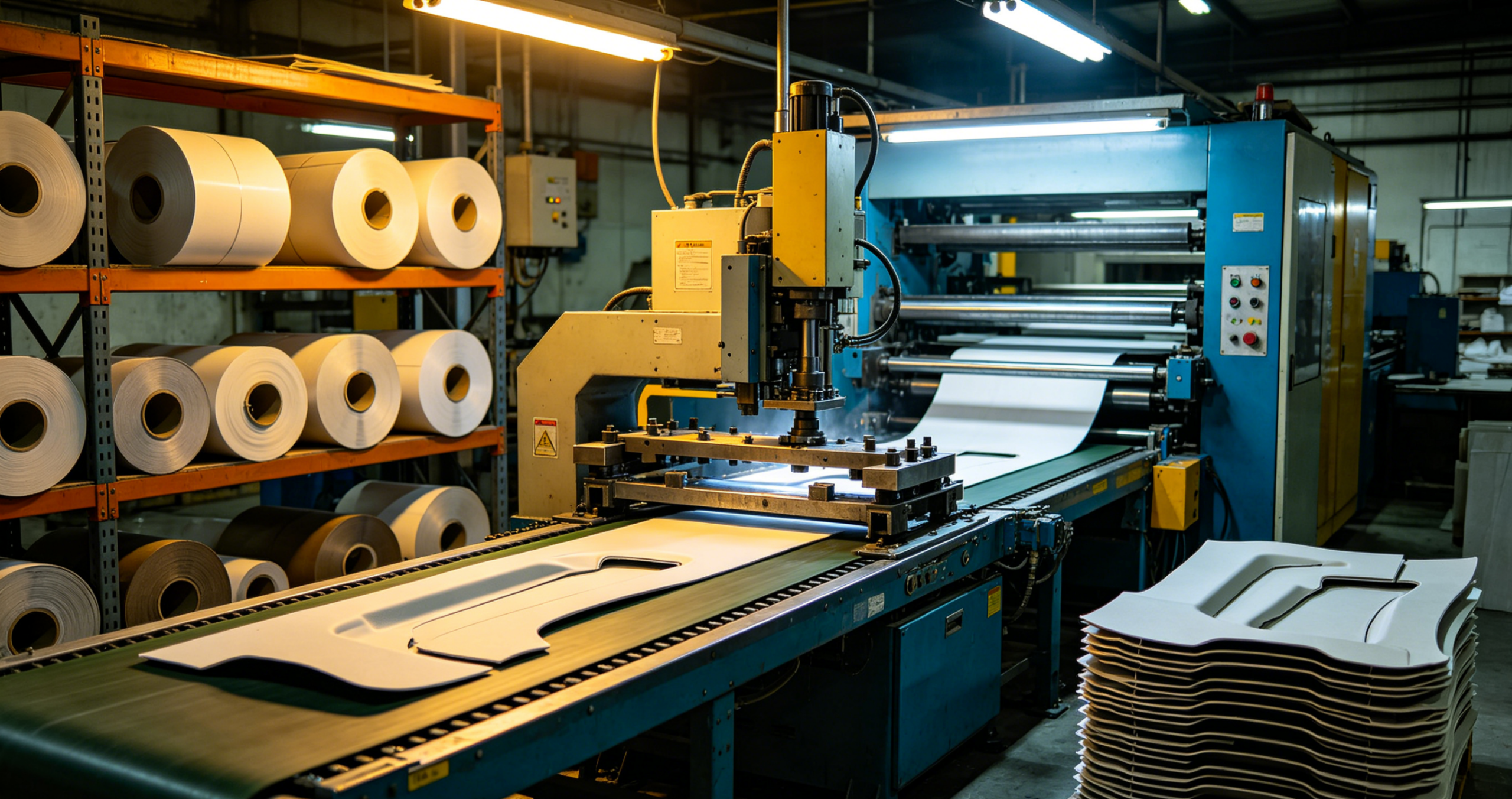
- Precision die cutting
- Multi-layer lamination
- Non-woven felt processing
- Acoustic material converting
- Adhesive integration
- Automotive-grade manufacturing control
Rather than simply supplying parts, we work with customers to understand:
- Vehicle noise targets
- Installation environments
- Durability requirements
- Assembly constraints
This allows us to recommend solutions that deliver long-term acoustic performance rather than short-term improvements.
For many automotive programs, reducing road noise is not about adding more material.
It is about using the right material in the right way.
Conclusion
Road noise remains one of the most challenging NVH issues in modern vehicles.
Die-cut fender liners provide an effective way to absorb sound, reduce tire-generated noise, and improve cabin comfort without adding excessive weight.
As vehicles become quieter and customer expectations continue to rise, wheel well acoustic treatment is becoming an increasingly important part of automotive design.
At Sanken, we combine precision die cutting, acoustic material expertise, and automotive manufacturing experience to help customers develop fender liner solutions that deliver lasting performance on real roads—not just in laboratory tests.