
What Is the Material and Applications of Non Woven Fabric? A Practical Industrial Guide for Engineers and OEM Buyers
Non woven fabric is one of those materials that quietly exists in almost every industrial product—yet is often underestimated.
It does not look advanced at first glance.
It is soft, fiber-based, and seemingly simple.
But in reality, non woven fabric is a highly engineered functional material platform widely used in automotive, medical, electronics, filtration, packaging, and insulation systems.
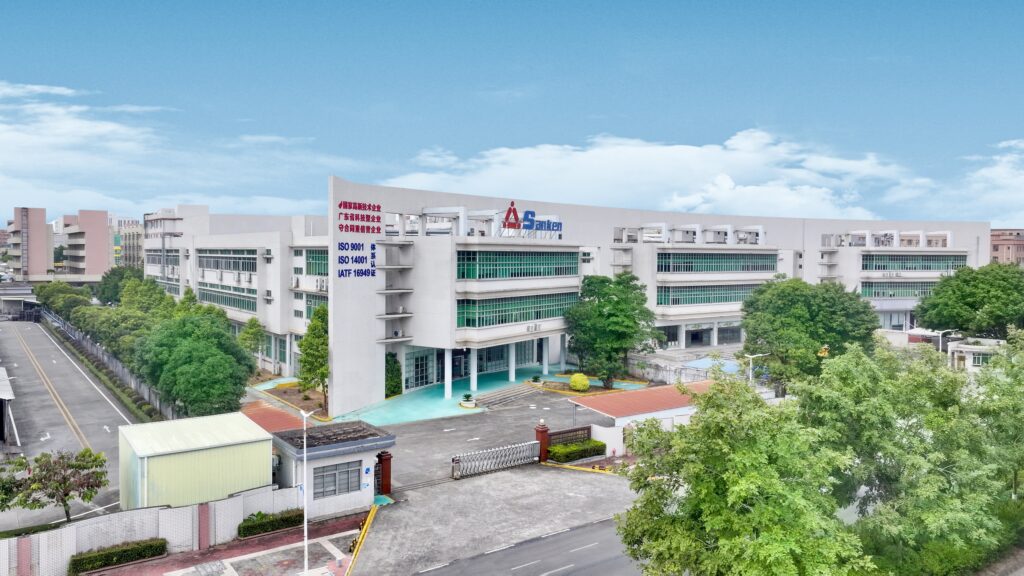
At Sanken (Dongguan Sanken Electronics Co., Ltd.), we work with non woven materials not as textile products, but as precision functional layers inside engineered assemblies.
So the real question is:
What exactly is non woven fabric, and why is it used so widely across industries?
What is non woven fabric made of?
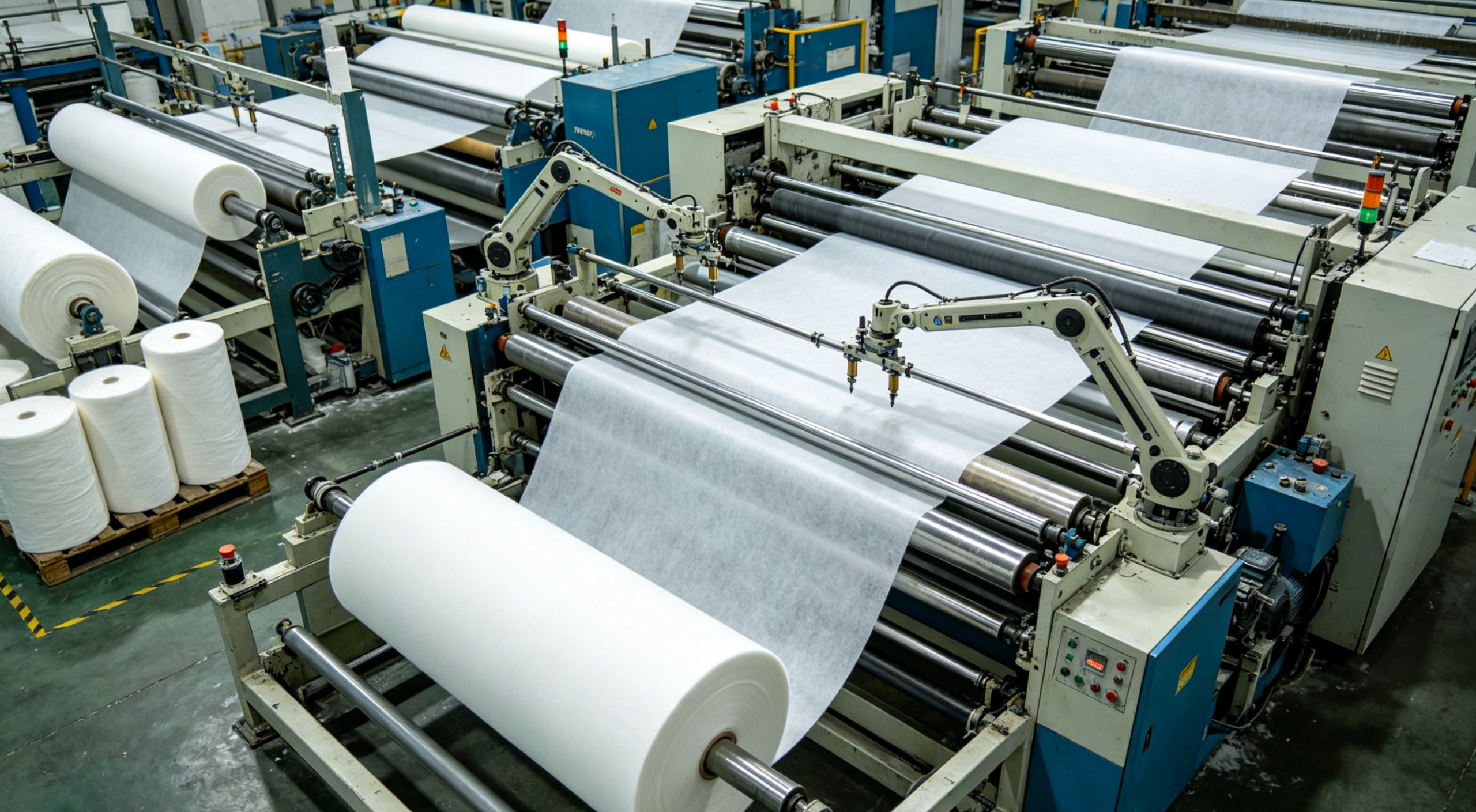
Non woven fabric is a fiber-based material that is not woven or knitted.
Instead of using traditional weaving methods, fibers are:
- bonded mechanically
- bonded thermally
- bonded chemically
- or entangled through needle punching
This creates a sheet-like structure without yarn construction.
Common raw materials include:
- polyester (PET fibers)
- polypropylene (PP fibers)
- viscose fibers
- nylon fibers
- recycled fiber blends
The final structure depends on:
- fiber type
- bonding method
- density
- thickness
- surface treatment
This means non woven fabric is not a single material.
It is a material family with adjustable engineering properties.
Why non woven fabric behaves differently from traditional textiles
Unlike woven fabrics, non woven materials have no fixed yarn structure.
Instead, performance comes from:
- fiber distribution
- bonding strength
- layer density
- internal void structure
This gives non woven fabric several unique properties:
- lightweight structure
- flexible compression behavior
- good acoustic absorption
- air permeability control
- cost-efficient production
Because of this structure, non woven fabric can be designed for very different functions simply by changing fiber composition or processing method.
What are the main types of non woven fabric?
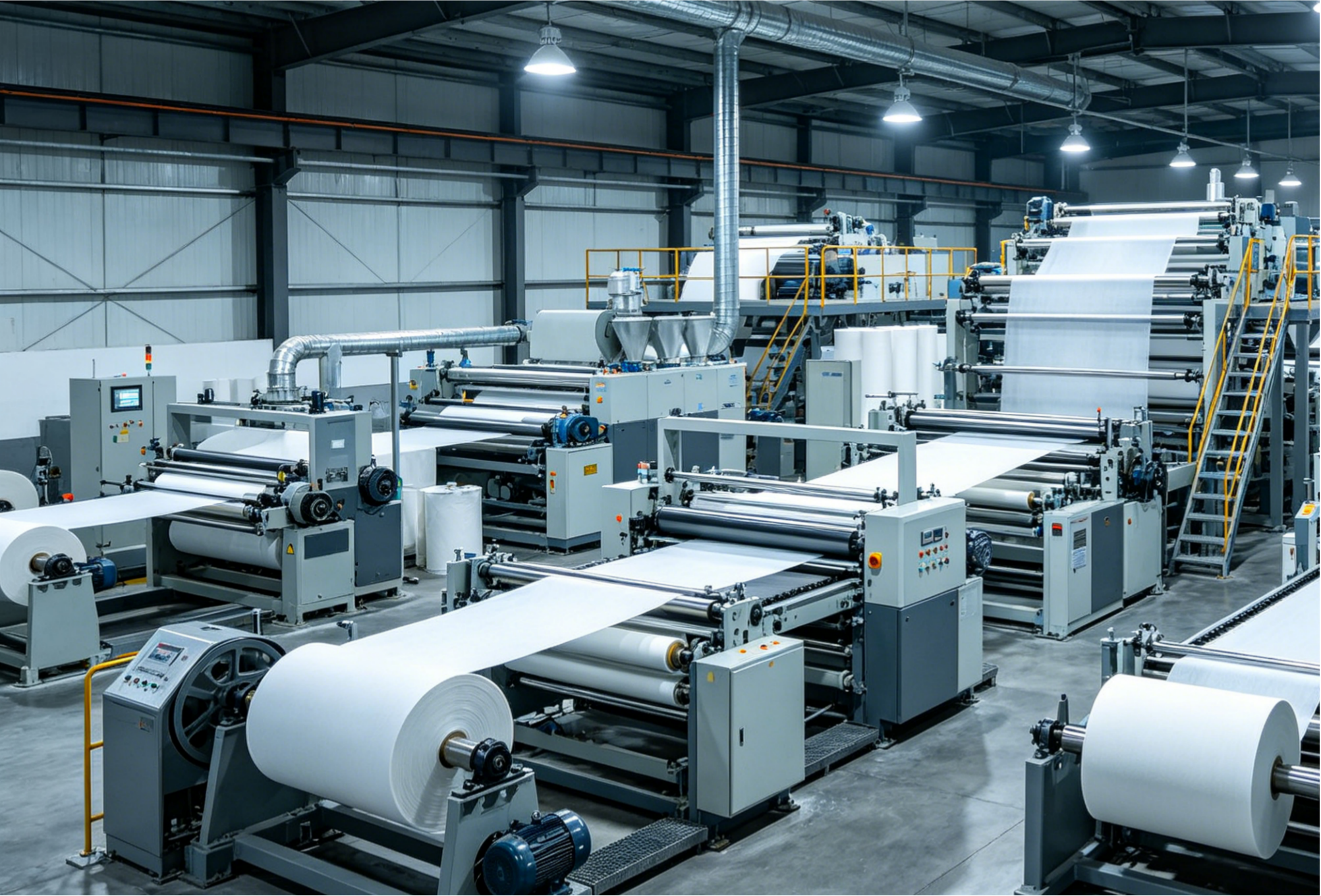
Non woven fabric is typically categorized by manufacturing method.
1. Needle punched non woven fabric
Fibers are mechanically entangled using barbed needles.
Key features:
- strong mechanical structure
- high durability
- good acoustic performance
- commonly used in automotive applications
This is one of the most widely used types in engineering systems.
2. Thermal bonded non woven fabric
Fibers are melted and bonded using heat.
Key features:
- clean surface
- consistent structure
- good dimensional stability
- used in filtration and hygiene products
3. Spunbond non woven fabric
Polymer is extruded into continuous filaments and laid into a web.
Key features:
- high strength
- lightweight
- widely used in packaging and medical industries
4. Chemical bonded non woven fabric
Fibers are bonded using chemical adhesives.
Key features:
- soft texture
- customizable properties
- used in specialty applications
What are the key properties of non woven fabric?
Non woven fabric performance depends on engineering design, not appearance.
Key properties include:
1. Density control
Higher density = better strength and durability
Lower density = better softness and compression behavior
2. Air permeability
Controls how air passes through the material.
Important for:
- filtration systems
- acoustic control
- ventilation applications
3. Acoustic absorption
Fiber structure traps sound waves and reduces noise reflection.
Used heavily in:
- automotive NVH systems
- industrial noise control
4. Compression behavior
Non woven fabric can compress and recover depending on structure design.
5. Thermal stability
Some non woven materials perform well under heat exposure depending on fiber type.
What are the applications of non woven fabric?
Non woven fabric is used across multiple industries due to its adaptability.
Automotive applications
One of the largest application areas.
Used in:
- door panel acoustic layers
- trunk insulation
- floor and roof noise damping
- fender liner backing materials
- vibration reduction pads
In modern vehicles, non woven fabric plays a key role in NVH performance.
Electronics applications
Non woven materials are used for:
- internal cushioning
- insulation layers
- dust protection
- spacing and shock absorption
They help protect sensitive components during operation and transport.
Medical applications
Non woven fabric is widely used in hygiene and medical systems:
- surgical masks
- gowns
- sterile packaging
- filtration layers
Its cleanliness and disposability make it suitable for medical environments.
Industrial applications
Used in:
- filtration systems
- insulation pads
- protective covers
- equipment lining materials
Why non woven fabric is important in automotive NVH systems
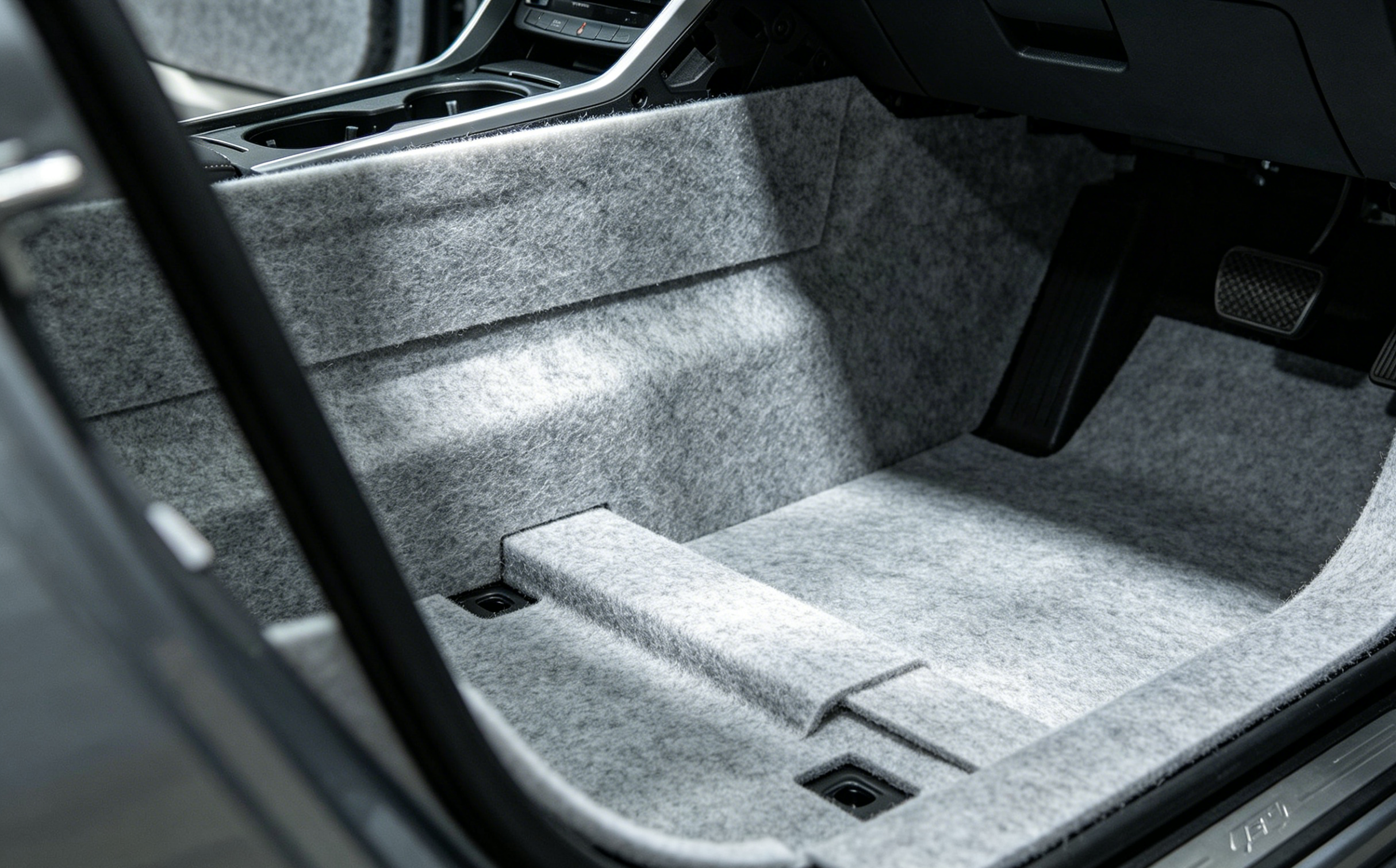
In automotive engineering, non woven fabric is not just a material—it is a functional acoustic layer.
It helps:
- absorb vibration energy
- reduce airborne noise
- improve cabin comfort
- stabilize multi-layer structures
Compared to rigid materials, non woven fabric provides:
- better energy dissipation
- lower weight
- easier shaping for die-cutting
This makes it ideal for modern lightweight vehicle design.
Why non woven fabric is not just a raw material
In real applications, non woven fabric is rarely used alone.
It is usually converted into functional components through:
- precision die cutting
- lamination with foam or adhesive
- multi-layer composite structures
- forming into shaped acoustic parts
At this stage, it becomes part of an engineered system rather than a raw sheet material.
This is where manufacturing quality becomes critical.
Poor cutting or inconsistent density can lead to:
- noise leakage
- poor fit
- reduced durability
- inconsistent performance
How Sanken works with non woven fabric
At Sanken, non woven fabric is treated as a functional engineering material, not a commodity.
Our capabilities include:
- precision die cutting for complex geometries
- multi-layer lamination with foam and adhesives
- automotive-grade acoustic material processing
- stable batch-to-batch production control
- integration into sealing and insulation systems
We focus on ensuring that non woven components perform reliably in real-world conditions, not just in material specifications.
Conclusion
Non woven fabric is a highly adaptable engineered material system, not a simple textile.
Its value comes from its ability to be designed for different functions such as:
- noise reduction
- insulation
- filtration
- cushioning
- structural support
In modern industrial design, it plays a critical role in lightweight, high-performance systems.
At Sanken, we transform non woven fabric into precision functional components that support automotive, electronics, and industrial applications with consistent performance and reliability.