
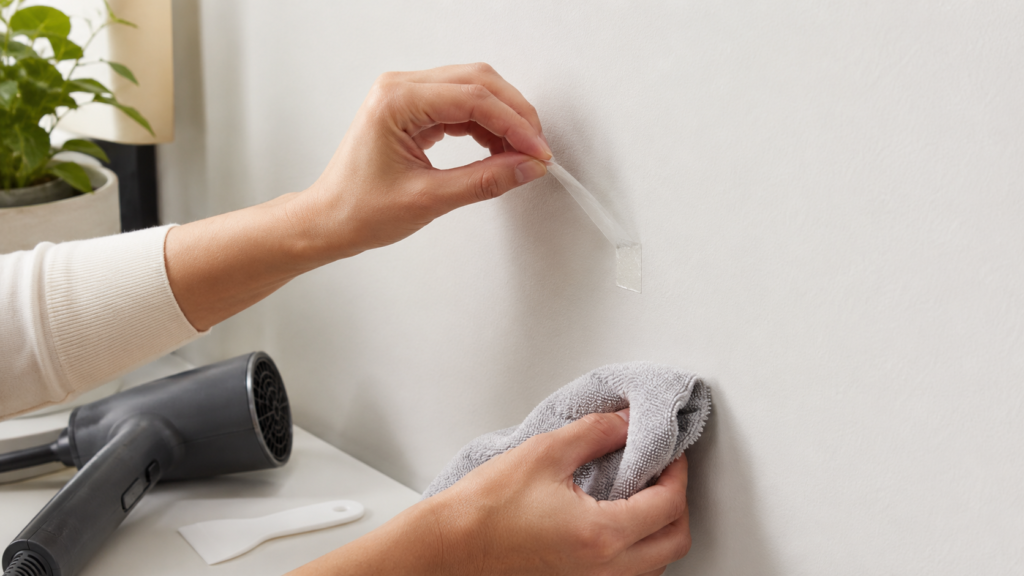
The safest way to remove 3M adhesive from a wall is to soften the adhesive first, peel slowly, and clean the residue with a wall-safe method. Do not pull the tape off quickly, because that is the easiest way to tear paint, damage drywall paper, or leave a rough patch on the wall.
For most painted walls, the best starting method is:
- Warm the adhesive with a hair dryer.
- Lift one corner gently.
- Peel slowly at a low angle.
- Rub off soft residue with your fingers or a plastic scraper.
- Clean the remaining adhesive with mild soapy water or a small amount of isopropyl alcohol tested in a hidden area.
The key is patience. 3M adhesive is designed to bond strongly, so forcing it off can damage the wall faster than the adhesive itself.
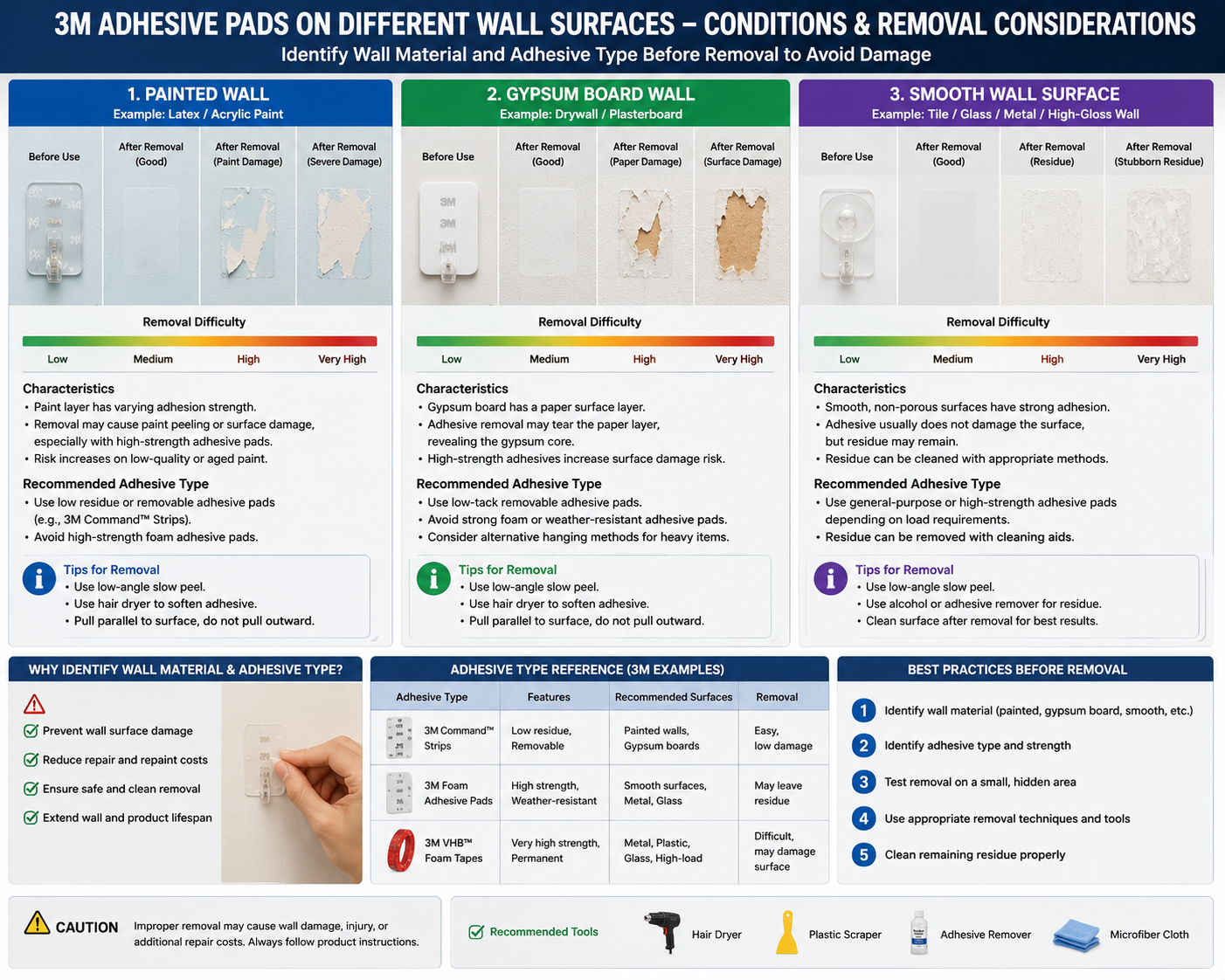
First, Identify the Wall Surface
Before removing 3M adhesive, check what kind of wall surface you are dealing with.
Different walls react differently to heat, moisture, and cleaners.
| Wall Surface | Removal Risk |
|---|---|
| Painted drywall | Paint may peel or drywall paper may tear |
| Glossy painted wall | Easier to clean, but coating may dull |
| Matte painted wall | More likely to stain or show rubbing marks |
| Wallpaper | Very high risk of tearing or discoloration |
| Tile wall | Usually easier and safer to clean |
| Wood panel wall | Finish may be damaged by solvent or heat |
| Textured wall | Adhesive may stay inside surface texture |
If the adhesive is on painted drywall, be more careful than you would be on glass, tile, or metal.
A wall is not a hard industrial surface. Paint and drywall paper are easy to damage.
Why 3M Adhesive Is Hard to Remove From Walls
3M makes many adhesive products. Some are designed for removable wall mounting, while others are made for long-term industrial bonding.
If the adhesive was designed for permanent attachment, it may bond strongly to paint. Over time, heat, humidity, sunlight, pressure, and aging can make removal harder.
Common reasons adhesive becomes difficult to remove include:
- It stayed on the wall for too long.
- The wall paint was weak or old.
- The adhesive was pressed too firmly.
- The room had heat or humidity exposure.
- The tape was not designed for wall-safe removal.
- The wall surface was porous or textured.
- The adhesive was pulled off too quickly.
This is why the removal method should focus on reducing stress on the paint layer.
Method 1: Use Gentle Heat
A hair dryer is usually the safest first tool.
Set the hair dryer to warm or medium heat. Hold it several inches away from the adhesive and warm the area for 30 to 60 seconds.
The heat helps soften the adhesive and makes it easier to peel.
Do not overheat the wall. Too much heat can soften paint, discolor the surface, or damage wallpaper.
Avoid using a heat gun unless you are experienced. A heat gun can become too hot very quickly and may damage paint or drywall.
Method 2: Peel Slowly at a Low Angle
After warming the adhesive, lift one corner gently.
Use:
- Your fingernail
- A plastic scraper
- An old credit card
- A plastic putty knife
Avoid metal blades on painted walls. They can scratch the surface or cut into the paint.
Peel the tape slowly and keep it close to the wall. Do not pull straight outward.
A low-angle peel reduces stress on the paint.
If the adhesive starts pulling paint off, stop. Warm it again and continue slowly.
Method 3: Roll Off Soft Adhesive Residue
After removing the tape or hook, sticky residue may remain.
If the residue is soft, try rolling it off with your finger.
Push the adhesive gently in one direction. It may form small sticky balls and lift from the wall.
This method is slow, but it is often safer than using solvent immediately.
For larger areas, use a plastic scraper with light pressure.
Do not scrape aggressively. The goal is to move the adhesive, not remove the paint.
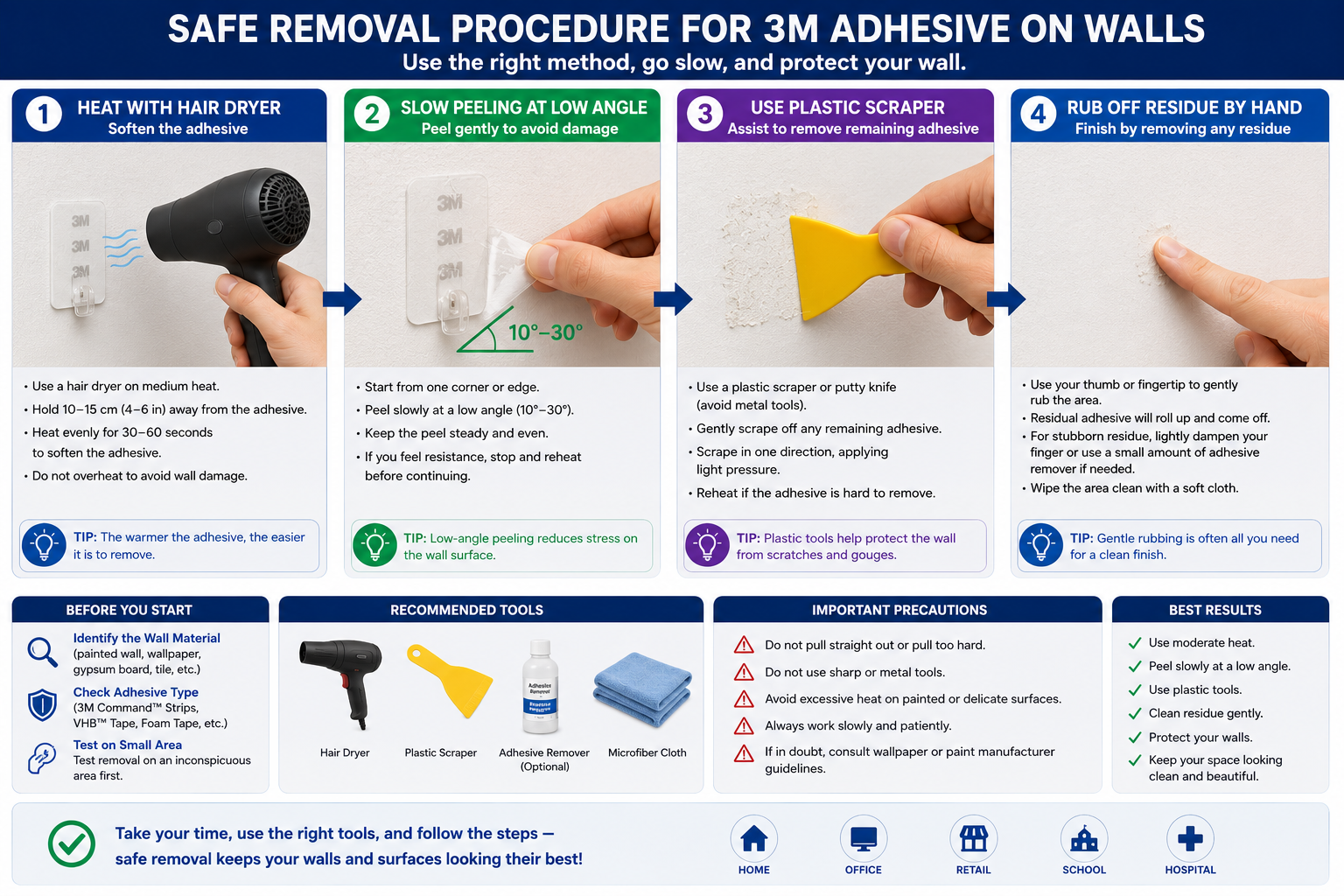
Method 4: Clean With Mild Soapy Water
If residue remains, start with the mildest cleaner.
Mix warm water with a small amount of dish soap. Dampen a soft cloth and rub the adhesive gently.
Do not soak the wall.
Painted drywall can absorb water, especially if the paint is matte or old. Too much water can leave marks or soften the paint.
After cleaning, wipe with a damp clean cloth and dry the area.
This method works best for light residue.
Method 5: Use Isopropyl Alcohol Carefully
If soap and water do not remove the residue, test isopropyl alcohol in a hidden area first.
Apply a small amount to a cloth, not directly to the wall. Rub gently.
If the paint does not change color, soften, or become shiny, you can continue carefully.
Isopropyl alcohol can help break down adhesive residue, but it may affect some paints and finishes.
Do not use too much. Work slowly and dry the area after cleaning.
Method 6: Use Adhesive Remover Only After Testing
Commercial adhesive removers may work, but they are risky on painted walls.
Some products can stain paint, leave oily marks, soften coatings, or create glossy patches.
If you use an adhesive remover:
- Test it in a hidden area.
- Use a very small amount.
- Apply it to a cloth, not directly to the wall.
- Rub gently.
- Clean afterward with mild soapy water.
- Dry the area completely.
Avoid strong solvents such as acetone, lacquer thinner, paint thinner, or aggressive degreasers on painted walls. They may remove paint faster than adhesive.
How to Remove 3M Command Strip Adhesive
If it is a 3M Command Strip, the removal method is different.
Command Strips are usually designed to stretch-release.
The proper method is:
- Hold the hook or base gently.
- Pull the exposed tab straight down.
- Stretch slowly along the wall.
- Do not pull outward.
- Keep stretching until the strip releases.
If you pull the tab outward, the paint may come off.
If the tab breaks, use gentle heat first, then slowly work the strip loose with dental floss or a plastic card.
Dental Floss Method for Wall Hooks
If a 3M hook or adhesive pad is stuck firmly, dental floss can help.
Slide dental floss behind the hook or pad and move it back and forth like a saw.
This can cut through the adhesive layer without pulling the wall outward.
After the hook comes off, remove residue with heat, finger rolling, or mild cleaner.
This method is useful when the adhesive pad is thick.
What Not to Do
Avoid these mistakes:
- Do not rip the tape off quickly.
- Do not use a metal knife on painted walls.
- Do not soak drywall with water.
- Do not use acetone on painted walls.
- Do not scrub with rough pads.
- Do not overheat the paint.
- Do not spray solvent directly onto the wall.
- Do not assume all 3M adhesives are removable.
Most wall damage happens because the adhesive is removed too aggressively.
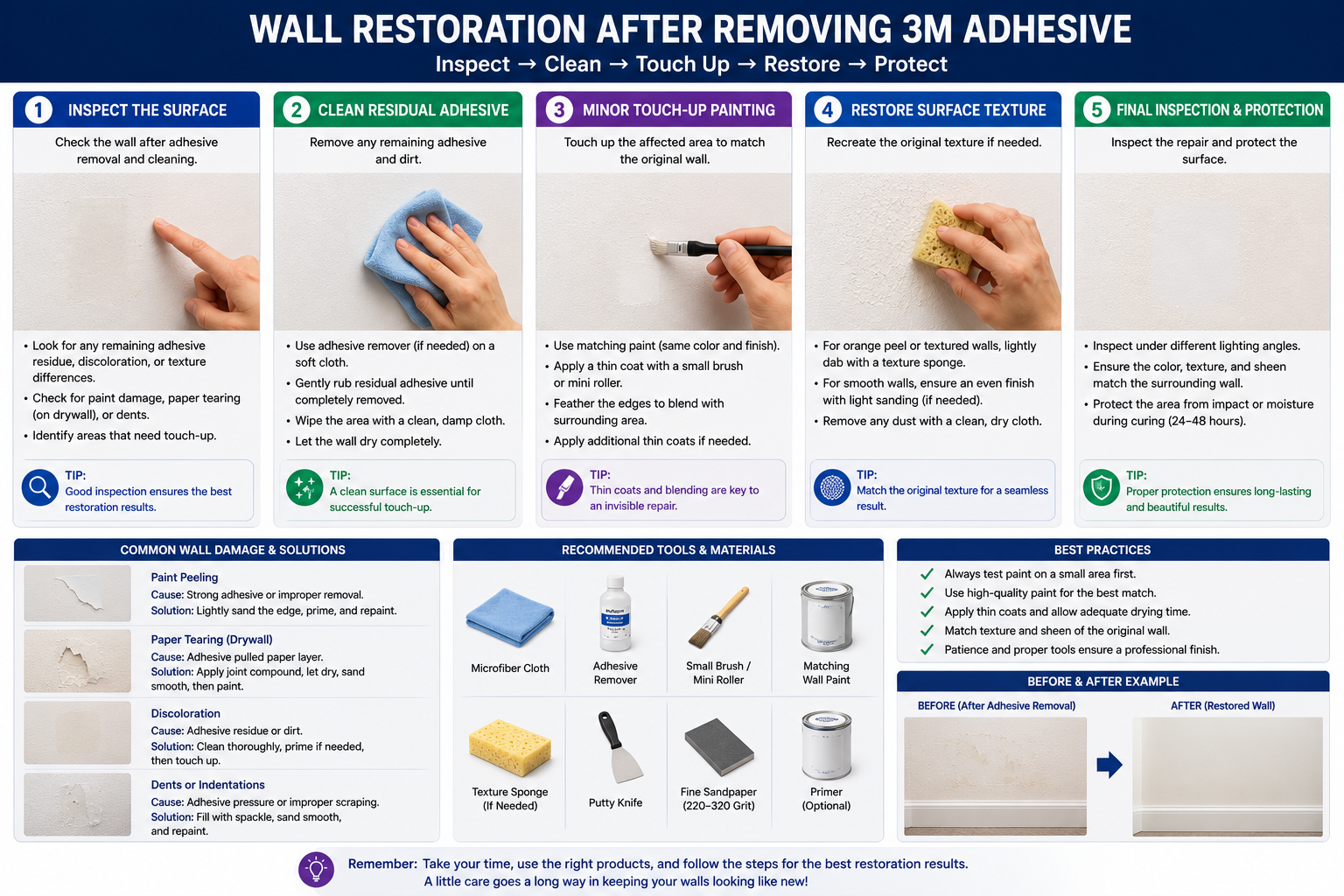
If Paint Comes Off
Sometimes paint still comes off, especially if the wall paint is old, thin, poorly bonded, or matte.
If this happens:
- Stop pulling.
- Remove the remaining adhesive more slowly.
- Clean the area.
- Let it dry completely.
- Lightly sand rough edges if needed.
- Touch up with matching paint.
Do not keep scraping the damaged area. That can make the repair larger.
How to Avoid This Problem Next Time
If you need to mount something on a wall again, choose the adhesive based on wall condition and removal requirement.
Before applying tape or hooks, consider:
- Is the wall painted, textured, wallpapered, or tiled?
- Is the paint new or old?
- Will the tape need to be removed later?
- How heavy is the object?
- Will the room face heat or humidity?
- Is the tape designed for wall-safe removal?
- Does the product include a stretch-release tab?
- Can the surface be cleaned before application?
For temporary wall mounting, removable wall strips are safer than permanent double-sided tape.
For industrial or product assembly use, the adhesive should be selected based on the surface, load, temperature, aging time, and required removability.
Why Adhesive Choice Matters in Product Design
This same problem also appears in manufacturing.
A tape that bonds strongly during assembly may become difficult to remove later. A protective film may leave residue. A temporary mounting tape may damage paint, plastic, coated metal, or display surfaces.
For OEM buyers, removability should be discussed before choosing adhesive.
Important questions include:
- Should the adhesive be permanent or removable?
- How long will it stay attached?
- What surface will it bond to?
- What residue level is acceptable?
- Will the product face heat or humidity?
- Will removal be done by workers or end users?
- Should the die-cut part include a pull tab?
A good adhesive solution should match the full product life cycle: bonding, use, removal, and surface condition after removal.
How Sanken Supports Custom Adhesive Parts
Sanken Manufacturing helps customers convert adhesive materials, 3M tapes, PET-backed tapes, foam tapes, protective films, and double-sided tapes into custom die-cut parts.
For projects that require clean removal or controlled bonding, we help review adhesive type, release liner, pull-tab design, die-cut shape, surface compatibility, and residue risk.
This is especially useful for electronics, displays, automotive interiors, packaging, medical devices, and industrial assemblies where adhesive failure or residue can create quality problems.
Conclusion
The safest way to remove 3M adhesive from a wall is to use gentle heat, peel slowly at a low angle, and clean the remaining residue with a wall-safe method. For painted drywall, patience is more important than force because aggressive pulling, scraping or solvents can damage paint and drywall paper.
If adhesive needs to be removed cleanly in the future, choose a removable adhesive or stretch-release strip from the beginning. The best adhesive is not only the one that sticks strongly, but also the one that matches the surface, usage time, removal method and residue requirement.
For OEM applications, Sanken supports custom adhesive tape parts, removable adhesive components, PET-backed tape parts, foam tape pads, protective films, pull-tab designs and precision die-cut adhesive solutions for stable assembly and cleaner removal.