
Is EVA Foam Waterproof? Exploring Its Properties and Industrial Applications
EVA foam (Ethylene Vinyl Acetate) is widely recognized for its durability, flexibility, and closed-cell structure. One of the most sought-after characteristics is its inherent waterproof nature, which makes it ideal for automotive, industrial, marine, and consumer applications where moisture resistance is critical.
For manufacturers, OEM buyers, and product designers, the real question is not only “Is EVA foam waterproof?” It’s: “How can we leverage EVA foam’s waterproof properties to solve assembly, cushioning, and protective challenges while ensuring performance and longevity?”
What Makes EVA Foam Waterproof?
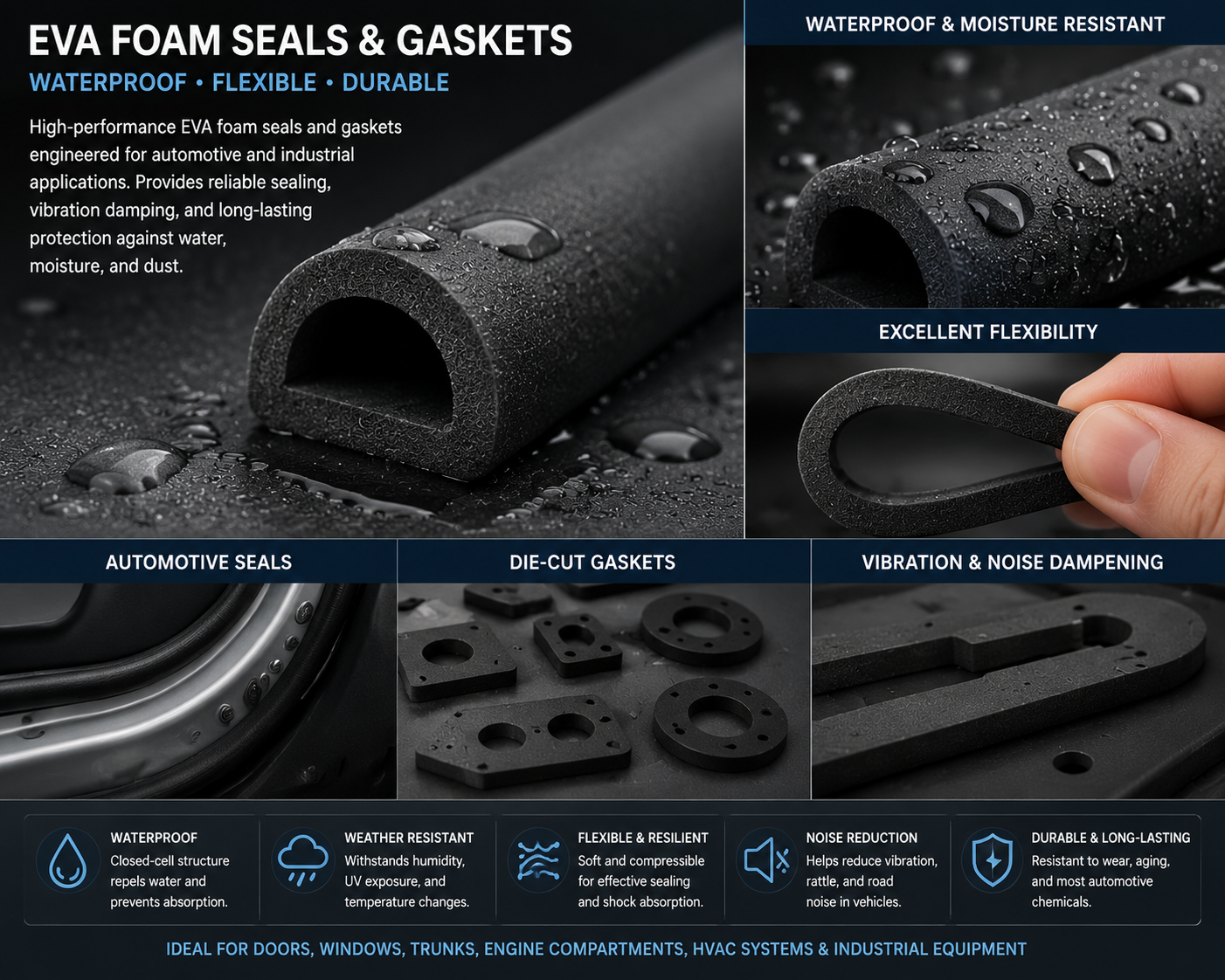
EVA foam consists of a closed-cell polymer structure, which means each cell is sealed off from the others. This structure prevents water from penetrating the material, unlike open-cell foams, which can absorb moisture.
Key properties include:
- Non-porous surface: Water beads on the surface and does not soak in.
- Resistance to humidity and moisture: Ideal for high-humidity environments or contact with liquids.
- Lightweight and durable: EVA retains shape and flexibility even when wet.
- Easy to clean: Water and dirt can be wiped off, reducing contamination risk.
These features make EVA foam a strong candidate for functional parts in environments where water exposure or condensation is expected.
Industrial and OEM Applications
EVA foam is used across multiple industries because it combines waterproofing with cushioning, sealing, and die-cutting versatility.
Automotive Industry
- Door seals, gaskets, and weatherstripping
- Dashboard pads and anti-vibration components
- Trunk liners and floor mats
These applications benefit from EVA foam’s resistance to moisture, preventing rust, vibration noise, and water damage.
Electronics and Packaging
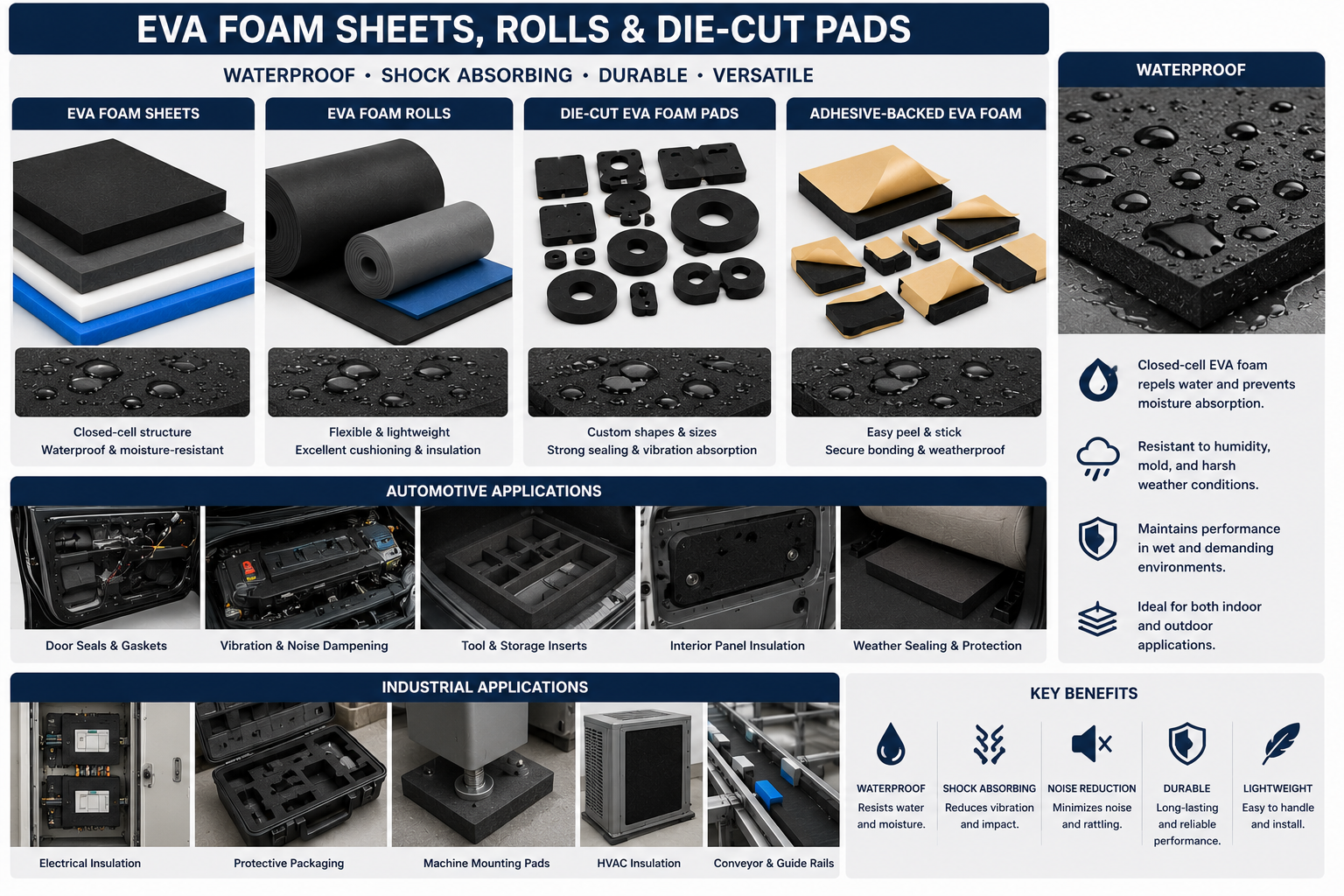
- Protective inserts for devices prone to moisture exposure
- Die-cut EVA pads for shock absorption
- Adhesive-backed foam for moisture-sensitive assembly
Precision die-cutting ensures components maintain dimensional stability and waterproof integrity during assembly.
Marine and Outdoor Equipment
- Kayak seats, flotation devices, and exercise mats
- Boat decking pads and outdoor cushioning
EVA foam’s ability to resist water absorption prevents degradation and ensures long-term usability in wet environments.
Industrial and Medical Applications
- Sealing strips and vibration pads
- Foam components in medical device supports
- Protective layers in machinery exposed to water or humidity
Custom die-cutting, lamination, and adhesive backing allow EVA foam to be used safely and effectively in critical functional parts.
Enhancing Waterproof Performance
While EVA foam is inherently waterproof, certain applications require enhanced performance:
- Laminated or composite structures: Combining EVA with rubber, films, or non-woven fabrics can improve barrier properties.
- Die-cutting precision: Ensures edges and seals are fully intact to prevent water ingress.
- Adhesive backing with waterproof adhesives: Maintains component adhesion in humid or wet environments.
- Surface coating or sealing: Optional for marine or outdoor exposure to extreme conditions.
These enhancements allow EVA foam to meet the demanding requirements of modern OEM and industrial products.
Common Considerations
- Edge sealing: Cut edges may absorb moisture if not properly sealed.
- Adhesive compatibility: Check that adhesives and laminates maintain water resistance.
- Temperature range: EVA foam remains stable, but extreme heat can affect flexibility.
- Long-term durability: Closed-cell structure resists water over time, but proper installation ensures optimal performance.
Understanding these factors ensures that EVA foam delivers consistent waterproofing throughout its lifecycle.
Why EVA Foam Is Preferred Over Other Foams
Compared to other foams, EVA offers:
- Superior water resistance vs. PU or open-cell foams
- Lightweight and compressible yet resilient
- Easy to die cut and shape for custom parts
- Compatible with adhesive lamination, film, and non-woven composites
- Stable in high-humidity environments
These advantages make EVA foam a reliable choice for OEMs needing durable, waterproof components.
Conclusion
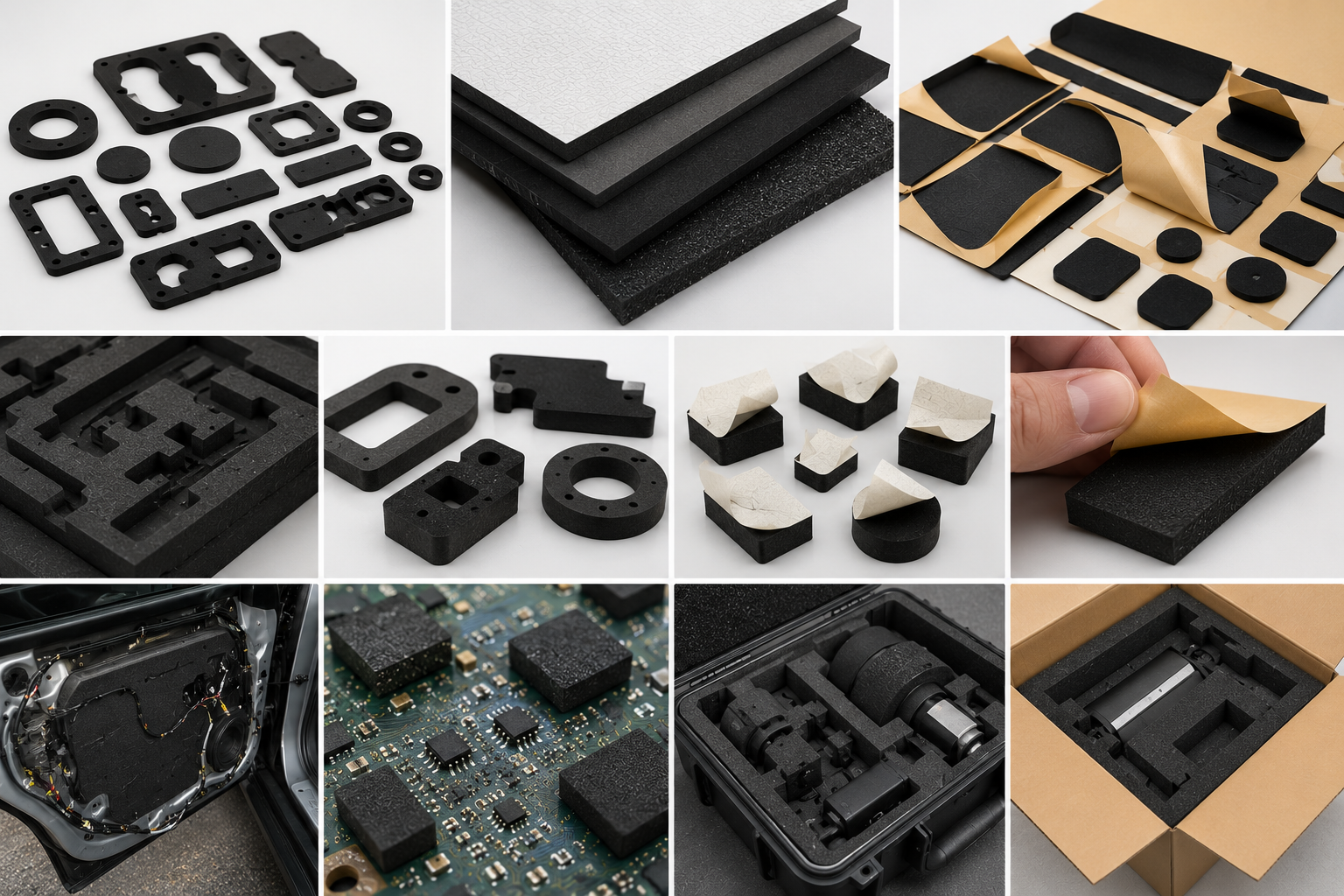
EVA foam is inherently waterproof thanks to its closed-cell structure. It is ideal for automotive, industrial, marine, electronics, and medical applications requiring moisture resistance, cushioning, and dimensional stability. Proper die-cutting, lamination, and edge sealing ensure that EVA foam components perform reliably over time, making it a practical, long-lasting solution for OEM and industrial manufacturers.
By leveraging EVA foam’s properties, engineers and buyers can create durable, water-resistant, and high-performance parts for a wide range of applications.