
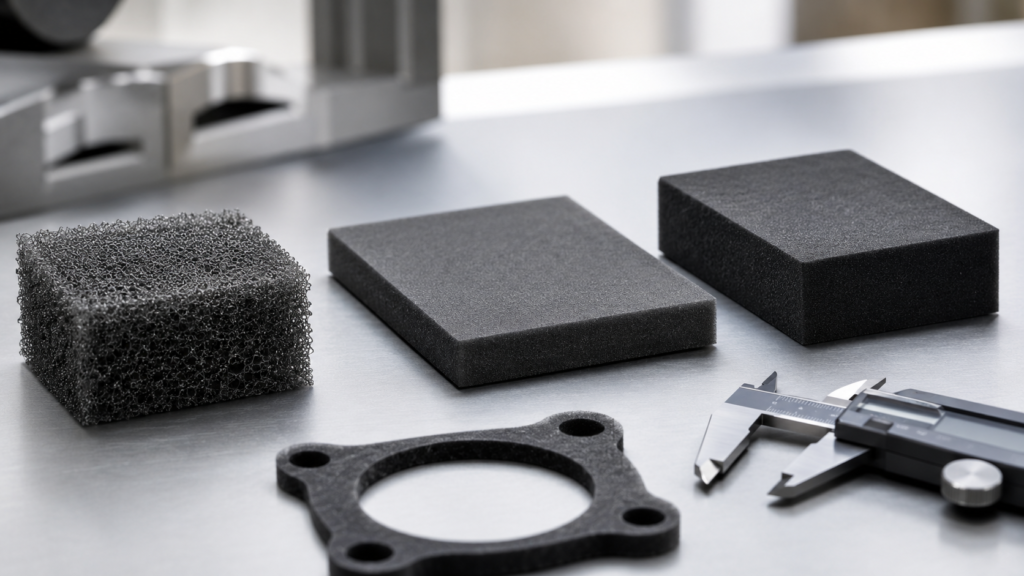
Foam density refers to the mass of foam material per unit volume, usually measured in kg/m³ or lb/ft³. In OEM applications, foam density affects cushioning, sealing, compression resistance, sound absorption, vibration damping, durability and die-cutting accuracy.
The main foam density types are low-density foam, medium-density foam and high-density foam. Low-density foam is softer and lighter, medium-density foam balances flexibility and durability, and high-density foam provides stronger support, compression resistance and longer service life.
At Sanken Manufacturing, we help customers select and convert EVA foam, PU foam, PE foam, rubber foam, silicone foam and multilayer foam materials into precision die-cut gaskets, cushioning pads, anti-vibration parts, acoustic components and protective packaging.
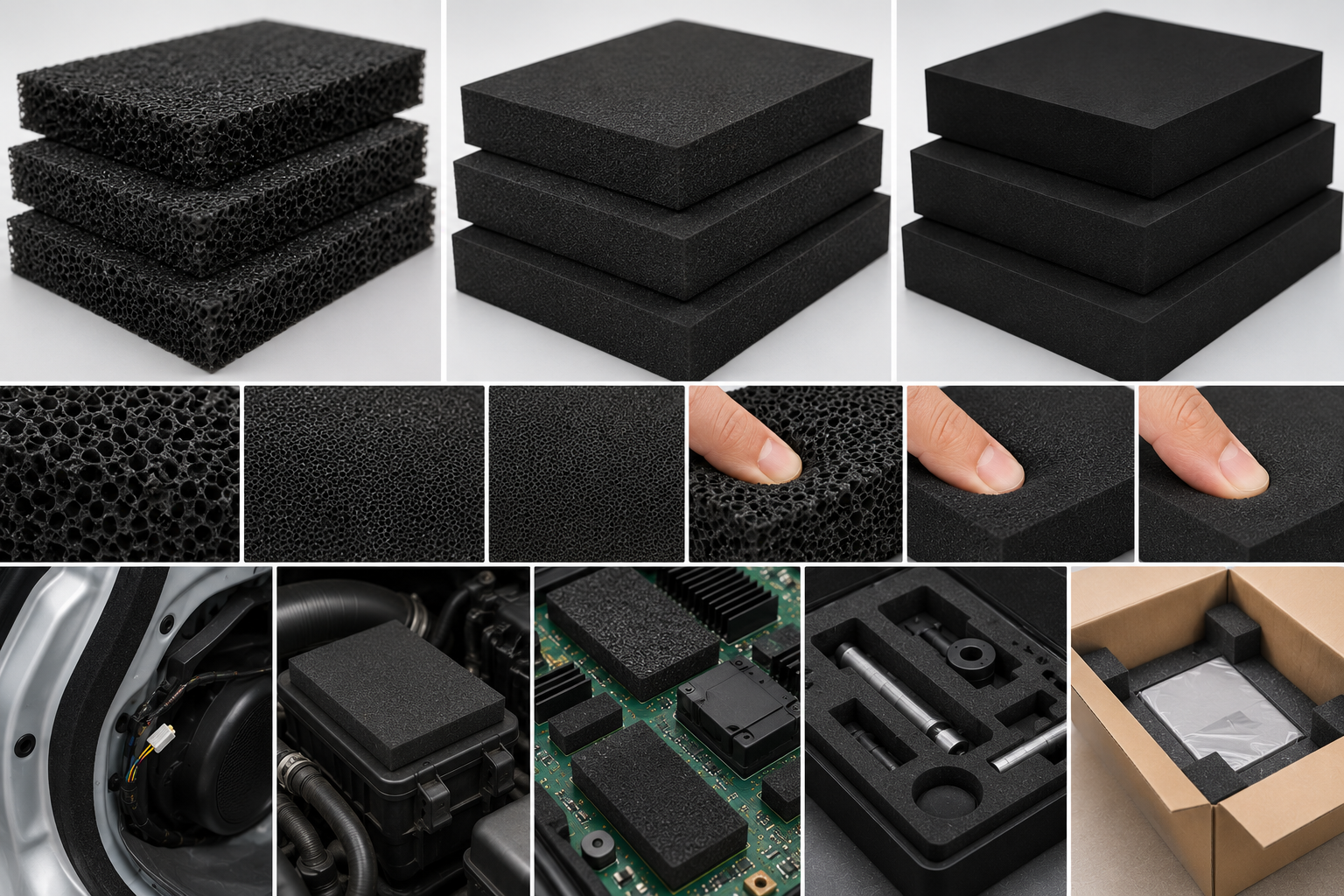
Foam Density Categories
Foam densities are generally classified into three main categories:
1. Low-Density Foam
Characteristics:
- Lightweight and soft
- Flexible and compressible
- Cost-effective
Applications:
- Cushioning in packaging
- Lightweight padding for furniture
- Sound absorption panels
- Temporary or disposable padding
Pros and Cons:
- Pros: Easy to handle, low material cost, good for temporary or flexible applications.
- Cons: Less durable, may compress permanently under load, lower resistance to wear and tear.
2. Medium-Density Foam
Characteristics:
- Balanced flexibility and durability
- Moderate weight
- Good cushioning and support
Applications:
- Automotive interior padding
- Industrial gaskets
- Protective inserts for electronics
- Anti-vibration pads
Pros and Cons:
- Pros: More durable than low-density foam, maintains shape better, versatile for multiple uses.
- Cons: Slightly heavier, higher material cost, may require careful die-cutting to maintain precision.
3. High-Density Foam
Characteristics:
- Heavier and firmer
- Excellent support and load-bearing capacity
- Resistant to permanent compression
Applications:
- Automotive suspension pads
- Heavy-duty gaskets and seals
- Industrial cushioning components
- Structural protective layers
Pros and Cons:
- Pros: Long-lasting, excellent shape retention, suitable for high-stress applications.
- Cons: More expensive, harder to cut without precision die-cutting, less flexible.
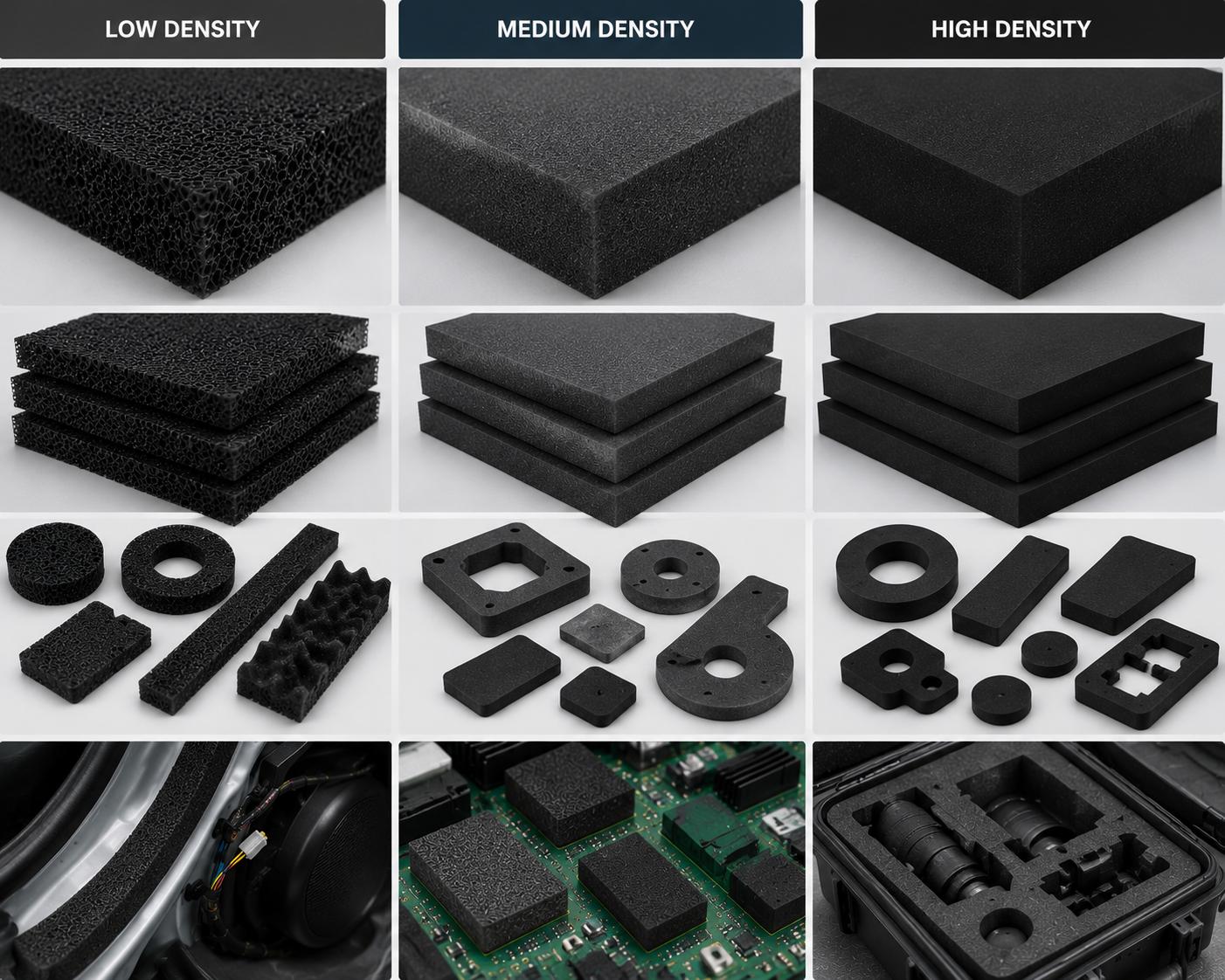
How Foam Density Affects Performance
Density is a critical factor in determining foam behavior:
- Cushioning: Low-density foams provide soft cushioning, high-density foams provide firm support.
- Durability: Higher-density foams resist permanent compression and wear over time.
- Noise and vibration control: Medium and high-density foams are preferred for damping vibrations in automotive and industrial applications.
- Die-cut precision: Higher-density foams often require precision cutting tools to maintain exact tolerances.
- Weight considerations: Low-density foams are lighter, which can reduce shipping or installation weight.
Common Industrial Foam Types by Density
| Foam Type | Typical Density Range | Recommended Use |
|---|---|---|
| EVA foam | 25–200 kg/m³ | Automotive pads, anti-vibration components, cushioning |
| PU foam | 16–80 kg/m³ (low) / 80–250 kg/m³ (high) | Packaging, furniture, industrial pads |
| PE foam | 30–300 kg/m³ | Protective packaging, gaskets, insulation |
| Rubber foam | 60–400 kg/m³ | Sealing, vibration damping, industrial gaskets |
| Silicone foam | 100–500 kg/m³ | Medical devices, heat-resistant sealing |
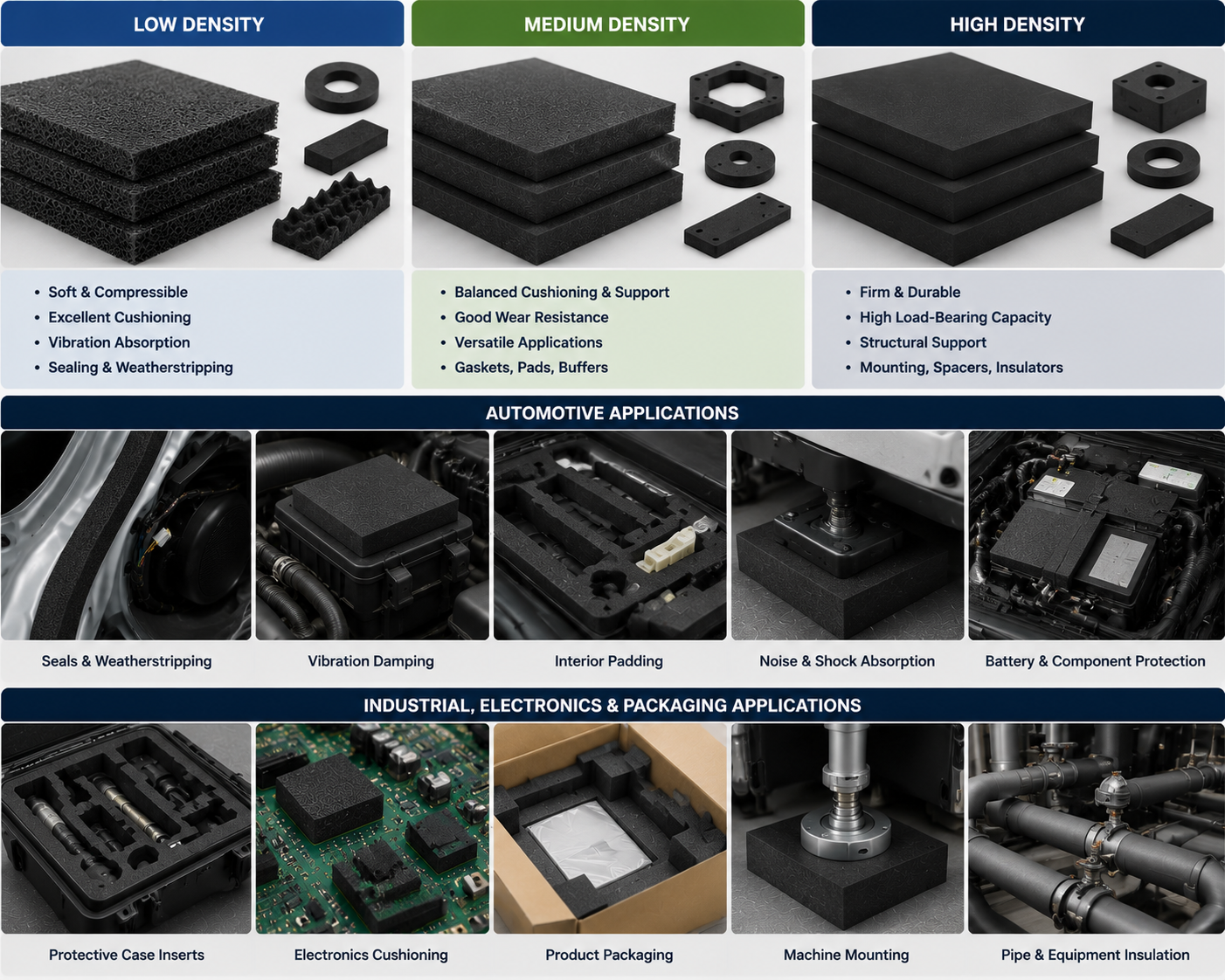
Selecting Foam Density for Your Application
When choosing foam density, consider:
- Load and stress: Will the foam bear weight or pressure? Higher density may be required.
- Durability requirements: Longer service life favors medium or high-density foam.
- Cushioning vs. support: Softer low-density foam for comfort, firmer high-density foam for support.
- Die-cut precision: Complex shapes require appropriate density for clean cutting.
- Environmental conditions: Temperature, humidity, chemical exposure may affect density choice.
- Weight restrictions: Low-density foams reduce weight in automotive or portable applications.
By evaluating these factors, you can select foam density that balances cost, performance, and longevity.
Conclusion
Foam density is one of the most important factors in foam material selection. Low-density foam is lightweight and soft, medium-density foam offers balanced cushioning and durability, and high-density foam provides stronger support, compression resistance and long-term stability.
For OEM applications, the best foam density depends on sealing pressure, cushioning requirement, vibration level, acoustic performance, temperature exposure, adhesive compatibility, die-cut shape and final assembly method.
Sanken supports EVA foam, PU foam, PE foam, rubber foam, silicone foam and multilayer foam converting for automotive, electronics, medical, packaging and industrial applications. We can help customers select foam density, laminate adhesive layers, produce precision die-cut foam gaskets, cushioning pads, anti-vibration parts and assembly-ready foam components for stable mass production.