

Is Full Leather Interior in a Car Worth It? What Buyers Should Consider Before Paying More
Full leather interiors look premium. They feel luxurious. They can make a vehicle easier to sell and more pleasant to drive. But for many car buyers and automotive OEM teams, the real question is not only “Does leather look good?” The better question is: “Will this interior stay comfortable, durable, quiet, and cost-effective after years of use?”
The answer depends on material quality, climate, maintenance, manufacturing structure, foam support, adhesive stability, and how the leather is integrated with the vehicle interior system.
At Sanken Manufacturing, we look at automotive interiors from the inside out. Behind leather seats, door panels, dashboards, and trim surfaces, there are many hidden materials: foam pads, non-woven fabrics, adhesive tapes, acoustic layers, insulation components, anti-rattle parts, and precision die-cut support structures. These hidden parts often decide whether a “premium” interior still feels premium after years of driving.
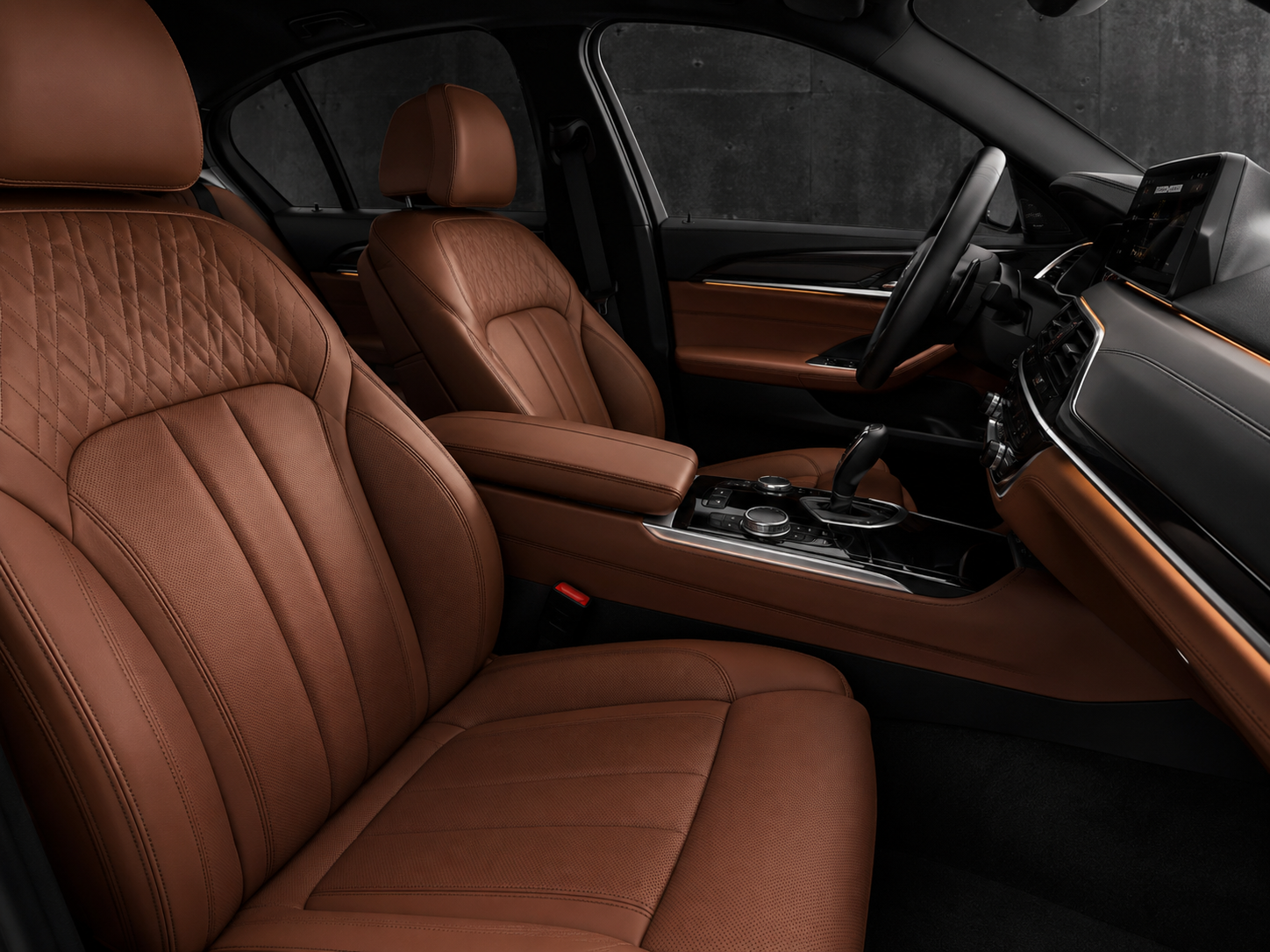
What Does “Full Leather Interior” Really Mean?
Many buyers assume full leather means every interior surface is genuine leather.
That is rarely true.
In many vehicles, “leather interior” may include a mix of:
| Interior Area | Common Material |
|---|---|
| Seat contact surfaces | Genuine leather or premium synthetic leather |
| Seat sides | Synthetic leather or coated material |
| Door inserts | Leather, synthetic leather, or laminated trim |
| Dashboard trim | Soft-touch material, film, leather wrap, or PU |
| Hidden support layers | Foam, fabric, adhesive, non-woven, plastic parts |
So when a customer pays for a full leather package, they should understand what is actually leather and what is engineered material.
This is not always a bad thing.
Modern synthetic leather and engineered interior materials can offer strong durability, easier cleaning, and better consistency than natural leather in some applications.
Why Full Leather Interior Feels Worth It
For many buyers, leather is worth it because it improves the emotional value of the vehicle.
A full leather interior can provide:
- Premium appearance
- Better perceived quality
- Softer touch
- Improved resale appeal
- More luxury feeling
- Stronger brand image
In higher-end vehicles, leather can make the cabin feel more refined and comfortable.
For business users, luxury cars, executive vehicles, and premium trims, leather may support the overall product positioning.
From a customer experience perspective, leather creates an immediate impression.
People notice it the moment they open the door.
Where Full Leather Interior Becomes a Problem
Leather is not perfect.
Customers often discover the disadvantages later.
Common problems include:
1. Heat in Summer
Leather seats can become very hot under sunlight.
This is a real concern in warm regions.
If the seat ventilation system is weak, the driving experience may become uncomfortable.
2. Cold Feeling in Winter
Leather may feel cold when the vehicle first starts in winter.
Seat heating can solve this, but not every model includes strong heating performance.
3. Maintenance Requirement
Leather requires care.
Without cleaning and conditioning, it may dry, crack, fade, or wrinkle.
For customers who want a low-maintenance vehicle, full leather may not always be the easiest choice.
4. Aging and Surface Wear
Leather surfaces may develop:
- Creases
- Glossy wear marks
- Scratches
- Color fading
- Surface cracking
This depends on leather quality, coating, usage habits, and climate exposure.
The Hidden Structure Matters More Than Buyers Think
Most drivers judge leather by what they can see and touch.
Automotive engineers look deeper.
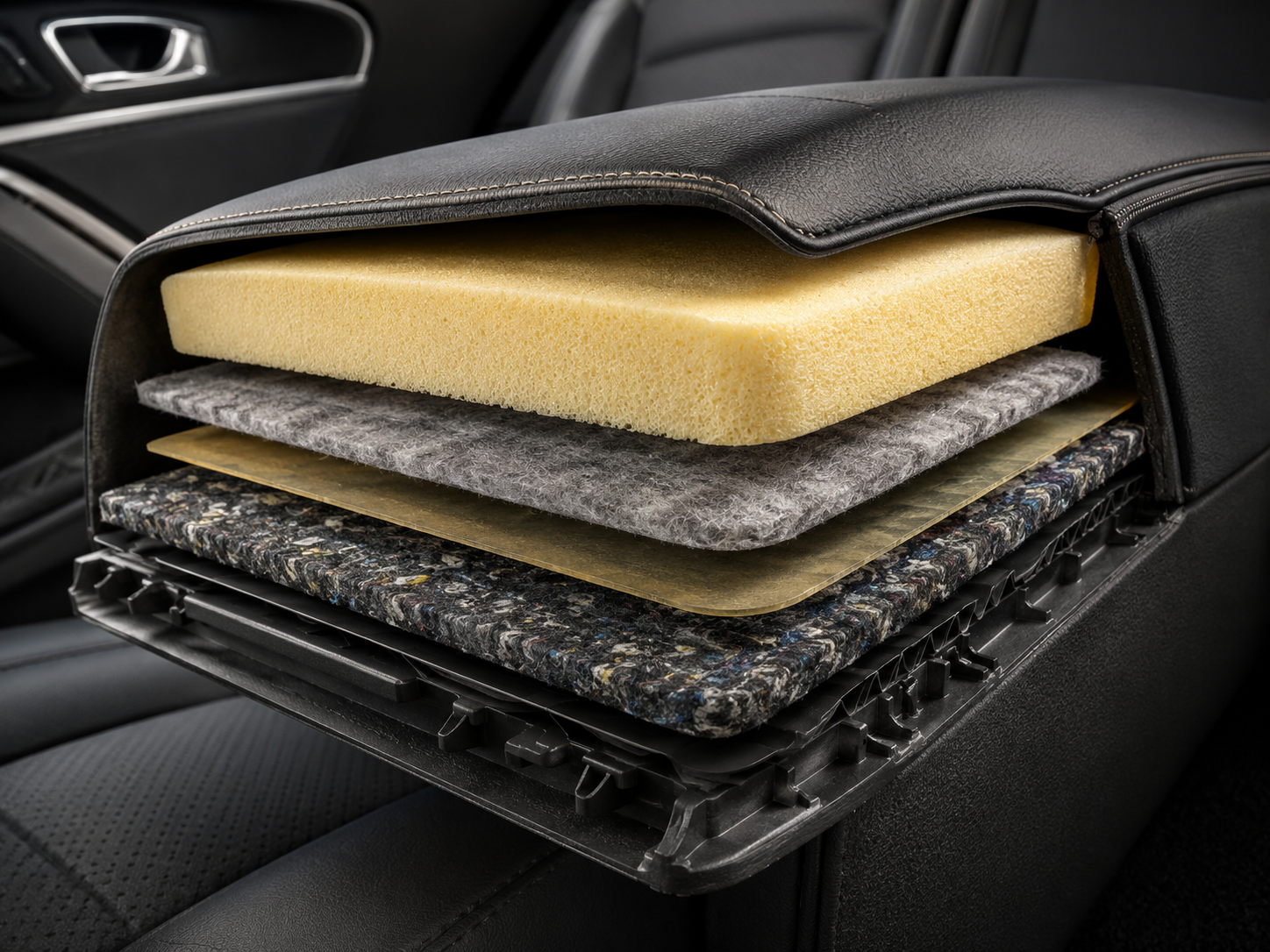
A comfortable leather interior depends on the complete material system underneath.
This may include:
- Seat foam
- Cushioning pads
- Adhesive layers
- Non-woven backing
- Anti-rattle foam
- Acoustic insulation
- Heat insulation layers
- Die-cut spacers and support parts
If these hidden layers are poorly designed, the leather surface may still look good at first but feel worse over time.
For example:
- Poor foam recovery can make seats feel collapsed.
- Weak adhesive can cause bubbling or delamination.
- Bad anti-rattle materials can create interior noise.
- Poor dimensional control can create wrinkles or uneven fit.
At Sanken, this is where we help automotive customers. We produce precision die-cut foam, non-woven, rubber, adhesive, and insulation components that support stable interior assembly and long-term performance.
Is Leather Better Than Fabric?
It depends on the buyer’s priorities.
| Factor | Leather Interior | Fabric Interior |
|---|---|---|
| Premium appearance | Strong | Moderate |
| Maintenance | Requires care | Easier in some cases |
| Heat comfort | Can get hot | Usually better |
| Cleaning spills | Easier if coated | Depends on fabric |
| Durability | Good if high quality | Good if engineered |
| Cost | Higher | Lower |
| Luxury perception | Higher | Lower |
Leather is better when the buyer values luxury, appearance, and resale perception.
Fabric may be better when the buyer values lower cost, breathable comfort, and easier daily use.
For automotive OEMs, the decision is more complex. They must balance customer expectations, material cost, assembly process, long-term durability, and warranty risk.
Is Synthetic Leather a Better Option?
Sometimes, yes.
Modern synthetic leather has improved significantly.
It can offer:
- Better stain resistance
- More consistent texture
- Lower cost
- Easier maintenance
- Better animal-free positioning
- Improved durability in some applications
Many EV brands and modern automotive manufacturers now use synthetic leather or leather alternatives because customers increasingly care about sustainability, cleaning, and consistent performance.
However, synthetic leather also needs good backing, foam support, adhesive lamination, and surface durability testing.
The surface material alone is never the full story.
Why Automotive OEM Buyers Must Think Beyond Appearance
For OEM buyers, leather interior decisions are not only about luxury.
They also affect production and quality control.
A leather interior system must meet requirements for:
- Heat aging
- Abrasion resistance
- Odor control
- VOC performance
- Flame resistance
- Adhesive stability
- Wrinkle resistance
- Color consistency
- Assembly fit
- Long-term comfort
If the hidden materials fail, the customer may blame the whole vehicle interior.
That creates warranty pressure and brand damage.
This is why material selection and converting quality are so important.
How Precision Die-Cut Parts Support Leather Interiors
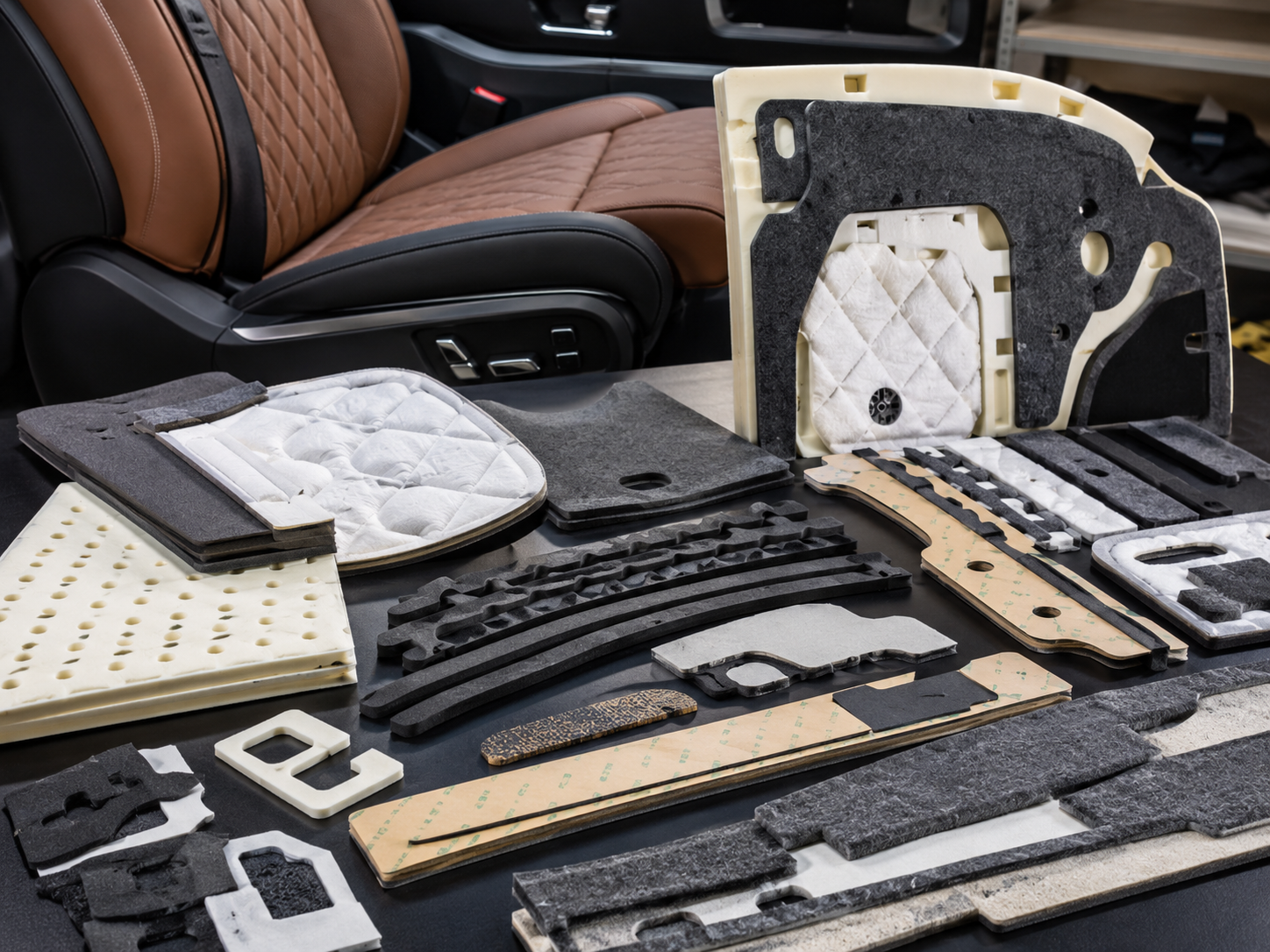
Leather interiors rely on many small die-cut parts.
These parts are usually hidden, but they solve real problems.
Examples include:
- Anti-rattle foam pads
- Door panel cushioning strips
- Adhesive-backed spacers
- Non-woven backing parts
- Acoustic insulation pads
- Thermal protection layers
- Rubber sealing supports
- Assembly positioning components
A small foam pad may prevent a squeak.
A die-cut adhesive layer may improve trim bonding.
A non-woven acoustic part may reduce cabin noise.
A precisely converted spacer may improve panel fit.
These are not decorative parts.
They are functional parts that help the interior feel better, quieter, and more reliable.
When Is Full Leather Interior Worth It?
Full leather interior is worth it when the buyer wants:
- Premium appearance
- Luxury cabin feel
- Strong resale impression
- Easier cleaning of surface spills
- Better brand image
- Higher trim-level value
It is especially suitable for premium vehicles, executive cars, luxury SUVs, and customers who maintain interiors carefully.
When Is It Not Worth It?
Full leather may not be worth it when the buyer:
- Drives in very hot climates
- Wants minimum maintenance
- Has pets or heavy daily wear
- Prioritizes low cost
- Prefers breathable fabric comfort
- Does not care about luxury appearance
In those cases, high-quality fabric or synthetic leather may offer better practical value.
What Should Buyers Check Before Choosing Full Leather?
Before paying more for a full leather interior, buyers should ask:
- Which areas are genuine leather?
- What material is used on side panels and trim?
- Is the leather coated for stain resistance?
- Does the seat have heating or ventilation?
- How does the material perform in hot climates?
- What maintenance does it require?
- Is the backing foam durable?
- Does the interior have good acoustic insulation?
- Are hidden materials designed to prevent rattling and delamination?
- Is the supplier experienced in automotive interior materials?
For OEM projects, these questions should be asked during development, not after production starts.
How Sanken Helps Automotive Interior Projects
At Sanken Manufacturing, we support automotive interior manufacturers with precision material converting solutions.
Our capabilities include:
- Precision die cutting
- Foam converting
- Non-woven fabric converting
- Adhesive lamination
- Rubber processing
- Hot pressing
- Custom assembly
- Injection molding support
We help customers create interior components that improve comfort, reduce noise, support assembly, and improve long-term reliability.
Our goal is not simply to provide materials.
Our goal is to help customers reduce production risk, improve interior quality, and simplify supplier management.
Conclusion
Full leather interior can be worth it if the buyer values luxury appearance, premium touch, resale impression, and comfort. But leather alone does not guarantee a high-quality interior. Long-term performance depends on the full material system behind the surface, including foam, adhesive, non-woven backing, acoustic insulation, and precision die-cut support parts.
For automotive OEMs and interior suppliers, the best interior is not only beautiful. It must remain comfortable, quiet, durable, and stable in mass production. At Sanken Manufacturing, we help customers build that reliability through precision die cutting, material converting, adhesive lamination, and custom automotive interior component solutions.