
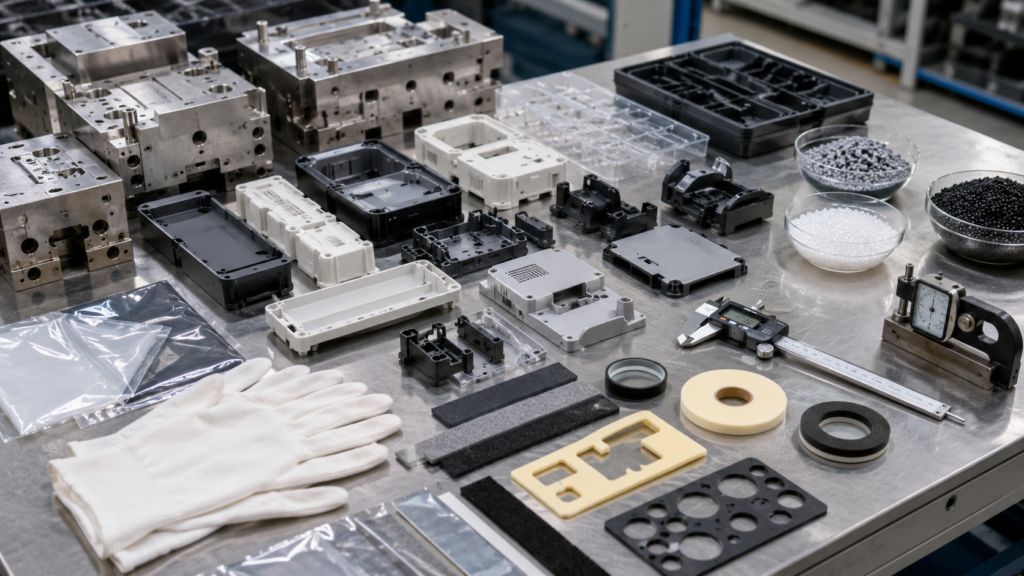
Choosing between low-volume and high-volume injection molding depends on your project stage, production quantity, tooling budget, material requirement, tolerance, lead time, and long-term demand. Low-volume injection molding is usually better for early production, market testing, engineering validation, bridge production, and projects with uncertain demand. High-volume injection molding is usually better when the design is confirmed, demand is stable, and the project needs lower unit cost, repeatable quality, and long-term mass production.
For OEM engineers and purchasing teams, the decision is not only about quantity. A custom plastic part must fit the final assembly, meet quality standards, and work with related components such as foam gaskets, adhesive tape parts, PET insulation films, rubber pads, protective films, non-woven felt strips, and other custom die cut parts.
At Sanken, we support OEM customers with custom injection molded plastic parts, precision die cut foam gaskets, adhesive tape components, PET and PI insulation films, rubber pads, protective films, non-woven felt components, sealing parts, and multilayer material converting for automotive, electronics, battery, appliance, medical device, and industrial applications.
What Is Low-Volume Injection Molding?
Low-volume injection molding is used when the customer needs a smaller production quantity before committing to full mass production. It is often used for prototype validation, pilot runs, market testing, functional samples, and bridge production.
Low-volume molding may be suitable when:
- The design is close to final but still needs validation
- The expected demand is not yet clear
- The customer needs production-grade material samples
- The project needs faster parts before full tooling investment
- The product is used in a niche market
- The customer wants to test assembly before scaling up
- The part may still need design improvement
Low-volume injection molding can help customers reduce risk before investing in more complex or higher-output tooling.
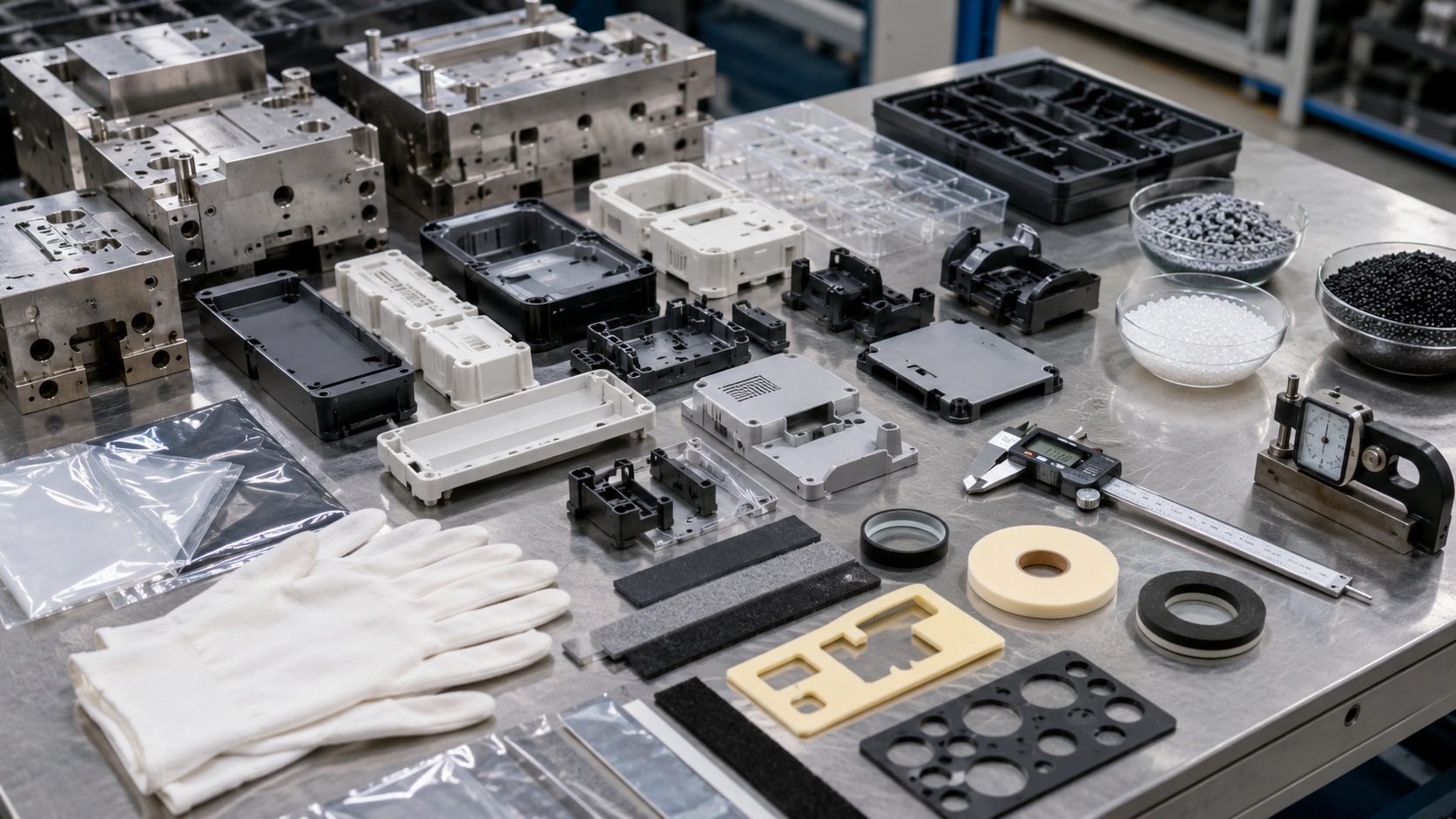
What Is High-Volume Injection Molding?
High-volume injection molding is used when the product design is approved and the part needs to be produced repeatedly in large quantities. The tooling is usually designed for longer mold life, higher production efficiency, better cycle time, and stable quality control.
High-volume molding is suitable when:
- The design is confirmed
- Production demand is stable
- Unit cost must be reduced
- Part quality must remain consistent
- The project requires repeat orders
- Assembly process is already validated
- The customer needs long-term supply stability
High-volume injection molding usually requires higher tooling investment, but it can reduce the cost per part when the production quantity is large enough.
Low-Volume vs High-Volume Injection Molding
| Factor | Low-Volume Injection Molding | High-Volume Injection Molding |
|---|---|---|
| Best use | Pilot production, bridge production, small batches | Mass production and long-term supply |
| Tooling cost | Usually lower | Usually higher |
| Unit cost | Higher than high-volume production | Lower at scale |
| Design flexibility | More flexible | Less flexible after tooling approval |
| Lead time | Often faster for early parts | Longer tooling preparation |
| Mold life | Lower to medium | Higher |
| Production efficiency | Suitable for limited runs | Optimized for large quantities |
| Quality control | Important for validation | Critical for stable mass production |
| Best project stage | Early or uncertain demand | Confirmed demand and approved design |
The right choice depends on whether the project needs flexibility or production efficiency.
Choose Low-Volume Injection Molding When the Design Is Still Being Validated
Low-volume injection molding is useful when the product is not fully ready for long-term mass production.
This may happen when:
- The customer needs real plastic parts for assembly testing
- 3D printed samples are not enough for material validation
- The design may still change
- The final order quantity is uncertain
- The customer needs parts for internal testing or market samples
- The project is moving from prototype to early production
A 3D printed part can help confirm shape, but it may not represent the final molded material, surface finish, shrinkage, or assembly behavior. Low-volume injection molding can provide more realistic production-grade samples.
For example, a plastic housing may need to be tested with foam gaskets, adhesive tape, PET insulation films, rubber pads, or protective films. Low-volume molding allows the customer to check real assembly conditions before scaling up.
Choose High-Volume Injection Molding When Demand Is Stable
High-volume injection molding becomes more practical when the design is approved and production demand is clear.
It is the better choice when:
- The part will be produced repeatedly
- The mold needs longer service life
- Cycle time must be optimized
- Unit cost must be reduced
- Quality standards are already confirmed
- Assembly fixtures and packaging are finalized
- Long-term supply is required
For automotive electronics, consumer electronics, appliances, medical devices, and industrial equipment, high-volume injection molding can provide stable production when the project is mature.
However, high-volume tooling should not begin too early. If the design changes after the mold is completed, modification cost and lead time may increase.
Tooling Cost and Mold Life
Tooling is one of the biggest differences between low-volume and high-volume injection molding.
Low-volume tools are often designed for shorter production runs. They may be more cost-effective when the project is still developing or the required quantity is limited.
High-volume tools are designed for longer mold life and higher production efficiency. They may use better mold steel, more cavities, stronger cooling design, and more stable production features.
| Tooling Decision | Suitable Situation |
|---|---|
| Lower-cost tooling | Small quantity, pilot run, design validation |
| More durable tooling | Repeated production and long-term orders |
| Single-cavity mold | Lower demand or early production |
| Multi-cavity mold | Higher demand and lower unit cost target |
| Prototype or bridge tooling | Transition from sample to production |
| Production mold | Approved design and stable mass production |
The lowest mold cost is not always the best decision. If the tool cannot support stable quality, the project may face rework, delays, and higher total cost.
Unit Cost and Total Project Cost
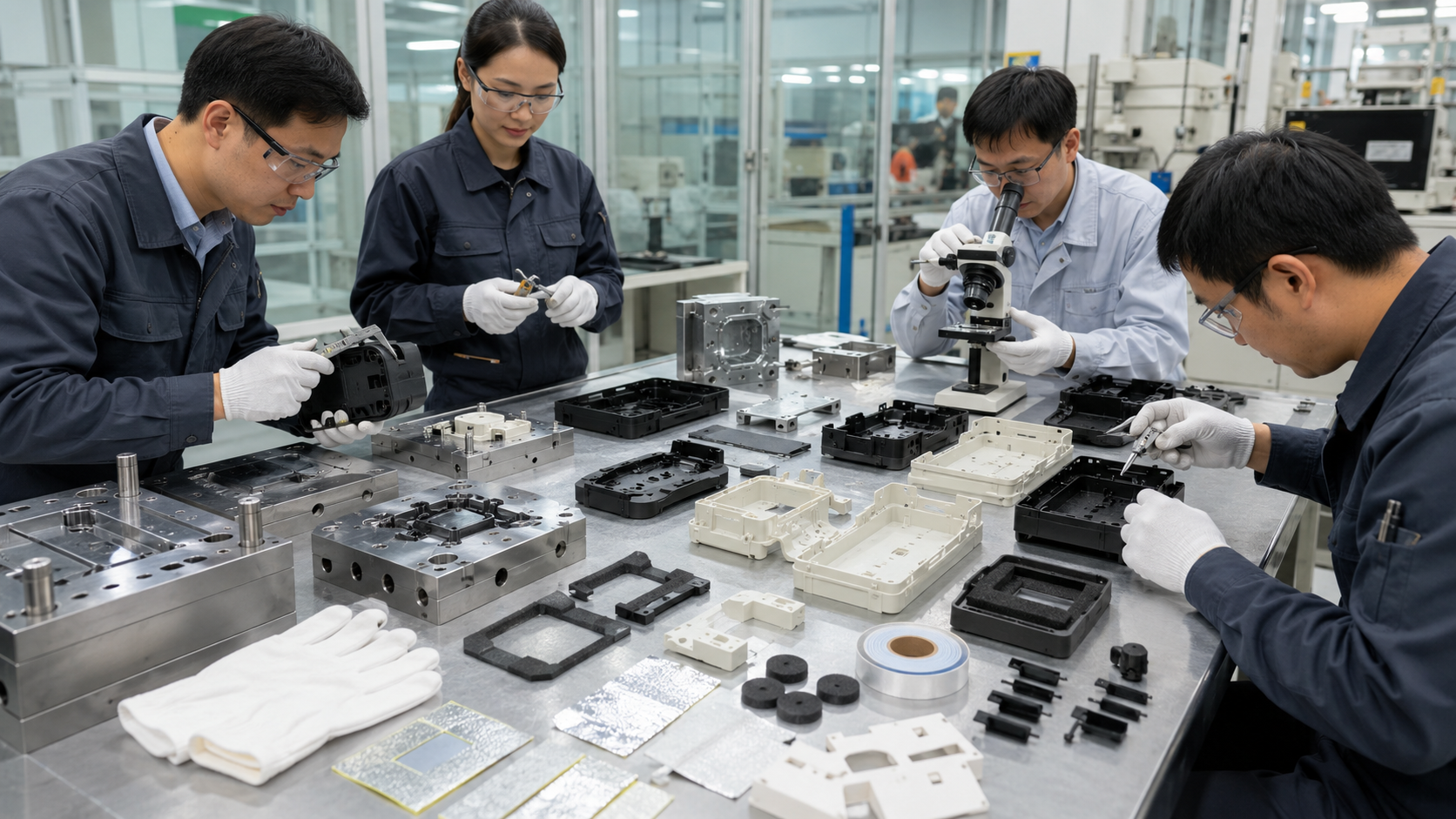
Low-volume injection molding usually has a lower tooling cost but a higher unit cost. High-volume injection molding usually has a higher tooling cost but a lower unit cost at scale.
OEM buyers should compare total project cost, not only the first quotation.
Total cost may include:
- Mold cost
- Plastic material cost
- Unit production cost
- Sample approval cost
- Inspection cost
- Assembly testing cost
- Packaging cost
- Mold modification cost
- Rework or rejection cost
- Supplier management cost
If the part will only be produced in a small quantity, low-volume molding may be more practical. If the part will be produced in large quantities over time, high-volume molding may reduce the total cost.
Material and Quality Requirements
Both low-volume and high-volume injection molding can use production-grade plastic materials, depending on the project and tooling method.
Common materials include ABS, PC, PP, PA, POM, PE, TPE, TPU, and other engineering plastics.
Material selection should consider:
- Strength
- Heat resistance
- Chemical resistance
- Flexibility
- Surface appearance
- Shrinkage
- Adhesive bonding compatibility
- Dimensional stability
- Assembly environment
Quality requirements also affect the decision. If the part has tight tolerance, visible surfaces, clip strength requirements, or must align with die cut components, the supplier should review these needs before selecting the tooling and molding approach.
Assembly Fit With Die Cut Components
Many injection molded plastic parts need related flexible components.
Examples include:
| Molded Plastic Part | Related Die Cut Component | Function |
|---|---|---|
| Automotive electronic housing | Foam gasket | Dust sealing and vibration reduction |
| Battery-related cover | PET or PI insulation film | Electrical insulation |
| Display frame | Double-sided adhesive tape | Bonding and positioning |
| Sensor housing | Light-blocking film | Optical shielding |
| Appliance panel | Rubber pad | Cushioning and damping |
| Medical device shell | Protective film | Surface protection |
| Interior plastic trim | Non-woven felt strip | Anti-rattle control |
If the molded part and die cut component are not reviewed together, problems may appear late.
For example, a low-volume sample may pass visual inspection but fail assembly because the gasket groove is not deep enough. A high-volume molded part may be rejected if PET film holes do not align with screw posts. Adhesive tape may lift if the plastic surface is not suitable for bonding.
At Sanken, we review molded plastic parts together with foam, tape, film, rubber, felt, and protective materials to reduce assembly mismatch before production.
Low-Volume Injection Molding Is Good for Risk Control
Low-volume molding can be a smart step before high-volume production.
It helps customers check:
- Real material behavior
- Part shrinkage
- Surface appearance
- Warpage
- Clip strength
- Hole alignment
- Foam gasket fit
- Adhesive bonding area
- PET film alignment
- Rubber pad contact
- Protective film coverage
- Packaging method
- Assembly efficiency
This is especially useful when the project has many related parts or the final assembly has not been fully validated.
High-Volume Injection Molding Is Good for Stable Supply
High-volume molding is better when the customer needs consistent production and long-term cost control.
It helps customers achieve:
- Better production efficiency
- Lower unit cost at scale
- Stable dimensions
- Repeatable surface quality
- Better batch consistency
- Faster output after tooling approval
- More stable long-term supply
For OEM buyers, high-volume molding makes sense when the part design, material, packaging, and assembly process are already confirmed.
Common Mistakes When Choosing Production Volume
| Mistake | Possible Result |
|---|---|
| Choosing high-volume tooling before design approval | Expensive mold changes |
| Staying with low-volume production too long | Higher unit cost |
| Ignoring assembly testing | Poor fit during production |
| Choosing the cheapest mold only | Quality instability |
| Not reviewing related die cut parts | Gasket, tape, film, or rubber mismatch |
| Ignoring packaging | Scratches, deformation, or mixed parts |
| Not confirming long-term demand | Wrong tooling investment |
The best decision should balance flexibility, cost, quality, and production risk.
How to Decide: A Practical Checklist
Before choosing low-volume or high-volume injection molding, ask:
- Is the design finalized?
- What is the expected annual volume?
- Is the demand stable or uncertain?
- Does the part need production-grade material?
- Are critical dimensions confirmed?
- Will the part assemble with foam, tape, film, rubber, or felt components?
- Are testing requirements clear?
- Are surface requirements defined?
- Is the packaging method confirmed?
- Will the part require repeat orders?
- Is unit cost or flexibility more important at this stage?
If the answer points toward uncertainty and validation, low-volume molding may be better. If the answer points toward approved design and stable demand, high-volume molding may be better.
How Sanken Supports Low-Volume and High-Volume Projects
Sanken Manufacturing Co., Ltd. supports OEM customers with custom injection molded plastic parts and related precision die cut components from sample development to mass production.
Our support includes:
- Custom molded plastic housings
- Covers, brackets, clips, and enclosures
- Mold feasibility review
- Material selection support
- Trial sample review
- Low-volume project support
- Mass production support
- Foam gasket die cutting
- Adhesive tape components
- PET and PI insulation films
- Rubber pads and sealing parts
- Protective films
- Non-woven felt parts
- Multilayer material converting
- Assembly-ready packaging
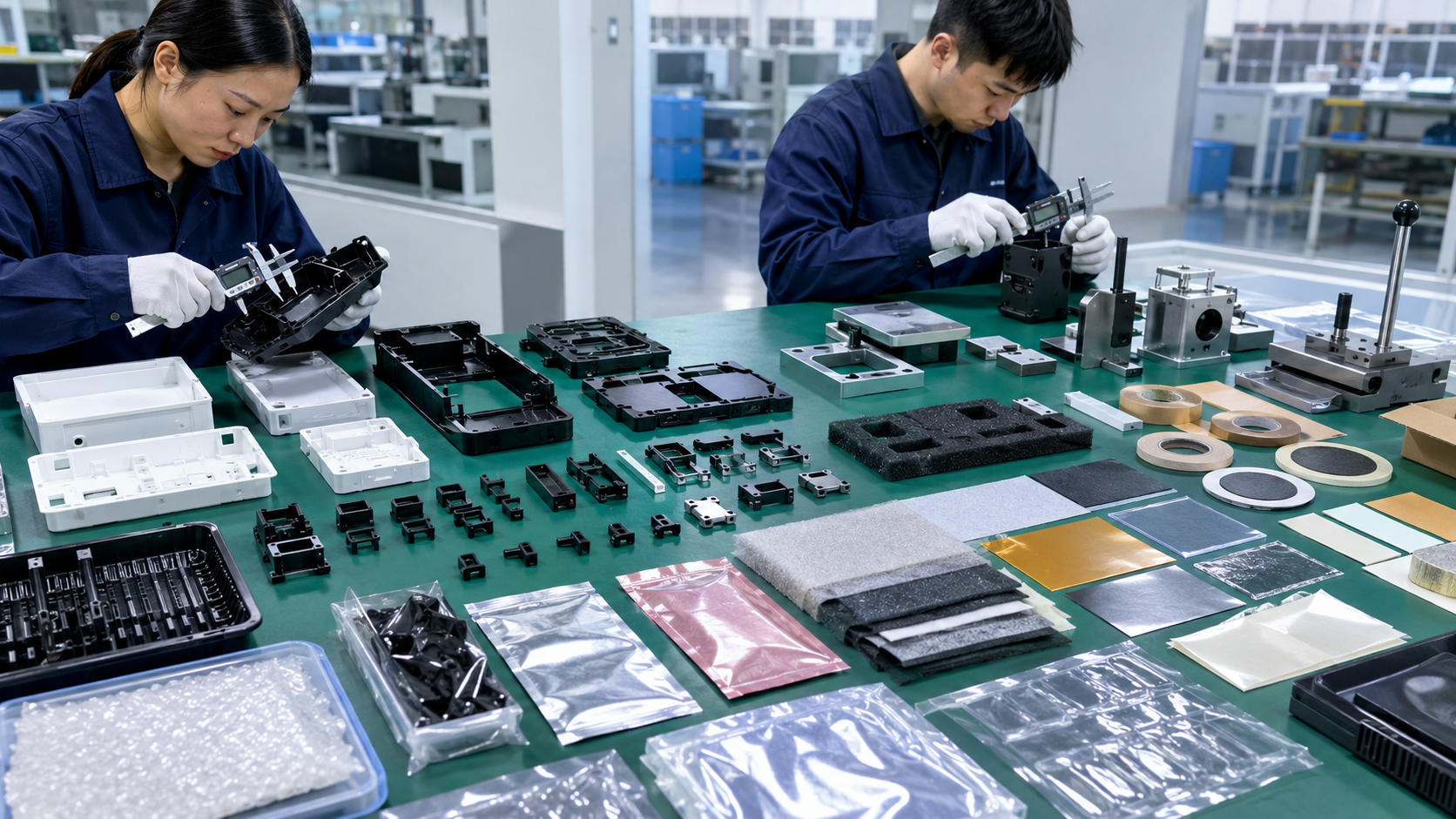
For each project, we review plastic material, mold feasibility, tolerance, surface quality, foam gasket fit, adhesive bonding surface, PET film alignment, rubber compression, protective film coverage, packaging, and final assembly method.
Our goal is to help customers choose the right production path, reduce repeated samples, avoid unnecessary tooling changes, improve assembly fit, and support stable OEM plastic parts manufacturing.
FAQ
What is low-volume injection molding?
Low-volume injection molding is used for smaller production quantities, pilot runs, bridge production, and early validation before full mass production.
What is high-volume injection molding?
High-volume injection molding is used for large-scale production when the design is approved, demand is stable, and the project needs lower unit cost and repeatable quality.
Which is better for a new plastic parts project?
For a new project with uncertain design or demand, low-volume molding may be better. For an approved design with stable demand, high-volume molding is usually more cost-effective.
Is low-volume injection molding cheaper?
Low-volume molding may have lower tooling cost, but the unit cost is usually higher than high-volume molding. It is useful when flexibility and risk control are more important than the lowest unit price.
When should I move from low-volume to high-volume molding?
Move to high-volume molding when the design, material, assembly method, packaging, quality standards, and demand are confirmed.
Why should die cut components be reviewed before choosing molding volume?
Foam gaskets, adhesive tapes, PET films, rubber pads, protective films, and felt parts can affect assembly fit. Reviewing them early helps prevent mismatch during both pilot and mass production.
Can Sanken support both low-volume and high-volume OEM projects?
Yes. Sanken supports custom injection molded plastic parts and related die cut components for sample development, pilot production, and mass production projects.
Conclusion
Low-volume and high-volume injection molding both have value, but they serve different project needs. Low-volume molding is useful when the design, demand, or assembly process still needs validation. High-volume molding is better when the design is approved, demand is stable, and the project requires lower unit cost, consistent quality, and long-term supply.
For OEM plastic parts projects, the best decision should consider tooling cost, unit cost, material performance, tolerance, surface quality, packaging, and related die cut components.
At Sanken, we help OEM customers review plastic molded parts together with foam, rubber, film, tape, felt, and protective components so the final production path is practical, cost-effective, and stable from prototype to mass production.