
What Are Other Normal Thermal Insulation Materials?
Thermal insulation materials are used to reduce heat transfer, improve energy efficiency, protect sensitive components, and maintain stable operating temperatures. While polyurethane foam (PUF) is one of the most popular insulation materials, many other thermal insulation materials are widely used across construction, automotive, consumer electronics, industrial equipment, and HVAC systems.
Common thermal insulation materials include fiberglass, mineral wool, ceramic fiber, foam insulation, aerogel, silicone foam, rubber foam, non-woven insulation felt, expanded polystyrene (EPS), extruded polystyrene (XPS), and reflective foil insulation. Each material offers different advantages depending on temperature requirements, thickness limitations, moisture exposure, and cost considerations.
Understanding these materials helps engineers and OEM manufacturers select the best solution for their applications.
Why Thermal Insulation Materials Matter
Effective insulation helps:
- Reduce energy consumption
- Minimize heat loss
- Improve product reliability
- Protect electronic components
- Increase equipment efficiency
- Enhance user comfort
The ideal material depends on both performance requirements and manufacturing considerations.
Theme: Industrial Thermal Insulation Materials
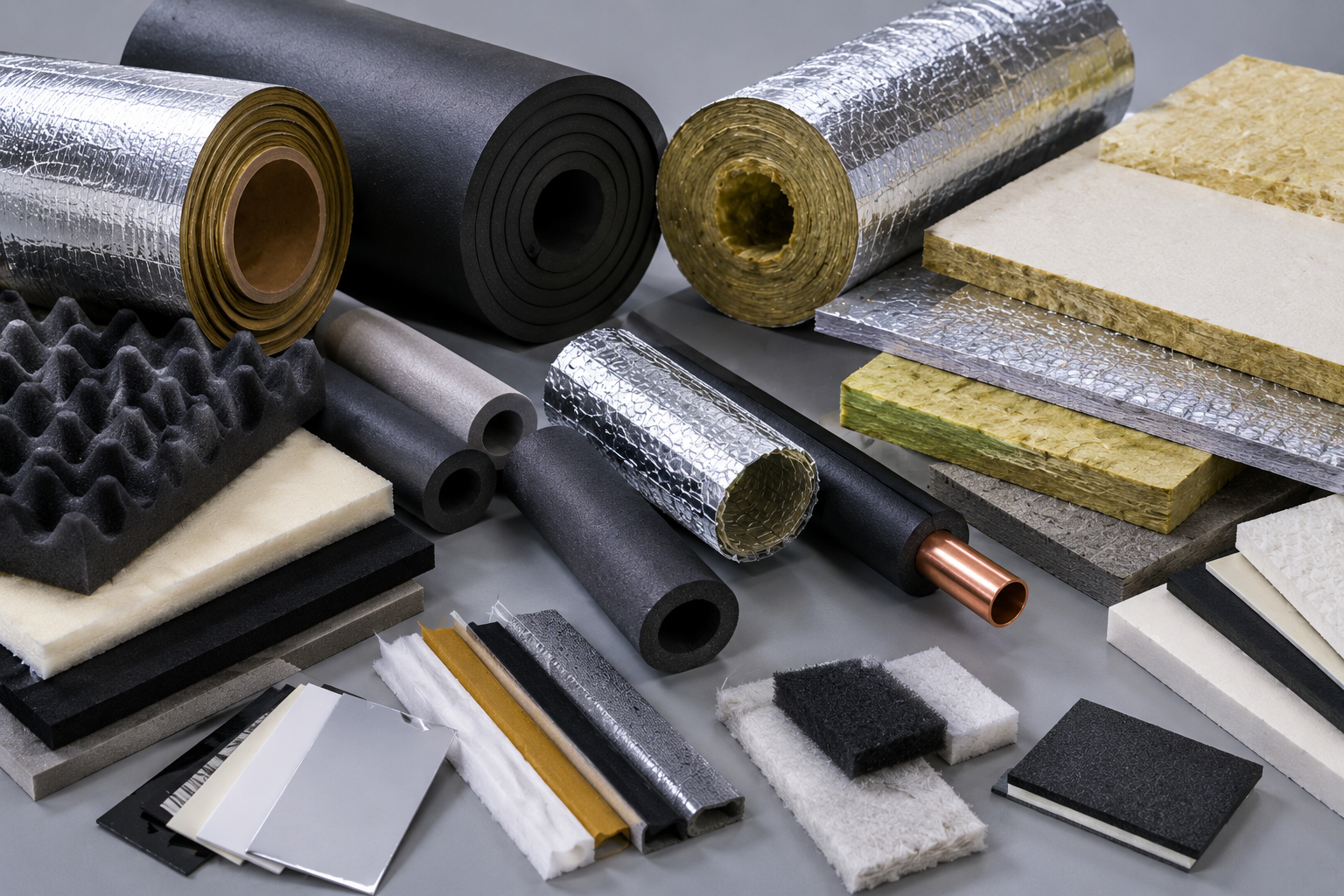
1. Fiberglass Insulation
Fiberglass is one of the most widely used insulation materials worldwide.
It consists of fine glass fibers that trap air and reduce heat transfer.
Advantages
- Cost-effective
- Lightweight
- Good thermal resistance
- Fire resistant
Applications
- Buildings
- HVAC systems
- Industrial equipment
- Appliances
2. Mineral Wool (Rock Wool)
Mineral wool is produced from natural stone or industrial slag.
Advantages
- Excellent fire resistance
- High-temperature performance
- Sound absorption
- Long service life
Applications
- Commercial buildings
- Industrial plants
- Fire-rated systems
- Acoustic insulation
Mineral wool is often preferred where both thermal and fire protection are required.
3. Ceramic Fiber Insulation
Ceramic fiber is designed for extreme temperature environments.
Advantages
- Outstanding heat resistance
- Lightweight
- Low thermal conductivity
- Excellent thermal stability
Applications
- Furnaces
- Kilns
- Aerospace systems
- Industrial heating equipment
Ceramic fibers can withstand temperatures far beyond conventional insulation materials.
4. Expanded Polystyrene (EPS)
EPS is a lightweight foam insulation material commonly used in construction.
Advantages
- Affordable
- Lightweight
- Easy to process
- Good thermal performance
Applications
- Building insulation
- Packaging
- Cold storage
EPS is one of the most economical insulation materials available.
5. Extruded Polystyrene (XPS)
XPS offers improved performance compared to EPS.
Advantages
- Higher compressive strength
- Better moisture resistance
- Consistent thermal performance
Applications
- Foundations
- Roof insulation
- Refrigeration systems
6. Rubber Foam Insulation
Rubber foam combines insulation performance with flexibility.
Common materials include:
- NBR foam
- EPDM foam
- Silicone foam
Advantages
- Flexible
- Moisture resistant
- Easy installation
- Good thermal insulation
Applications
- HVAC systems
- Automotive insulation
- Pipe insulation
- Industrial equipment
Theme: Precision Thermal Insulation Components
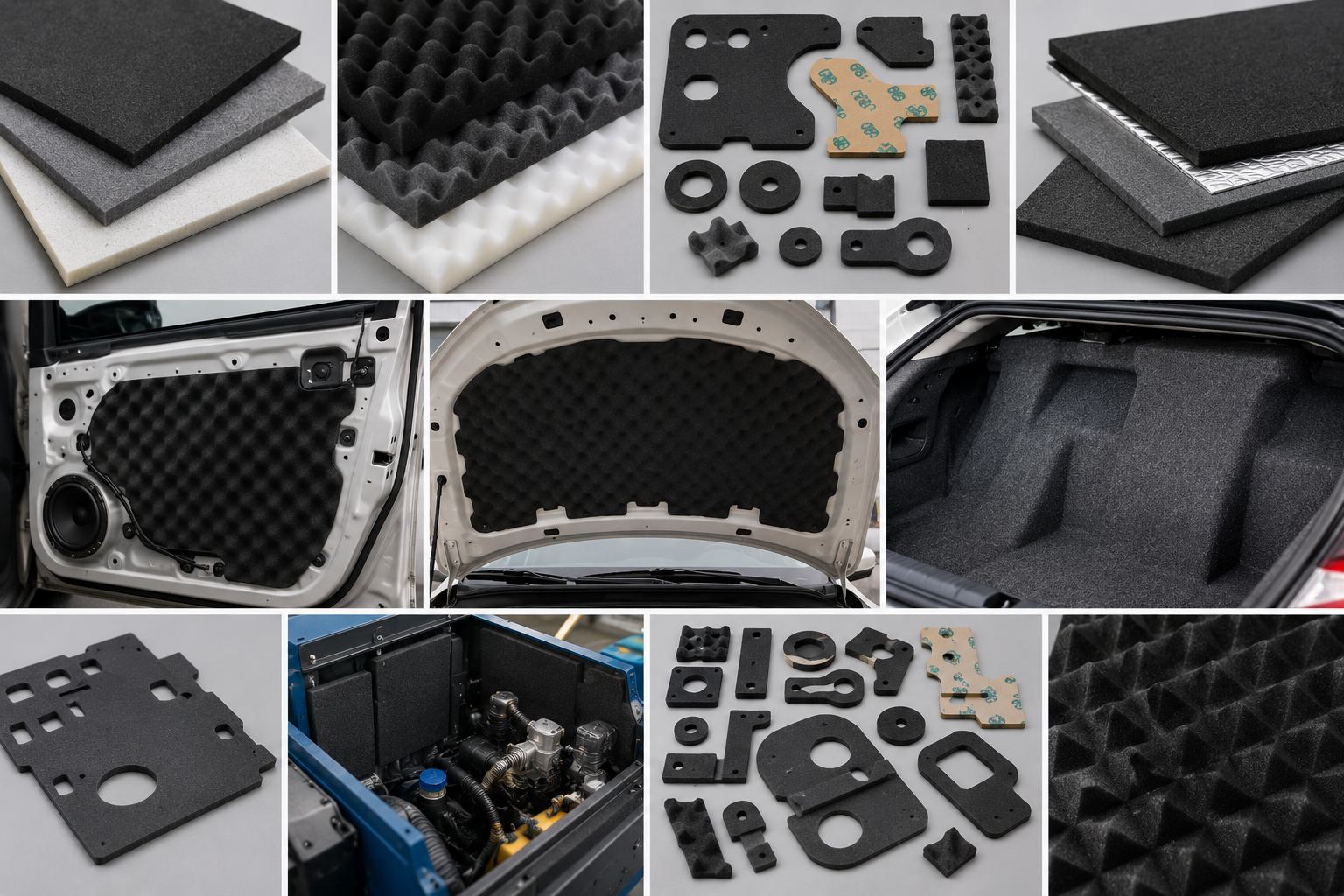
7. Silicone Foam
Silicone foam performs well in high-temperature environments.
Advantages
- Heat resistant
- UV resistant
- Flexible
- Long-lasting
Applications
- Electronics
- Automotive systems
- Aerospace components
Silicone foam is commonly used where temperature stability is critical.
8. Non-Woven Insulation Felt
Non-woven insulation materials are increasingly used in automotive and industrial applications.
Examples include:
- Polyester felt
- Needle-punched felt
- Recycled fiber insulation
Advantages
- Lightweight
- Acoustic insulation
- Thermal insulation
- Easy die cutting
Applications
- Automotive NVH systems
- Appliance insulation
- Interior trim components
9. Reflective Foil Insulation
Reflective insulation reduces radiant heat transfer.
Advantages
- Lightweight
- Thin profile
- Effective against radiant heat
Applications
- Roofing systems
- HVAC ducts
- Building insulation
- Thermal barriers
Reflective foil is often combined with foam or fiber insulation for enhanced performance.
10. Aerogel Insulation
Aerogel is among the highest-performing insulation materials available.
Advantages
- Extremely low thermal conductivity
- Ultra-lightweight
- Very thin profile
- Superior insulation performance
Applications
- Aerospace
- Electronics
- Industrial insulation
- High-performance thermal management
Although expensive, aerogel provides exceptional thermal efficiency.
Which Thermal Insulation Material Is Best?
The best material depends on the application.
| Material | Main Advantage |
|---|---|
| Fiberglass | Cost-effective insulation |
| Mineral Wool | Fire resistance |
| Ceramic Fiber | Extreme temperatures |
| EPS | Low cost |
| XPS | Moisture resistance |
| Rubber Foam | Flexible insulation |
| Silicone Foam | High-temperature stability |
| Non-Woven Felt | Thermal and acoustic insulation |
| Reflective Foil | Radiant heat protection |
| Aerogel | Maximum thermal performance |
Different industries often combine multiple materials to achieve optimal performance.
How Sanken Manufacturing Supports Thermal Insulation Applications
Dongguan Sanken Electronics Manufacturing Co., Ltd. provides custom thermal insulation solutions for OEM manufacturers worldwide.
Our capabilities include:
- Precision die cutting
- Foam converting
- Non-woven felt processing
- Adhesive laminating
- Thermal insulation assemblies
- Rubber sealing products
Key Advantages
- OEM and ODM customization
- ISO 9001 certified quality management
- RoHS and REACH compliant materials
- Domestic and overseas production bases
- Cleanroom precision manufacturing
- Tool development from drawings or samples
We specialize in automotive NVH insulation materials, precision die-cut PET and TPU components, and custom sealing solutions for consumer electronics and industrial equipment.
Theme: Custom OEM Thermal Insulation Solutions
Featured Snippet Summary
Other common thermal insulation materials include fiberglass, mineral wool, ceramic fiber, EPS, XPS, rubber foam, silicone foam, non-woven felt, reflective foil insulation, and aerogel. Each material offers different levels of thermal resistance, fire protection, moisture resistance, and durability depending on the application.
Conclusion
Beyond PUF insulation, many thermal insulation materials are widely used across construction, automotive, electronics, and industrial applications. Fiberglass, mineral wool, ceramic fiber, foam insulation, non-woven felt, and aerogel each provide unique advantages for controlling heat transfer and improving energy efficiency.
Selecting the right insulation material requires balancing thermal performance, environmental conditions, manufacturing requirements, and cost objectives to achieve the best long-term results.