
What are the Applications of Custom PET Film Die Cutting?
PET film may not be the most visible component inside modern products, but it is often one of the most important.
From smartphones and automotive displays to medical devices and industrial electronics, custom die-cut PET film components quietly perform critical functions such as insulation, protection, light management, shielding, and bonding.
As products become thinner, lighter, and more complex, manufacturers increasingly rely on precision die-cut PET film solutions to achieve consistent performance and efficient assembly.
At Sanken, we work with OEMs and product engineers who need more than raw PET film. They need precisely converted components that fit their designs, simplify manufacturing, and improve product reliability.
So where exactly is custom PET film die cutting used?
What Is PET Film?
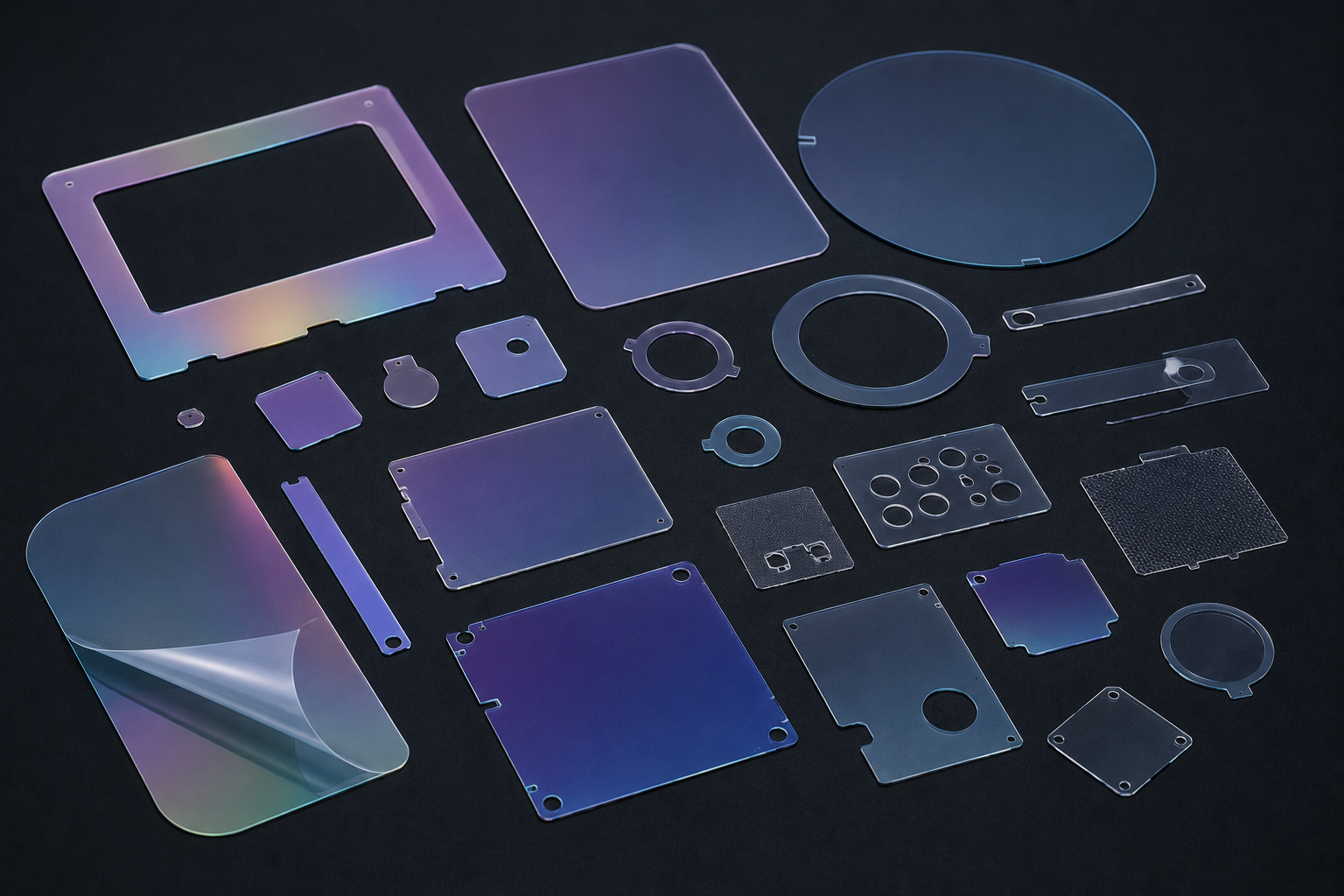
PET (Polyethylene Terephthalate) film is a high-performance polyester material known for its excellent combination of strength, dimensional stability, electrical insulation, and optical clarity.
Because of these characteristics, PET film has become one of the most widely used converting materials in modern manufacturing.
Key advantages include:
- Excellent dielectric properties
- High tensile strength
- Chemical resistance
- Temperature stability
- Lightweight construction
- Optical transparency
- Consistent thickness control
These properties make PET film suitable for a wide variety of die-cut applications.
Why Manufacturers Choose Custom Die-Cut PET Film
Standard PET film rolls rarely fit finished products directly.
Manufacturers often require:
- Precise shapes
- Complex geometries
- Mounting holes
- Window openings
- Multi-layer constructions
- Adhesive integration
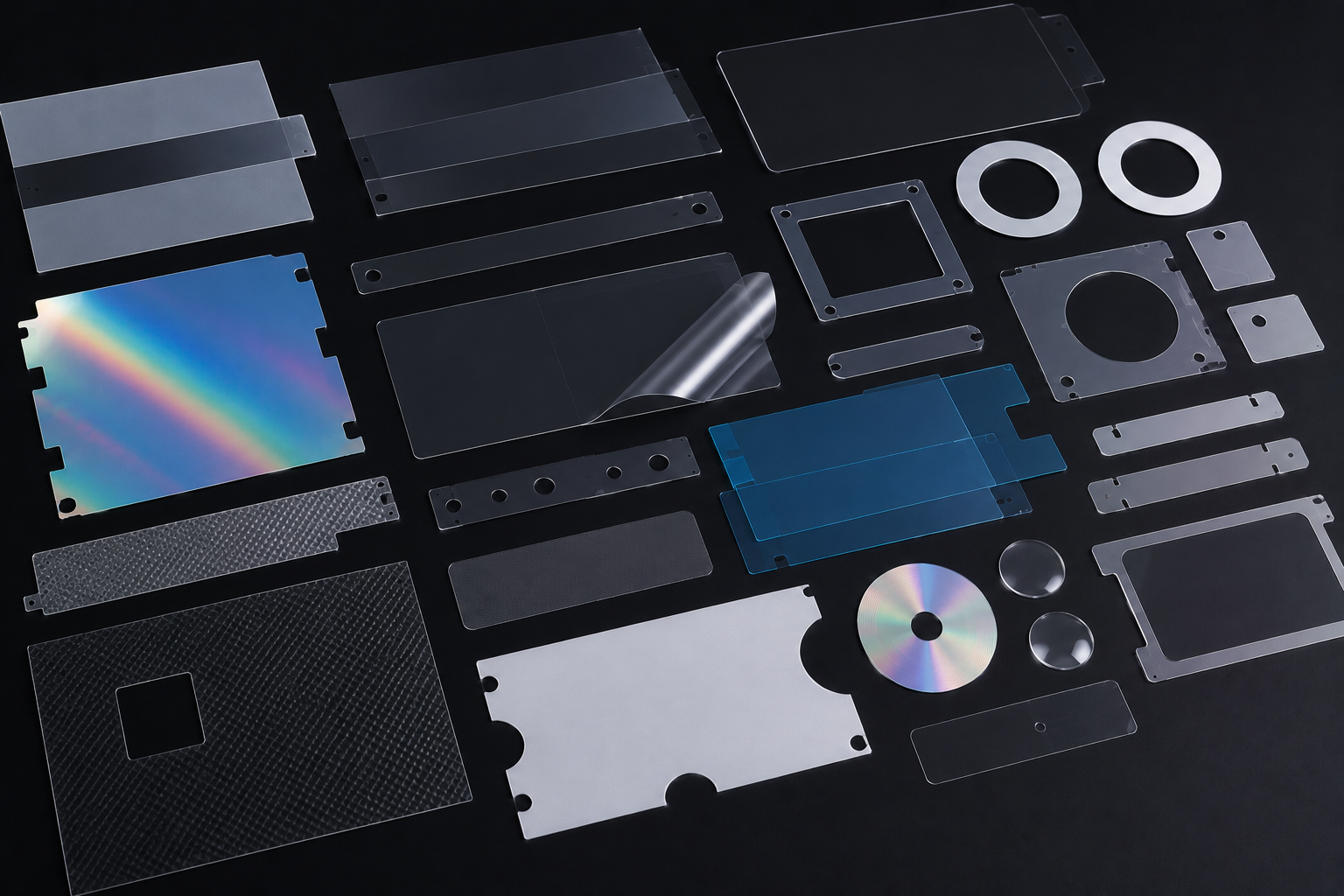
Custom die cutting transforms raw PET film into production-ready components.
Benefits include:
- Faster assembly
- Reduced labor costs
- Improved consistency
- Better product performance
- Lower material waste
For high-volume manufacturing, precision die cutting is often essential.
PET Film Applications in Consumer Electronics
Consumer electronics represent one of the largest markets for custom PET film converting.
Modern electronic devices contain numerous die-cut PET components.
Common applications include:
Display Insulation Layers
PET film helps isolate electrical components within:
- Smartphones
- Tablets
- Laptops
- Wearables
Protective Films
PET protective films safeguard sensitive surfaces during:
- Manufacturing
- Transportation
- Assembly
Display Components
PET film is widely used in:
- LCD modules
- OLED displays
- Touchscreen assemblies
- Optical film structures
Because consumer electronics continue becoming thinner, PET film remains an ideal lightweight solution.

PET Film Applications in Automotive Electronics
Today's vehicles contain more electronics than ever before.
As a result, demand for die-cut PET film components continues growing.
Typical automotive applications include:
- Instrument clusters
- Touchscreen displays
- Head-up displays
- Camera modules
- Sensor systems
- Battery management systems
PET film is commonly used for:
- Electrical insulation
- Surface protection
- Optical layers
- Label structures
Its dimensional stability makes it particularly suitable for automotive environments where temperature fluctuations can be significant.
PET Film for Electrical Insulation
One of PET film's most important functions is electrical insulation.
Its dielectric properties help protect sensitive electronic systems.
Applications include:
- Circuit board insulation
- Battery insulation
- Power supply protection
- Motor insulation
- Flexible electronics
Engineers often select PET because it delivers reliable electrical performance while maintaining a thin profile.
PET Film in Battery Systems
The rapid growth of electric vehicles and portable electronics has increased demand for battery insulation materials.
Die-cut PET film components are frequently used inside:
- EV battery packs
- Energy storage systems
- Consumer batteries
- Power modules
Common functions include:
- Electrical isolation
- Cell separation
- Protective barriers
- Thermal management support
Battery manufacturers often require precision die-cut parts to ensure safety and assembly consistency.
Optical PET Film Applications
Optical-grade PET films play an important role in display technologies.
Applications include:
- Diffuser films
- Reflective films
- Brightness enhancement films
- Light guide systems
These materials help improve:
- Brightness
- Uniformity
- Energy efficiency
- Display clarity
Optical film converting often requires extremely tight tolerances and clean manufacturing environments.
PET Film for Labels and Graphic Overlays
Many industrial products use PET films as:
- Nameplates
- Membrane switch overlays
- Control panel graphics
- Product identification labels
Benefits include:
- Durability
- Printability
- Chemical resistance
- Wear resistance
Compared with paper-based solutions, PET provides significantly longer service life.
PET Film in Medical Devices
Medical manufacturers often utilize PET film because of its cleanliness and reliability.
Applications include:
- Diagnostic equipment
- Medical sensors
- Disposable medical products
- Monitoring devices
Die-cut PET components help provide:
- Electrical insulation
- Device protection
- Precise positioning
- Consistent manufacturing quality
As medical technology becomes more compact, PET film usage continues to expand.
PET Film Combined with Adhesive Tapes
Many converted PET film components include adhesive layers.
This creates multi-functional assemblies that combine:
- Protection
- Bonding
- Insulation
- Positioning
Examples include:
- Display mounting components
- Electronic assembly tapes
- Automotive bonding systems
- Device protection structures
Precision die cutting allows PET films and adhesives to be laminated and converted into a single ready-to-install component.
Why Precision Die Cutting Matters
PET film applications often require:
- Tight tolerances
- Clean edges
- Consistent dimensions
- High-volume repeatability
Poor converting may result in:
- Misalignment
- Adhesive failure
- Assembly difficulties
- Product defects
Precision die cutting ensures components perform consistently throughout production.
For industries such as automotive electronics and consumer devices, accuracy is often measured in fractions of a millimeter.
How Sanken Supports PET Film Converting Projects
At Sanken, we help customers transform PET film materials into precision functional components.
Our capabilities include:
- Precision die cutting
- Kiss cutting
- Multi-layer lamination
- Adhesive integration
- Optical film converting
- Clean room production
- High-volume manufacturing
We support industries including:
- Consumer electronics
- Automotive
- Medical devices
- Industrial equipment
- Energy storage systems
By combining material expertise with advanced converting technologies, we help customers improve product quality while simplifying assembly processes.
Conclusion
Custom PET film die cutting supports a wide range of industries by transforming versatile polyester films into high-performance functional components.
From display assemblies and battery insulation to automotive electronics and medical devices, precision-converted PET film helps manufacturers improve product reliability, assembly efficiency, and overall performance.
As electronic products continue becoming more compact and sophisticated, demand for custom die-cut PET film solutions will only continue to grow.
At Sanken, we help OEMs convert PET film materials into precision-engineered components that meet the demanding requirements of today's manufacturing environments.