
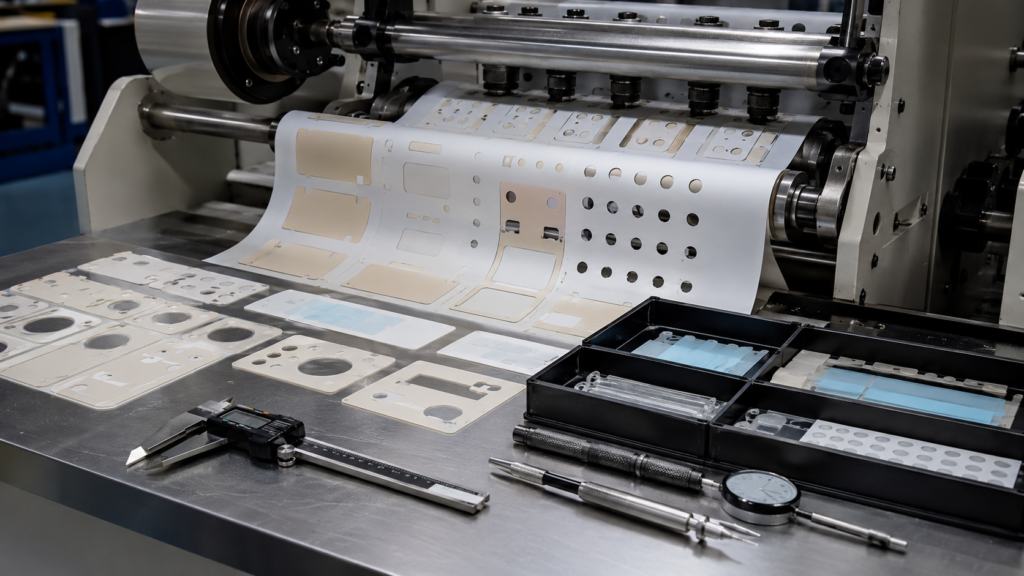
For simple paper cutting, a utility knife with a metal ruler, a rotary cutter, or a guillotine paper cutter can create a straight line. But in industrial manufacturing, straight-line cutting is not only about making paper look neat. It affects dimensional accuracy, material waste, edge quality, and downstream assembly efficiency.
For OEM production, paper-based materials may include release liners, kraft paper, insulation paper, adhesive-backed paper, label stock, coated paper, protective paper, and packaging board. These materials often need to be cut by slitting, sheeting, die cutting, or other controlled converting methods.
At Sanken Manufacturing Co., Ltd., straight-line cutting is often part of a wider material converting process that includes roll slitting, sheet cutting, laminating, die cutting, adhesive converting, and preparation for foam, film, paper, and insulation components.
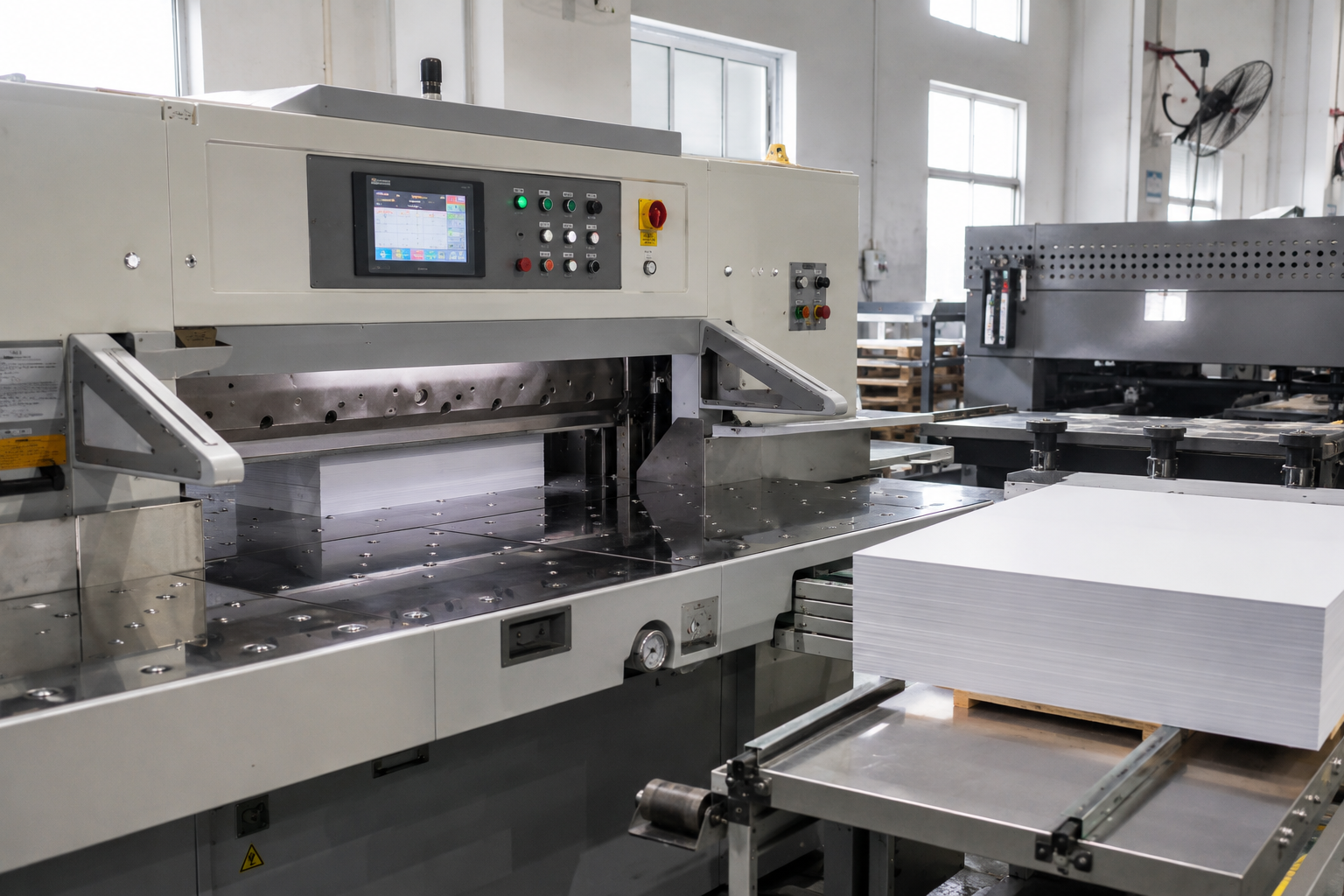
Straight cutting methods vary greatly depending on production volume, material type, accuracy requirements, and manufacturing objectives.
Why Straight-Line Cutting Is Important
Many industrial products begin with accurately cut paper materials.
Applications include:
- Packaging inserts
- Release liners
- Protective papers
- Insulation materials
- Label stock
- Medical packaging
Poor cutting quality can result in:
- Dimensional inaccuracies
- Material waste
- Poor appearance
- Assembly problems
- Production delays
Maintaining clean, straight cuts improves overall manufacturing efficiency.
Common Requirements
Manufacturers typically require:
- Accurate dimensions
- Smooth edges
- Repeatable results
- High throughput
- Minimal material waste
The cutting method chosen should match these production goals.
Factors Affecting Cutting Quality
Several variables influence cutting performance:
| Factor | Impact |
|---|---|
| Material Thickness | Cutting Force |
| Blade Sharpness | Edge Quality |
| Cutting Speed | Productivity |
| Material Stability | Accuracy |
| Machine Precision | Repeatability |
Proper process control is essential for achieving consistent results.
Rotary Paper Cutters
Rotary paper cutters use a circular blade that travels along a guide rail.
Advantages
- Smooth cuts
- Good accuracy
- Easy operation
Applications
Commonly used for:
- Office environments
- Print shops
- Small manufacturing facilities
Rotary cutters offer improved consistency compared with manual knife cutting.
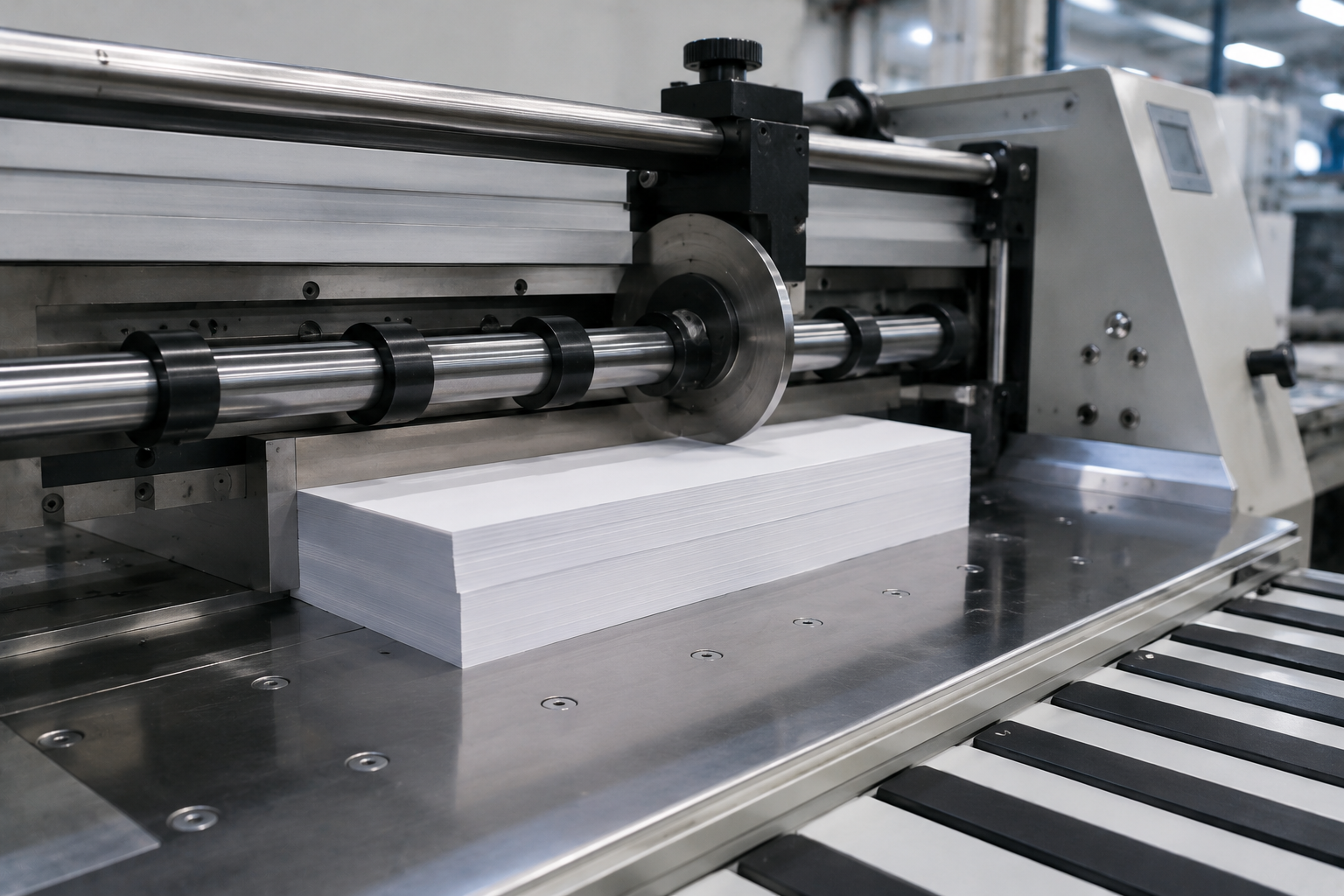
Guillotine Paper Cutters
Guillotine cutters are among the most widely used straight-line cutting systems.
A long straight blade descends through a stack of paper.
Advantages
- High productivity
- Straight edges
- Batch processing capability
Applications
Used extensively in:
- Commercial printing
- Packaging production
- Label manufacturing
Industrial guillotine systems can process large material stacks with excellent repeatability.
Benefits for Manufacturing
Guillotine cutting helps:
- Increase throughput
- Reduce labor costs
- Improve dimensional consistency
For sheet materials, it remains one of the most economical cutting solutions.
Roll Slitting Systems
When paper is supplied in roll form, slitting systems are often used.
Slitting cuts wide rolls into narrower widths.
Razor Slitting
Razor slitting uses sharp blades to separate moving materials.
Advantages include:
- High speed
- Low maintenance
- Excellent for thin materials
Shear Slitting
Shear slitting functions similarly to scissors.
Benefits include:
- Clean edges
- Improved dimensional control
- Better performance on thicker materials
Crush Cutting
Crush cutting uses pressure against a hardened surface.
Applications include:
- Industrial papers
- Specialty materials
- High-volume production
Roll slitting is commonly used for packaging, labels, electronics, and medical products.
Precision Sheet Cutting Systems
Automated sheet cutters convert roll materials into accurately sized sheets.
Advantages
- High accuracy
- Automated operation
- Excellent repeatability
Applications
Used for:
- Printing materials
- Packaging stock
- Electronics manufacturing materials
Sheeting systems often integrate directly into production lines.
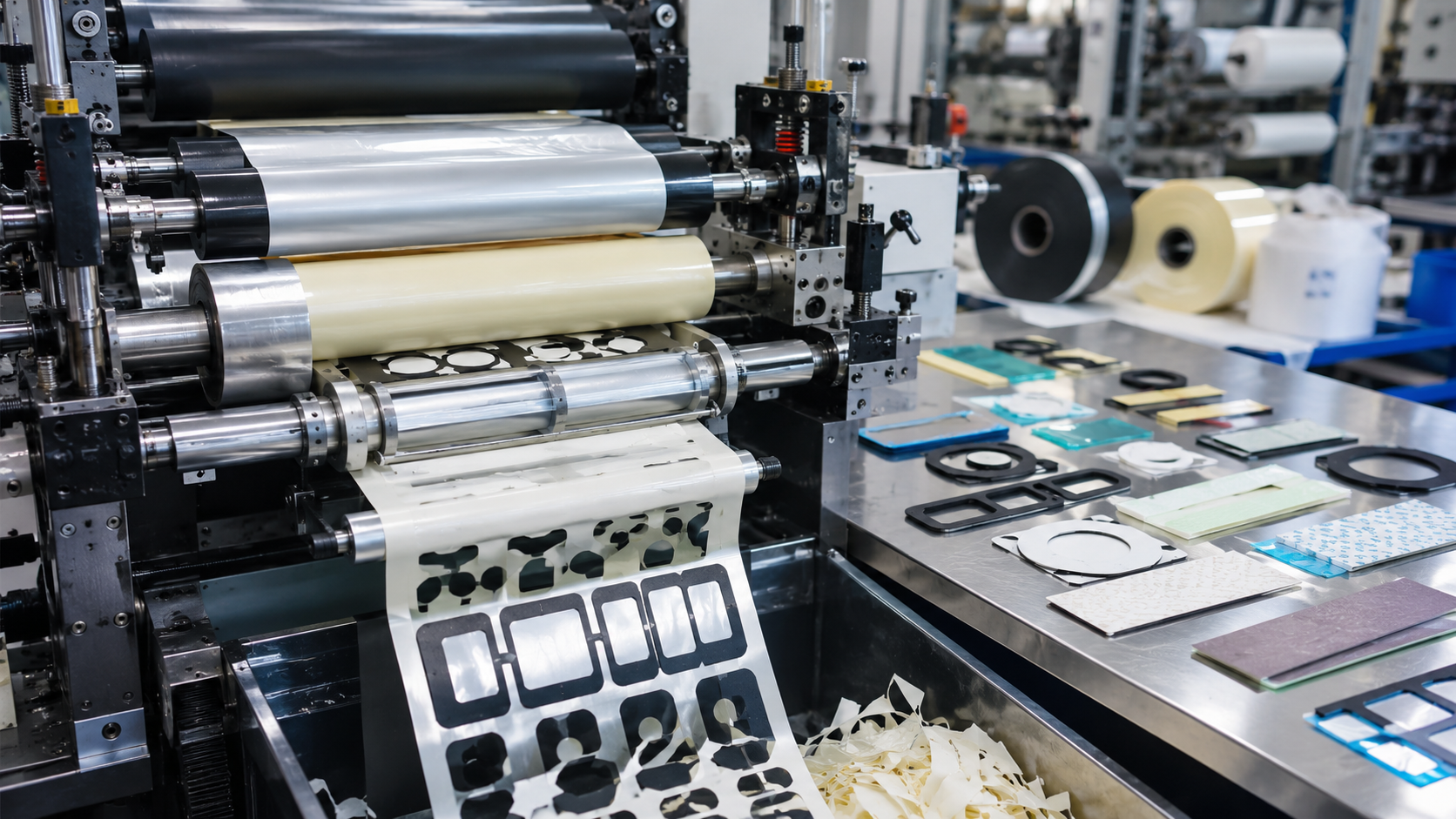
Die Cutting for Straight and Complex Components
Although die cutting is commonly associated with custom shapes, it is also highly effective for straight-line cutting applications.
At Sanken, precision die cutting is used for:
- Release liners
- Adhesive materials
- Insulation papers
- Packaging components
- Medical materials
Advantages
- High speed
- Tight tolerances
- Consistent quality
- Multi-feature processing
Die cutting becomes especially valuable when straight cuts are combined with holes, windows, or complex geometries.
Choosing the Right Cutting Method
The best solution depends on several factors.
Production Volume
| Volume | Recommended Method |
|---|---|
| Prototype | Utility Knife |
| Small Batch | Rotary Cutter |
| Medium Volume | Guillotine Cutter |
| Large Volume | Slitting System |
| Mass Production | Die Cutting |
Material Type
Different materials require different cutting technologies.
Examples include:
- Kraft paper
- Release liners
- Coated papers
- Laminated materials
- Adhesive-backed papers
Material characteristics should always be evaluated before selecting equipment.
Accuracy Requirements
Applications with tight tolerances may require:
- Automated systems
- Precision tooling
- Vision inspection
- Controlled material handling
Higher accuracy generally demands more sophisticated equipment.
Straight-Line Cutting in Electronics Manufacturing
Many electronic products use paper-based materials during manufacturing.
Examples include:
- Release papers
- Carrier liners
- Protective papers
- Insulation papers
These materials often require highly accurate cutting to ensure compatibility with automated assembly processes.
Precision cutting helps maintain:
- Registration accuracy
- Assembly efficiency
- Product consistency
How Sanken Supports Precision Material Cutting
At Sanken Manufacturing Co., Ltd., we provide advanced converting solutions for paper, film, foam, adhesive, and insulation materials.
Our capabilities include:
- Precision die cutting
- Roll slitting
- Sheet cutting
- Multi-layer lamination
- Adhesive converting
- Protective material processing
- Prototype development
- High-volume manufacturing
We support customers in:
- Consumer electronics
- Medical devices
- Automotive products
- Industrial equipment
- Energy storage systems
Our material expertise helps customers optimize both product performance and manufacturing efficiency.
Conclusion
For simple paper cutting, a utility knife, ruler, rotary cutter, or guillotine cutter may be enough. For industrial production, however, straight-line cutting often requires controlled slitting, sheeting, die cutting, or automated converting equipment to ensure accuracy, repeatability, and stable material handling.
For OEM manufacturers working with release liners, insulation papers, adhesive-backed materials, protective papers, packaging boards, foam laminates, and film-paper composites, the right cutting method can reduce waste, improve assembly efficiency, and support more stable mass production.
Sanken supports precision material converting for paper, film, foam, adhesive, rubber, non-woven, and insulation materials, including roll slitting, sheet cutting, lamination, die cutting, inspection, and customized delivery formats.