
Paper materials used in die cutting are not only ordinary printing or packaging papers. In OEM material converting, paper is often used as release liner, carrier paper, backing paper or process support material for adhesive-backed components.
For precision die cutting, the most relevant paper-based materials include glassine release liner, super-calendered kraft liner, clay-coated kraft liner and poly-coated paper liner. These materials help control adhesive release, kiss cutting depth, part handling, peeling performance and assembly efficiency.
For OEM buyers, the key is not simply choosing a paper type. The correct liner or paper carrier should match the adhesive, material thickness, die cutting method, liner release force, storage condition and final assembly process.
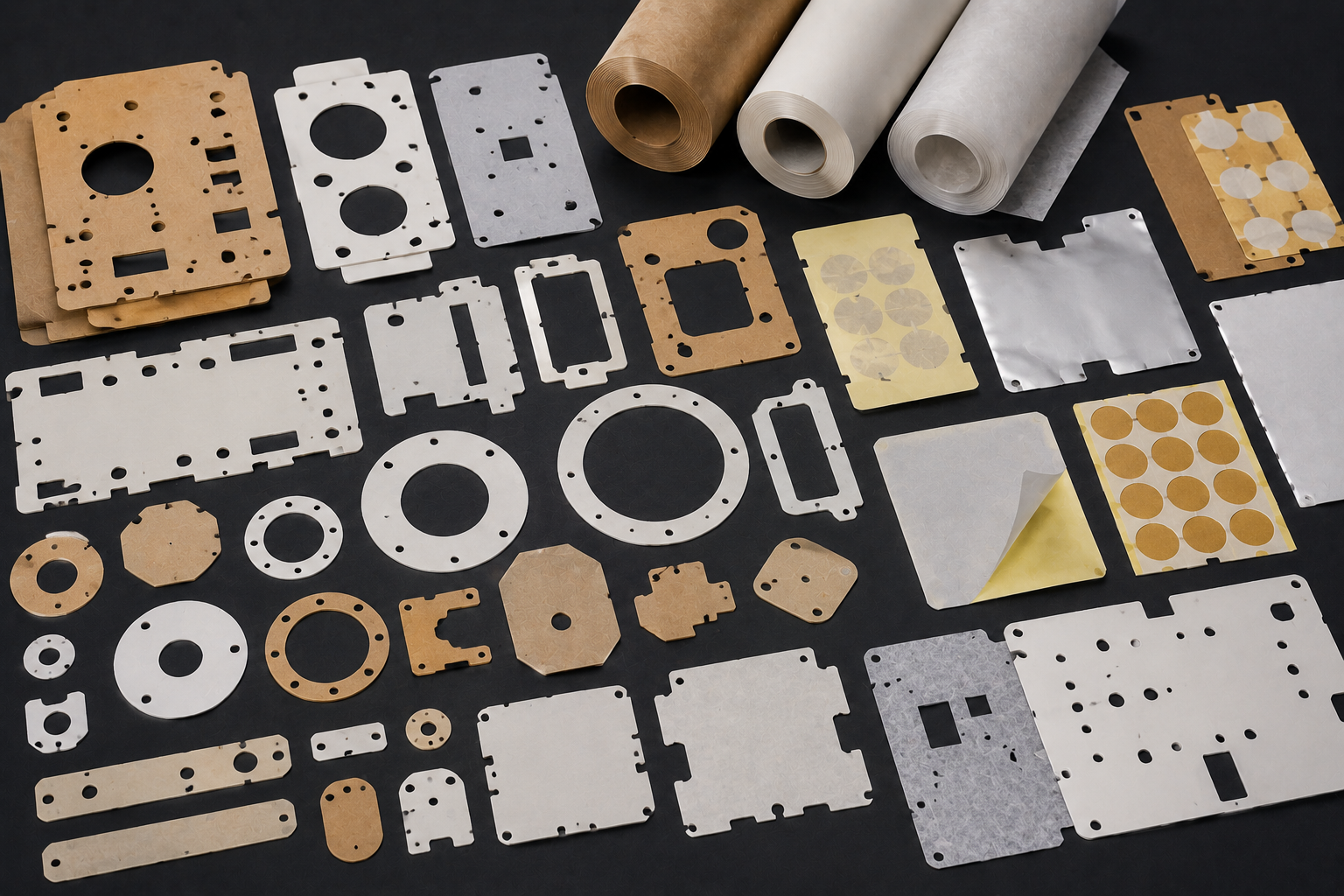
Paper selection should always be based on the product's application, processing requirements, and performance expectations rather than simply choosing the lowest-cost option.
Why Material Selection Matters in Die Cutting
Every paper material behaves differently during cutting.
Factors that affect die-cutting performance include:
- Thickness
- Density
- Surface coating
- Fiber structure
- Moisture content
- Dimensional stability
The correct material helps achieve:
- Clean cut edges
- Accurate dimensions
- Efficient production
- Reduced waste
- Consistent quality
Improper paper selection can create significant manufacturing challenges.
Common Problems Caused by Poor Material Selection
Manufacturers may experience:
- Edge tearing
- Incomplete cuts
- Excessive dust
- Tool wear
- Registration issues
- Material deformation
Choosing the right paper helps prevent these issues before production begins.
Understanding Application Requirements
Before selecting a paper grade, engineers should consider:
| Requirement | What to Consider |
|---|---|
| Adhesive release | Release coating, liner type and peeling force |
| Dimensional stability | Thickness, density and moisture control |
| Cutting performance | Fiber structure, coating and blade pressure |
| Assembly handling | Liner stiffness, curling and peeling behavior |
| Surface cleanliness | Dust, particles and edge quality |
| Storage condition | Humidity, temperature and liner deformation |
| Production format | Roll, sheet or kiss-cut liner-backed parts |
The intended end-use should always drive material selection.
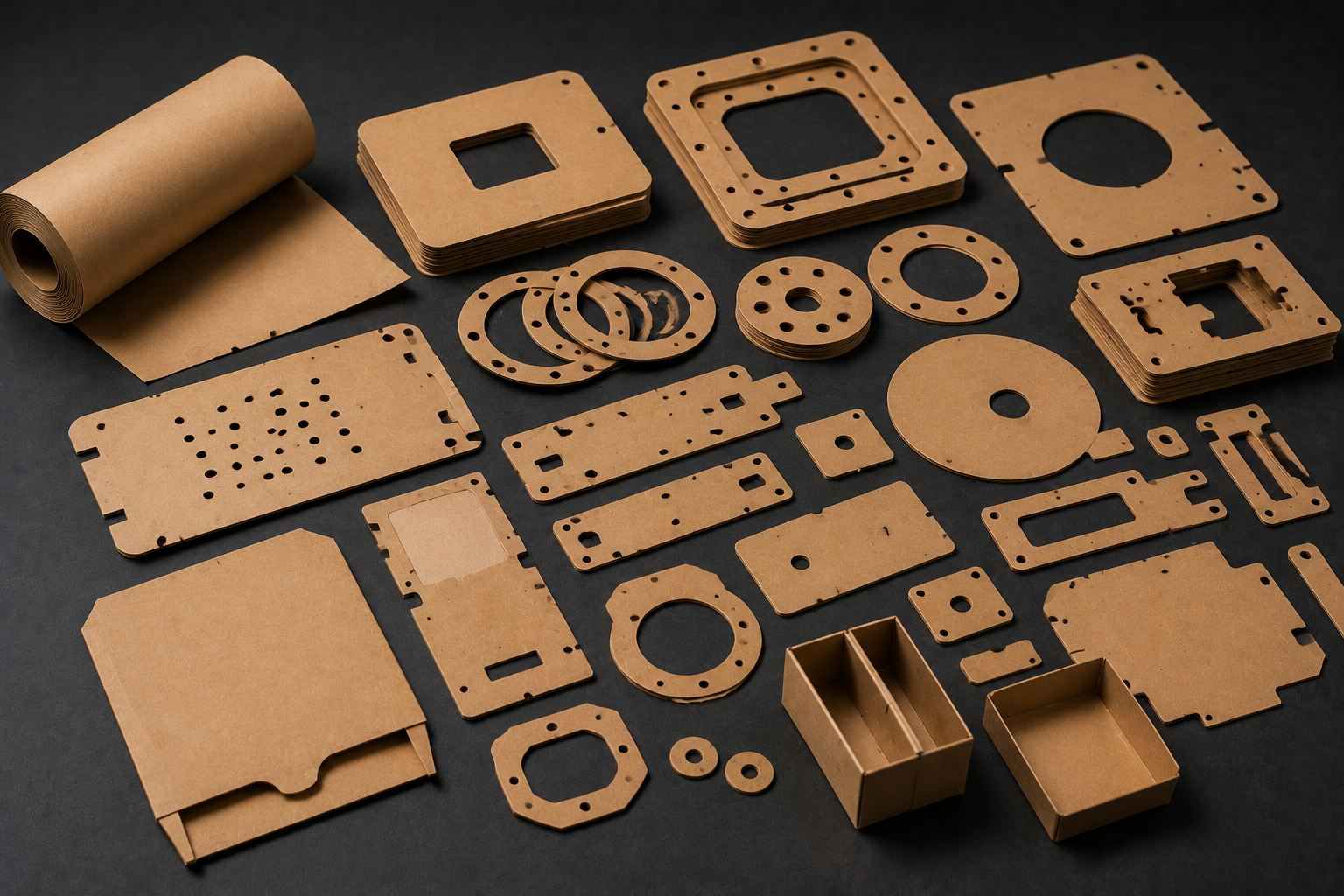
Kraft Paper
Kraft paper is one of the most commonly die-cut paper materials.
Known for its durability and strength, kraft paper is widely used in packaging applications.
Advantages
- High tear resistance
- Good dimensional stability
- Cost-effective
- Environmentally friendly
Applications
Common uses include:
- Protective packaging
- Shipping materials
- Industrial packaging
- Insulation products
Kraft paper performs particularly well in large-format die-cut applications.
Cardstock and Paperboard
Cardstock and paperboard materials provide greater rigidity than standard paper.
They are frequently used when structural support is required.
Advantages
- Excellent stiffness
- Superior printability
- Clean die-cut edges
- Good appearance
Applications
Common applications include:
- Retail packaging
- Product inserts
- Display materials
- Folding cartons
Paperboard remains one of the most popular materials for commercial die-cutting operations.
Coated Paper
Coated papers feature specialized surface treatments that improve appearance and printing performance.
Advantages
- Smooth surface finish
- Enhanced image quality
- Improved print resolution
Applications
Used for:
- Product labels
- Premium packaging
- Marketing materials
- Brand identification components
The coating may require specialized die-cutting parameters to prevent cracking or edge defects.
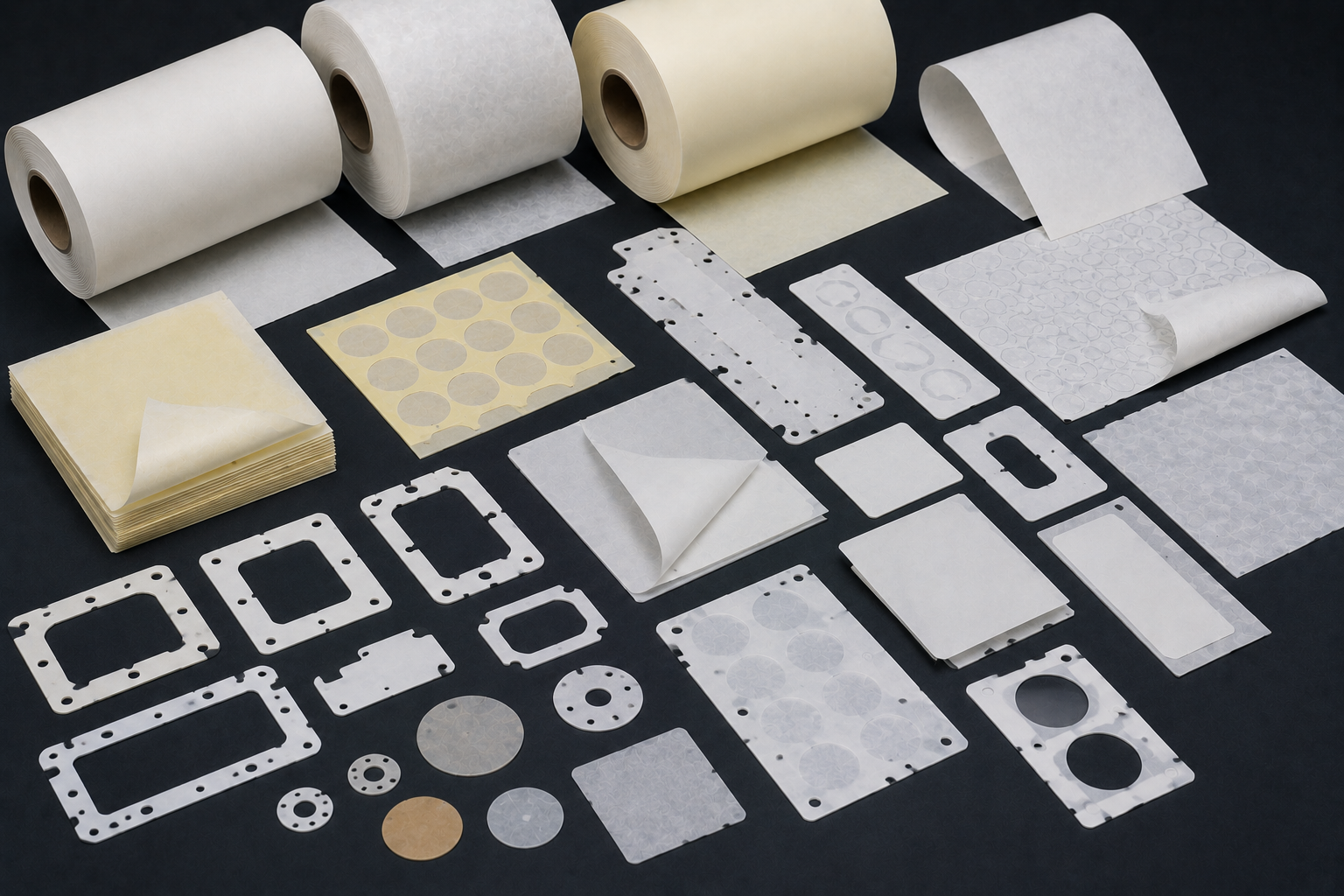
Release Liner Paper
Release liner papers play a critical role in adhesive product manufacturing.
These papers are coated with silicone or other release treatments.
Adhesive-backed components often require stable liner release and kiss cutting. Buyers can review adhesive-backed die cut components to understand common liner and adhesive risks.
Advantages
- Easy adhesive release
- Excellent dimensional stability
- Consistent processing
Applications
Common uses include:
- Adhesive tapes
- Labels
- Medical products
- Electronics assembly materials
Release liners are among the most frequently converted paper products in precision die cutting.
Common Release Liner Types
| Liner Type | Typical Application |
|---|---|
| Glassine paper | Adhesive-backed films, labels and precision kiss-cut parts |
| Super-calendered kraft liner | Industrial tapes and foam tape components |
| Clay-coated kraft liner | Specialty adhesive products and stable liner-backed parts |
| Poly-coated paper liner | High-performance adhesive applications requiring better moisture resistance |
Material selection depends on adhesive characteristics and processing requirements.
Glassine Paper
Glassine is a smooth, dense paper commonly used in adhesive applications.
Advantages
- Smooth surface
- Excellent release properties
- Good dimensional stability
Applications
Used for:
- Labels
- Medical adhesives
- Electronics assembly products
- Protective films
Glassine is particularly suitable for precision die-cut components requiring accurate registration.
Medical Grade Papers
Medical applications often require specialized paper materials.
These papers are designed to meet strict regulatory and performance requirements.
Advantages
- Controlled porosity
- Clean processing
- Sterilization compatibility
Applications
Used in:
- Medical packaging
- Diagnostic products
- Healthcare devices
Medical-grade materials require strict quality control throughout the converting process.
Synthetic Paper
Although technically not traditional paper, synthetic papers are often processed using paper die-cutting equipment.
Common materials include:
- Polypropylene-based sheets
- Polyester-based sheets
- Specialty polymer papers
Advantages
- Water resistance
- Chemical resistance
- High durability
Applications
Used in:
- Industrial labels
- Outdoor products
- Durable identification systems
Synthetic papers often offer significantly longer service life than conventional paper grades.
Paper Selection for Electronics Manufacturing
Many electronic products utilize paper-based materials during manufacturing.
Examples include:
- Release liners
- Insulation papers
- Protective papers
- Carrier materials
These applications require:
- Consistent thickness
- Low contamination
- Dimensional stability
Precision die cutting ensures these materials meet strict assembly requirements.
Paper Thickness and Die Cutting Performance
Thickness directly influences cutting quality.
Thin Papers
Advantages:
- Easy cutting
- High-speed processing
Challenges:
- Curling
- Stretching
Thick Papers
Advantages:
- Greater rigidity
- Structural support
Challenges:
- Increased cutting force
- Greater tool wear
Material thickness should be considered during both design and process development.
How Die Design Influences Paper Selection
The complexity of the part geometry also affects material choice.
Simple shapes generally allow more material flexibility.
Complex designs may require:
- Higher strength papers
- Better dimensional stability
- Improved fiber structure
Fine features and narrow sections often demand premium paper grades.
How Sanken Supports Release Liner and Adhesive Die Cutting Projects
Sanken supports OEM customers with precision die cutting, kiss cutting, adhesive lamination, roll slitting, sheet conversion and prototype development for adhesive-backed components.
In many projects, paper-based liners are not the final functional part, but they strongly affect production quality and assembly efficiency. A suitable release liner can help prevent adhesive lifting, liner tearing, difficult peeling, part stretching and poor placement during assembly.
Sanken can help review liner type, adhesive structure, material thickness, kiss cutting depth, waste removal, release performance and final delivery format before sampling and mass production.
Conclusion
The most relevant paper materials for OEM die cutting are often release liner papers and paper carrier materials, not ordinary printing paper. Glassine paper, super-calendered kraft liner, clay-coated kraft liner and poly-coated paper liner can affect adhesive release, kiss cutting quality, waste removal and assembly efficiency.
For adhesive-backed foam, tape, film and protective components, the liner should be selected together with the adhesive structure, material thickness, cutting method and final delivery format.
Need help choosing release liner paper for an adhesive die cutting project?
Send us your drawing, sample, material structure, adhesive requirement, liner type, release requirement, tolerance, annual volume and packaging preference. Sanken can help review material selection, kiss cutting depth, lamination structure, liner release and delivery format before sampling and mass production.