
What Is Die Cutting Used For?
Many OEMs and product designers face the challenge of turning sheets, films, foams, or rubber into precise shapes for assembly. Without accurate shaping, parts may not fit, sealing or cushioning performance can fail, and production efficiency suffers ([placeholder link]).
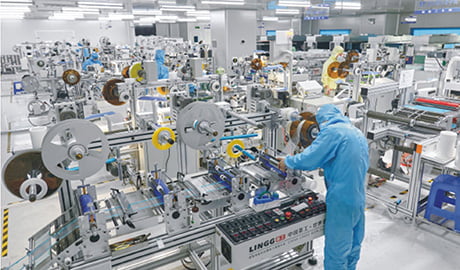
Die cutting is the process used to precisely cut materials into specific shapes or patterns at scale. It ensures uniformity, high accuracy, and repeatability across large production runs. Industries like automotive, electronics, medical, and packaging rely on die cutting for everything from gaskets and seals to foam pads, adhesive tapes, and protective films ([placeholder link]).
Even small deviations in material dimensions can lead to assembly errors, wasted materials, and production delays.
Common Uses of Die Cutting
Automotive Industry
- Gaskets, seals, vibration-damping pads, insulation sheets
- Reduces assembly errors and ensures proper fit in complex parts
Electronics & Electrical Components
- Insulation films, thermal pads, EMI shielding
- Allows precise tolerances in thin, delicate materials
Medical Applications
- Adhesive patches, protective films, foam supports
- High hygiene standards demand exact shapes and consistent quality
Packaging & Consumer Goods
- Labels, tags, protective inserts, promotional items
- Fast, repeatable production for mass-market applications
Industrial Sealing & Insulation
- Rubber, foam, and mineral wool cut to fit panels or housings
- Ensures tight seals, vibration reduction, or thermal insulation
Why Die Cutting Matters
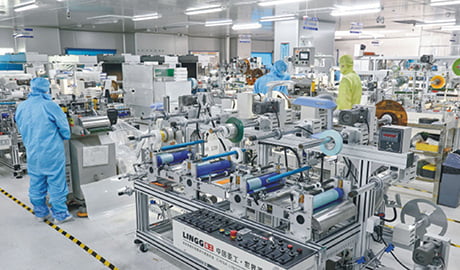
- Precision & Consistency: Cuts multiple parts with exact dimensions repeatedly.
- Material Efficiency: Minimizes waste by optimizing layouts and nesting shapes.
- Speed & Scalability: Ideal for high-volume production without sacrificing quality.
- Complex Shapes: Can handle intricate geometries impossible with manual cutting.
- Versatility: Works with foams, rubber, adhesives, textiles, films, and more ([placeholder link]).
Conclusion
Die cutting is a cornerstone of modern manufacturing, transforming raw materials into precise, functional components across automotive, electronics, medical, and industrial applications. It saves time, reduces waste, and ensures consistent quality—making it essential for OEMs and precision manufacturers.