
What Is Foam Tape Used For?
Foam tape is one of the most versatile materials used in modern manufacturing. From automotive assembly and consumer electronics to construction and industrial equipment, foam tape provides bonding, sealing, cushioning, insulation, and vibration-damping functions that traditional fasteners often cannot achieve.
Foam tape is a pressure-sensitive adhesive tape that combines a foam carrier with adhesive layers. It is primarily used for bonding, sealing, cushioning, gap filling, vibration reduction, thermal insulation, and noise control. Depending on the foam material and adhesive system, foam tape can replace screws, rivets, welds, and liquid adhesives in many applications.
Its ability to conform to uneven surfaces while maintaining strong adhesion makes foam tape an essential material across numerous industries.
What Is Foam Tape Made Of?
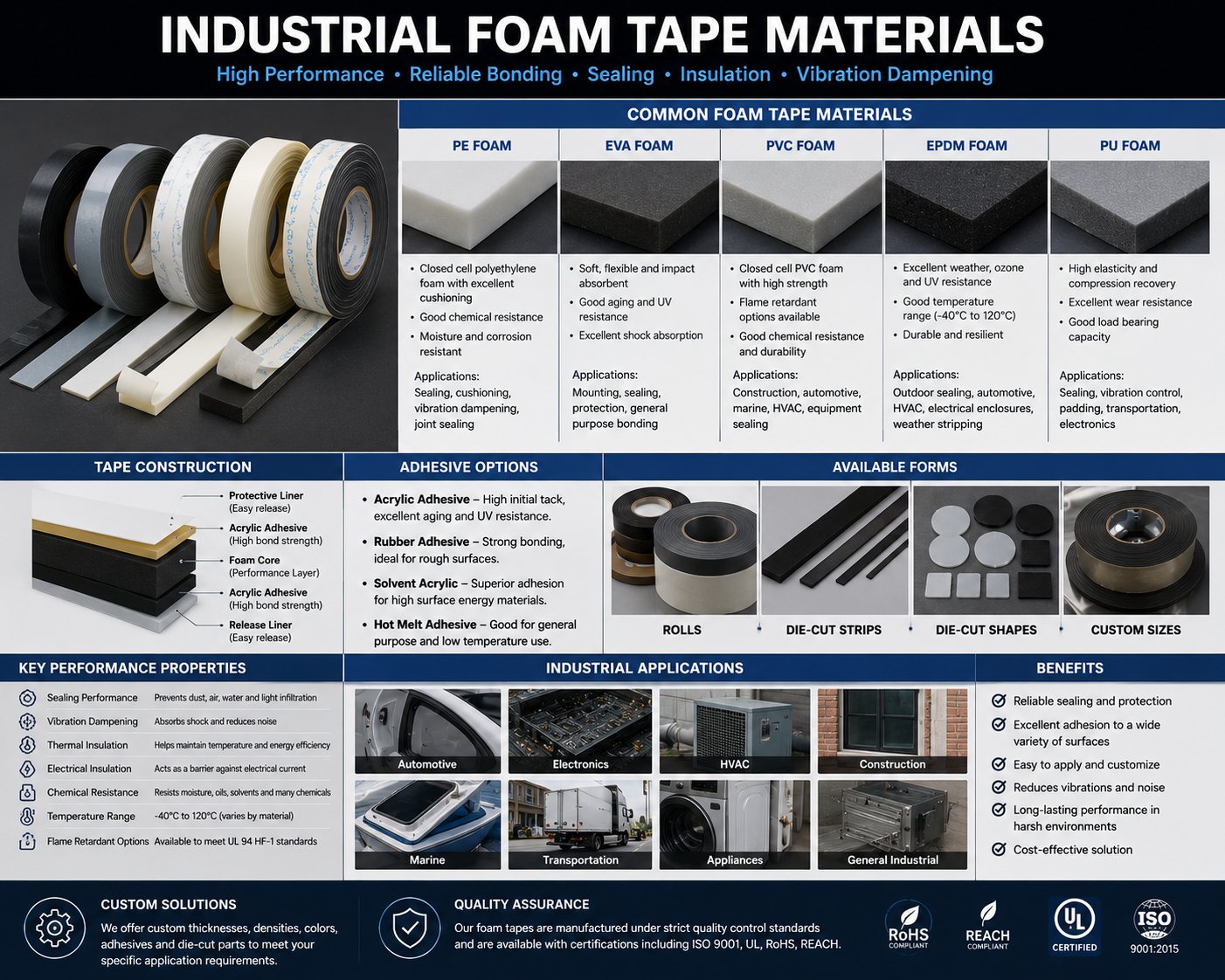
Foam tape typically consists of three components:
- Foam carrier
- Pressure-sensitive adhesive (PSA)
- Release liner
Common foam materials include:
- PE Foam (Polyethylene Foam)
- EVA Foam
- PU Foam
- Acrylic Foam
- EPDM Foam
- Silicone Foam
Different combinations are selected based on application requirements.
Theme: Industrial Foam Tape Materials
1. Bonding Components Together
One of the most common uses of foam tape is replacing mechanical fasteners.
Foam tape can bond:
- Plastic parts
- Metal components
- Glass panels
- Composite materials
- Decorative trims
Benefits
- Cleaner appearance
- Reduced assembly time
- No drilling required
- Improved stress distribution
Many manufacturers use foam tape instead of screws or rivets to improve product aesthetics and efficiency.
2. Sealing Against Dust, Water, and Air
Foam tape is widely used as a sealing material.
It helps prevent:
- Water ingress
- Dust contamination
- Air leakage
- Moisture penetration
Common Applications
- Automotive doors
- Electronic enclosures
- HVAC systems
- Outdoor equipment
Closed-cell foam tapes provide particularly effective sealing performance.
3. Vibration Damping and Noise Reduction
Foam tape absorbs vibration energy and reduces noise transmission.
This is especially important in:
- Automotive interiors
- Electronic devices
- Industrial equipment
Benefits include:
- Reduced rattling
- Improved comfort
- Enhanced product durability
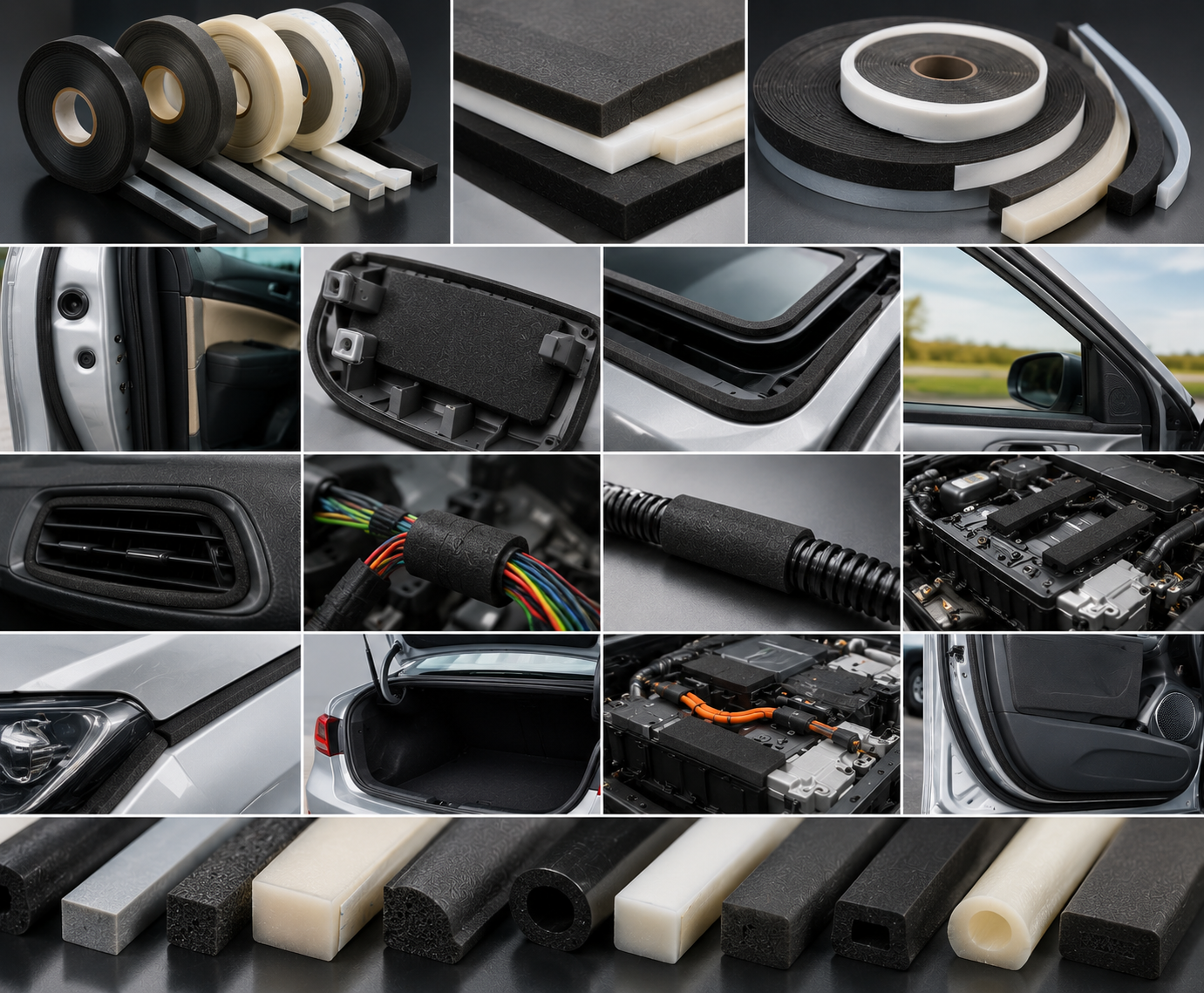
Theme: Automotive Foam Tape Applications
4. Cushioning and Impact Protection
Foam tape can act as a protective cushion between components.
Applications include:
- Display protection
- Battery cushioning
- Packaging protection
- Equipment shock absorption
The foam layer absorbs impact and helps prevent damage.
5. Thermal Insulation
Certain foam tapes provide thermal insulation properties.
They help:
- Reduce heat transfer
- Protect sensitive electronics
- Improve energy efficiency
Common materials include:
- PE foam
- EVA foam
- Silicone foam
These materials are often used in thermal management systems.
6. Electrical Insulation
Some foam tapes are used in electronic products to provide:
- Electrical isolation
- Component spacing
- Protection against short circuits
Applications include:
- Smartphones
- Tablets
- Wearable devices
- Battery packs
When combined with PET or insulation films, foam tapes provide multifunctional assemblies.
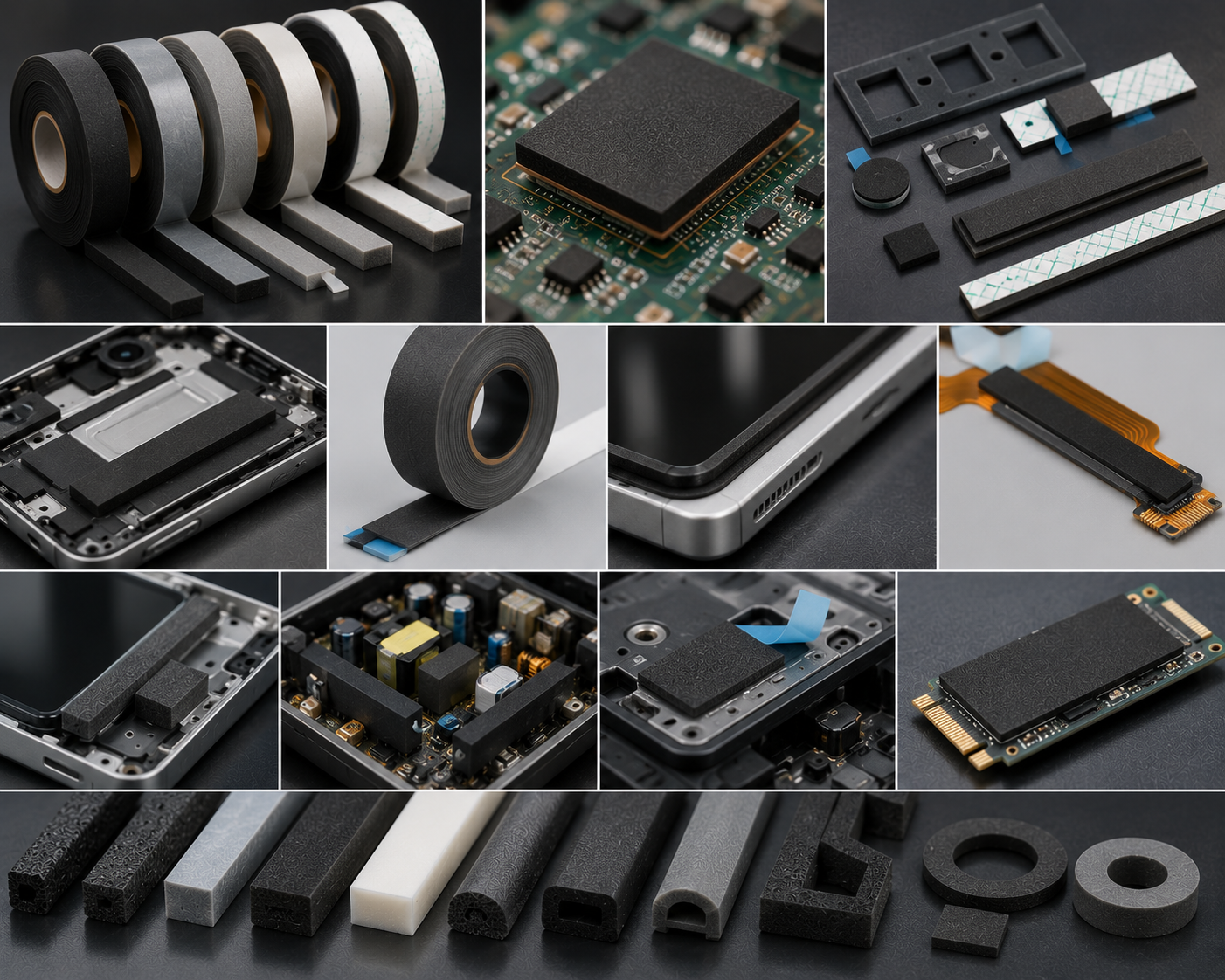
Theme: Precision Electronic Foam Tape Components
Common Industries That Use Foam Tape
Automotive Industry
Foam tape is used for:
- NVH insulation components
- Interior trim attachment
- Weather sealing
- Vibration control
Consumer Electronics
Applications include:
- Display mounting
- Battery fixing
- Camera cushioning
- Waterproof sealing
Construction Industry
Used for:
- Window sealing
- Door sealing
- HVAC insulation
- Structural glazing systems
Industrial Equipment
Applications include:
- Equipment assembly
- Gasket replacement
- Protective cushioning
- Environmental sealing
Types of Foam Tape
| Foam Type | Primary Function |
|---|---|
| PE Foam Tape | Sealing and cushioning |
| EVA Foam Tape | Cushioning and bonding |
| Acrylic Foam Tape | Structural bonding |
| EPDM Foam Tape | Weather sealing |
| PU Foam Tape | Compression sealing |
| Silicone Foam Tape | High-temperature sealing |
Selecting the correct foam tape depends on environmental and performance requirements.
Why Precision Die Cutting Is Important for Foam Tape
Most industrial foam tape applications require custom shapes.
Precision die cutting allows manufacturers to produce:
- Gaskets
- Mounting pads
- Sealing rings
- Electronic components
- Automotive insulation parts
Benefits include:
- Faster assembly
- Improved consistency
- Reduced material waste
How Sanken Manufacturing Supports Foam Tape Applications
Dongguan Sanken Electronics Manufacturing Co., Ltd. specializes in precision foam tape converting and custom material processing solutions.
Our capabilities include:
- Precision die cutting
- Foam tape converting
- Adhesive laminating
- PET film processing
- Non-woven material converting
- Rubber sealing products
- Injection molding
Key Advantages
- OEM and ODM customization
- ISO 9001 certified quality management
- RoHS and REACH compliant materials
- Domestic and overseas production bases
- Cleanroom precision manufacturing
- Tool development from drawings or samples
We support automotive NVH insulation systems, consumer electronics assemblies, wearable devices, and industrial sealing applications.
Featured Snippet Summary
Foam tape is used for bonding, sealing, cushioning, vibration damping, thermal insulation, and electrical insulation. It combines a foam carrier with adhesive layers and is widely used in automotive, electronics, construction, packaging, and industrial applications.
Conclusion
Foam tape is far more than a simple adhesive product. It serves as a multifunctional material that provides bonding strength, sealing performance, vibration control, cushioning, and insulation.
When combined with precision die cutting and custom converting technologies, foam tape can be transformed into highly engineered components that improve assembly efficiency, product reliability, and long-term performance across a wide range of industries.