
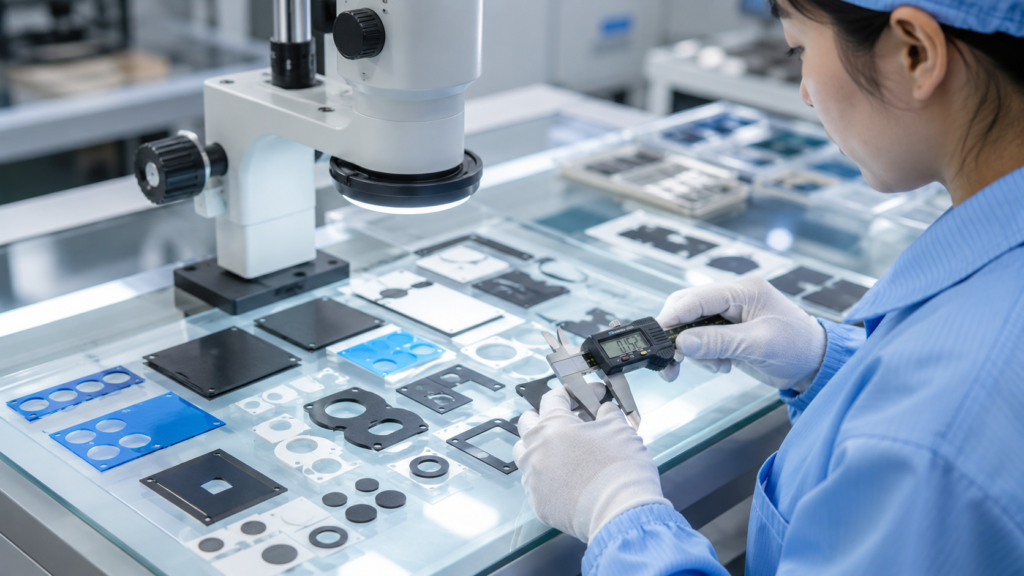
The best adhesive for die cut tape parts depends on the bonding surface, temperature range, load direction, assembly pressure, product lifespan and working environment. There is no universal adhesive that works for every OEM project.
Acrylic adhesive is often used when long-term durability, heat resistance and aging performance are important. Rubber adhesive usually provides fast initial tack. Silicone adhesive is often required for silicone surfaces or high-temperature applications. Polyurethane adhesive may be useful when flexibility and impact resistance are needed.
For OEM buyers, adhesive selection should not be based only on how sticky the tape feels by hand. The final performance depends on surface energy, peel strength, shear resistance, adhesive thickness, carrier material, release liner, die cutting accuracy and assembly method.
Is There One Best Adhesive for All Die Cut Tape Parts?
No.
There is no universal “best adhesive.”
There is only the best adhesive for a specific application.
A tape part used inside a car door has different needs from a tape part used inside a smartphone, medical device, display module, or battery pack.
A good adhesive must match:
- Surface material
- Surface energy
- Temperature exposure
- Humidity
- Shear force
- Peel force
- Compression load
- Aging requirement
- Assembly method
This is why professional die cut tape manufacturing starts before cutting.
It starts with application analysis.
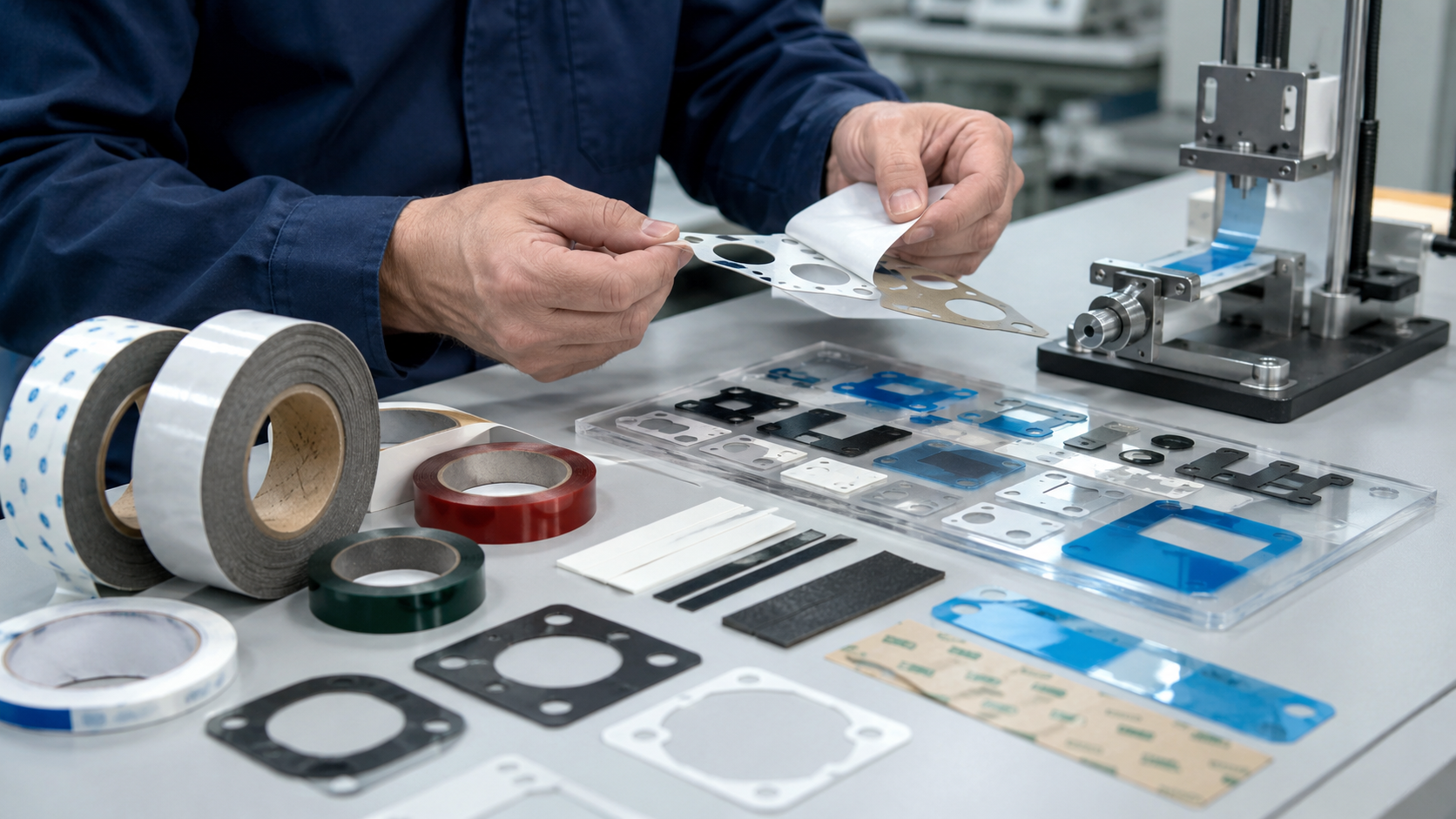
What Are the Main Adhesive Types Used for Die Cut Tape Parts?
The most common adhesive systems include acrylic, rubber, silicone, and polyurethane adhesives.
Each has different strengths.
| Adhesive Type | Main Advantage | Common Use |
|---|---|---|
| Acrylic Adhesive | Long-term durability and heat resistance | Automotive, electronics, outdoor bonding |
| Rubber Adhesive | Strong initial tack | General bonding, packaging, fast assembly |
| Silicone Adhesive | Bonds silicone and handles heat | Silicone rubber, high-temperature parts |
| Polyurethane Adhesive | Flexible bonding | Foam, flexible materials, cushioning parts |
Acrylic adhesive is often our first choice for OEM projects that require aging resistance, heat performance, and stable long-term bonding.
Rubber adhesive can be useful when fast initial bonding is more important than long-term temperature performance.
Silicone adhesive is often necessary when bonding to silicone surfaces.
That last point is important.
Normal adhesive usually does not like silicone.
Silicone is the quiet troublemaker in the adhesive world.
Why Does the Bonding Surface Matter So Much?
Adhesive performance depends heavily on the bonding surface.
High surface energy materials are easier to bond.
Examples include:
- Stainless steel
- Aluminum
- Glass
- ABS
- PC
Low surface energy materials are harder to bond.
Examples include:
- PP
- PE
- TPE
- PTFE
- Silicone rubber
- Some powder-coated surfaces
If the adhesive cannot wet the surface properly, the tape may lift or peel even when the material looks correct.
For difficult surfaces, we may recommend:
- Special acrylic adhesive
- Rubber-based adhesive
- Silicone adhesive
- Primer treatment
- Plasma treatment
- Larger bonding area
- Different tape carrier
At Sanken, we always ask what surface the tape will bond to.
Without that answer, choosing adhesive is just gambling with better vocabulary.
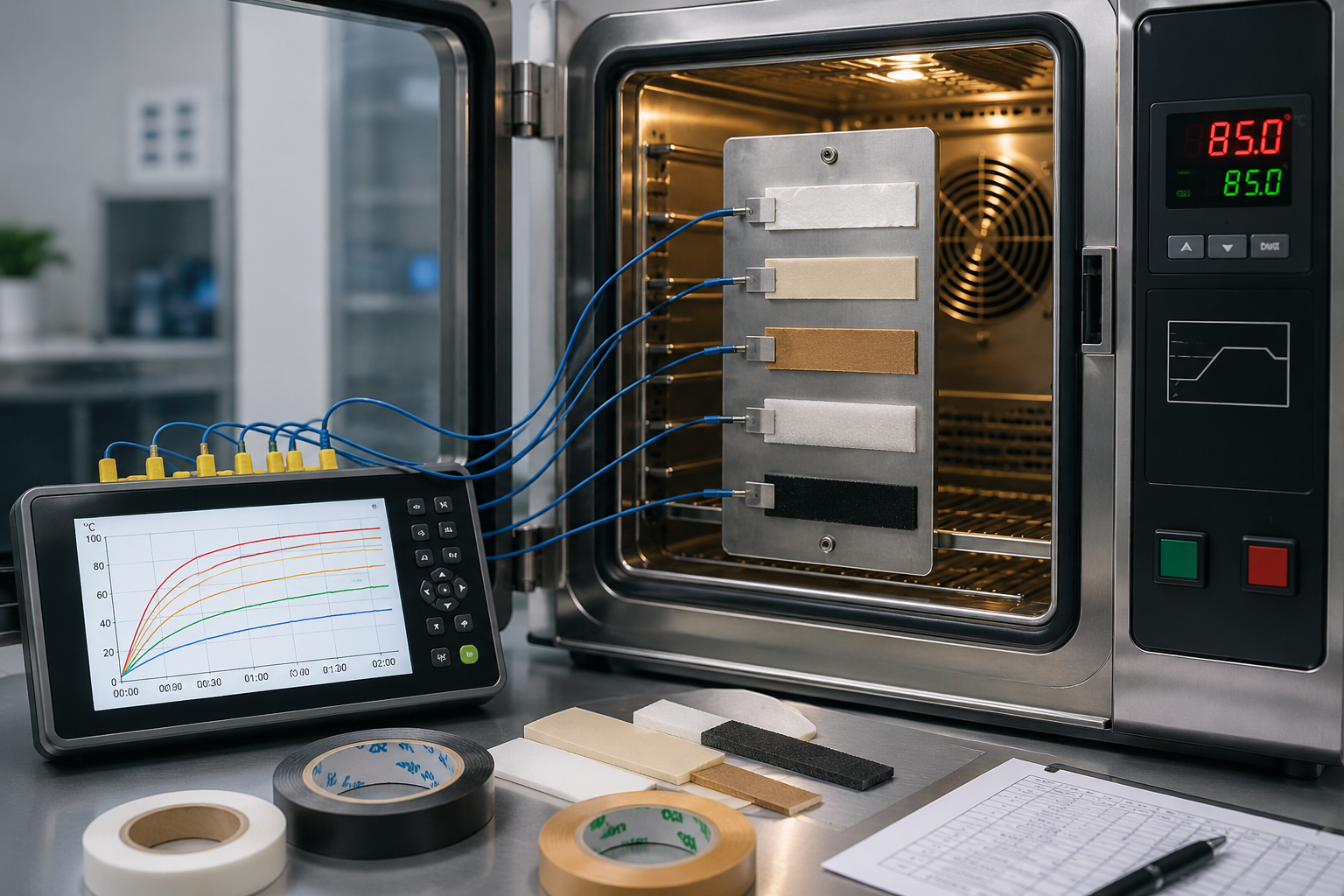
How Does Temperature Affect Adhesive Selection?
Temperature can completely change adhesive performance.
Some adhesives become soft under heat.
Some become brittle in cold environments.
Some lose tack after thermal aging.
For automotive, electronics, and battery applications, temperature resistance is critical.
Typical temperature-related risks include:
- Edge lifting
- Adhesive creep
- Layer shifting
- Loss of peel strength
- Residue after removal
- Long-term aging failure
Acrylic adhesives usually perform better in long-term heat aging applications than many rubber adhesives.
But again, the full structure matters.
The carrier, liner, foam, film, and adhesive must work together.
A strong adhesive on the wrong carrier can still fail.
Should You Choose High Tack or High Shear Strength?
This is where many buyers make mistakes.
High tack means the adhesive grabs the surface quickly.
High shear strength means the adhesive resists sliding under load.
They are not the same thing.
A tape can feel very sticky by hand and still shift after assembly.
For die cut tape parts used in vertical bonding, load-bearing, vibration, or thermal cycling, shear strength is extremely important.
For quick assembly or temporary fixing, initial tack may matter more.
At Sanken, we evaluate both.
We look at:
- Peel strength
- Shear strength
- Initial tack
- Aging resistance
- Compression behavior
- Die cutting stability
This helps prevent the common problem of tape parts sticking well at first but failing later.
What OEM Buyers Should Confirm Before Choosing Adhesive
Before choosing adhesive for die cut tape parts, OEM buyers should confirm the real application environment instead of comparing adhesive strength alone.
Important points include:
- Bonding surface material
- Surface energy level
- Operating temperature range
- Humidity and aging exposure
- Peel strength requirement
- Shear resistance requirement
- Compression or vibration load
- Adhesive thickness
- Carrier film or foam structure
- Release liner type
- Kiss-cut or through-cut requirement
- Manual or automated assembly method
- Required delivery format: roll, sheet, piece or kit
This review helps reduce edge lifting, adhesive overflow, liner tearing, difficult peeling, bonding failure and long-term assembly risk.
Why Does Die Cutting Process Affect Adhesive Performance?
Many people think adhesive failure only comes from adhesive selection.
That is not true.
Poor die cutting can damage adhesive performance.
Common problems include:
| Process Problem | Failure Result |
|---|---|
| Excessive cutting pressure | Adhesive overflow |
| Poor kiss cutting depth | Liner damage |
| Rough cutting edge | Edge lifting |
| Material stretching | Part deformation |
| Poor waste removal | Surface contamination |
| Weak lamination | Layer separation |
Die cut tape parts require precise control of blade pressure, liner release, roll tension, and waste removal.
At Sanken, we combine adhesive laminating with precision die cutting and quality inspection.
That means we control the structure before, during, and after cutting.
This is why we can solve problems that basic cutting suppliers often cannot.
What Adhesive Is Best for Automotive Die Cut Tape Parts?
For automotive applications, acrylic adhesive is often preferred because of its long-term durability, heat resistance, and aging performance.
Automotive tape parts may face:
- Heat
- Humidity
- Vibration
- Dust
- Repeated compression
- Long service life
- Strict assembly requirements
Common applications include:
- Interior bonding pads
- Foam sealing tapes
- NVH components
- Battery insulation parts
- Wire harness fixing parts
- Waterproof gasket tapes
For some automotive interior parts, foam tape with acrylic adhesive may provide both cushioning and bonding performance.
For special rubber or silicone surfaces, the adhesive system must be adjusted.
At Sanken, we help customers avoid over-engineering and under-engineering.
Both are expensive.
One wastes money.
The other creates failure.
What Adhesive Is Best for Electronics Die Cut Tape Parts?
Electronics applications usually require precision, cleanliness, and stable bonding.
Common needs include:
- Thin tape structures
- Clean die cut edges
- No adhesive overflow
- Accurate liner release
- Stable insulation
- Heat resistance
- Low contamination
Applications include:
- Display bonding
- PET insulation films
- Battery pads
- Sensor gaskets
- Speaker mesh bonding
- EMI shielding tapes
- Protective film layers
For electronics, acrylic adhesive is widely used, but the right grade depends on surface material and thermal requirements.
Clean processing is also critical.
Dust, burrs, and adhesive strings can cause serious assembly issues.
This is why Sanken focuses not only on adhesive selection but also on clean converting and inspection.
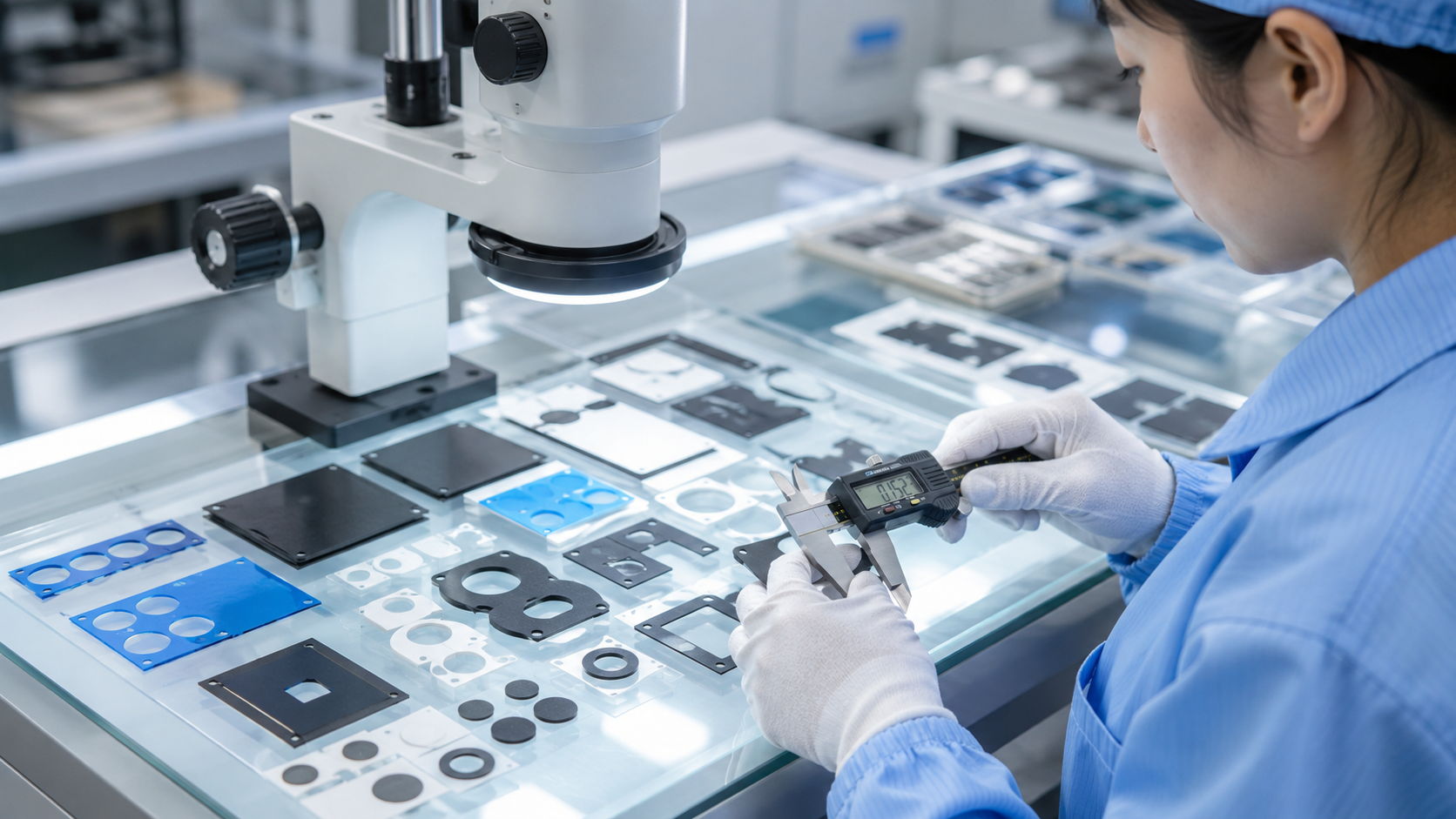
How Sanken Chooses Adhesive for Die Cut Tape Parts
Sanken Manufacturing does not choose adhesive by guesswork. We review the application, drawing, material stack, bonding surface, assembly method and working environment before recommending adhesive options.
For die cut tape parts, we may evaluate peel strength, shear strength, initial tack, aging performance, temperature resistance, liner release, dimensional stability, adhesive overflow and assembly fit.
Our capabilities include adhesive laminating, precision die cutting, kiss cutting, foam tape converting, film converting, multilayer material bonding, inspection and mass production support for automotive, electronics, medical and industrial OEM applications.
Conclusion
The best adhesive for die cut tape parts depends on the bonding surface, surface energy, temperature range, humidity, peel strength, shear force, compression load, aging requirement and assembly method. Acrylic, rubber, silicone and polyurethane adhesives all have different advantages, but none of them is best for every project.
For OEM buyers, adhesive selection should be reviewed together with the carrier material, release liner, die-cut shape, cutting depth, waste removal, packaging format and final production environment. A tape part that feels sticky during sampling may still fail during heat aging, vibration, vertical load or mass assembly.
Sanken supports custom die cut tape parts, adhesive-backed foam parts, PET-backed adhesive films, protective films, liner-backed components and multilayer bonding structures. From adhesive selection and material laminating to kiss cutting, inspection and mass production, Sanken helps customers reduce lifting, shifting, peeling and assembly failure risks.