

Why Do Die Cut Tape Parts Lift, Shift, or Peel Off?
Die cut tape parts look small, but they can create big trouble. I have seen OEM projects delayed because adhesive pads lifted at the edge, shifted during assembly, or peeled off after temperature testing. When tape fails, the problem is rarely “just glue.” It is usually material, surface, pressure, tolerance, or process control working against you ([placeholder link]).
Die cut tape parts lift, shift, or peel off because the adhesive system does not match the surface, environment, compression force, or assembly process. A reliable tape part needs the correct substrate, adhesive type, liner, lamination method, die cutting depth, surface preparation, and inspection standard. At Sanken, we solve this by combining material selection, precision die cutting, adhesive laminating, kiss cutting, and batch quality verification before mass production begins.
A cheap tape part can become very expensive when it fails on the assembly line. My rule is simple: if the part must stick, we must engineer why it sticks.
Why Do Die Cut Tape Parts Lift at the Edges?
Edge lifting usually happens when the adhesive cannot maintain full contact with the bonding surface.
This may be caused by low surface energy plastic, dust, oil, curved housing design, weak adhesive selection, or poor die cutting edge quality.
Materials such as PP, PE, powder-coated metal, textured plastic, and silicone rubber can be difficult to bond without the correct adhesive system ([placeholder link]).
At Sanken, we do not only ask for the drawing.
We ask about the bonding surface, application pressure, temperature range, and final product environment.
That is how we prevent edge lifting before the customer starts mass assembly.
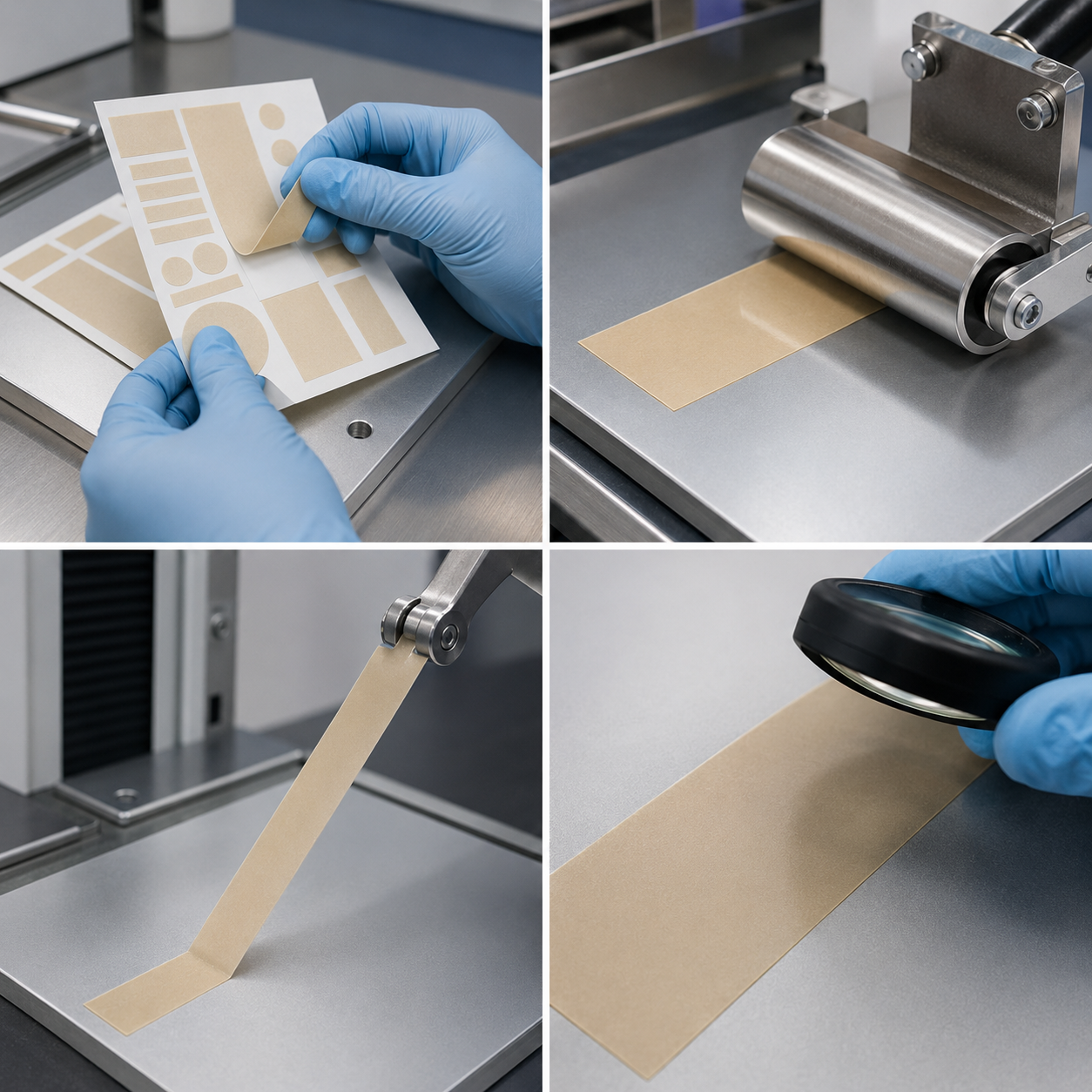
Why Do Die Cut Tape Parts Shift After Assembly?
Tape shifting usually means the adhesive has poor shear strength or the part was not designed for the load direction.
This is common in foam tape, double-sided tape, and bonding pads used in automotive interiors, electronics housings, appliances, and display modules.
The tape may look fine after initial bonding.
Then it slowly moves under heat, vibration, pressure, or repeated use.
That movement creates misalignment, noise, leakage, or visible defects.
Many suppliers only test peel strength.
We also consider shear resistance, compression load, bonding area, and long-term aging behavior ([placeholder link]).
That is where Sanken’s material converting experience becomes useful.
Why Do Tape Parts Peel Off Completely?
Complete peeling often means the adhesive never formed a strong bond.
This can happen for several reasons:
- Wrong adhesive type
- Dirty bonding surface
- Insufficient application pressure
- Short dwell time
- Poor liner removal
- Low surface energy substrate
- Temperature mismatch
- Material aging during storage
Acrylic adhesive, rubber adhesive, and silicone adhesive all behave differently.
One adhesive may work well on metal but fail on plastic.
Another may bond quickly but perform poorly under heat.
At Sanken, we help customers match adhesive chemistry to real application conditions instead of guessing from a catalog.
How Does Surface Energy Affect Adhesive Performance?
Surface energy is one of the most overlooked reasons tape parts fail.
High surface energy materials, such as clean metal or glass, are usually easier to bond.
Low surface energy materials, such as PP, PE, TPE, and some coated plastics, are much harder.
If the adhesive cannot wet the surface properly, the bond will be weak.
The tape may lift or peel even if the die cut shape is correct.
For difficult surfaces, we may recommend:
- High-performance acrylic adhesive
- Rubber-based adhesive
- Primer treatment
- Plasma or corona surface treatment
- Larger bonding area
- Different foam or film carrier
This is why a professional die cutting supplier should understand materials, not just cutting tools.
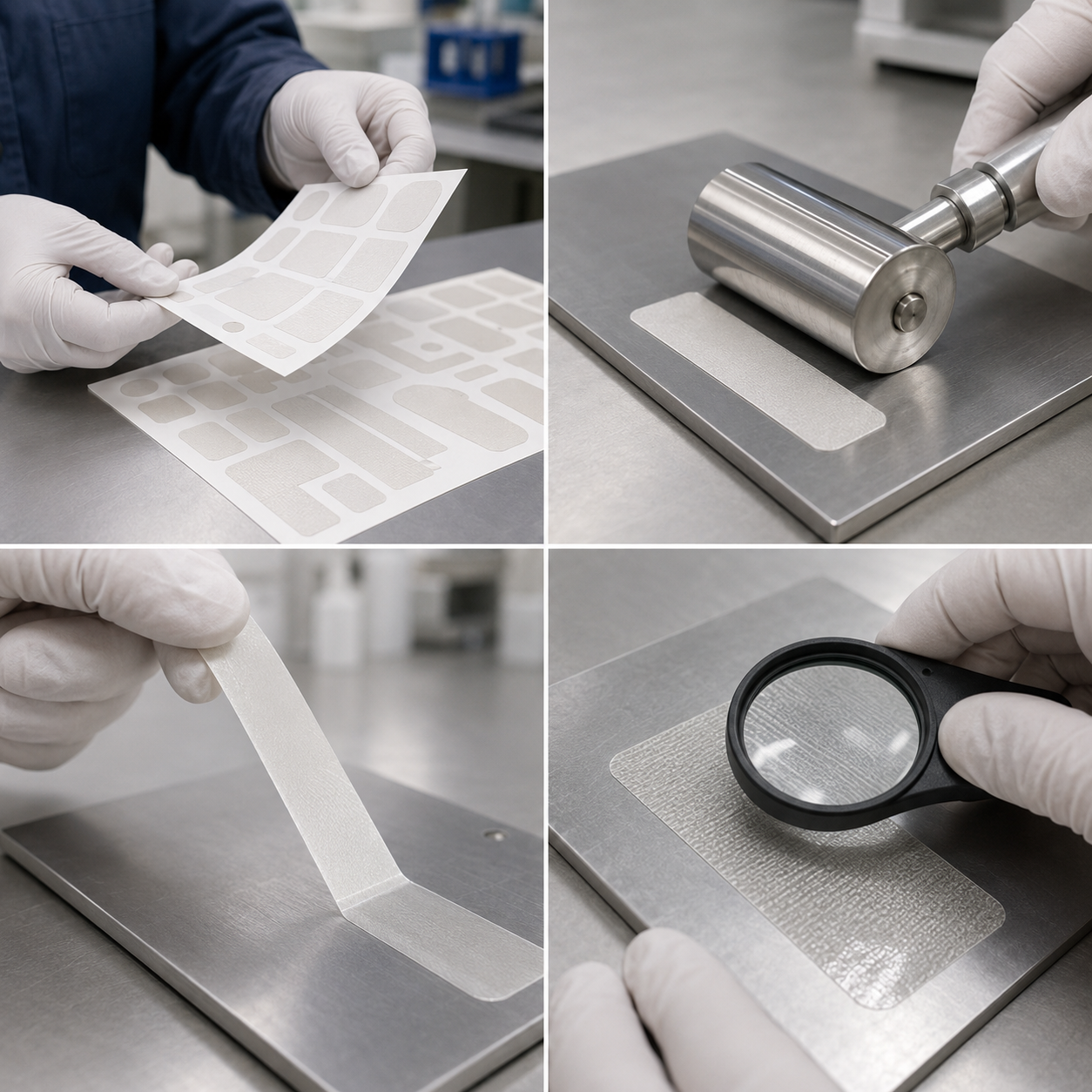
Can Poor Die Cutting Cause Tape Failure?
Yes.
Poor die cutting can absolutely cause tape failure.
If the blade pressure is wrong, the adhesive may overflow at the edge.
If the kiss cut depth is unstable, the liner may be damaged.
If the material stretches during cutting, the part may deform after release.
Common die cutting problems include:
| Problem | Result |
|---|---|
| Adhesive overflow | Dirty edges and bonding failure |
| Liner cut-through | Difficult peeling during assembly |
| Rough edges | Edge lifting risk |
| Dimensional drift | Misalignment |
| Poor waste removal | Contamination |
| Weak lamination | Layer separation |
At Sanken, we control die cutting pressure, roll tension, liner stability, tooling condition, and inspection standards.
This is why our die cut tape parts are designed for production use, not only for sample approval.
Why Does Storage Condition Matter?
Tape parts are sensitive to time, temperature, and humidity.
If adhesive materials are stored incorrectly, bonding performance may decline before the part even reaches the assembly line.
Common storage risks include:
- High temperature
- Excessive humidity
- Dust exposure
- Liner deformation
- Adhesive aging
- Roll compression marks
For OEM customers, we help define packaging, shelf life, liner protection, and delivery format.
This is especially important for automotive, electronics, medical, and optical applications.
A good tape part must arrive clean, flat, stable, and ready for assembly.
Why Do Some Suppliers Fail While Sanken Can Solve It?
Many suppliers treat die cut tape parts as simple shapes.
We do not.
At Sanken, we treat them as functional bonding components.
That means we control:
- Adhesive selection
- Foam or film carrier selection
- Material laminating
- Precision die cutting
- Kiss cutting depth
- Liner release performance
- Dimensional tolerance
- Cleanliness inspection
- Packaging stability
We also provide one-stop processes including precision die cutting, material converting, adhesive laminating, hot pressing, spraying and gluing, silk screen printing, and injection molding support.
Our quality systems include IATF 16949, ISO 9001, and ISO 14001 ([placeholder link]).
That gives OEM customers more stable quality and fewer supplier coordination problems.
How Should OEM Buyers Prevent Tape Part Failure?
Before ordering die cut tape parts, I recommend asking these questions:
- What surface will the tape bond to?
- Is the material high or low surface energy?
- What temperature and humidity will the part face?
- Will the part experience shear force, vibration, or compression?
- Is the adhesive suitable for long-term aging?
- Can the supplier control kiss cutting depth?
- Are the parts inspected before shipment?
If a supplier cannot answer these clearly, the risk is high.
The lowest price often hides the highest failure cost.
At Sanken, we prefer solving the problem before production, not apologizing after shipment.
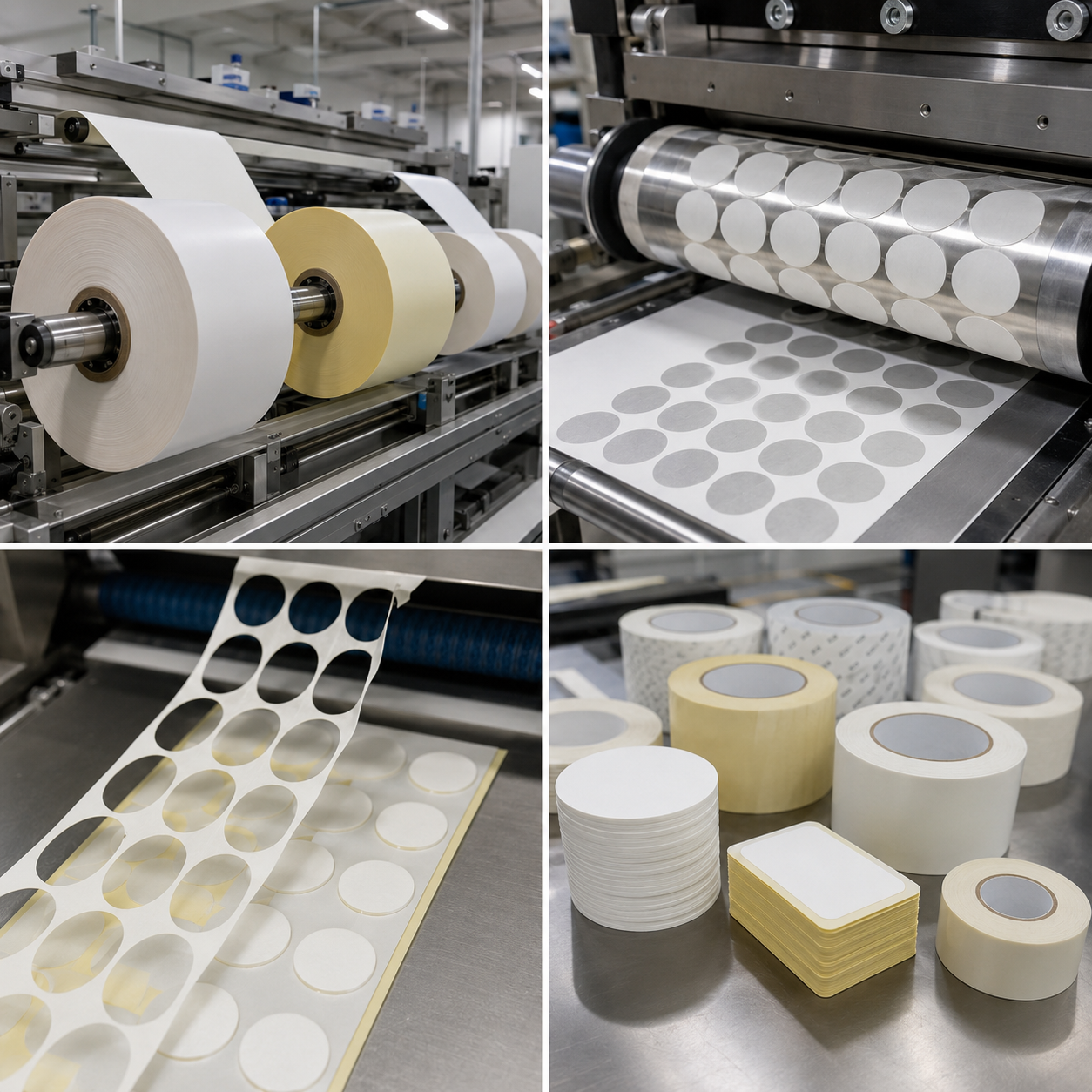
Conclusion
Die cut tape parts lift, shift, or peel off when adhesive, surface, design, process, or inspection is wrong. At Sanken, we combine material expertise, precision die cutting, adhesive laminating, and quality verification to help OEM customers achieve stronger bonding and more reliable production.