
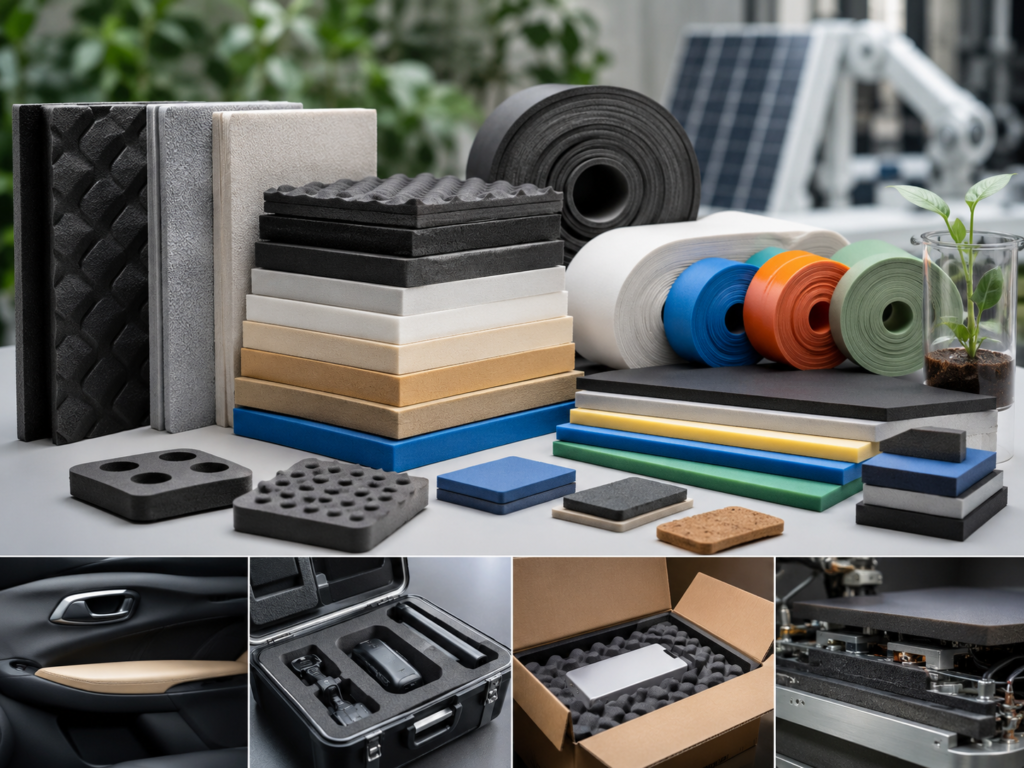
EVA is one of those materials that looks simple until a project goes wrong. A foam pad collapses too early. An adhesive-backed part lifts during assembly. A protective insert smells unpleasant after heat exposure. A cushion layer fails compression testing. Suddenly, “just EVA” becomes a production problem.
EVA stands for ethylene-vinyl acetate. It is a flexible polymer material widely used in foam, film, sheet, adhesive, cushioning, sealing, insulation, and protective applications. For OEM buyers, EVA is valuable because it is lightweight, soft, shock-absorbing, easy to process, and cost-effective. But choosing the right EVA grade, thickness, density, and converting method is critical.
At Sanken Manufacturing, we often help customers convert EVA materials into precision die-cut foam parts, adhesive-backed pads, protective liners, cushioning components, sealing parts, and custom assemblies for automotive, electronics, medical, consumer, and industrial applications.
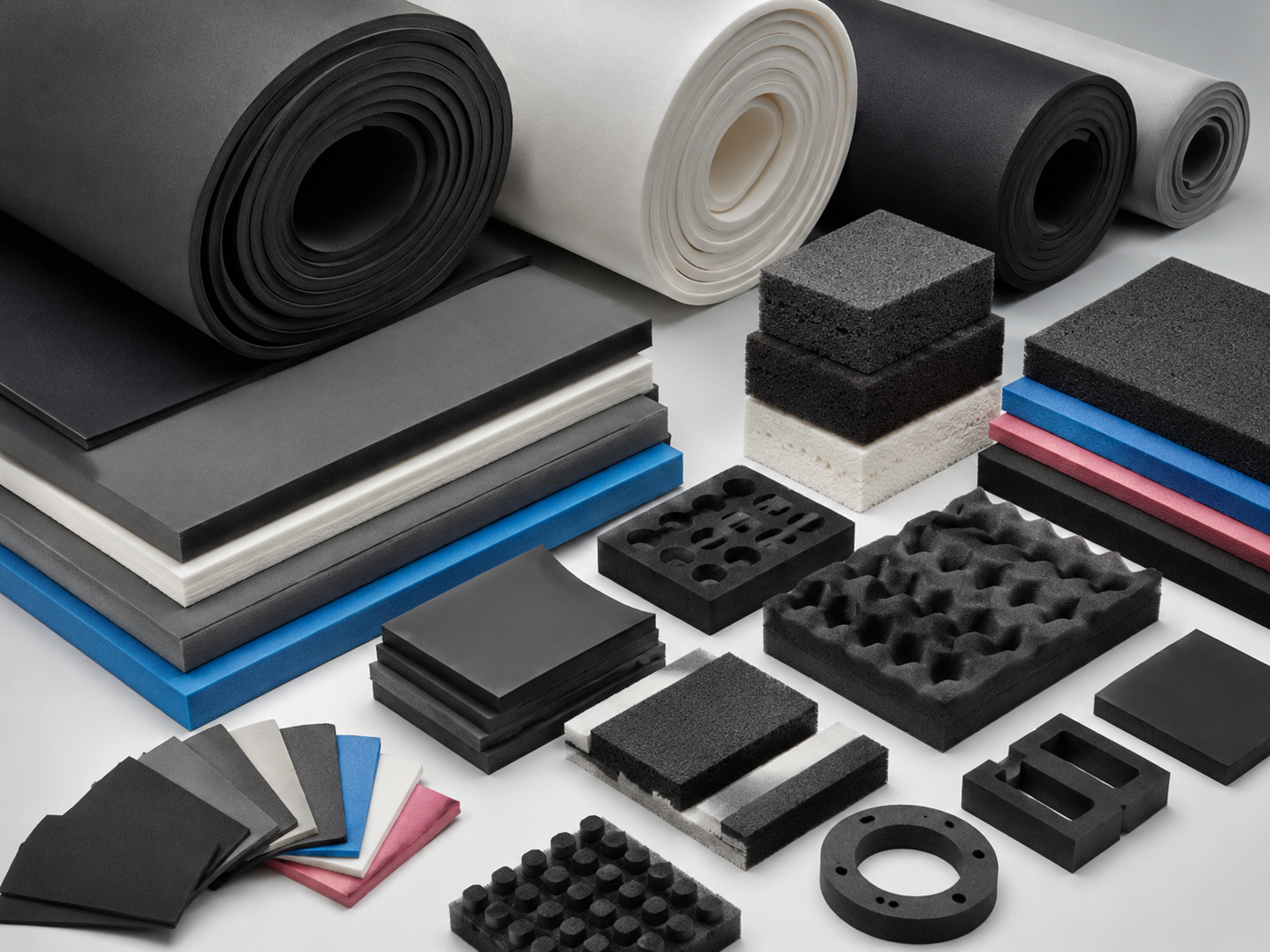
What Is EVA Material?
EVA is a copolymer made from ethylene and vinyl acetate.
The ratio of vinyl acetate affects the material’s softness, flexibility, clarity, and elasticity. In simple terms, higher vinyl acetate content usually makes EVA softer and more flexible.
EVA can be supplied in several forms:
| EVA Form | Common Use |
|---|---|
| EVA foam | Cushioning, sealing, shock absorption |
| EVA sheet | Pads, liners, protective layers |
| EVA film | Packaging, lamination, surface protection |
| EVA adhesive | Hot melt adhesive and bonding applications |
| EVA molded parts | Footwear, handles, protective components |
For most industrial buyers, EVA foam is the most common form.
It is often used when the product needs softness, cushioning, insulation, impact absorption, or lightweight protection.
Why Is EVA So Popular?
EVA is popular because it balances performance and cost.
It is not as expensive as some high-performance elastomers, but it offers better flexibility and cushioning than many rigid plastics.
Key advantages include:
- Lightweight
- Flexible
- Good cushioning
- Shock absorbing
- Water resistant
- Easy to die cut
- Easy to laminate
- Available in different densities
- Suitable for adhesive backing
This makes EVA useful in many OEM projects where buyers need a practical material that performs well without making the final product too expensive.
What Are the Main Properties of EVA?
1. Good Cushioning Performance
EVA foam absorbs impact and reduces pressure.
This is why it is used in:
- Protective packaging
- Electronics cushioning
- Tool box liners
- Sports equipment
- Automotive pads
For buyers, cushioning performance is not only about softness. It is also about recovery.
If the foam does not recover after compression, the part may lose its function.
2. Water Resistance
EVA has good resistance to water absorption compared with many open-cell foam materials.
This makes it suitable for applications where moisture exposure may occur.
However, EVA is not automatically waterproof in every structure. Surface treatment, foam cell structure, adhesive choice, and part design still matter.
3. Lightweight Structure
Weight reduction is important in automotive, electronics, packaging, and portable equipment.
EVA helps reduce weight while still providing cushioning and protection.
4. Easy Processing
EVA can be:
- Die cut
- Laminated
- Slit
- Kiss cut
- Hot pressed
- Adhesive backed
- Molded
This is one reason EVA works well for customized OEM components.
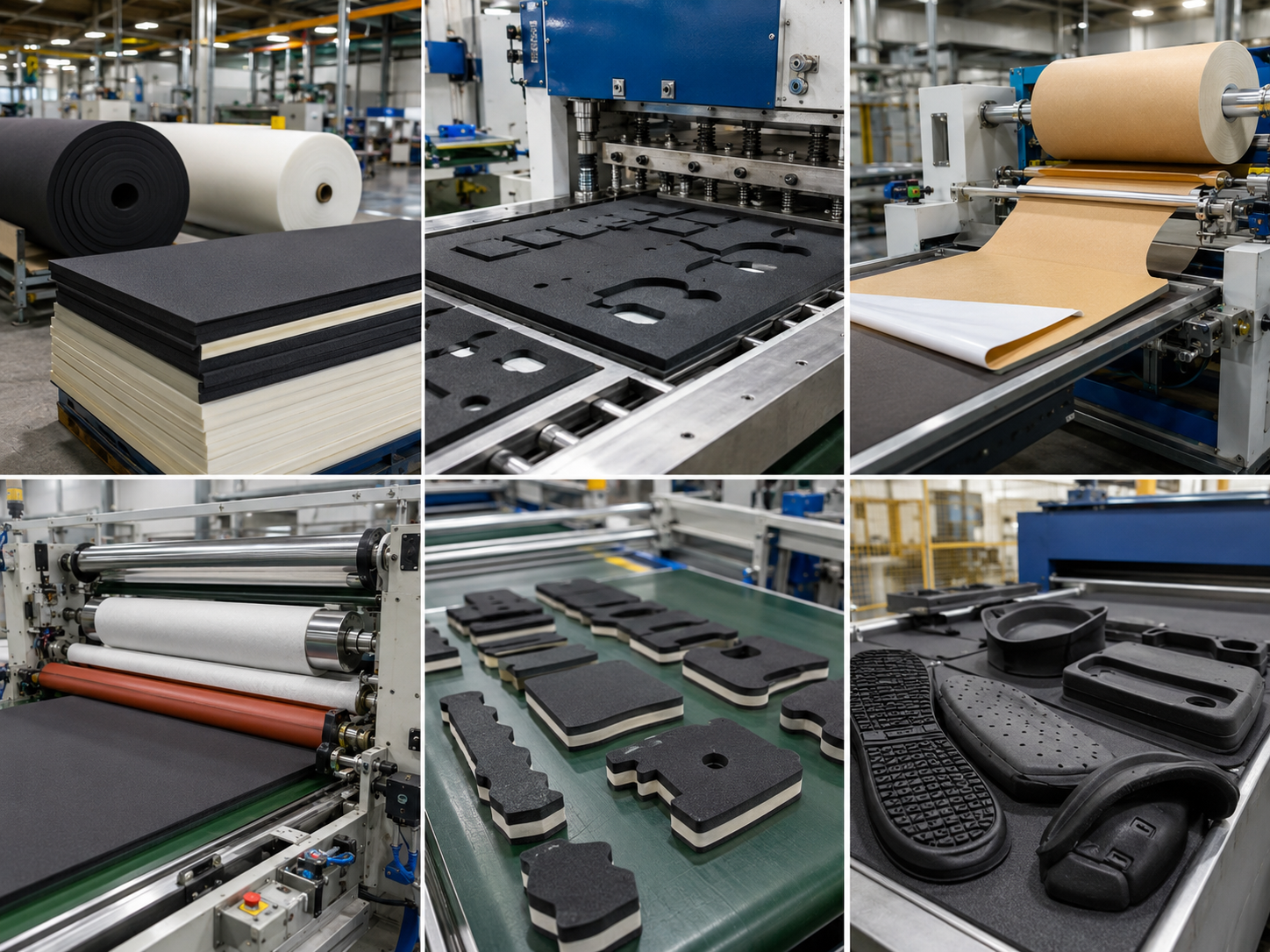
EVA Foam vs PE Foam vs Rubber
Many buyers compare EVA with PE foam and rubber.
They may look similar, but their performance is different.
| Material | Main Strength | Common Limitation |
|---|---|---|
| EVA Foam | Soft, flexible, shock absorbing | May compress under long-term load |
| PE Foam | Lightweight, good structure | Less soft than EVA |
| Rubber | Strong sealing and elasticity | Heavier and often higher cost |
EVA is often chosen when the project needs comfort, cushioning, easy processing, and moderate cost.
Rubber may be better when strong sealing, high elasticity, or harsh environmental resistance is required.
PE foam may be better when the project needs lightweight structure and lower compression softness.
The best choice depends on the actual application, not only the material name.
Common Applications of EVA Material
Automotive Applications
EVA is used in many automotive areas, especially for cushioning, anti-rattle, sealing support, and interior comfort.
Typical applications include:
- Interior foam pads
- Anti-vibration cushions
- Door trim support pads
- Noise reduction layers
- Protective liners
- Assembly spacers
- Packaging for automotive components
For automotive buyers, the main concerns are usually compression behavior, aging resistance, odor, adhesive stability, and dimensional consistency.
A low-cost EVA material may pass the first sample test but fail after heat exposure or long-term compression.
That is why Sanken helps customers evaluate material behavior before mass production.
Electronics Applications
Electronics products often need soft protection and insulation.
EVA can be used for:
- Cushioning pads
- Protective foam liners
- Shock absorbing inserts
- Battery pack protection
- Dust protection pads
- Assembly spacers
These parts often require clean edges and accurate dimensions.
Precision die cutting is important because even small dimensional errors can affect assembly speed and product appearance.
Packaging Applications
EVA foam is widely used for protective packaging.
It can protect products from vibration, impact, and scratches during shipping.
Applications include:
- Tool packaging
- Instrument packaging
- Electronics packaging
- Medical equipment packaging
- Luxury product inserts
Compared with ordinary packaging foam, EVA often gives a cleaner and more premium appearance.
Medical and Healthcare Applications
EVA may be used in medical equipment cushioning, protective pads, and disposable product components.
In medical projects, buyers must carefully confirm material safety, cleanliness, odor, and regulatory requirements.
Not every EVA grade is suitable for medical use.
Industrial Applications
Industrial products use EVA for:
- Gaskets
- Seals
- Protective pads
- Anti-slip layers
- Cushioning strips
- Vibration reduction parts
- Equipment liners
Many of these products require adhesive backing or multilayer lamination.
This is where converting quality becomes very important.
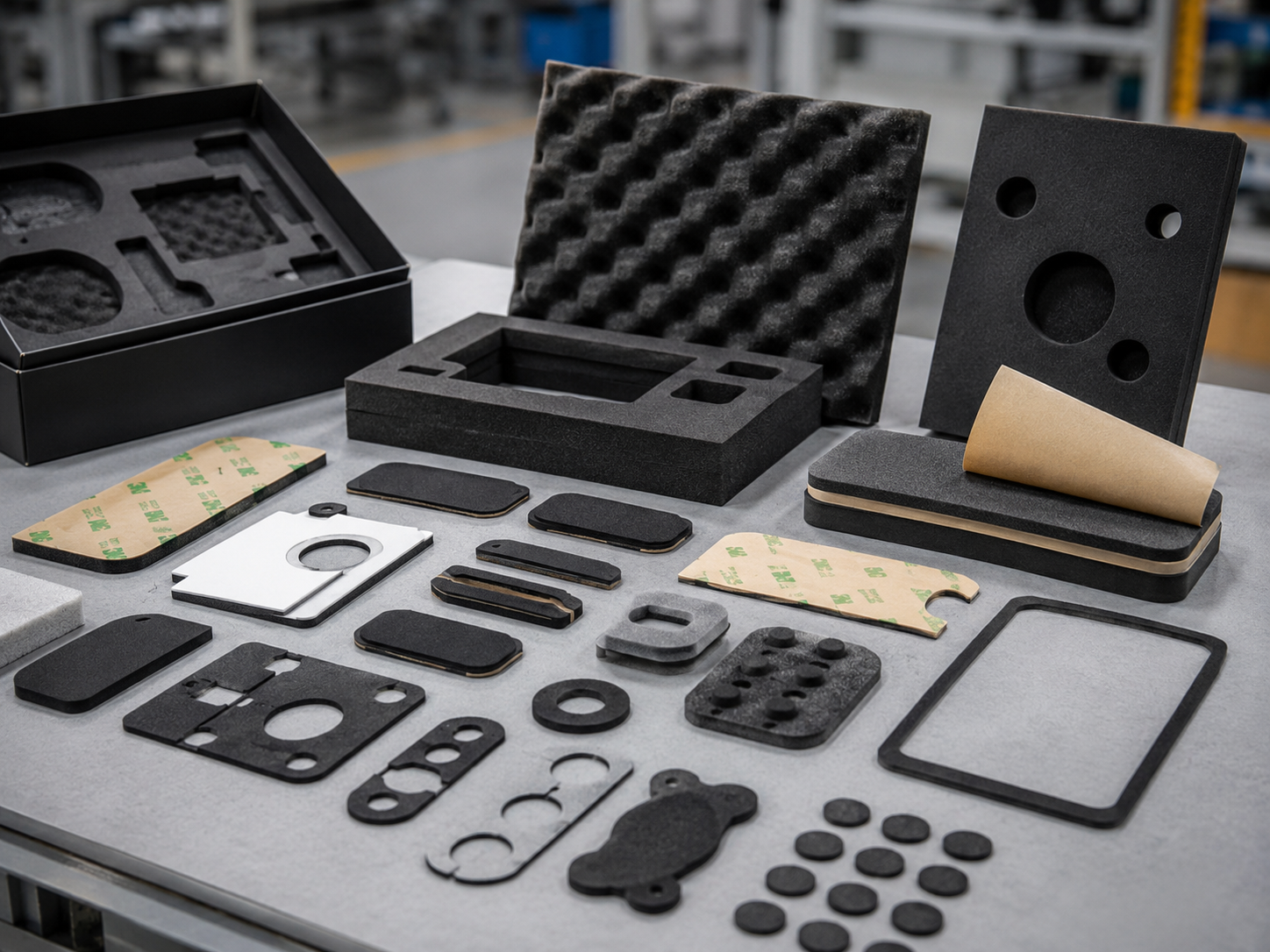
Common Problems Buyers Face With EVA
EVA is useful, but it is not risk-free.
If the material is selected or processed incorrectly, problems may occur.
Compression Collapse
Some EVA foam materials may flatten after long-term pressure.
This affects cushioning, sealing, and anti-vibration performance.
Adhesive Lifting
If the adhesive is not matched with EVA surface properties, the part may lift or peel during assembly.
Odor Issues
Low-quality EVA may produce odor after heat exposure.
This is especially risky for automotive interiors and consumer products.
Dimensional Variation
Soft foam materials can stretch, compress, or deform during processing.
If die cutting is not controlled well, the final part may not fit correctly.
Poor Edge Quality
Rough edges, tearing, or dust can affect product appearance and assembly.
These issues are common when the supplier lacks experience with foam converting.
How to Choose the Right EVA Material
Before selecting EVA, buyers should confirm:
- What density is required?
- What thickness is needed?
- Does the part need adhesive backing?
- Will the part face heat, humidity, or compression?
- Is odor control important?
- Does the part need flame resistance?
- What die-cut tolerance is required?
- Will the product be used in automotive, electronics, medical, or packaging?
These questions help avoid wrong material selection.
They also help the supplier recommend the right EVA grade and converting process.
What Should OEM Buyers Confirm Before Ordering EVA Parts?
Before ordering custom EVA parts, buyers should confirm the final application, compression requirement, thickness tolerance, adhesive backing, surface contact material, temperature exposure, odor requirement, flame resistance requirement and delivery format.
For adhesive-backed EVA foam parts, the adhesive and release liner are just as important as the foam itself. Poor adhesive matching can cause lifting, difficult peeling or unstable bonding during assembly.
For automotive, electronics and medical-related projects, buyers should also check aging resistance, cleanliness, odor control and dimensional stability before mass production.
Why Precision Die Cutting Matters for EVA Parts
Raw EVA sheets are only the beginning.
OEM customers usually need finished parts that are ready for assembly.
Common converted EVA products include:
- Die-cut EVA foam pads
- Adhesive-backed EVA parts
- EVA cushioning strips
- EVA gaskets
- EVA protective liners
- Laminated EVA foam assemblies
Poor converting can create problems such as:
- Uneven thickness
- Poor edge quality
- Adhesive misalignment
- Dimensional instability
- Difficult assembly
At Sanken, we support EVA projects with precision die cutting, adhesive laminating, foam converting, hot pressing, and custom assembly.
This helps customers reduce supplier complexity and improve production stability.
How Sanken Helps Customers With EVA Projects
At Sanken Manufacturing, we focus on solving real customer problems, not only supplying materials.
For EVA projects, we can support:
- Material selection
- Prototype development
- Die-cut structure optimization
- Adhesive lamination
- Foam converting
- Custom packaging inserts
- Mass production support
Our customers often come from automotive, electronics, medical equipment, packaging, and industrial manufacturing.
The goal is simple:
Help customers get stable parts, reduce assembly problems, shorten development time, and improve long-term product reliability.
Conclusion
EVA is a flexible ethylene-vinyl acetate material used in foam, sheet, film, adhesive, cushioning, sealing, insulation and protective applications. It is lightweight, soft, water resistant, easy to process and suitable for many OEM products.
However, the right EVA solution depends on density, thickness, compression behavior, adhesive compatibility, odor control, aging resistance, flame resistance and die cutting accuracy. Choosing the wrong EVA grade may lead to compression collapse, adhesive lifting, odor problems, poor edge quality or unstable assembly.
Sanken supports custom EVA foam and EVA-based components through material selection, adhesive laminating, foam converting, precision die cutting, inspection and mass production. If you need die cut EVA foam pads, adhesive-backed EVA parts, EVA gaskets, protective liners or cushioning components for OEM assembly, Sanken can help turn material selection into stable production-ready parts.