
What Are the Key Uses & Benefits of Automotive Non Woven Fabric?
Automotive non woven fabric is one of the most widely used yet least understood materials inside modern vehicles. Most drivers never see it, but automotive engineers rely on it every day to reduce noise, lower vehicle weight, improve passenger comfort, and support sustainable vehicle design.
From trunk floors and door panels to headliners and wheel arch liners, non woven materials have become essential components in modern automotive manufacturing. As electric vehicles become quieter and OEMs pursue lightweight solutions, the importance of automotive non woven fabric continues to grow.
At Sanken, we work closely with automotive manufacturers and Tier 1 suppliers to convert non woven materials into precision die-cut components that improve vehicle performance while meeting strict production requirements.
What Is Automotive Non Woven Fabric?
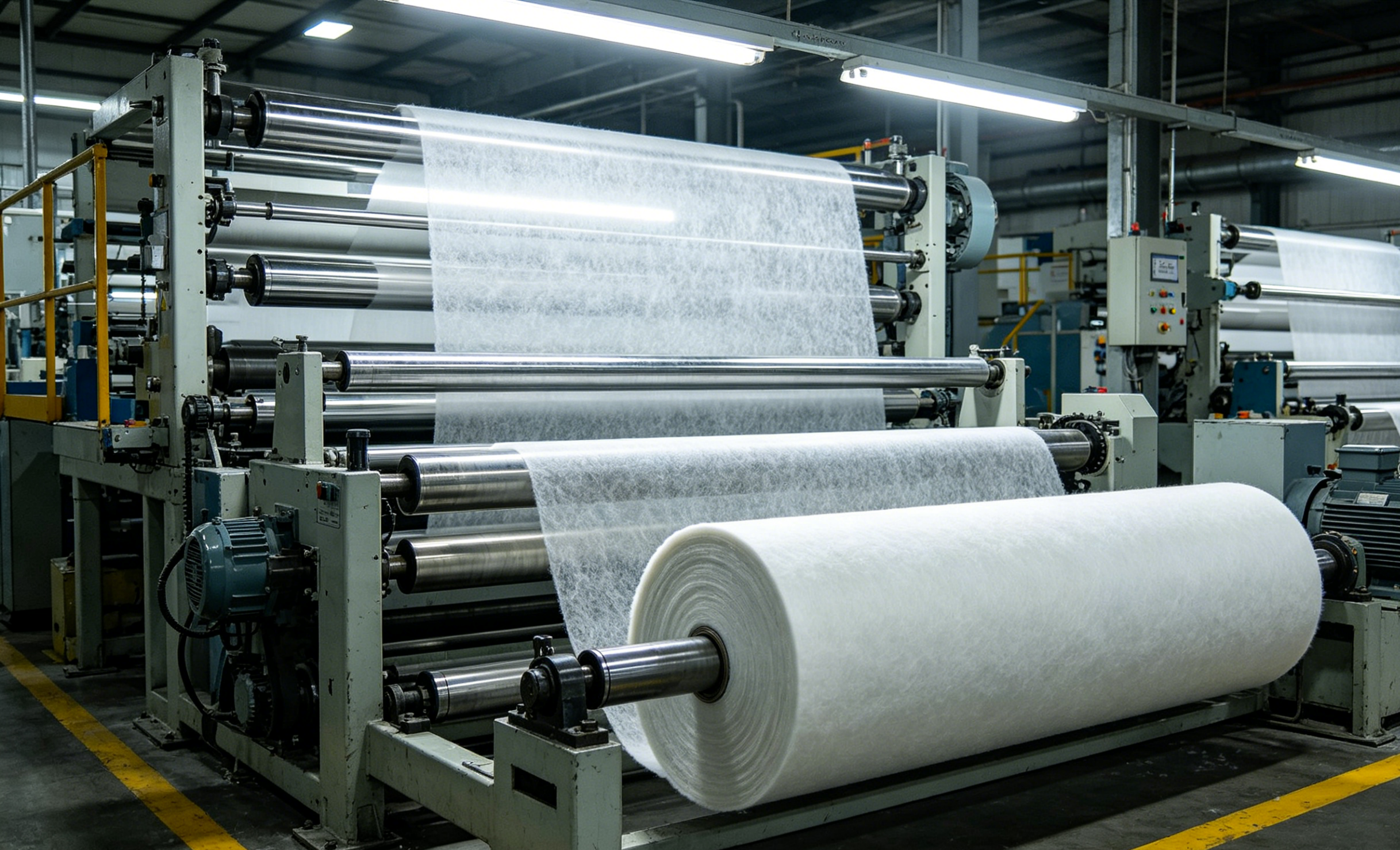
Unlike traditional woven textiles, non woven fabric is produced by bonding fibers together through mechanical, thermal, or chemical processes rather than weaving yarns.
This manufacturing method creates a material that can be engineered for specific automotive requirements such as:
- Sound absorption
- Vibration damping
- Thermal insulation
- Weight reduction
- Structural reinforcement
- Surface protection
Common automotive non woven materials include:
- Polyester (PET) fibers
- Polypropylene (PP) fibers
- Recycled fiber blends
- Needle-punched non woven felt
- Thermal bonded non woven materials
Because the fiber structure can be customized, manufacturers can optimize density, thickness, stiffness, and acoustic performance according to vehicle requirements.
Why Has Automotive Non Woven Fabric Become So Popular?
Automotive engineers face a difficult challenge.
They must continuously improve vehicle comfort while reducing weight and controlling costs.
Traditional materials often solve one problem while creating another.
For example:
- Thicker materials improve noise reduction but add weight.
- Stronger materials improve durability but increase cost.
- Rigid structures improve support but transmit vibration.
Non woven materials offer a balanced solution.
They are lightweight, cost-effective, easy to convert, and capable of delivering multiple functions simultaneously.
This combination explains why automotive non woven fabric usage has increased significantly over the past decade.
Key Use #1: Automotive Acoustic Insulation
One of the most important applications of non woven fabric is noise reduction.
Vehicle noise originates from many sources:
- Tire interaction with the road
- Wind turbulence
- Engine vibration
- Electric motor systems
- Suspension movement
Non woven materials absorb sound energy within their fiber structure, reducing the amount of noise transmitted into the passenger cabin.
Typical acoustic applications include:
- Dash insulators
- Floor insulation systems
- Trunk liners
- Roof liners
- Door trim assemblies
- Fender liner backing materials
As EV adoption grows, acoustic performance becomes even more important because the absence of engine noise makes road noise more noticeable.
Key Use #2: Trunk Floor Systems
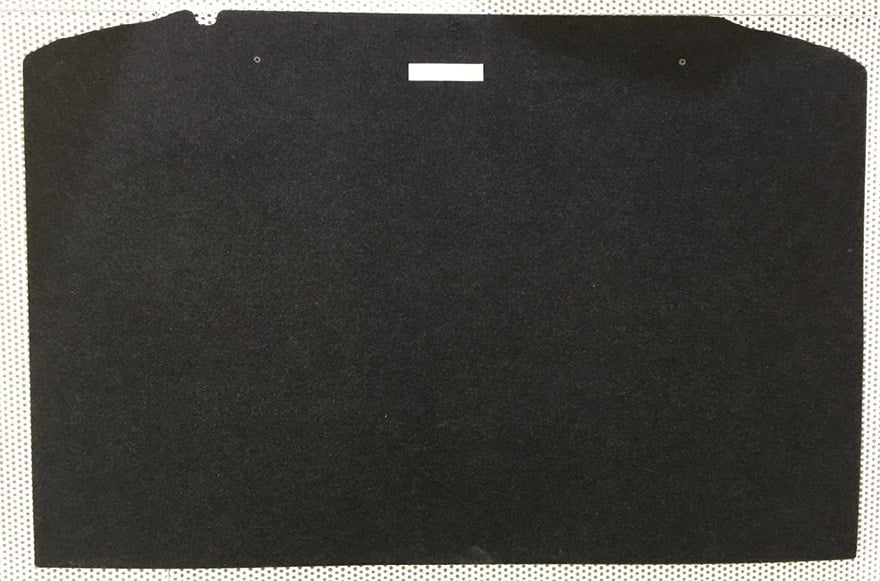
Modern trunk floor covers frequently use non woven composite structures.
These systems must achieve several goals:
- Support luggage weight
- Reduce vibration
- Improve acoustic comfort
- Maintain lightweight construction
Needle-punched non woven felt and PET-based materials are commonly selected because they offer an excellent balance between strength and weight.
Compared with traditional heavy board materials, non woven structures help OEMs reduce vehicle mass while maintaining performance.
This is especially valuable in electric vehicles where every kilogram affects driving range.
Key Use #3: Door Panels and Interior Trim
Automotive door systems contain numerous hidden non woven components.
These materials help:
- Eliminate rattles
- Reduce vibration transfer
- Improve perceived vehicle quality
- Support decorative trim structures
Without these components, interior noise levels would increase significantly over time.
Many customers associate vehicle quality with how solid and quiet the cabin feels.
Non woven materials play a major role in creating that impression.
Key Use #4: Headliners and Roof Systems
The vehicle roof is one of the largest surfaces inside the cabin.
Without proper acoustic treatment, it can become a source of:
- Wind noise
- Rain impact noise
- Resonance
Non woven materials are commonly integrated into:
- Headliners
- Sunroof shade panels
- Roof insulation systems
Because these applications require lightweight construction, non woven materials often outperform heavier alternatives.
Their fiber structure also helps absorb airborne noise while maintaining dimensional stability.
Key Use #5: Fender Liners and Wheel Arch Applications
Wheel wells are among the noisiest areas of a vehicle.
Road debris, water spray, and tire interaction create significant sound energy.
Many modern fender liners now incorporate non woven materials to:
- Absorb road noise
- Reduce splash noise
- Improve cabin comfort
- Maintain lightweight construction
Compared with conventional plastic-only solutions, non woven composite fender liners often provide superior NVH performance.
This is why they have become increasingly common across both passenger vehicles and EV platforms.
Key Use #6: Thermal Insulation Applications
Modern vehicles contain numerous heat-sensitive systems.
These include:
- Electronic control units
- Battery systems
- HVAC components
- Interior trim assemblies
Non woven materials can help manage heat transfer by acting as thermal insulation barriers.
In electric vehicles, thermal management has become a critical design consideration.
Proper insulation improves:
- Battery efficiency
- Passenger comfort
- Component durability
As vehicle electrification accelerates, thermal applications for non woven materials continue to expand.
Key Benefits of Automotive Non Woven Fabric
Lightweight Construction
Reducing weight remains a major objective for automotive manufacturers.
Non woven materials typically weigh less than many traditional alternatives while maintaining functional performance.
Benefits include:
- Improved fuel economy
- Extended EV driving range
- Lower emissions
- Easier assembly
Excellent Acoustic Performance
The random fiber structure of non woven materials creates multiple sound absorption pathways.
This allows them to:
- Reduce airborne noise
- Control resonance
- Improve cabin comfort
For modern vehicle programs, NVH performance is often a major competitive advantage.
Design Flexibility
Non woven materials can be:
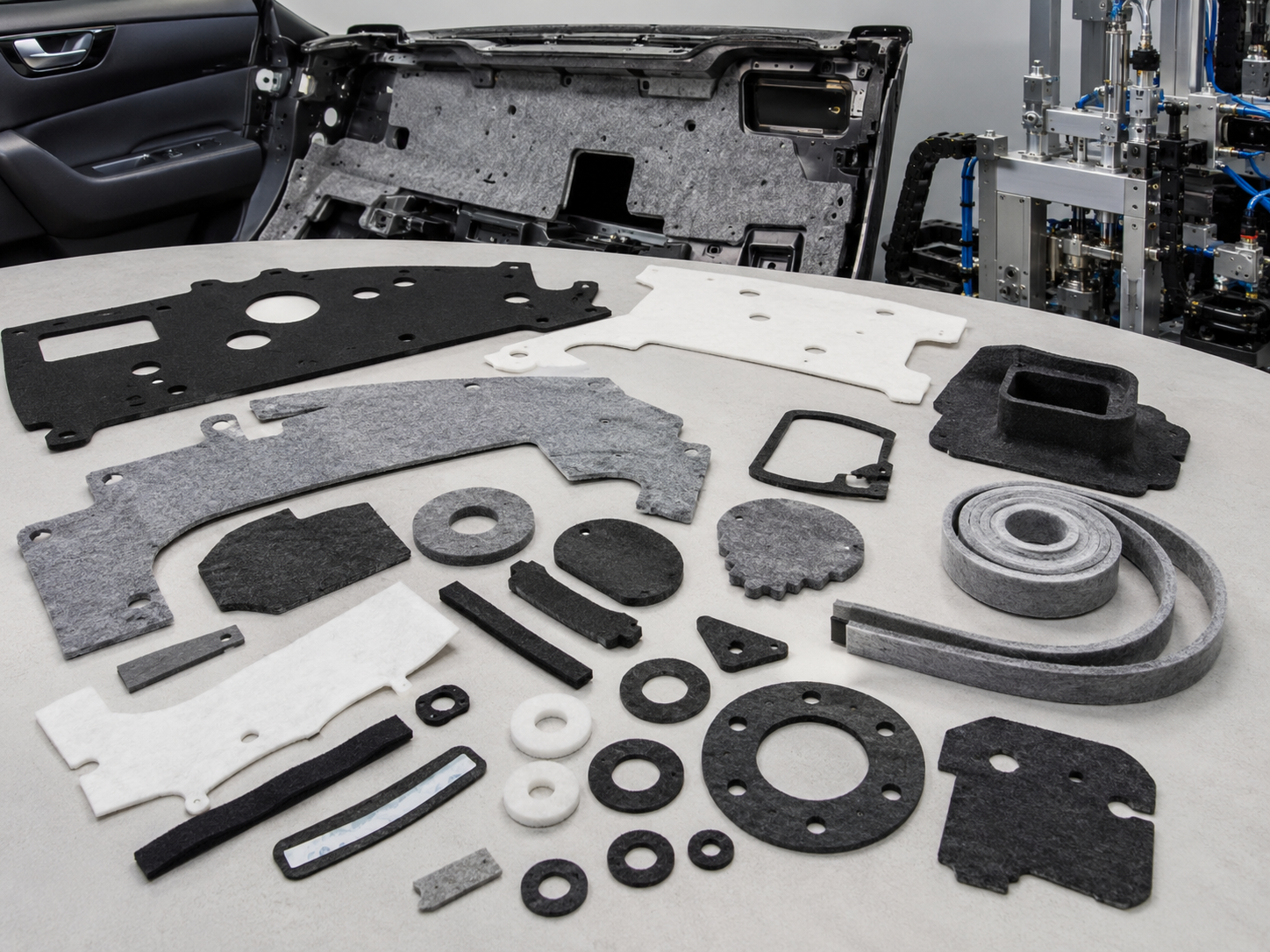
- Die cut
- Laminated
- Thermoformed
- Hot pressed
This flexibility allows engineers to create complex shapes that fit modern vehicle architectures.
Sustainability Advantages
Many automotive non woven materials now utilize recycled fibers.
This helps OEMs meet:
- Sustainability goals
- Environmental regulations
- Circular economy initiatives
Recycled PET non woven materials are becoming increasingly popular across the automotive industry.
Cost Efficiency
Non woven materials often provide an attractive balance between:
- Performance
- Manufacturing efficiency
- Material utilization
This helps manufacturers maintain competitive production costs without sacrificing quality.
Why Material Conversion Matters As Much As The Material Itself
Choosing the right material is only the first step.
The way that material is converted often determines final performance.
Poor converting can lead to:
- Dimensional variation
- Assembly issues
- Material waste
- Reduced durability
At Sanken, we frequently see situations where a good material underperforms because it was not properly processed.
That is why precision converting is critical.
Processes such as:
- Precision die cutting
- Multi-layer lamination
- Adhesive integration
- Compression forming
all influence the final effectiveness of automotive non woven components.
How Sanken Supports Automotive Non Woven Applications
At Sanken, we specialize in converting automotive non woven materials into high-performance functional components.
Our capabilities include:
- Precision die cutting
- Multi-layer lamination
- Acoustic material converting
- Foam and non woven integration
- Adhesive-backed assemblies
- Automotive insulation solutions
Rather than simply supplying parts, we help customers optimize:
- Material selection
- Manufacturability
- Assembly efficiency
- Long-term reliability
This approach helps OEMs and Tier 1 suppliers reduce risk while improving overall vehicle performance.
The Future of Automotive Non Woven Fabric
The automotive industry is moving toward:
- Electric vehicles
- Lightweight construction
- Sustainable materials
- Higher comfort standards
These trends all favor increased use of non woven materials.
Future developments will likely focus on:
- Recycled fiber content
- Improved acoustic performance
- Lighter composite structures
- Multi-functional material systems
As vehicles become more sophisticated, automotive non woven fabric will continue to play a central role in solving engineering challenges.
Conclusion
Automotive non woven fabric has evolved from a simple textile material into a highly engineered solution used throughout modern vehicles.
Its key applications include acoustic insulation, trunk floor systems, door panels, headliners, fender liners, and thermal management components.
The combination of lightweight construction, sound absorption, design flexibility, sustainability, and cost efficiency makes non woven fabric one of the most valuable materials in today's automotive industry.
At Sanken, we help automotive manufacturers transform these materials into precision die-cut components that improve comfort, reliability, and production efficiency across the entire vehicle platform.