
How Has Auto Nonwoven Evolved for OEM NVH Needs?
Modern vehicles are quieter than ever before.
As engines become more refined and electric vehicles continue to gain market share, OEMs face a new challenge: controlling the noises that drivers never noticed before.
Road noise, tire noise, wind turbulence, structural vibration, and cabin resonance have become major factors affecting vehicle quality perception.
To address these challenges, automotive nonwoven materials have evolved from simple insulation layers into highly engineered NVH solutions.
At Sanken, we have witnessed this transformation firsthand. What was once considered a low-cost interior material is now a critical component in achieving modern OEM NVH targets.
So how exactly has automotive nonwoven evolved to meet today's noise, vibration, and harshness requirements?
What Is Driving the Evolution of Automotive Nonwoven Materials?
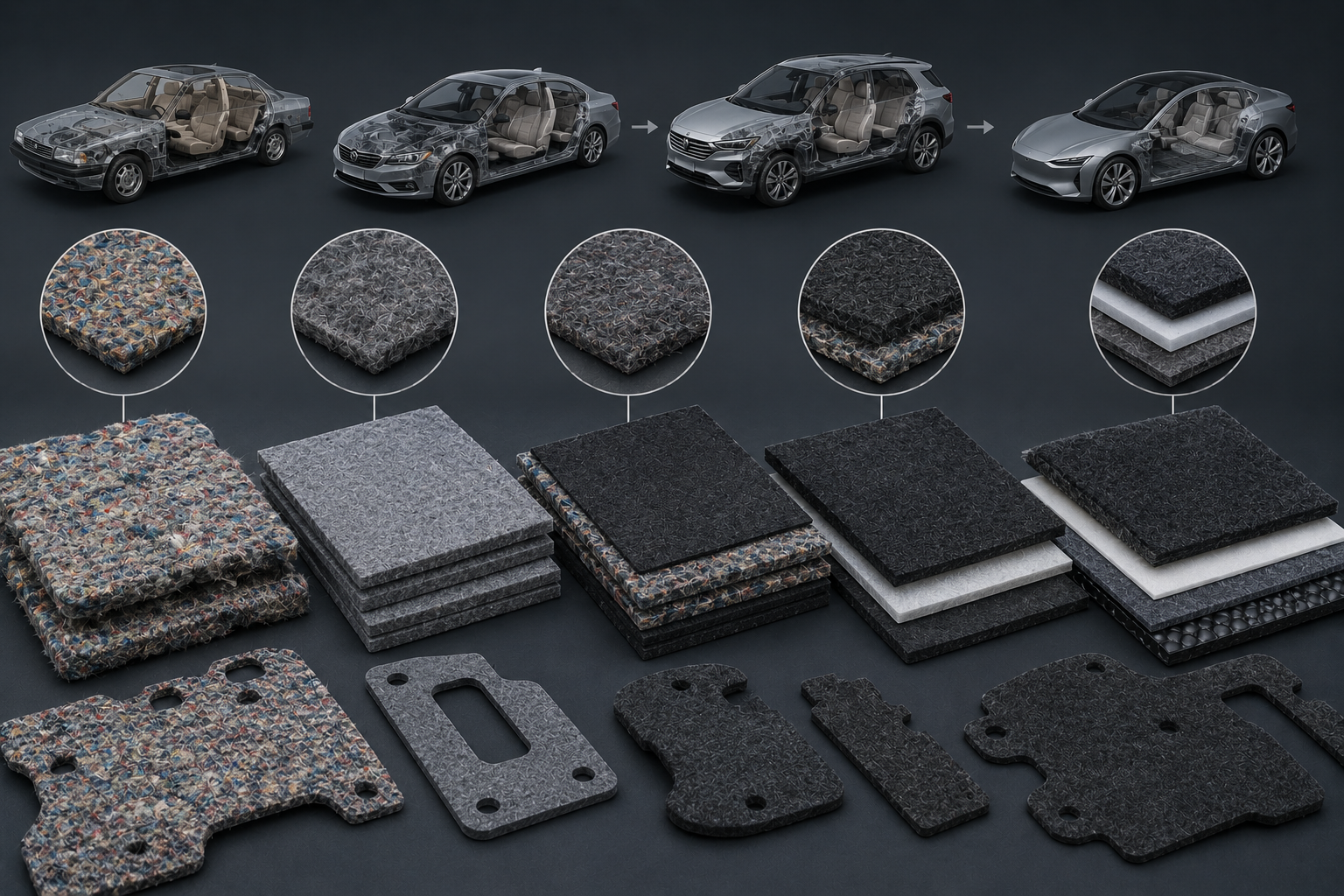
Twenty years ago, many automotive nonwoven materials served basic functions:
- Surface coverage
- Trim backing
- Simple insulation
- Appearance enhancement
Today's vehicles demand much more.
OEMs now require materials that can simultaneously provide:
- Sound absorption
- Vibration damping
- Lightweight construction
- Thermal insulation
- Sustainability compliance
- Long-term durability
As a result, automotive nonwoven materials have become more specialized and performance-oriented.
Instead of being passive components, they now actively contribute to vehicle NVH performance.
Stage 1: From Simple Felt to Acoustic Engineering Materials
Early automotive felt materials primarily focused on coverage and protection.
They offered limited acoustic performance and were often selected based on cost.
As customer expectations increased, OEMs began requiring materials capable of reducing:
- Engine noise
- Tire noise
- Wind noise
- Cabin resonance
This led to the development of advanced:
- Needle-punched nonwoven felt
- Multi-density fiber structures
- Acoustic composite materials
By optimizing fiber orientation and density, manufacturers significantly improved sound absorption performance without dramatically increasing weight.
Stage 2: Lightweighting Becomes a Priority
Vehicle weight reduction has become a major industry objective.
Every kilogram removed from a vehicle contributes to:
- Better fuel economy
- Lower emissions
- Increased EV range
Traditional insulation materials often delivered good acoustic performance but added considerable mass.
Modern automotive nonwoven materials evolved to solve this problem.
Engineers developed lightweight structures using:
- PET fibers
- PP fibers
- Recycled fiber blends
- Hybrid composite systems
These materials maintain acoustic effectiveness while reducing overall vehicle weight.
This balance between NVH performance and lightweight construction has become one of the biggest reasons OEMs continue expanding nonwoven applications.
Stage 3: Electric Vehicles Changed NVH Requirements
The rise of electric vehicles completely changed the NVH landscape.
In traditional vehicles, engine noise often masked other sounds.
In EVs, drivers can hear:
- Tire interaction with pavement
- Wind turbulence
- Suspension vibration
- Interior rattles
More clearly than ever before.
This shift forced OEMs to rethink acoustic material strategies.
Modern nonwoven materials now target specific frequency ranges to address EV-related noise issues.
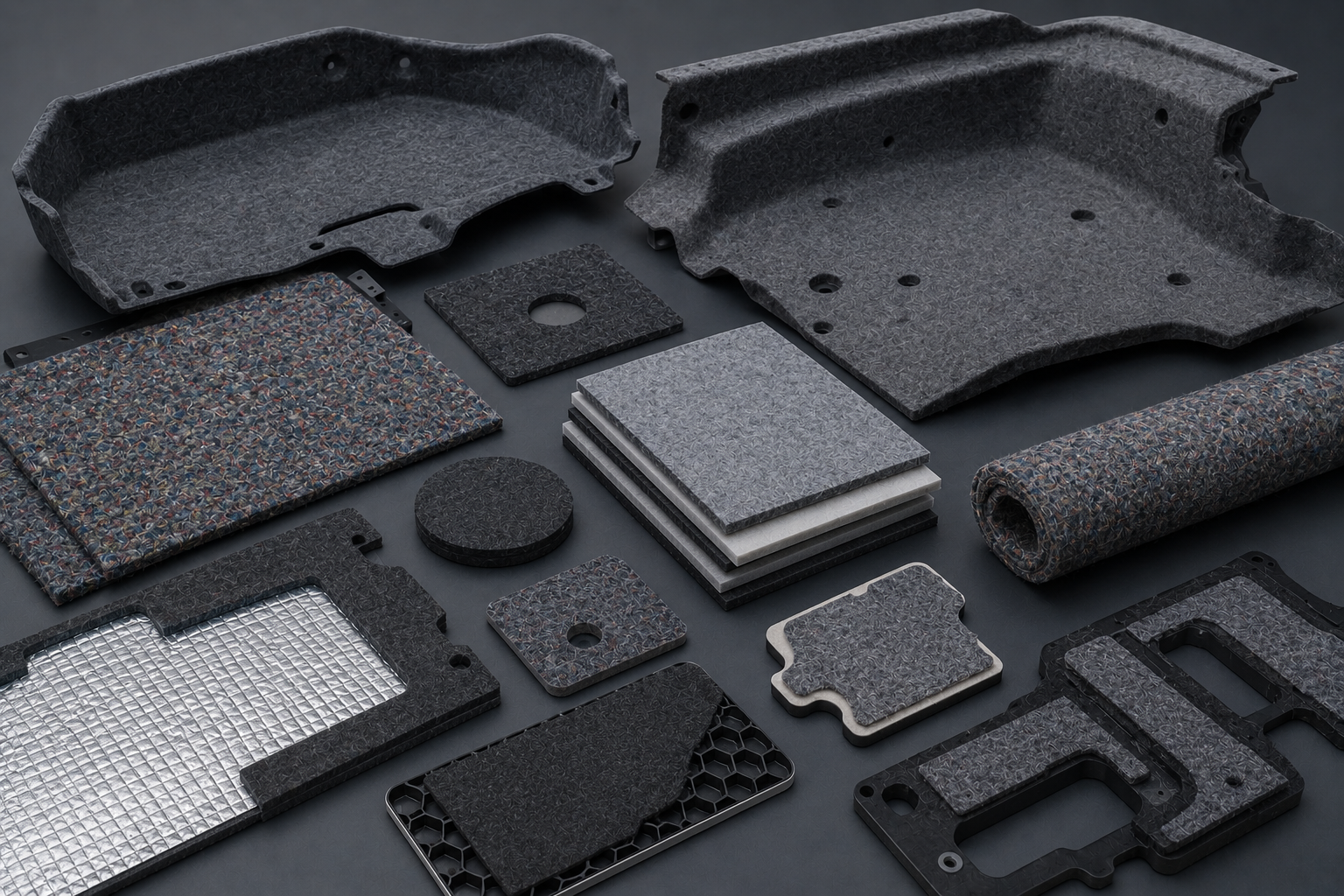
Applications have expanded into:
- Battery pack insulation
- Wheel arch liners
- Trunk floor systems
- Headliners
- Dash insulators
- Door acoustic barriers
The focus is no longer just noise reduction.
It is about creating a refined cabin experience.
Stage 4: Multi-Functional Nonwoven Systems
One of the most important developments is the transition from single-purpose materials to multi-functional systems.
Modern automotive nonwoven components often combine:
- Acoustic absorption
- Thermal insulation
- Structural reinforcement
- Moisture resistance
- Surface protection
For example, a trunk floor system may provide:
- Load support
- Noise reduction
- Weight savings
- Sustainability benefits
All within one engineered component.
This multi-functionality helps OEMs reduce part count while improving overall vehicle performance.
Where Are Advanced Nonwoven NVH Materials Used Today?
Today's automotive nonwoven materials can be found throughout the vehicle.
Interior Systems
- Door panels
- Headliners
- Sunroof shade panels
- Dashboard insulation
- Carpet backing systems
Trunk Area
- Trunk floor covers
- Side trim panels
- Storage compartment insulation
Wheel Arch Applications
- Fender liners
- Splash protection systems
- Road noise absorption layers
Powertrain and Battery Systems
- Engine compartment insulation
- EV battery protection structures
- Thermal management components
The range of applications continues to expand as material technology improves.
Why Precision Converting Matters More Than Ever
Material performance alone is not enough.
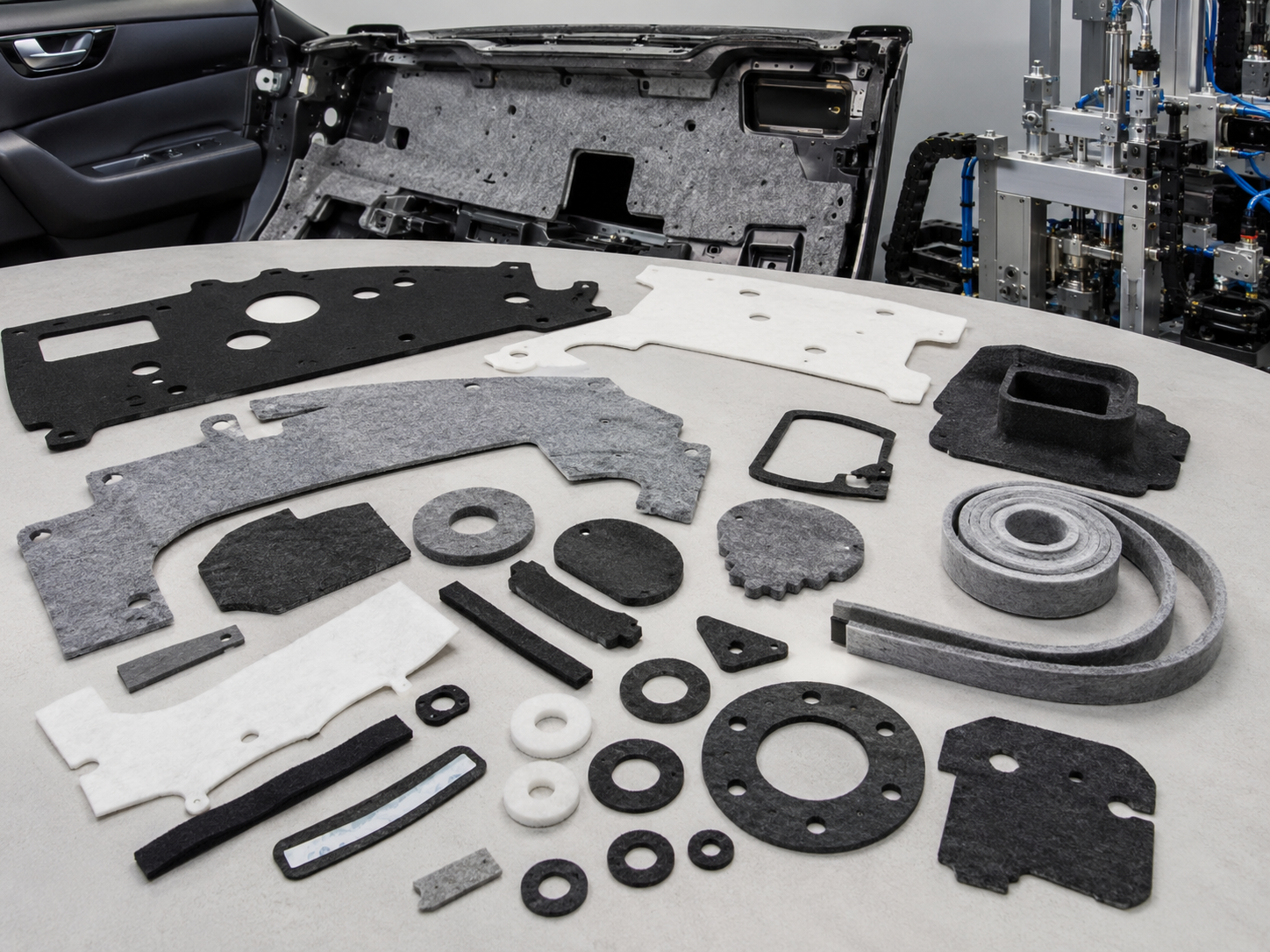
Even the best nonwoven material can fail to meet NVH targets if it is not properly converted.
OEMs increasingly require:
- Tight dimensional tolerances
- Complex geometries
- Multi-layer assemblies
- Consistent production quality
This is where precision die cutting becomes critical.
Proper converting ensures:
- Accurate fit
- Stable installation
- Consistent acoustic performance
- Reduced assembly variation
At Sanken, we often find that successful NVH projects depend as much on converting quality as on material selection.
How Sanken Supports OEM NVH Programs
At Sanken, we help automotive manufacturers transform advanced nonwoven materials into functional NVH components.
Our capabilities include:
- Precision die cutting
- Multi-layer lamination
- Acoustic material converting
- Foam and nonwoven integration
- Automotive insulation systems
- Adhesive-backed assemblies
By combining material expertise with manufacturing precision, we help OEMs achieve demanding NVH targets while maintaining production efficiency.
Whether the goal is reducing road noise, improving EV cabin comfort, or optimizing lightweight design, our focus remains the same:
Delivering reliable, production-ready solutions.
The Future of Automotive Nonwoven Materials
Automotive nonwoven materials will continue evolving alongside vehicle technology.
Future developments are expected to focus on:
- Higher recycled content
- Improved acoustic efficiency
- Lower weight structures
- Enhanced thermal performance
- Integrated multi-functional composites
As OEMs continue raising NVH expectations, nonwoven materials will play an even greater role in creating quieter, more comfortable vehicles.
Conclusion
Automotive nonwoven materials have evolved far beyond their original role as simple insulation products.
Today they serve as engineered NVH solutions that help OEMs reduce noise, lower weight, improve sustainability, and enhance vehicle comfort.
From traditional felt systems to advanced multi-functional composites, nonwoven technology continues to shape the future of automotive design.
At Sanken, we support this evolution by converting high-performance nonwoven materials into precision die-cut components that help automotive manufacturers meet the NVH challenges of tomorrow.