
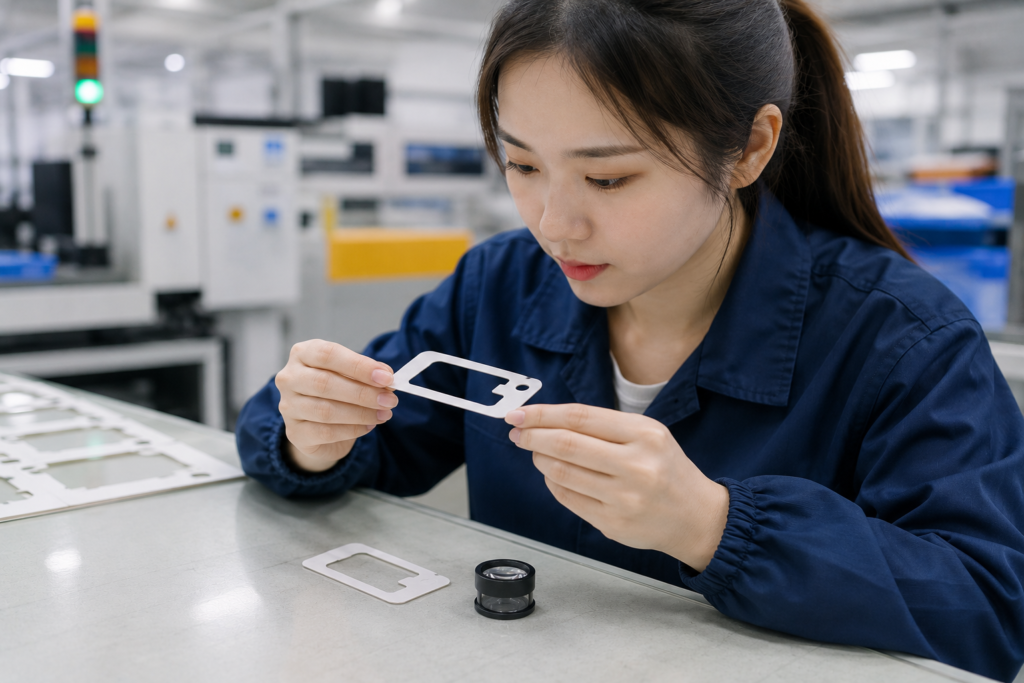
The best paper for die cutting depends on what the finished part must do.
A paper that performs well for a printed label may not be suitable for a folding package. A thick paperboard may hold its shape but require different tooling from thin coated paper. Release paper used with adhesive materials must support kiss cutting and peeling rather than simply provide a clean visible edge.
Choosing the wrong paper can lead to fiber tearing, rough edges, cracking, dust, registration movement or unstable adhesive performance. A sample may appear acceptable while problems emerge later during faster or higher-volume production.
For buyers, the correct question is not simply, “Which paper can be die cut?” It is, “Which paper provides the required appearance, strength, dimensional stability and converting performance for this application?”
This guide explains the main paper materials used in die cutting and the factors that should be confirmed before production.
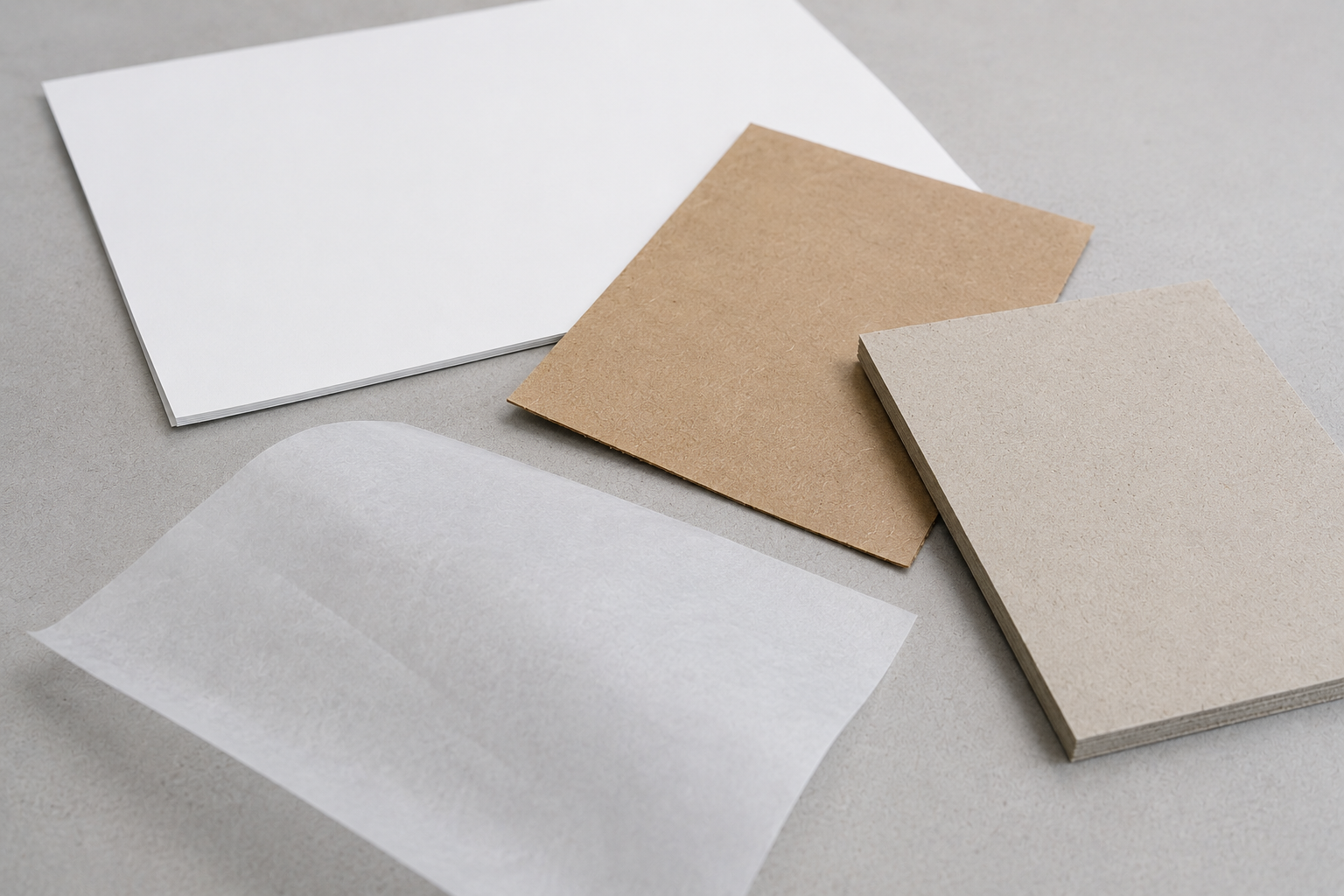
What Types of Paper Are Commonly Used for Die Cutting?
Many paper materials can be die cut, but they serve different purposes.
| Paper type | Common characteristics | Typical applications |
|---|---|---|
| Cardstock | Thicker and stiffer than standard paper | Cards, inserts and light packaging |
| Coated paper | Smooth printable surface | Labels, graphics and printed components |
| Kraft paper | Strong fiber structure and natural finish | Packaging and protective paper parts |
| Art paper | Smooth surface intended for quality printing | Printed packaging and presentation materials |
| Paperboard | Greater thickness and structural stiffness | Cartons, dividers and formed paper structures |
| Corrugated paper | Fluted construction with cushioning properties | Protective packaging and shipping applications |
| Release paper | Coated surface designed to separate from adhesive | Adhesive labels and liner-supported die-cut parts |
| Synthetic paper | Polymer-based paper-like material | Moisture-resistant labels and industrial identification |
| Thermal paper | Heat-sensitive coated surface | Receipts, variable-information labels and selected tags |
No paper type is automatically suitable for every design.
The correct material depends on:
- Finished product function
- Required thickness and stiffness
- Print and surface requirements
- Part dimensions
- Minimum wall width
- Holes, slots and corner geometry
- Folding or creasing requirements
- Adhesive construction
- Production volume
- Sheet or roll delivery
Material selection should start with the finished application rather than with the cutting machine alone.
How Does the Application Determine the Paper Choice?
The finished use of the part determines which paper properties matter most.
For printed labels, surface quality, ink compatibility and registration may be more important than structural stiffness. For a folding carton, the material must support cutting and creasing without excessive cracking.
Protective inserts may require greater thickness or cushioning. Adhesive-backed paper parts need a suitable surface for bonding and a release liner that remains stable during processing.
Buyers should therefore define:
- Whether the part is decorative or functional
- Whether it must fold or remain flat
- Whether it will be bonded to another surface
- Whether moisture resistance is required
- Whether the part will be applied manually or automatically
- Whether appearance or edge cleanliness is critical
- Whether the part will experience compression or handling stress
A material selected only because it looks suitable in sheet form may behave differently after printing, coating, laminating or die cutting.
Why Paper Thickness and Density Matter
Paper thickness affects cutting behavior, edge quality, part stiffness and handling.
Thin paper may wrinkle, stretch or tear if web tension and cutting conditions are not controlled. Thick paperboard may compress around the cut edge or require a different tooling configuration.
However, thickness alone does not determine how a paper will cut.
Two papers with similar thickness can behave differently because of:
- Fiber density
- Fiber direction
- Surface coating
- Moisture content
- Internal bonding strength
- Recycled fiber content
- Laminated layers
- Material stiffness
A denser paper may produce a cleaner edge than a loosely structured paper of the same thickness. A heavily coated paper may look smooth but show cracking if the design contains tight corners or folding lines.
For this reason, buyers should provide the exact paper grade or a representative sample whenever possible. A specification that only states “0.5 mm paper” does not fully define the material.
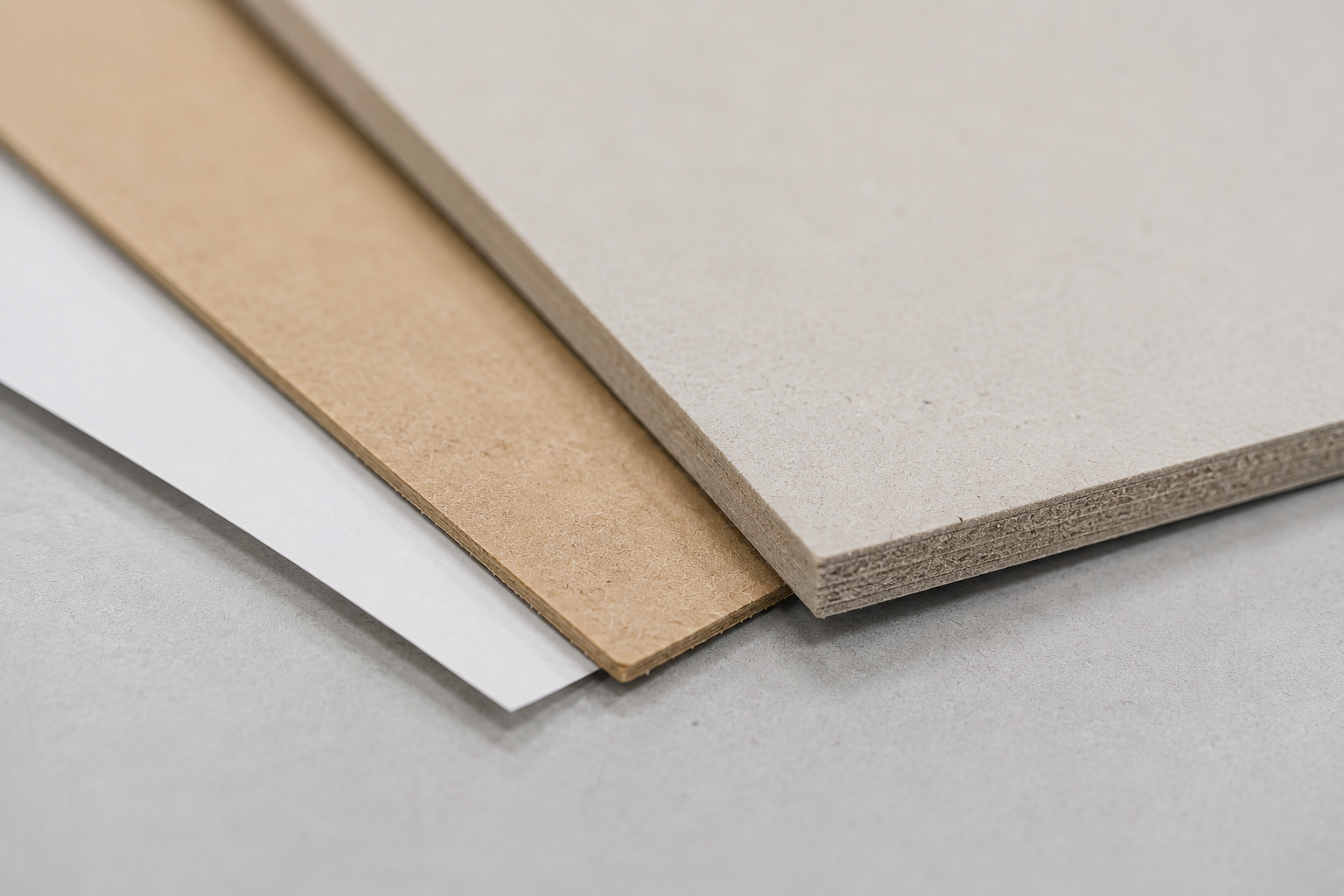
What Causes Rough or Torn Die-Cut Edges?
Paper is made from fibers, so its cut edge behaves differently from film, foam or rubber.
Common paper-edge problems include:
- Fiber tearing
- Fuzzy edges
- Surface-coating cracks
- Delamination between paper layers
- Compressed edges
- Incomplete internal cuts
- Small particles around holes or corners
These problems may be influenced by the paper grade, fiber direction, tooling condition, cutting pressure and part geometry.
Very small holes, narrow bridges and sharp internal corners can be more difficult to produce consistently than larger open shapes. A design that looks simple on a drawing may become unstable if the remaining paper wall is too narrow.
Tool wear can also reduce edge quality. A worn or unsuitable cutting edge may compress the paper before completing the cut, producing visible deformation or loose fibers.
Before tooling, the drawing should be reviewed together with the actual material. Our guide to checking whether a custom die-cut part is manufacturable explains why geometry and material behavior should be evaluated together.
Why Adhesive Compatibility Is Important
Some die-cut paper products include pressure-sensitive adhesive or are laminated to double-sided tape.
In these constructions, the paper must remain stable during lamination and cutting. Its surface must also be compatible with the selected adhesive.
Possible problems include:
- Paper separating from the adhesive
- Adhesive soaking into a porous paper surface
- Curling after lamination
- Adhesive extending beyond the cut edge
- Liner lifting
- Residue during removal
- Dimensional change after bonding
Coated and uncoated papers may interact differently with the same adhesive. A smooth coated surface may provide different bonding behavior from a porous kraft paper.
The adhesive should be evaluated on the actual paper grade rather than selected only from a general material description.
If the project uses a liner-supported adhesive construction, liner release and kiss-cut depth must also be reviewed. Our article explaining how double-sided tape works in die-cut OEM parts provides more information about adhesive structures and converting considerations.
Why Dust and Fiber Control Matter
Paper naturally generates more fibers and particles during cutting than many film materials.
The acceptable level depends on the application.
For general packaging, small amounts of paper dust may have limited functional impact. For electronics, optical components or other cleanliness-sensitive assemblies, particles can interfere with bonding surfaces or contaminate nearby components.
Particle generation can be influenced by:
- Paper fiber structure
- Tool sharpness
- Cutting speed
- Cutting pressure
- Waste removal
- Material handling
- Workplace cleanliness
- Packaging method
It is more accurate to discuss controlled particle generation than to describe ordinary paper converting as completely dust-free.
If a project has strict cleanliness requirements, buyers should define the inspection standard and acceptable condition before production. In some cleanliness-sensitive applications, a film-based material may be more appropriate than paper.
How Tooling Affects Paper Die-Cutting Quality
Even a suitable paper can produce poor results if the tooling and process conditions do not match the material.
Relevant tooling factors include:
- Cutting-edge condition
- Blade geometry
- Cutting pressure
- Tooling clearance
- Creasing configuration
- Material support
- Part layout
- Waste-removal direction
Thin coated paper, thick paperboard and corrugated structures do not use identical process settings.
For example, excessive pressure may crush thick paperboard or mark the supporting material. Insufficient cutting depth may leave connected fibers, especially around small internal features.
Creasing also requires separate consideration. A folding line must deform the paper in a controlled way without cutting through it or creating uncontrolled surface cracks.
During precision die cutting, tooling should be adjusted according to the actual material, geometry and required finished condition rather than based on paper thickness alone.
What Makes Paper Die Cutting Stable in Mass Production?
A successful prototype does not automatically confirm stable volume production.
During longer production runs, paper behavior may change because of:
- Material-lot variation
- Moisture and humidity
- Tool wear
- Web-tension changes
- Printing or coating variation
- Lamination stress
- Waste-removal conditions
- Storage and handling
Paper can absorb or release moisture according to the environment. This may affect flatness, dimensions, stiffness and registration.
For printed or multilayer components, small movement between printing, lamination and cutting can create visible registration errors.
Mass-production evaluation should therefore include more than dimensional checks on the first samples. Depending on the project, it may also include:
- Cut-edge inspection
- Registration inspection
- Creasing or folding tests
- Adhesive-bonding checks
- Peeling evaluation
- Flatness checks
- Periodic sampling during production
- Packaging and transportation review
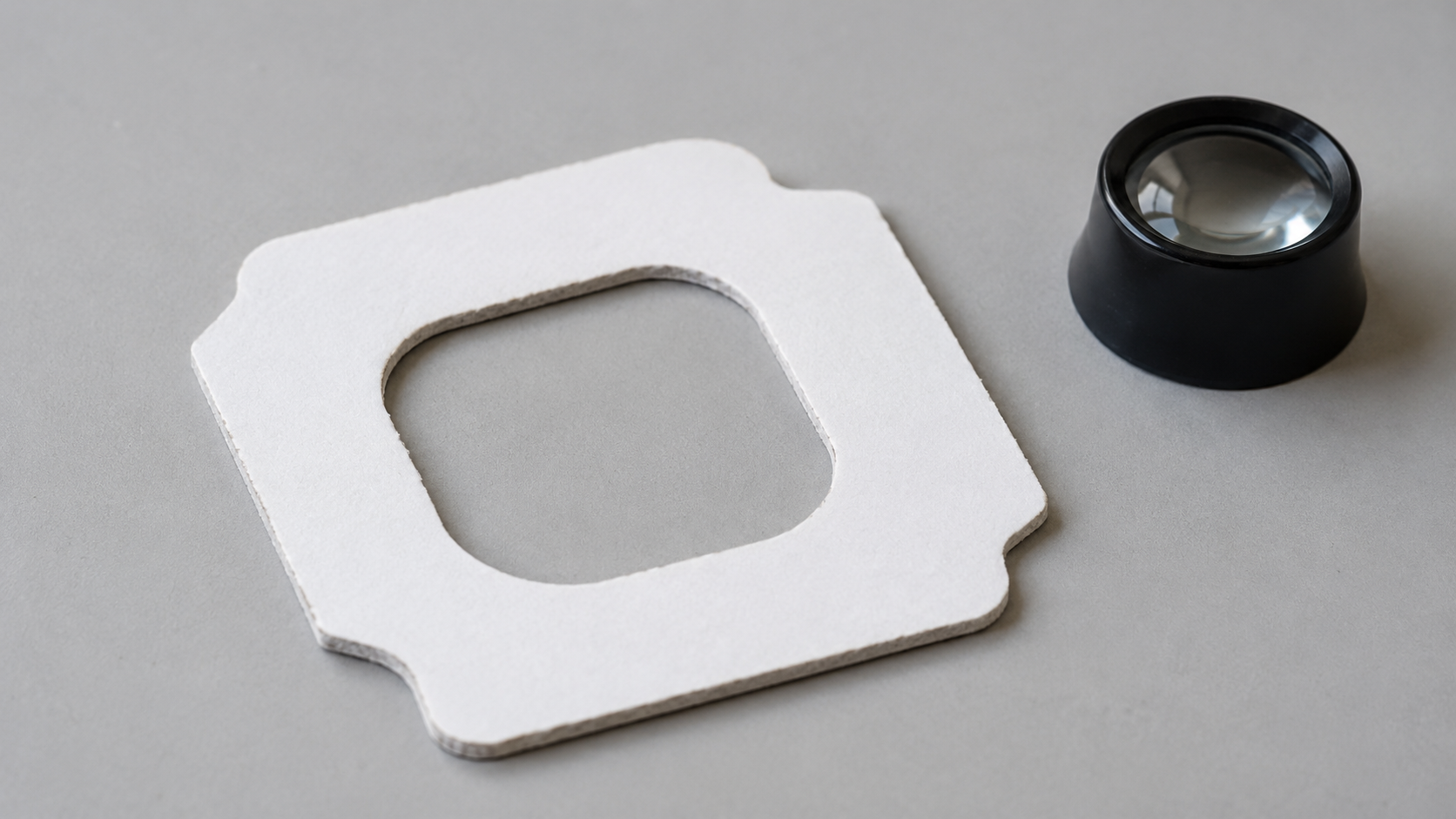
What Should Buyers Confirm Before Production?
Before requesting a quotation or approving production, buyers should provide:
- Exact paper type and grade
- Material supplier, if specified
- Thickness or basis weight
- Surface coating
- Fiber direction, if critical
- Printing requirements
- Adhesive or lamination requirements
- Drawing and critical dimensions
- Minimum wall widths
- Hole and slot dimensions
- Folding or creasing requirements
- Required edge appearance
- Cleanliness expectations
- Sheet or roll format
- Expected annual volume
- Packaging requirements
If the paper grade has not been finalized, representative samples should be tested before tooling approval.
For custom projects, buyers can also review what affects the cost of die-cut parts, because material utilization, geometry, tooling and delivery format can all affect production cost.
How Sanken Reviews Paper Die-Cutting Projects
Sanken evaluates die-cutting projects according to the customer’s material, drawing, application and production requirements.
Depending on the construction, the review may include:
- Paper cutting
- Adhesive lamination
- Kiss cutting or through cutting
- Part layout
- Waste removal
- Prototype sampling
- Dimensional inspection
- Sheet or roll delivery
Our main precision-converting work includes custom die-cut parts made from adhesive tapes, foam, rubber, PET films, protective films and non-woven materials.
When paper forms part of the specified construction, its cutting, lamination and handling behavior should be confirmed through actual sampling. We do not assume that every paper grade will perform in the same way.
Conclusion
The best paper for die cutting depends on the finished application, material structure and production requirements.
Cardstock, coated paper, kraft paper, art paper, paperboard, corrugated paper, release paper, synthetic paper and thermal paper each have different strengths and limitations.
Buyers should evaluate more than paper thickness. Fiber structure, coating, stiffness, adhesive compatibility, edge quality, dust generation, tooling and volume-production stability can all affect the finished result.
The most reliable approach is to define the actual paper grade, drawing, functional requirements and delivery format before tooling. Final approval should be based on samples made with the intended material and evaluated under representative production and assembly conditions.