
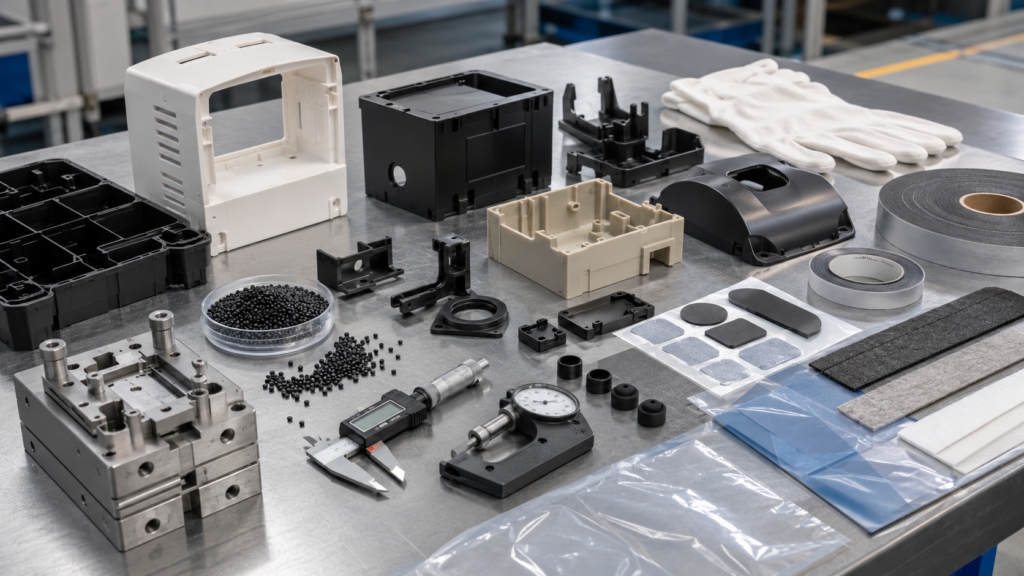
Injection molding is worth it for custom plastic parts when the project needs stable mass production, repeatable quality, production-grade materials, consistent dimensions, good surface finish, and lower unit cost at medium or high volume. It may not be the best first choice for very early prototypes or very small quantities, but once the design is confirmed and the part needs to be produced repeatedly, injection molding often becomes the most practical manufacturing method.
For OEM engineers and purchasing teams, the decision should not be based only on mold cost. Injection molding requires upfront tooling investment, but it can reduce long-term unit cost, improve batch consistency, and support reliable assembly. This is especially important when plastic parts must work with foam gaskets, adhesive tape components, PET insulation films, rubber pads, protective films, non-woven felt strips, and other custom die cut parts.
At Sanken, we support OEM customers with custom injection molded plastic parts, precision die cut foam gaskets, adhesive tape parts, PET and PI insulation films, rubber pads, protective films, non-woven felt components, sealing parts, and multilayer material converting for automotive, electronics, battery, appliance, medical device, and industrial applications.
Injection Molding Is Worth It When Volume Is High Enough
The biggest reason to choose injection molding is production volume.
Injection molding has an upfront mold cost. This means it may not be cost-effective if you only need a few samples. However, when the same custom plastic part will be produced in hundreds, thousands, or more, the mold cost can be spread across the production quantity.
| Project Situation | Injection Molding Worth It? | Why |
|---|---|---|
| One early concept sample | Usually no | 3D printing or prototype methods are faster |
| Small trial batch | Maybe | Depends on part function and future demand |
| Medium-volume production | Often yes | Tooling cost can be spread across more parts |
| High-volume OEM production | Usually yes | Stable quality and lower unit cost |
| Long-term repeat orders | Strongly yes | Mold investment supports supply consistency |
For OEM projects, buyers should calculate total project cost, not only the first tooling quotation.
A low-cost prototype method may be useful at the beginning, but it may become expensive if the part needs stable mass production.
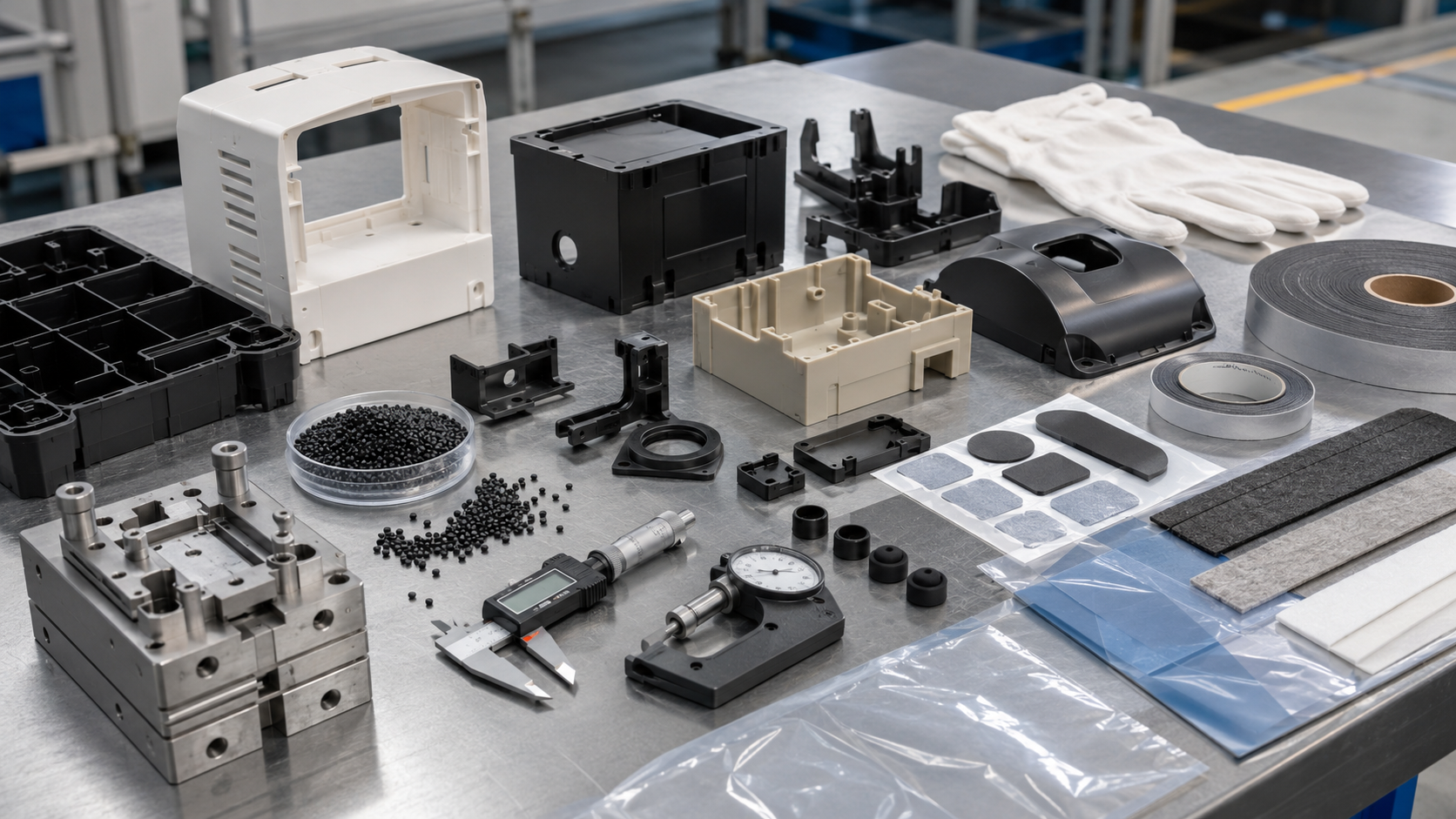
Injection Molding Is Worth It When the Design Is Confirmed
Injection molding is not ideal when the product design is still changing every week. Mold changes can be expensive and time-consuming.
Before opening an injection mold, the design should be reviewed carefully. Important points include:
- Wall thickness
- Draft angle
- Screw posts
- Ribs and bosses
- Clips and snap-fit areas
- Hole position
- Surface finish
- Shrinkage risk
- Gasket grooves
- Adhesive bonding areas
- Assembly clearance
- Packaging requirements
If the design is not final, 3D printing, CNC samples, or prototype tooling may be better for early review. Once the design is approved, injection molding becomes more valuable because it can produce repeatable parts at scale.
For example, if a plastic housing needs a foam gasket, the gasket groove should be confirmed before tooling. If a PET insulation film must align with screw posts, the molded structure and film tolerance should be checked together. If adhesive tape will bond to the plastic surface, the surface texture and material must be reviewed early.
Injection Molding Is Worth It When Repeatable Quality Matters
OEM custom plastic parts often need more than a correct shape. They need stable performance across repeated production batches.
Injection molding is worth it when the part must control:
- Dimensional tolerance
- Surface appearance
- Material strength
- Clip performance
- Hole alignment
- Warpage
- Shrinkage
- Assembly fit
- Color consistency
- Packaging protection
This is especially important for automotive electronics, medical devices, consumer electronics, appliance parts, industrial enclosures, and battery-related plastic components.
A prototype may look acceptable, but mass production requires repeatability. Injection molding can support stable part quality when the mold, material, and process parameters are properly controlled.
Injection Molding Is Worth It When Material Performance Matters
Custom plastic parts often need production-grade materials. Injection molding supports a wide range of thermoplastics and engineering plastics, including ABS, PC, PP, PA, POM, PE, TPE, TPU, and other materials.
Material selection may depend on:
| Requirement | Material Consideration |
|---|---|
| Impact resistance | PC, ABS, or modified engineering plastics |
| Good appearance | ABS, PC/ABS, or selected cosmetic-grade materials |
| Chemical resistance | PP, PE, or other suitable plastics |
| Wear resistance | PA or POM |
| Flexibility | TPE or TPU |
| Dimensional stability | Material and mold shrinkage control |
| Adhesive bonding | Surface energy and texture compatibility |
| Heat resistance | Application-specific engineering plastics |
Injection molding is worth it when the final part must survive real use, not only visual inspection.
A 3D printed sample may help check the shape, but it may not match the final molded material’s strength, surface finish, shrinkage, or long-term behavior.
Injection Molding Is Worth It When Assembly Fit Is Critical
Many OEM plastic parts must fit with other components. This is where injection molding becomes valuable.
A molded plastic part may need to assemble with:
- Foam gaskets
- Double-sided adhesive tape
- PET insulation films
- PI insulation films
- Rubber damping pads
- Protective films
- Non-woven felt strips
- Screws and clips
- Connectors
- Sensors
- Display modules
- Battery-related parts
If the plastic part is unstable, the related components may also fail.
For example, a foam gasket may not seal if the molded groove warps. A PET insulation film may not align if posts shift. Adhesive tape may lift if the plastic surface is not suitable. A rubber pad may create too much pressure if the clearance is not reviewed.
At Sanken, molded parts and die cut components can be reviewed together to reduce assembly mismatch before mass production.
Injection Molding Is Worth It When Surface Quality Matters
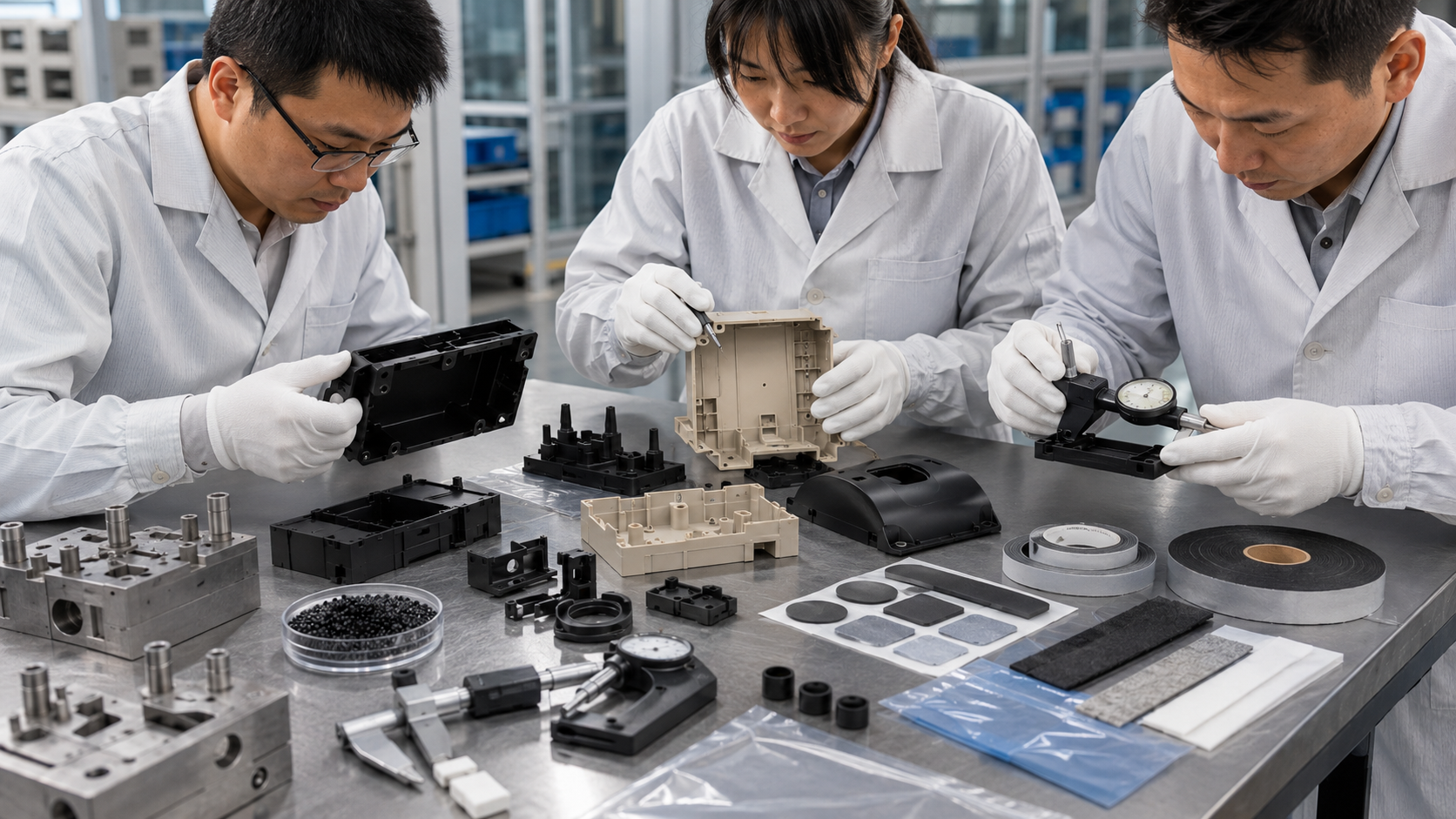
Injection molded plastic parts can provide stable surface quality when the mold and process are properly controlled.
This matters for:
- Consumer electronics covers
- Medical device shells
- Appliance panels
- Automotive interior parts
- Industrial control housings
- Visible plastic covers
- Branded product components
Surface requirements may include texture, gloss, color consistency, smoothness, scratch control, and cosmetic appearance.
For visible OEM parts, poor surface quality can cause rejection even if the dimensions are correct. Injection molding can support consistent appearance better than many prototype methods, especially when the tool surface and process are controlled.
Injection Molding May Not Be Worth It in These Cases
Injection molding is powerful, but it is not always the best first choice.
It may not be worth it when:
- Only one or two prototypes are needed
- The design is still changing frequently
- The customer has not confirmed the product structure
- The expected quantity is very low
- The project does not require production-grade material
- The part is only for visual presentation
- Tooling budget is not yet approved
- The final demand is uncertain
In these cases, 3D printing, CNC machining, soft tooling, or other prototype methods may be better before injection mold investment.
However, if the project is expected to move into mass production later, early prototype work should still consider molding feasibility. A prototype design that cannot be molded efficiently may create problems later.
Cost Factors That Decide Whether Injection Molding Is Worth It
Injection molding cost includes more than the mold price.
Key cost factors include:
| Cost Factor | Why It Matters |
|---|---|
| Mold complexity | Complex molds cost more |
| Part size and weight | Larger parts use more material |
| Material type | Engineering plastics cost more than basic plastics |
| Number of cavities | Affects tooling cost and output efficiency |
| Tolerance requirement | Tight tolerance needs stronger control |
| Surface finish | Cosmetic parts require better tooling and handling |
| Production quantity | Higher volume reduces unit cost |
| Cycle time | Faster cycle improves production efficiency |
| Secondary operations | Inserts, assembly, printing, or packaging add cost |
| Inspection level | Higher quality standards increase inspection cost |
The correct question is not “Is the mold expensive?” The better question is “Will the mold reduce total cost and risk over the full production cycle?”
Injection Molding vs Prototype Methods
Prototype methods are useful before production, but they have different strengths.
| Factor | Prototype Methods | Injection Molding |
|---|---|---|
| Best use | Early design review | Approved mass production |
| Upfront cost | Lower | Higher due to mold |
| Design changes | Easier | More costly after tooling |
| Unit cost at volume | Usually higher | Usually lower |
| Material consistency | Limited or different | Stronger for production plastics |
| Surface quality | Depends on method | More stable with good tooling |
| Assembly repeatability | Limited | Better for mass production |
| OEM production suitability | Early stage | Final production stage |
For many OEM projects, the best path is prototype first, injection molding later.
How to Know If Your Project Is Ready for Injection Molding
Before investing in injection molding, OEM buyers should confirm:
- The design is mostly finalized
- The expected volume supports tooling investment
- The plastic material is selected or can be reviewed
- Critical dimensions are clear
- Surface requirements are defined
- Assembly conditions are understood
- Related foam, tape, film, rubber, or felt parts are considered
- Testing requirements are known
- Packaging expectations are clear
- The supplier can support tooling review and sample improvement
If these points are not clear, the project may need more engineering review before mold opening.
How Sanken Supports Custom Plastic Part Projects
Sanken Manufacturing Co., Ltd. supports OEM customers with injection molded plastic parts and related die cut component solutions.
Our support includes:
- Custom injection molded plastic housings
- Molded covers, clips, brackets, and enclosures
- Mold feasibility review
- Material selection support
- Trial sample review
- Foam gasket die cutting
- Adhesive tape components
- PET and PI insulation films
- Rubber pads and sealing parts
- Protective films
- Non-woven felt parts
- Multilayer material converting
- Assembly-ready packaging
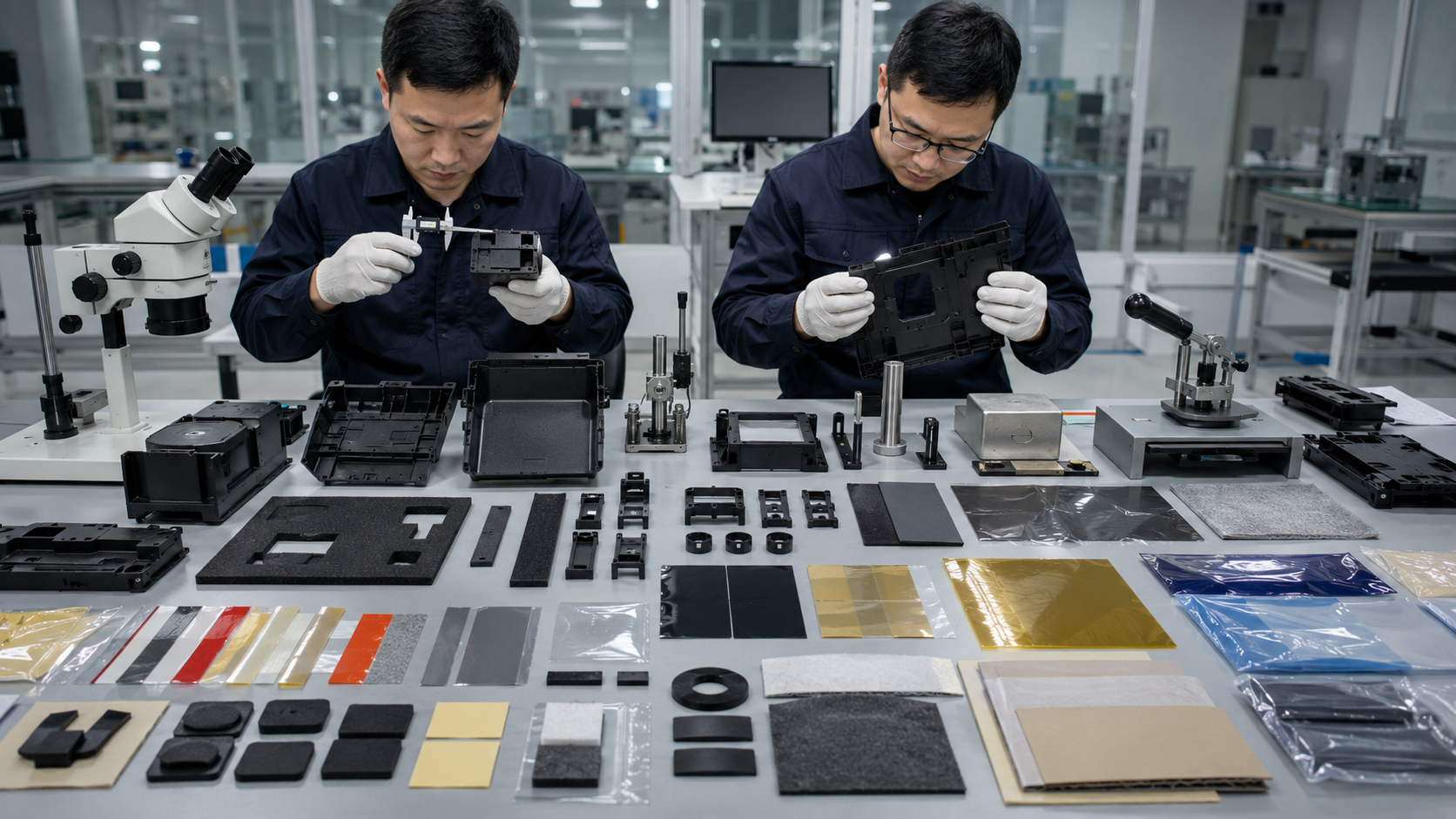
For each project, we review part function, plastic material, mold feasibility, tolerance, surface quality, foam gasket fit, adhesive bonding surface, PET film alignment, rubber compression, protective film coverage, packaging, and final assembly method.
Our goal is to help customers decide when injection molding is worth it and how to reduce tooling changes, repeated samples, poor fit, adhesive lifting, gasket mismatch, inspection failure, and unstable mass production.
FAQ
When is injection molding worth it for custom plastic parts?
Injection molding is worth it when the design is approved, production volume is medium or high, repeatable quality is required, and the part needs stable material performance, surface quality, and assembly fit.
Is injection molding good for low-volume production?
It depends. For very low quantities, prototype methods may be better. For low-volume parts that require production-grade material, strict fit, or future mass production, injection molding may still be worth considering.
Why does injection molding have a high upfront cost?
The upfront cost comes mainly from mold design and tooling. However, once the mold is ready, the unit cost can become lower at higher production volumes.
Should I use 3D printing before injection molding?
Yes, 3D printing can be useful for early design review, shape checking, and assembly discussion before mold investment. But final production parts may still require injection molding.
What makes injection molding better for OEM production?
Injection molding provides better repeatability, production-grade material options, stable dimensions, consistent surface quality, and lower unit cost at volume.
Why should molded parts be reviewed with die cut components?
Many plastic parts work with foam gaskets, adhesive tapes, PET films, rubber pads, protective films, and felt strips. Reviewing them together helps prevent poor fit, sealing failure, adhesive lifting, and assembly problems.
Can Sanken support injection molded parts and die cut components together?
Yes. Sanken supports custom injection molded plastic parts together with precision die cut foam gaskets, adhesive tape parts, PET and PI films, rubber pads, protective films, non-woven felt parts, and multilayer OEM components.
Conclusion
Injection molding is worth it for custom plastic parts when the project requires repeatable mass production, stable dimensions, production-grade materials, consistent surface quality, reliable assembly fit, and long-term cost control. It may not be the best choice for very early prototypes or uncertain low-volume demand, but it is often the right choice once the design and volume are confirmed.
For OEM projects, molded plastic parts should also be reviewed together with related die cut components such as foam gaskets, adhesive tapes, PET films, rubber pads, protective films, and felt parts.
At Sanken, we help customers evaluate injection molding projects from prototype review to mass production, supporting custom plastic parts and related die cut components that are accurate, clean, assembly-ready, and stable for real OEM manufacturing.