
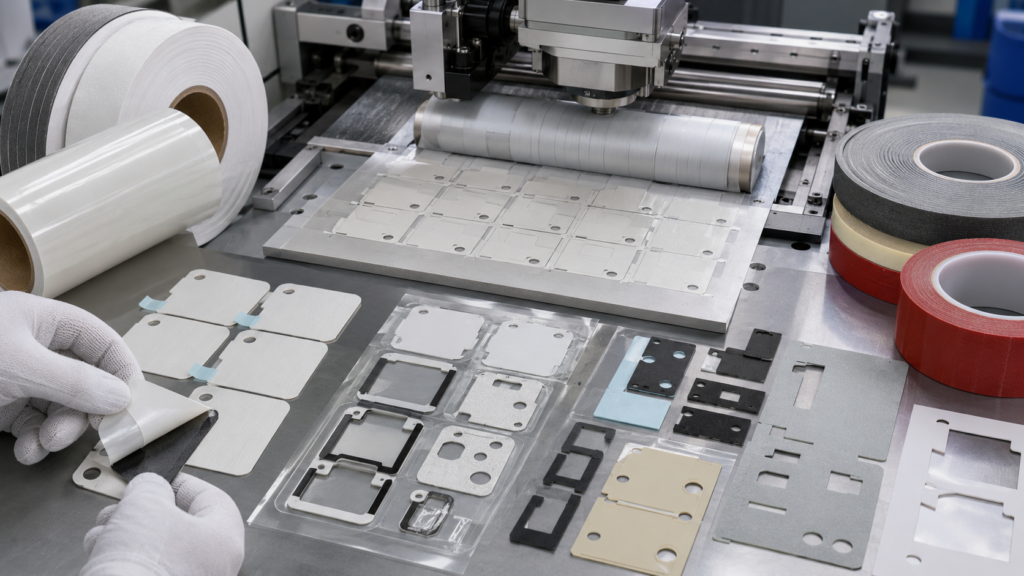
Adhesive die cut parts are designed to make OEM assembly faster, cleaner, and more repeatable. But when they are hard to peel or difficult to apply, they can slow down the production line, deform during handling, create adhesive lifting, cause misalignment, or increase rework.
For OEM engineers and purchasing teams, this problem is not only an operator issue. It is usually connected to material structure, adhesive selection, liner release, kiss cutting depth, part geometry, packaging, and assembly method.
At Sanken, we help OEM customers develop adhesive-backed die cut foam parts, double-sided tape components, PET adhesive films, protective films, rubber pads, non-woven felt parts, and multilayer converted components for automotive, electronics, battery, medical, appliance, and industrial applications.
Why Adhesive Die Cut Parts Become Difficult to Peel
Adhesive die cut parts usually stay on a release liner before assembly. Operators peel the part from the liner, position it on the product, and apply pressure. This seems simple, but many things can go wrong.
A part may be hard to peel because the liner release is too tight. It may stretch because the material is too soft. It may lift at the edge because the adhesive is not stable. It may curl because the material tension was not controlled during converting. It may also tear if the shape has narrow walls, sharp corners, or small tabs.
Common hard-to-peel symptoms include:
- Part sticks too strongly to the liner
- Release liner tears during peeling
- Adhesive transfers to the liner
- Foam gasket stretches or deforms
- PET film curls after peeling
- Small holes stay attached to waste
- Corners lift during application
- Operators need tweezers or extra tools
- Parts shift before bonding
- Application speed becomes slow and inconsistent
These issues can increase labor cost and reduce production efficiency. In high-volume OEM assembly, even a few extra seconds per part can become a serious cost problem.
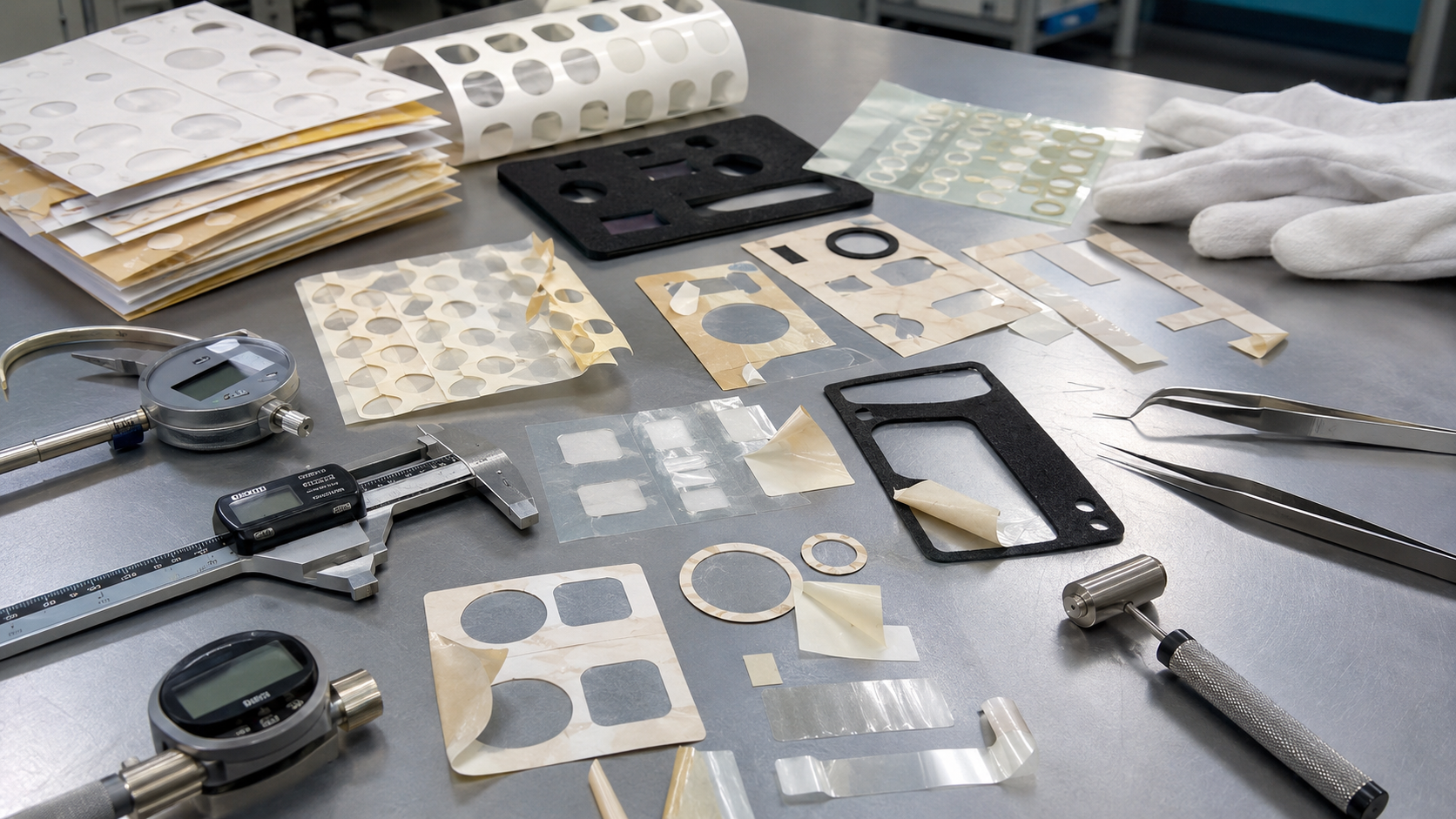
Common Causes of Peeling and Application Problems
| Problem | Common Cause | Production Risk |
|---|---|---|
| Hard to peel from liner | Release liner too tight or kiss cut too deep | Slow assembly and part damage |
| Part stretches during peeling | Soft foam, thin film, or weak carrier | Poor fit and misalignment |
| Liner tears | Cutting depth too deep | Operator delay and rejected parts |
| Adhesive lifts at corners | Sharp corners, wrong adhesive, poor surface contact | Peeling after assembly |
| Adhesive overflow | Excess pressure or soft adhesive | Contamination and poor appearance |
| Part curls after peeling | Material tension or thin structure | Difficult positioning |
| Small holes not removed | Poor waste removal | Blocked holes and assembly mismatch |
| Poor bonding after application | Wrong adhesive or dirty bonding surface | Part falls off or shifts |
The important point is that peeling and application problems are rarely caused by one single factor. A good solution requires reviewing the full adhesive component structure.
Liner Release Is Often the First Thing to Check
The release liner controls how easily the part can be removed before assembly. If the liner release force is too high, the operator may stretch or damage the part. If it is too low, the parts may shift, lift, or fall off during packaging and transportation.
Common liner options include paper liner, film liner, easy-release liner, tight-release liner, single-sided release liner, and double-sided release liner.
The right liner depends on:
- Adhesive strength
- Part size
- Part thickness
- Material softness
- Peeling direction
- Assembly speed
- Packaging format
- Storage condition
For small or delicate adhesive parts, easy-release liner may improve handling. For parts that must stay firmly in place during transport, a slightly tighter liner may be needed.
The goal is not simply the easiest release. The goal is stable release during production and controlled peeling during assembly.
Kiss Cutting Depth Must Be Controlled
Kiss cutting is widely used for adhesive-backed die cut parts. The blade cuts through the top material and adhesive layer but does not cut through the release liner.
If kiss cutting is too shallow, the part may not separate cleanly from the waste material.
If kiss cutting is too deep, the liner may be damaged or cut through. This can cause liner tearing, poor peeling, adhesive contamination, or unstable part spacing.
For OEM adhesive components, kiss cutting depth must be adjusted based on the full material stack:
- Top film, foam, felt, or rubber
- Adhesive layer
- Carrier material
- Release liner
- Total thickness
- Material compression
- Adhesive softness
A small cutting depth error can create big assembly problems, especially for thin PET adhesive films, foam tape gaskets, protective film tabs, and double-sided tape components.
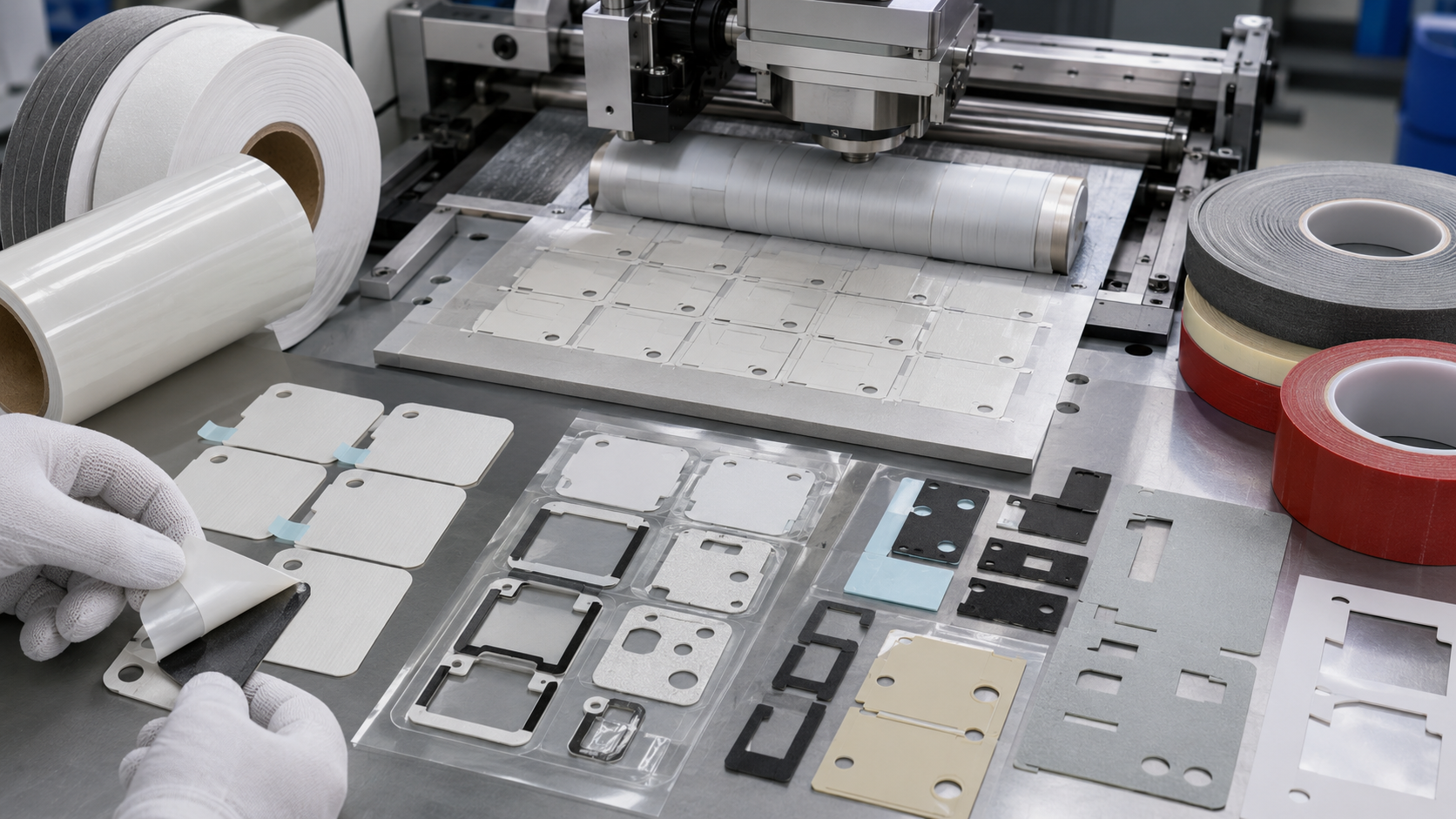
Material Structure Affects Peeling Behavior
Different materials behave differently when operators peel and apply them.
Foam tape parts may stretch if the foam is too soft or the sealing wall is too narrow.
PET adhesive films may curl if the film is thin or the tension is not controlled.
Transfer adhesive can be difficult to handle because it has no carrier layer.
Rubber adhesive pads may need stronger liner support because of weight and material recovery.
Non-woven felt with adhesive backing may shed fibers or deform if the cutting and peeling process is not controlled.
A stronger carrier can improve dimensional stability. A better liner can improve peeling. A pull tab can help operators remove the part without touching the adhesive.
For complex OEM parts, material structure should be designed for both performance and handling.
Part Design Can Make Peeling Easier or Harder
Some die cut parts are difficult to peel because the design is not assembly-friendly.
Common design risks include:
| Design Issue | Possible Result |
|---|---|
| Very narrow foam walls | Stretching or tearing during peeling |
| Sharp corners | Edge lifting and peeling stress |
| Small isolated tabs | Difficult handling |
| No pull tab | Slow liner removal |
| Large thin film area | Curling during application |
| Small holes close to edge | Poor waste removal |
| Tight spacing on liner | Difficult picking |
| Complex shape with weak bridges | Part deformation |
Small design improvements can often reduce assembly problems.
Useful design changes include:
- Add rounded corners
- Increase minimum wall width
- Add pull tabs or handling tabs
- Improve part spacing on liner
- Use split liner for large parts
- Add finger-lift areas
- Avoid very small unsupported features
- Use stronger carrier film when needed
A good die cut part should not only match the drawing. It should also be easy for the operator to use.
Adhesive Selection Must Match the Bonding Surface
Even if a part peels well, it may still be hard to apply if the adhesive does not match the final bonding surface.
Automotive, electronics, medical, and industrial parts may bond to ABS, PC, PP, PE, metal, glass, painted surfaces, rubber, powder coating, textured plastic, or coated films. Each surface behaves differently.
Low surface energy plastics such as PP and PE are more difficult to bond. Textured surfaces reduce contact area. Dust, oil, moisture, fingerprints, and release agents can also weaken bonding.
Common adhesive problems include:
- Poor initial tack
- Edge lifting
- Delayed bonding
- Adhesive residue
- Weak bonding after heat aging
- Adhesive transfer during peeling
- Adhesive overflow after compression
A strong adhesive is not always the best choice. If the adhesive is too aggressive, peeling from the liner may become difficult. If it is too soft, it may overflow during cutting or assembly. If it is not matched to the surface, the part may lift after application.
Application Pressure and Method Matter
Pressure-sensitive adhesive needs pressure to create good surface contact. If operators place the part lightly without enough pressure, the adhesive may not wet the surface properly.
Good application depends on:
- Clean bonding surface
- Correct part alignment
- Enough pressure
- Proper dwell time
- Suitable temperature
- No trapped air
- Correct peeling direction
- Stable fixture or guide if needed
For large parts, a roller or fixture may improve bonding. For small parts, better liner layout may help operators pick and place the component accurately.
For precision OEM assembly, the supplier and customer should review how the part will be used on the line, not only how it is produced.
Packaging Can Create Peeling Problems
Some adhesive parts leave the factory in good condition but become difficult to apply after packaging or storage.
Packaging problems may include:
- Parts compressed too tightly
- Liner bending
- Adhesive edges exposed
- Sheets stacked unevenly
- Roll tension too high
- Small parts shifting on liner
- Dust contamination
- Heat or humidity exposure
- Thin film curling
Adhesive-backed parts should be packed based on material sensitivity and assembly method.
Roll format may be suitable for automatic application. Sheet format may be better for manual assembly. Tray packaging may be useful for delicate parts. Protective bags may help reduce dust and moisture exposure.
How to Fix Hard-to-Peel Adhesive Die Cut Parts
The best fix depends on the root cause. Buyers and engineers should review the part systematically.
| Fix Method | What It Improves |
|---|---|
| Change liner release level | Easier peeling and less deformation |
| Adjust kiss cutting depth | Prevents liner tearing and poor release |
| Add pull tabs | Improves operator handling |
| Round sharp corners | Reduces lifting and peeling stress |
| Increase weak wall width | Prevents tearing and stretching |
| Change adhesive grade | Improves bonding and liner balance |
| Use carrier film | Improves dimensional stability |
| Improve waste removal | Reduces blocked holes and picking issues |
| Change packaging format | Prevents curling and shifting |
| Test on real surface | Confirms bonding reliability |
A practical solution often combines several changes. For example, a foam tape gasket may need a better liner, rounded corners, wider sealing walls, and adjusted kiss cutting depth at the same time.
What Buyers Should Provide Before Production
To reduce peeling and application problems, buyers should provide clear project information before sampling.
Important details include:
- Drawing or sample
- Material requirement
- Adhesive type if specified
- Bonding surface
- Surface condition
- Thickness requirement
- Part function
- Peeling method
- Application method
- Assembly pressure
- Temperature and humidity exposure
- Delivery format
- Packaging preference
- Quantity and testing needs
This information helps the supplier choose the correct material, adhesive, liner, cutting method, and packaging format.
How Sanken Helps Prevent Peeling and Application Issues
Sanken Manufacturing Co., Ltd. helps OEM customers develop adhesive die cut parts that are easier to peel, apply, and use in real assembly conditions.
For adhesive-backed foam parts, we review foam density, compression, adhesive type, liner release, kiss cutting depth, sealing width, and edge stability.
For PET adhesive films and protective films, we review film thickness, curling risk, hole accuracy, clean edges, liner selection, and surface protection.
For double-sided tape parts, we review adhesive structure, carrier material, waste removal, part spacing, release liner, and bonding surface.
For rubber, felt, and multilayer adhesive components, we review material behavior, adhesive compatibility, die cut tolerance, and packaging method.
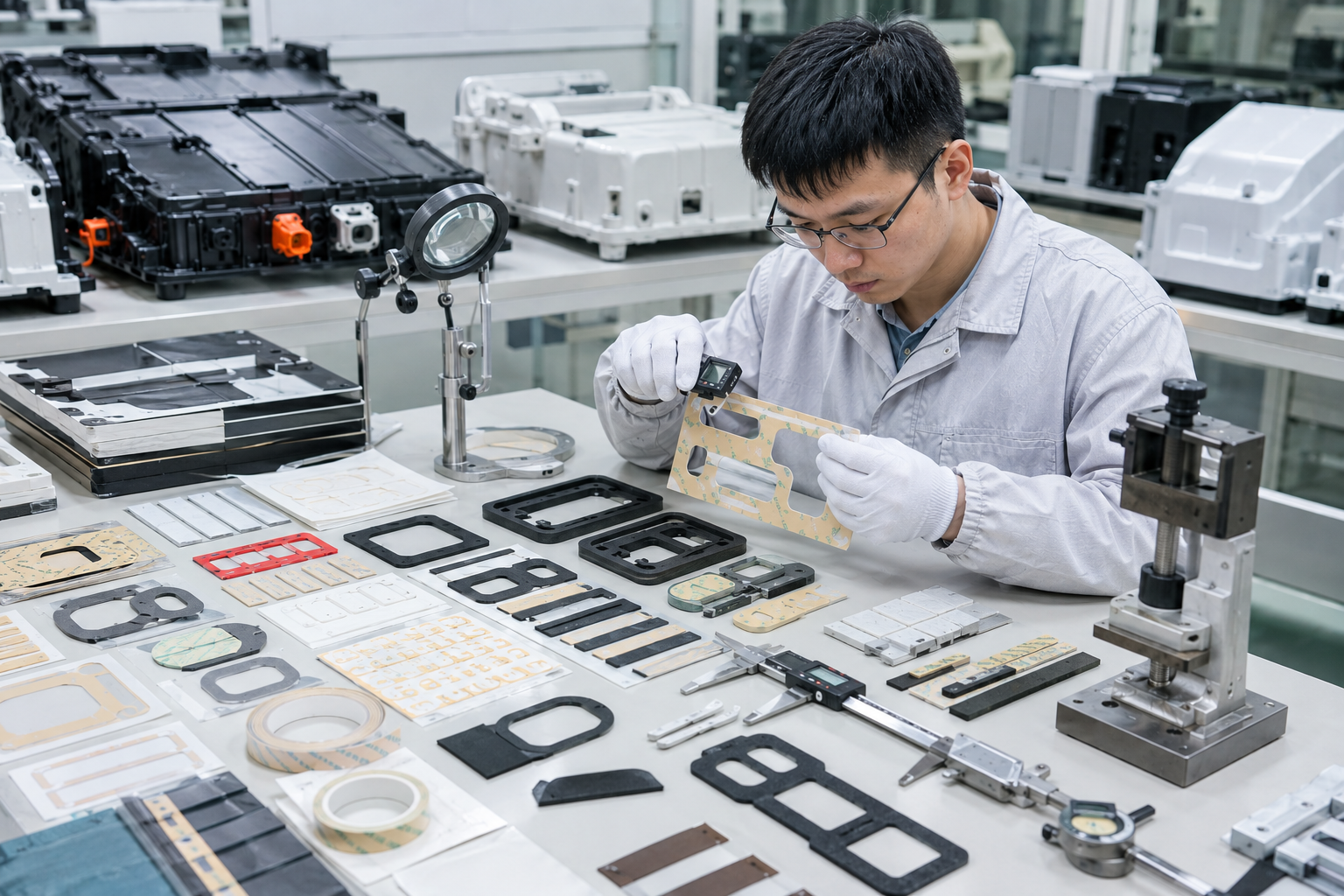
Our goal is to help customers reduce hard peeling, liner tearing, adhesive lifting, part deformation, slow application, rework, and unstable mass production.
A good adhesive die cut part should stay stable on the liner, peel cleanly, apply accurately, bond reliably, and support efficient OEM assembly.
FAQ
Why are adhesive die cut parts hard to peel?
They may be hard to peel because of tight liner release, incorrect kiss cutting depth, strong adhesive, soft material, poor part design, damaged liner, or unsuitable packaging.
Why does the liner tear when peeling adhesive parts?
Liner tearing often happens when kiss cutting is too deep, the liner is too weak, or the release force is too high.
How can pull tabs help adhesive die cut parts?
Pull tabs give operators a handling area, making the part easier to peel and apply without touching or deforming the adhesive area.
Why do adhesive parts stretch during peeling?
Stretching can happen when the material is too soft, the part has narrow walls, the liner release is too tight, or the adhesive structure lacks a stable carrier.
How can adhesive lifting be prevented?
Adhesive lifting can be reduced by matching the adhesive to the bonding surface, cleaning the surface, applying enough pressure, rounding corners, and testing under real conditions.
Is stronger adhesive always better?
No. Stronger adhesive may make liner release harder and may cause adhesive overflow or handling problems. Adhesive strength must match the surface and assembly method.
Can Sanken help improve adhesive die cut part handling?
Yes. Sanken supports material selection, adhesive lamination, liner release control, kiss cutting, part design review, packaging optimization, and inspection for custom adhesive die cut parts.
Conclusion
Adhesive die cut parts are hard to peel and apply when liner release, kiss cutting depth, adhesive selection, material structure, part design, packaging, or assembly method is not properly controlled. The problem should not be solved only by asking operators to work more carefully. It should be solved through better engineering and converting control.
By reviewing liner type, adhesive behavior, cutting depth, part geometry, pull tabs, carrier material, packaging, and real bonding surface, OEM buyers can reduce rework, improve assembly speed, and make adhesive parts more reliable in mass production.
At Sanken, we help customers develop adhesive-backed foam, tape, film, rubber, felt, and multilayer die cut components that peel cleanly, apply smoothly, and perform reliably in final OEM products.