
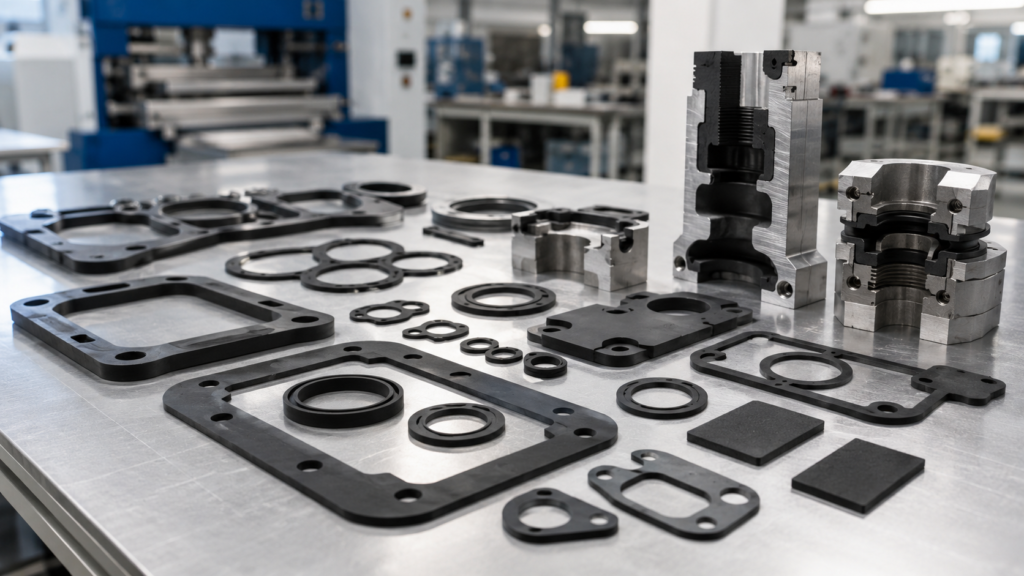
Low-cost die cut parts may look attractive during purchasing, especially when the drawing seems simple and the unit price difference is small. But in OEM assembly, the cheapest die cut part can sometimes become the most expensive option. Poor material selection, weak adhesive, unstable tolerance, difficult liner release, rough edges, deformation, and poor packaging can all increase labor time, rework, scrap, line stoppage, and customer complaints.
For OEM buyers and engineers, the real cost of a die cut component is not only the quotation price. The real cost includes how easily the part can be peeled, placed, bonded, compressed, inspected, assembled, and used in the final product.
At Sanken, we help OEM customers develop custom die cut foam gaskets, adhesive tape components, PET insulation films, protective films, rubber pads, non-woven felt parts, and multilayer converted components for automotive, electronics, battery, medical, appliance, and industrial applications.
Why Unit Price Alone Can Be Misleading
A die cut part may be a small component inside a larger product, but it can strongly affect assembly efficiency and product reliability.
A low-cost foam gasket may save a few cents per piece, but if it tears during peeling, operators need extra time to replace it.
A cheaper adhesive tape part may reduce material cost, but if it is hard to release from the liner, the assembly line slows down.
A low-cost PET insulation film may look acceptable, but if the hole position shifts, the product may need rework.
A cheaper protective film may protect the surface at first, but if it leaves residue, the customer may reject the part.
The supplier with the lowest unit price may not always control the full cost of use.
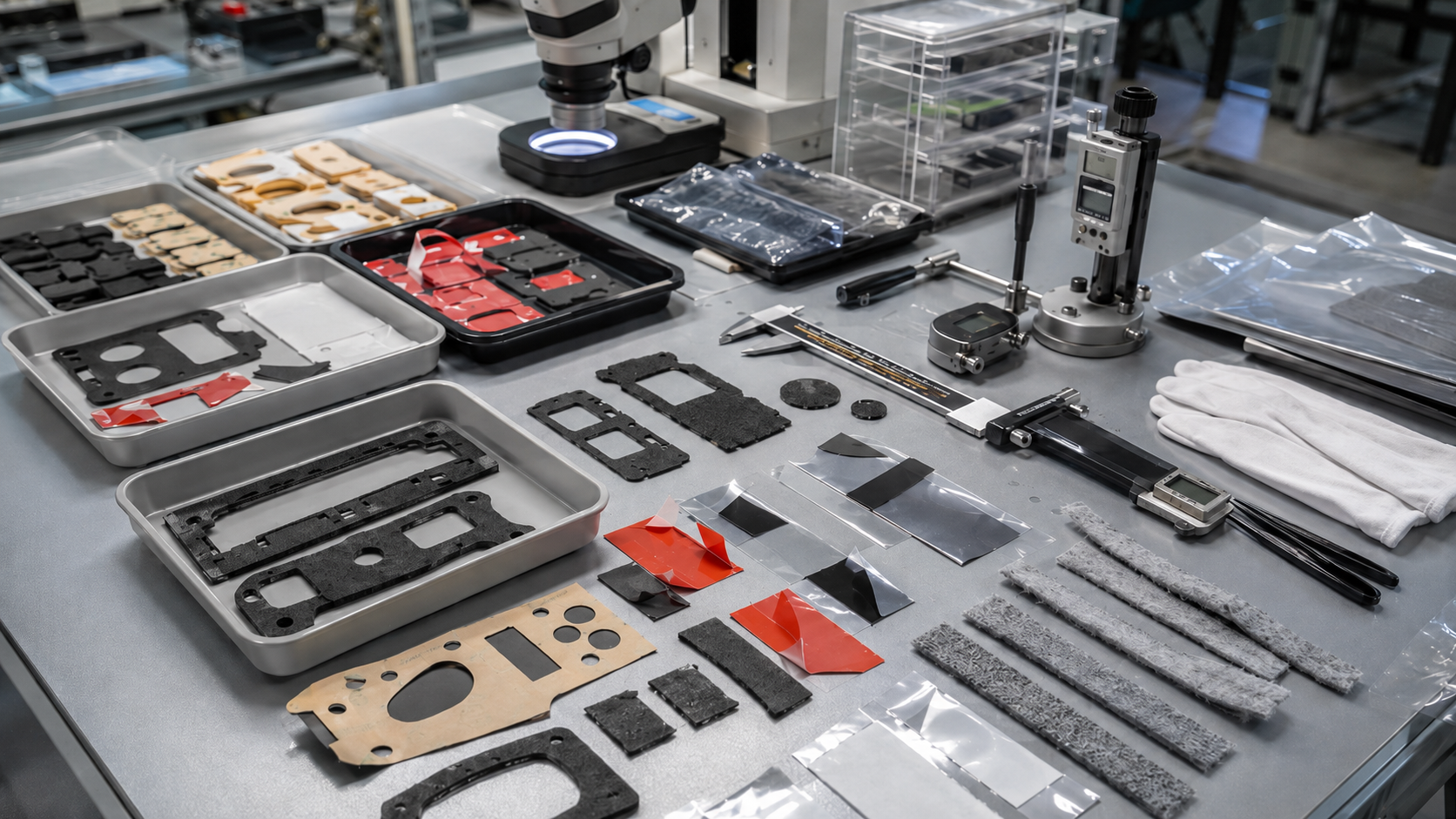
Common Hidden Costs in Low-Cost Die Cut Parts
Low-cost die cut parts often create costs that are not visible in the first quotation.
| Hidden Cost | What Causes It | Assembly Impact |
|---|---|---|
| Extra labor time | Difficult peeling, poor liner release, curling | Slower assembly |
| Rework | Poor fit, adhesive lifting, rough edges | More correction before shipment |
| Scrap | Deformed foam, damaged films, torn parts | Higher material waste |
| Line stoppage | Parts not ready to use | Production delay |
| Inspection cost | Unstable dimensions or mixed quality | More manual checking |
| Customer complaints | Poor bonding, sealing failure, residue | After-sales risk |
| Tooling changes | Design not reviewed early | Extra development cost |
| Packaging damage | Poor stacking or compression | Parts fail before use |
In many OEM projects, the cost of labor and assembly disruption is higher than the cost of the die cut part itself.
This is why purchasing teams should compare total cost, not only piece price.
Material Shortcuts Can Create Long-Term Problems
One common reason low-cost die cut parts create higher assembly costs is material substitution.
A supplier may quote a cheaper foam, thinner film, lower-grade adhesive, softer liner, or lower-density material. The sample may look similar, but performance may be different.
For foam parts, cheaper material may cause:
- Poor compression recovery
- Thickness variation
- Easy tearing
- Weak sealing
- Surface dust
- Shorter service life
For adhesive tape parts, cheaper material may cause:
- Weak bonding
- Edge lifting
- Adhesive overflow
- Difficult liner release
- Residue
- Poor heat aging
For PET, PI, or protective film parts, cheaper material may cause:
- Curling
- Scratches
- Poor insulation stability
- Hole misalignment
- Poor surface quality
- Residue after removal
For rubber parts, cheaper material may cause:
- Poor rebound
- Strong odor
- Hardness variation
- Poor edge quality
- Weak aging resistance
A material should be selected based on the final function, not only price.
Poor Liner Release Slows Down Assembly
Many adhesive-backed die cut parts are supplied on release liner. Operators peel the part from the liner, place it on the product, and apply pressure.
If the liner is wrong, assembly becomes slow and unstable.
Common liner problems include:
- Part is too hard to peel
- Liner tears during peeling
- Adhesive transfers to liner
- Part stretches during removal
- Small parts shift on the liner
- Corners lift before use
- Operators need tweezers or extra tools
These issues may seem small, but they directly affect production speed.
If each operator spends extra time peeling one adhesive part, the cost increases across thousands or millions of parts. In high-volume automotive, electronics, or appliance assembly, liner release can become a major hidden cost.
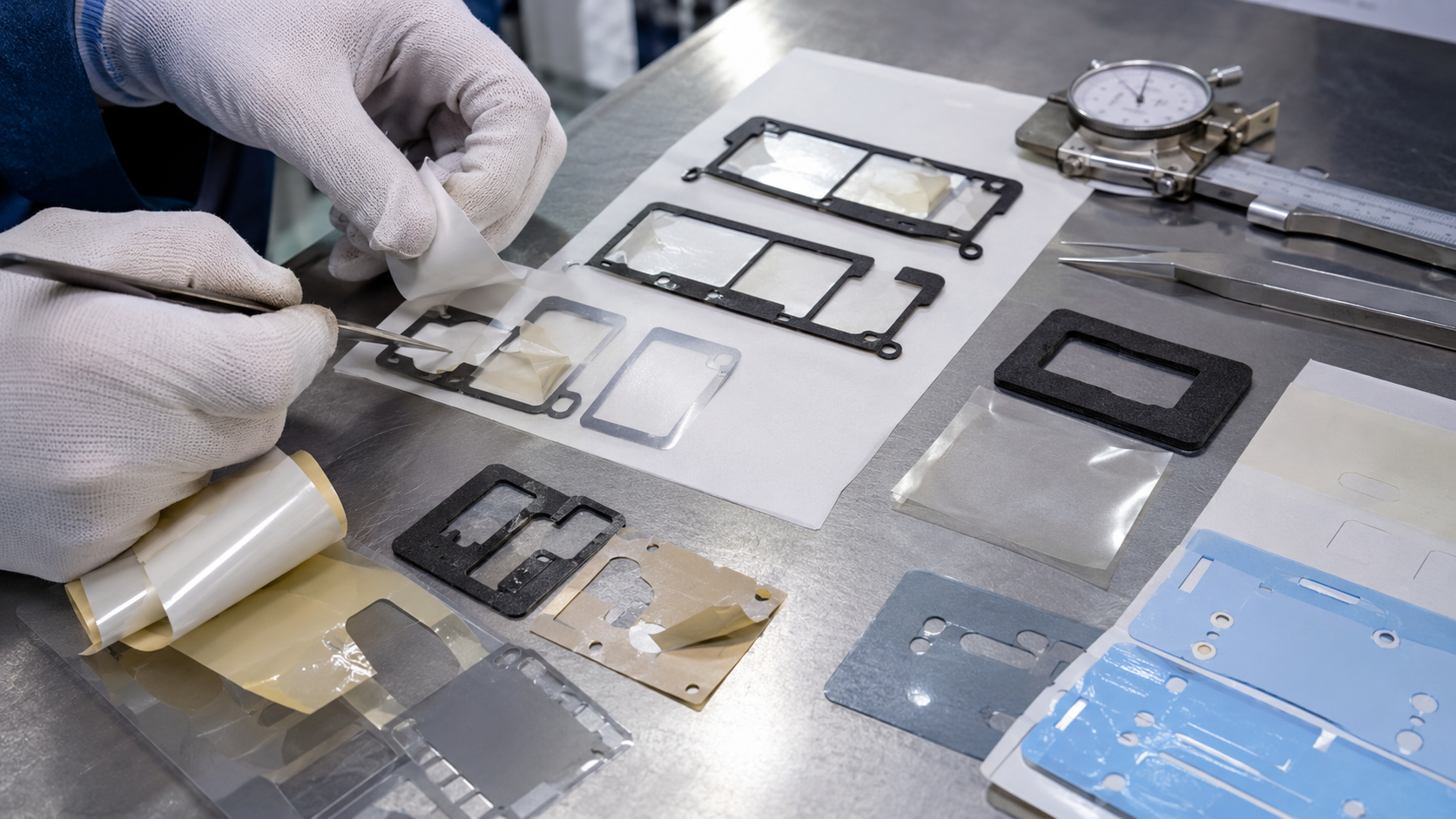
Loose Tolerance Can Cause Expensive Rework
Low-cost suppliers may reduce inspection time, tooling quality, or process control. This can lead to unstable dimensions.
For die cut parts, tolerance problems may include:
- Hole misalignment
- Outer profile variation
- Uneven gasket width
- Material stretching
- Poor layer alignment
- Inconsistent part spacing
- Unstable adhesive position
These problems can create serious assembly costs.
A foam gasket with poor hole alignment may not fit the housing.
A PET insulation film with shifted holes may interfere with screws or connectors.
A tape part with unstable adhesive position may reduce bonding strength.
A protective film with poor edge alignment may look unprofessional or expose sensitive surfaces.
In OEM assembly, a small dimensional error can create repeated manual adjustment, sorting, trimming, or rejection.
Rough Edges and Contamination Increase Quality Risk
Low-cost die cut parts may also have poor edge quality.
This is especially important for electronics, battery modules, medical devices, automotive interiors, displays, and precision assemblies.
Poor cutting can cause:
- Foam dust
- Felt fiber shedding
- Rubber burrs
- Film particles
- Adhesive strings
- Rough edges
- Blocked holes
- Waste residue
Particles and loose edges can contaminate the final product. In electronics, they may affect appearance or function. In automotive interiors, visible rough edges may reduce customer confidence. In adhesive parts, edge defects may create lifting or bonding failure.
Clean edge quality is not only an appearance requirement. It supports stable assembly and product reliability.
Cheap Adhesive Can Fail After Assembly
Adhesive selection is one of the most important factors in die cut parts.
A low-cost adhesive may work during the first sample test but fail later because of heat, humidity, vibration, compression, or surface incompatibility.
Common adhesive problems include:
- Edge lifting
- Poor initial tack
- Weak bonding to low surface energy plastics
- Adhesive residue
- Adhesive overflow
- Poor shear resistance
- Failure after heat aging
- Difficult liner release
Automotive and electronics assemblies often use surfaces such as ABS, PC, PP, PE, metal, painted surfaces, powder-coated surfaces, rubber, and coated films. Different surfaces need different adhesive solutions.
The cheapest adhesive is rarely the safest choice if the bonding surface is difficult or the product environment is demanding.
Poor Packaging Can Damage Good Parts
Even if the part is cut correctly, poor packaging can create assembly problems.
Low-cost packaging may cause:
- Foam compression marks
- Film curling
- Adhesive parts shifting
- Liner bending
- Dust contamination
- Edge damage
- Parts sticking together
- Difficulty counting or picking
Packaging should match the material and assembly method.
Soft foam parts should not be crushed.
Thin films should be protected from curling and scratches.
Adhesive-backed parts should stay flat on the liner.
Small parts may need trays, sheets, or organized liner formats.
For OEM assembly, packaging is part of the product solution. A part that arrives damaged or difficult to handle will increase total cost.
How Buyers Should Compare True Cost
Instead of choosing only by unit price, buyers should review the total cost of using the part.
| Cost Factor | What to Ask |
|---|---|
| Material performance | Does it meet sealing, bonding, insulation, or cushioning needs? |
| Assembly speed | Can operators peel and apply it easily? |
| Quality stability | Is tolerance consistent from batch to batch? |
| Adhesive reliability | Has it been tested on the real bonding surface? |
| Rework risk | Will operators need trimming, sorting, or extra cleaning? |
| Packaging | Will parts arrive flat, clean, and ready to use? |
| Testing | Has the part passed real assembly or aging checks? |
| Supplier support | Can the supplier identify design or material risks early? |
A slightly higher part price may reduce labor time, scrap, line stoppage, and customer complaints. In many OEM projects, that is the lower-cost solution.
Warning Signs of a Low-Cost Risk
Buyers should be careful when a supplier:
- Quotes without asking about application
- Only discusses material price
- Cannot explain adhesive and liner options
- Does not review tolerance feasibility
- Ignores packaging format
- Does not ask about bonding surface
- Cannot support sample testing
- Cannot explain edge quality control
- Does not discuss mass production repeatability
- Accepts every drawing without engineering review
A reliable die cutting manufacturer should help prevent problems before production, not only respond after defects appear.
How to Prevent Higher Assembly Costs
To avoid hidden costs, buyers and engineers should review the full component system before mass production.
| Prevention Step | Benefit |
|---|---|
| Review real application | Selects the correct material and structure |
| Test adhesive on real surface | Reduces lifting and bonding failure |
| Confirm liner release | Improves peeling and assembly speed |
| Check tolerance feasibility | Prevents fit and alignment problems |
| Test real assembly fit | Finds problems before production |
| Optimize part design | Reduces tearing, curling, and rework |
| Review packaging | Prevents damage before use |
| Inspect critical dimensions | Improves batch stability |
For adhesive-backed foam, tape, film, rubber, and felt parts, the supplier should control material, lamination, cutting depth, waste removal, inspection, and packaging together.
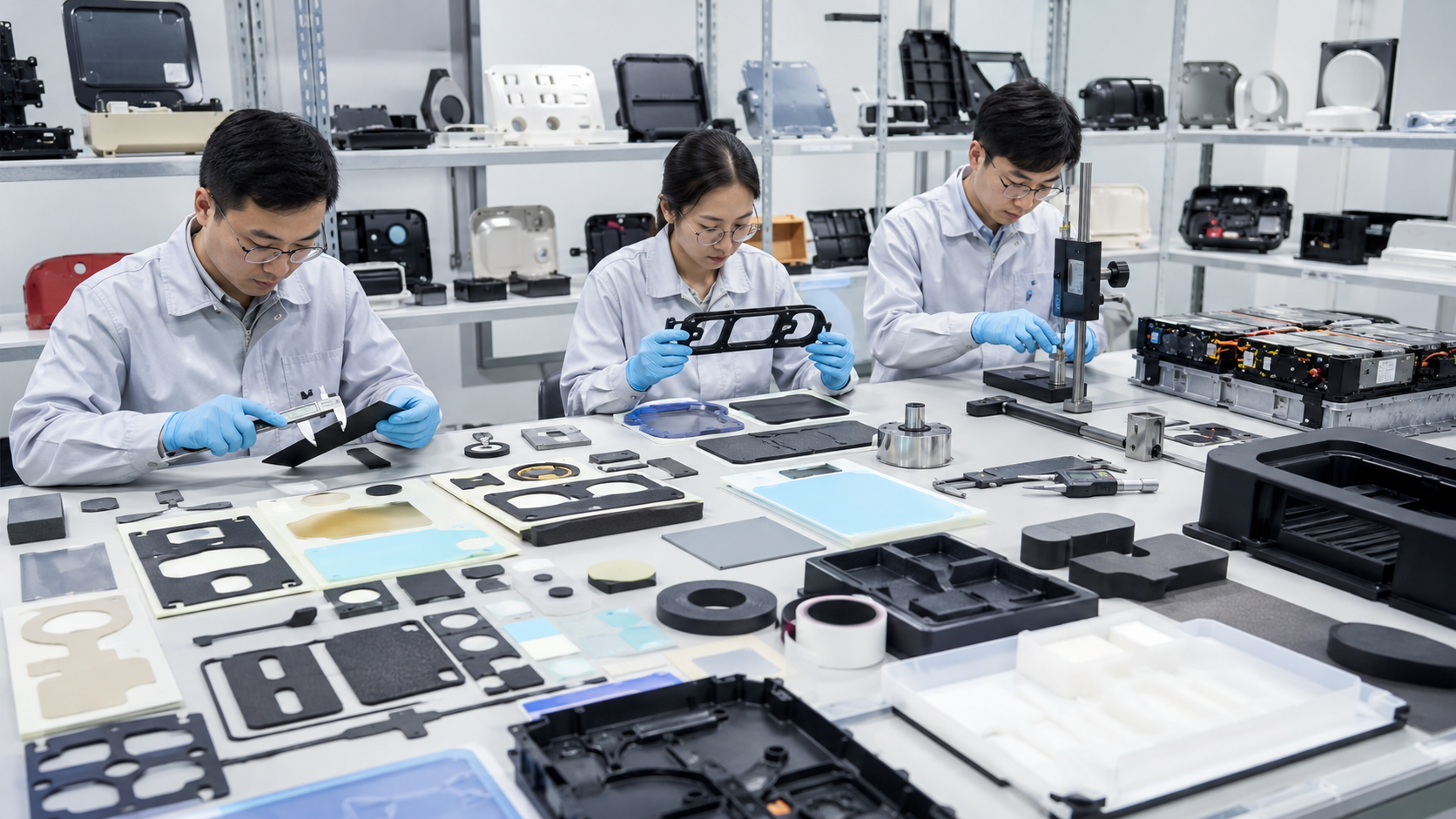
How Sanken Helps Reduce Total Cost
Sanken Manufacturing Co., Ltd. helps OEM customers reduce total assembly cost by focusing on material performance, die cutting quality, adhesive behavior, liner release, tolerance, and packaging.
For foam components, we review foam type, density, thickness, compression behavior, adhesive backing, and die cut geometry.
For tape components, we review adhesive structure, carrier material, liner release, kiss cutting depth, waste removal, and bonding surface.
For PET, PI, and protective film components, we review edge cleanliness, hole alignment, film tension, adhesive control, and packaging.
For rubber and non-woven felt components, we review hardness, rebound, fiber shedding, edge quality, adhesive lamination, and final use.
Our goal is to help customers avoid low-price decisions that lead to higher assembly cost, rework, poor bonding, poor fit, unstable quality, and delayed production.
A good die cut part should arrive clean, accurate, easy to peel, easy to assemble, and stable in the final product.
Conclusion
Low-cost die cut parts can lead to higher assembly costs when the supplier saves money by using unsuitable materials, weak adhesive, poor liner, loose tolerance, rough cutting, weak packaging, or limited inspection. The lowest unit price may create higher labor cost, rework, scrap, line stoppage, and customer complaints.
For OEM buyers, the better decision is to evaluate total cost of use. A reliable die cut part should be stable, clean, accurate, easy to peel, easy to apply, and suitable for real assembly conditions.
At Sanken, we help customers develop custom die cut foam, tape, film, rubber, felt, and multilayer components that support better assembly efficiency, lower rework risk, and more stable mass production.