
Why Are Modern Car Interiors Unnecessarily Complicated? The Hidden Manufacturing Problems Most Automakers Created Themselves
A few years ago, adjusting a car’s air conditioning took one second.
You reached for a button.
Done.
Today?
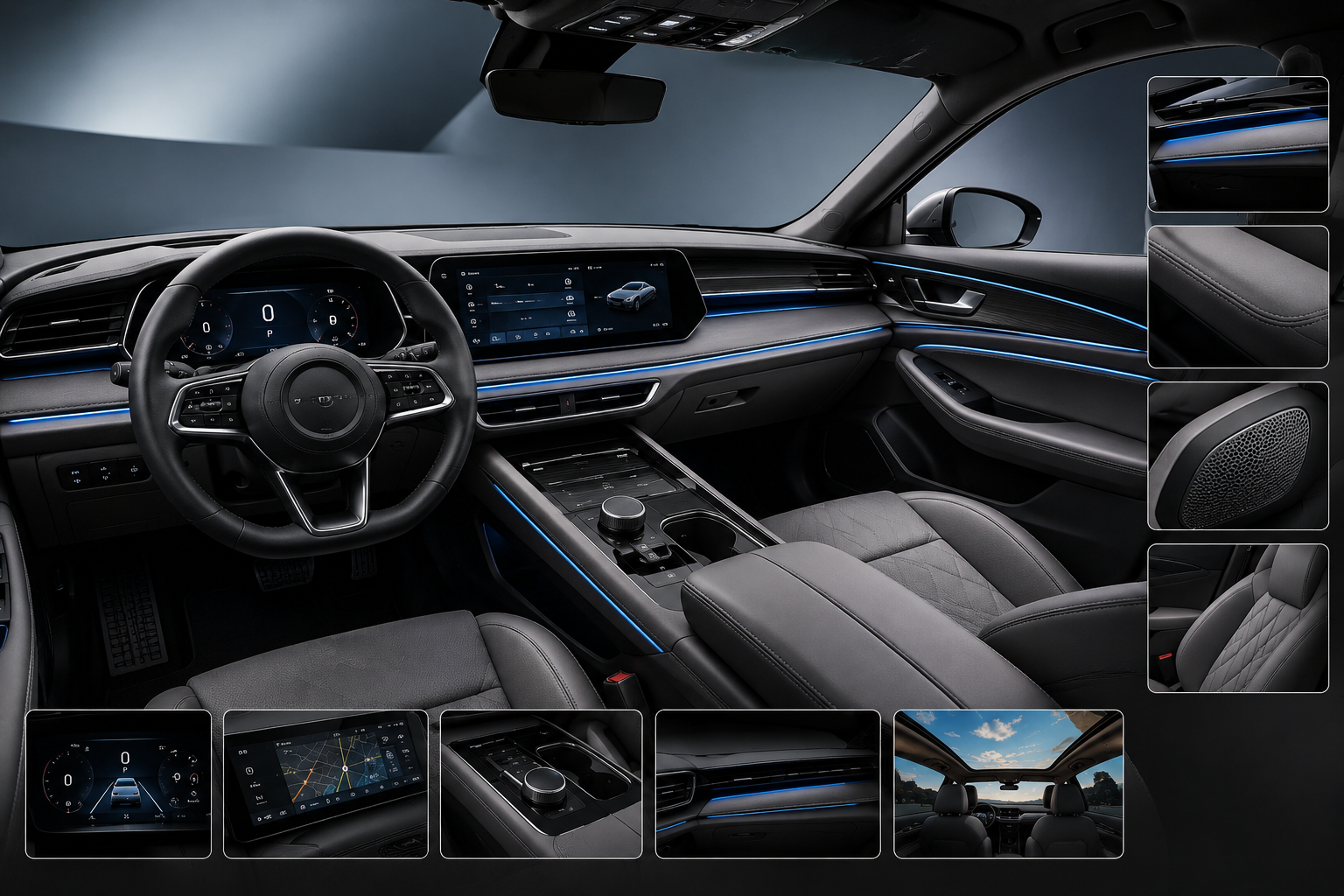
Some vehicles require drivers to open multiple touchscreen menus just to change cabin temperature. I’ve even seen drivers pull over because they could not quickly locate simple controls while driving. Ironically, while modern car interiors look more futuristic than ever, many have become more frustrating, more expensive to manufacture, and far harder to maintain.
Modern car interiors became increasingly complicated because automakers aggressively pursued digitalization, lightweight design, luxury aesthetics, integrated electronics, and software-driven user experiences. While these changes improved visual appeal and added advanced features, they also introduced major manufacturing, assembly, durability, acoustic, and usability challenges that many suppliers and OEMs are still struggling to solve today.
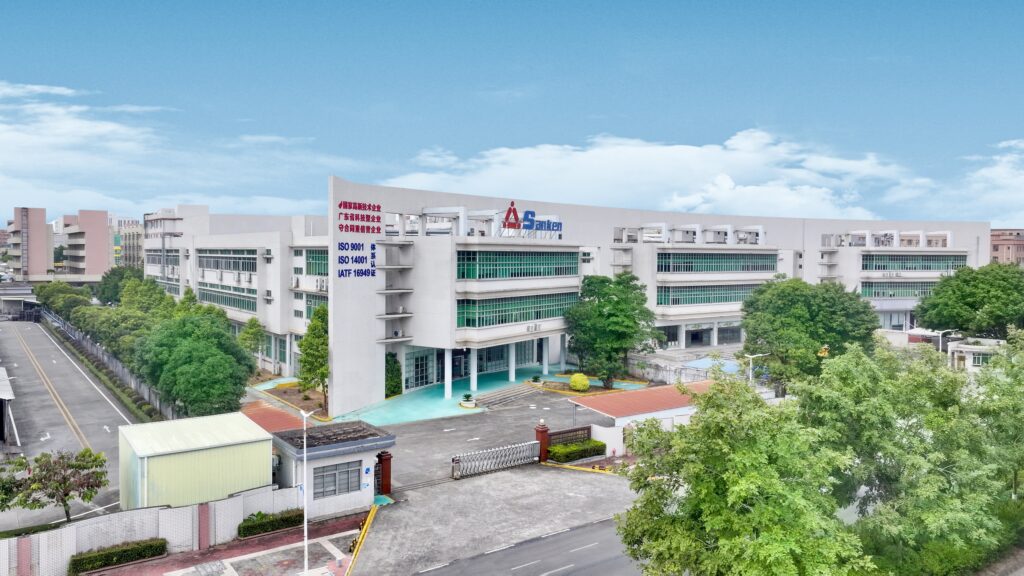
At Sanken, we see these challenges from a manufacturing perspective every day because behind every glossy screen and seamless dashboard surface lies a massive network of die-cut materials, foam systems, adhesive assemblies, insulation components, and precision-converted parts working together invisibly.
Why Automakers Keep Making Interiors More Complex
The short answer?
Competition.
Modern automakers are under enormous pressure to make vehicles feel:
- More premium
- More intelligent
- More futuristic
- More digital
- More luxurious
This created an industry-wide obsession with:
- Large touchscreens
- Hidden controls
- Ambient lighting
- Seamless surfaces
- Integrated electronics
- Multi-layer decorative materials
The problem is that visual simplicity often creates manufacturing complexity behind the scenes.
The Hidden Engineering Behind a “Simple” Dashboard
Many customers see a smooth dashboard surface and assume it is one single component.
It is not.
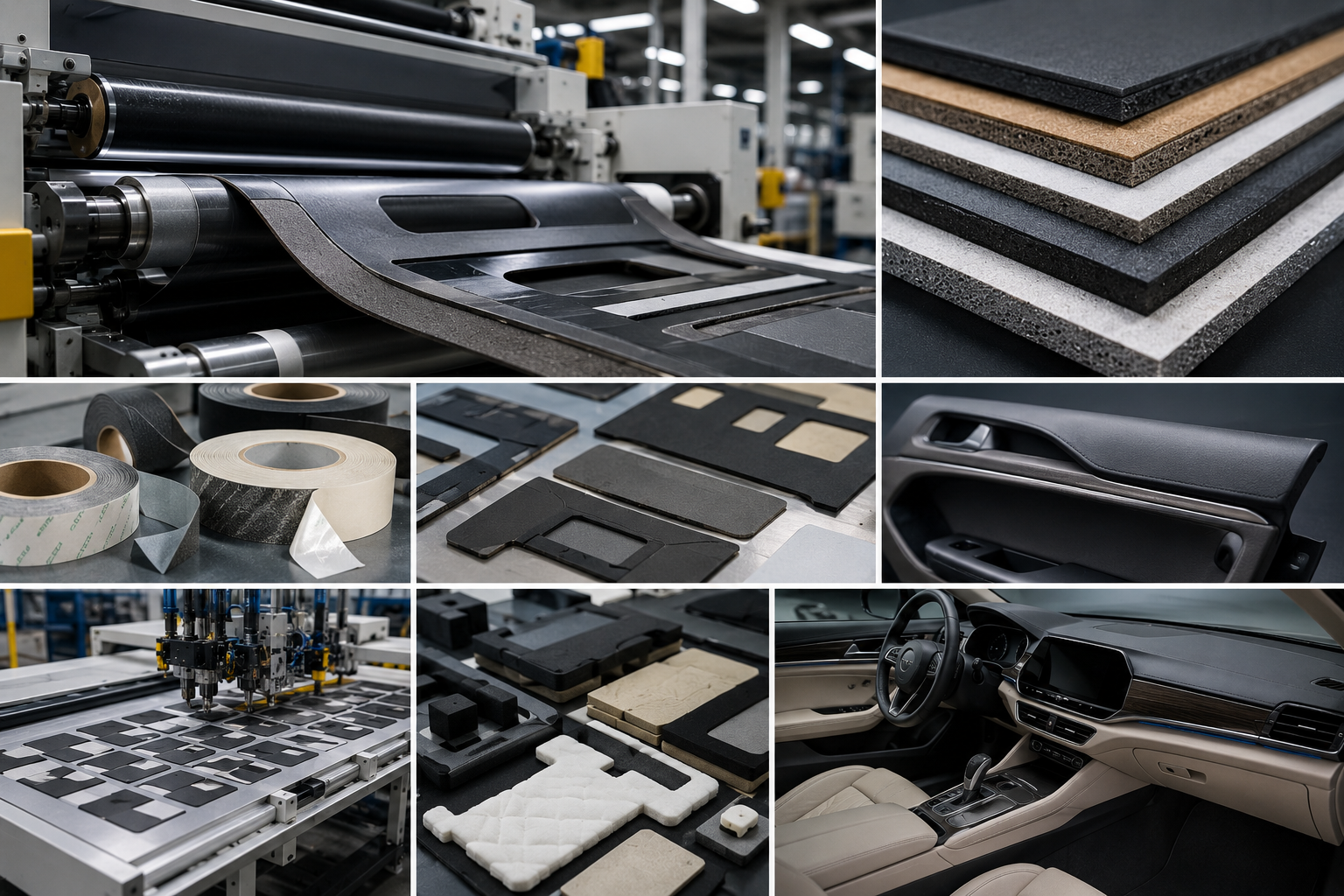
Modern automotive interiors often contain:
| Component Type | Main Function |
|---|---|
| Foam die cuts | Vibration control |
| Adhesive laminates | Material bonding |
| Acoustic insulation | Noise reduction |
| Thermal barriers | Heat management |
| Conductive shielding | Electronic protection |
| Decorative films | Surface appearance |
| Gaskets and seals | Airflow control |
A single dashboard assembly may involve dozens of precision-converted components layered together with extremely tight tolerances.
That complexity increases dramatically in EV platforms.
Why Electric Vehicles Made Interior Complexity Worse
EVs completely changed interior engineering priorities.
Without engine noise masking vibrations, drivers now notice:
- Wind turbulence
- Plastic rattles
- Panel vibration
- Electronic buzzing
- Structural resonance
This forced automakers to invest heavily in:
- Acoustic foam systems
- Advanced sealing materials
- Multi-layer insulation structures
- Precision adhesive assemblies
Ironically, making interiors feel “quiet and clean” actually requires far more hidden engineering work than older vehicle designs.
The Biggest Problem Buyers Face Today
Automotive OEM buyers are trapped between two pressures.
First, consumers demand luxury-level interior experiences.
Second, automakers demand lower production costs.
That creates major manufacturing headaches such as:
- Tight assembly tolerances
- More complex material stacks
- Faster development cycles
- Higher quality expectations
- Lightweight design requirements
At Sanken, we regularly help customers solve these exact production challenges through precision die cutting and integrated material converting solutions.
Why Touchscreens Created New Manufacturing Problems
Touchscreens simplified appearance.
But they complicated everything else.
Modern digital interiors generate:
- More heat
- More vibration sensitivity
- More electronic interference
- More wiring complexity
This increases demand for:
- EMI shielding materials
- Thermal management pads
- Optical bonding systems
- Cushioning foam assemblies
- Precision adhesive components
Without proper material engineering, interior durability problems appear very quickly.
For example:
- Screen rattling
- Adhesive lifting
- Heat deformation
- Noise vibration issues
This is why material selection became critically important in modern interior manufacturing.
Why Lightweight Design Made Interiors Harder to Engineer
Automakers constantly chase weight reduction to improve:
- Fuel efficiency
- EV battery range
- Emissions performance
However, lightweight structures often introduce new NVH challenges.
Lighter materials tend to:
- Vibrate more easily
- Amplify resonance
- Reduce structural damping
This forces engineers to rely heavily on precision foam and acoustic die-cut materials to restore cabin comfort.
At Sanken, we help customers optimize:
- Foam density
- Compression recovery
- Adhesive durability
- Acoustic absorption
- Structural sealing performance
These details dramatically affect final vehicle quality perception.
Why Assembly Complexity Increased So Much
Modern interiors require extremely precise assembly coordination.
A tiny dimensional variation may create:
- Uneven panel gaps
- Squeaking noises
- Poor fitment
- Light leakage
- Vibration instability
This is why advanced automotive suppliers focus heavily on:
- Precision converting
- Tolerance management
- Material traceability
- Automated inspection
At Sanken, manufacturing consistency is one of our core strengths because automotive production leaves almost no room for variability.
Why One-Stop Manufacturing Matters More Than Ever
Many OEM buyers struggle with fragmented supply chains.
Different suppliers handle:
- Foam materials
- Adhesive systems
- Thermal components
- Decorative films
- Plastic structures
This often creates communication delays and quality inconsistency.
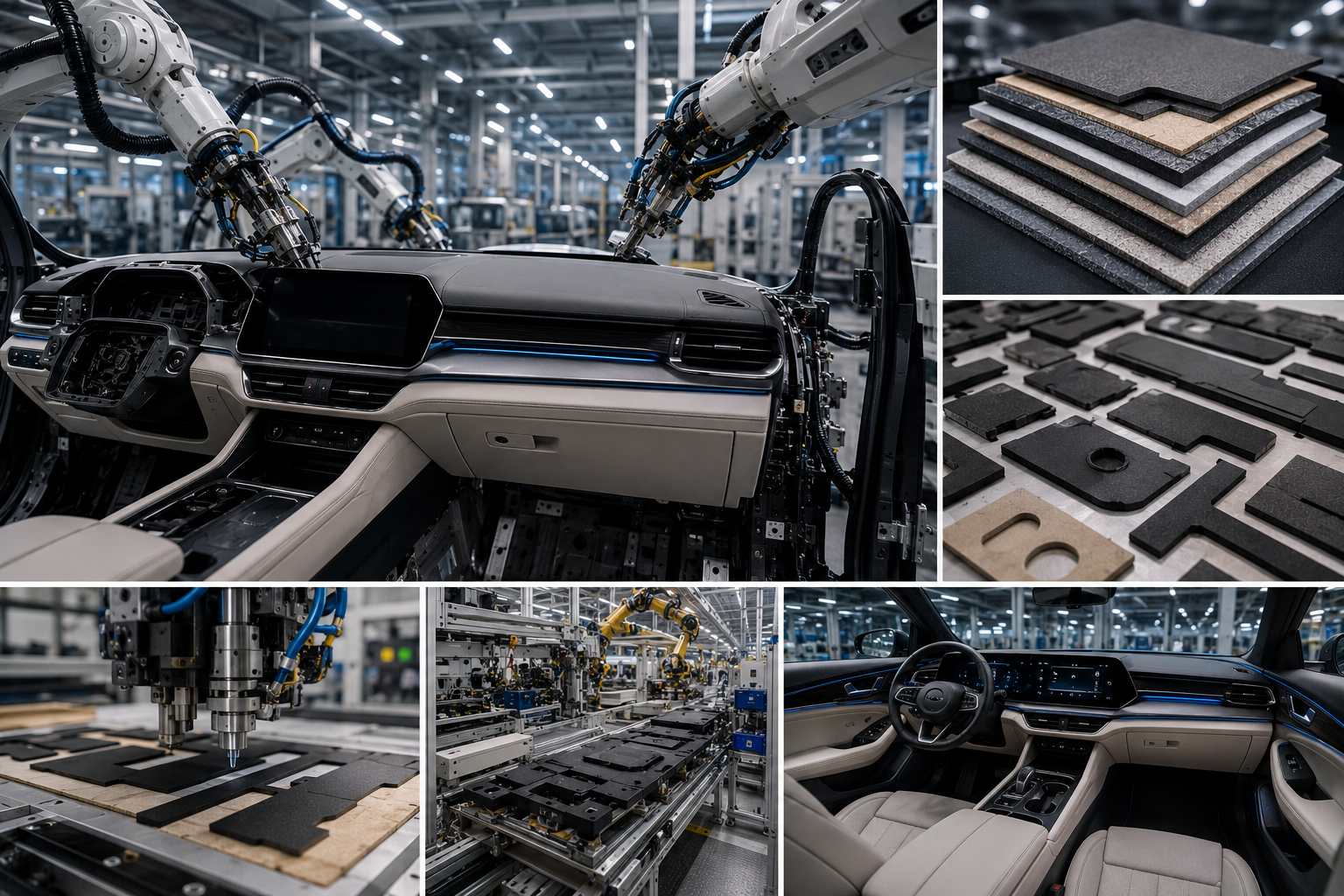
At Sanken, we integrate:
- Precision die cutting
- Adhesive laminating
- Foam converting
- Hot pressing
- Spraying and gluing
- Silk screen printing
- Injection molding
This integrated manufacturing model helps customers reduce complexity while improving production stability.
Why Consumers Feel Modern Interiors Are “Overdesigned”
Consumers rarely think about manufacturing systems.
They judge interiors emotionally.
Many drivers now feel modern interiors prioritize visual minimalism over actual usability.
Common complaints include:
- Too many hidden controls
- Distracting touchscreen interfaces
- Fingerprint-prone surfaces
- Expensive repair costs
- Reduced tactile feedback
Ironically, many “advanced” features increase user frustration rather than convenience.
This is pushing some automakers to reconsider physical controls again.
Why Automotive Suppliers Must Adapt Quickly
Interior technology evolves incredibly fast today.
Suppliers must support:
- Faster design revisions
- New material combinations
- Higher acoustic standards
- Greater thermal demands
- More integrated electronics
At Sanken, our systems operate under:
- IATF 16949
- ISO 9001
- ISO 14001
We help global automotive OEM customers develop scalable interior material solutions designed for modern vehicle manufacturing environments.
What Truly Separates Great Automotive Manufacturing Partners?
Many factories can produce parts.
Far fewer understand the hidden engineering challenges behind modern interior systems.
The real difference comes from:
- Material expertise
- Acoustic engineering understanding
- Process integration
- Precision converting capability
- Long-term production stability
At Sanken, we focus on helping customers simplify complexity behind the scenes so drivers experience quieter, cleaner, and more refined vehicle interiors.
Conclusion
Modern car interiors became increasingly complicated because automakers pursued digitalization, lightweight design, premium aesthetics, and advanced electronics simultaneously. Behind these sleek designs lies enormous manufacturing complexity involving foam die cuts, adhesive systems, acoustic materials, and precision converting technologies. At Sanken, we help automotive customers solve these hidden engineering challenges with integrated manufacturing solutions designed for stable, scalable, and high-quality production.