
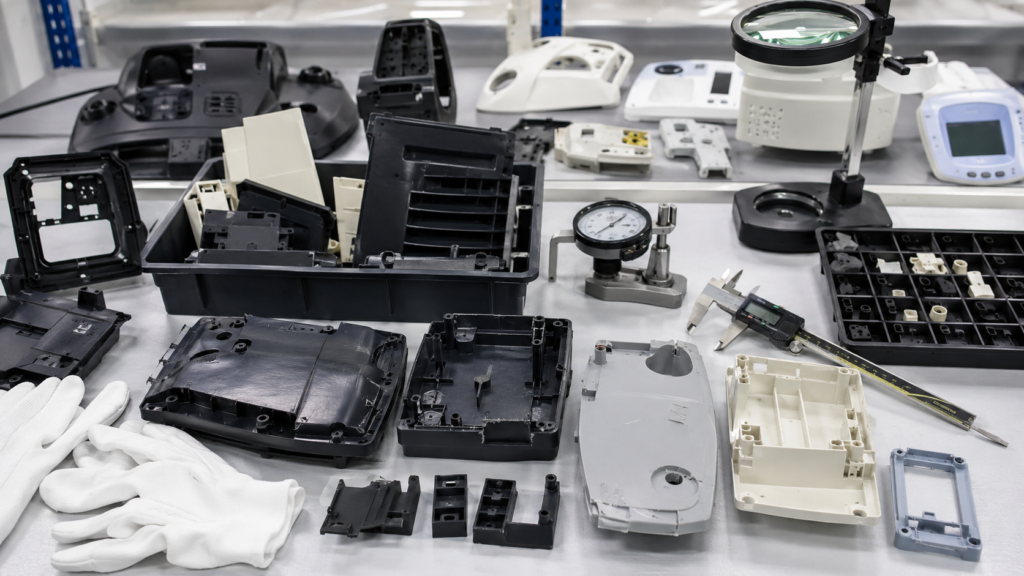
Injection molded plastic parts fail quality inspection when material selection, mold design, molding parameters, dimensional control, surface quality, assembly fit, or packaging is not properly controlled. A plastic housing, cover, bracket, clip, or enclosure may look acceptable at first glance, but it can still fail because of warpage, shrinkage, sink marks, flash, short shots, deformation, weak snap-fit strength, poor hole alignment, color variation, surface scratches, or mismatch with related die cut components.
For OEM engineers and purchasing teams, injection molded plastic parts are rarely isolated components. They often need to work together with foam gaskets, adhesive tape parts, PET insulation films, rubber pads, protective films, non-woven felt strips, and other custom assembly materials. If the molded part fails inspection or does not fit related parts, the whole assembly may be delayed.
At Sanken, we support OEM customers with custom injection molded plastic parts, precision die cut foam gaskets, adhesive tape components, PET and PI insulation films, protective films, rubber pads, non-woven felt parts, sealing components, and multilayer converted parts for automotive, electronics, battery, appliance, medical device, and industrial applications.
Why Injection Molded Plastic Parts Fail Inspection
Injection molding is a stable and efficient process for high-volume production, but it requires strong control over material, mold, machine settings, tooling maintenance, and inspection standards.
Common inspection failures include:
- Warpage or deformation
- Shrinkage outside tolerance
- Sink marks
- Flash around edges or holes
- Short shots or incomplete filling
- Weld lines in weak areas
- Flow marks or surface defects
- Color difference
- Scratches or contamination
- Poor hole alignment
- Incorrect wall thickness
- Weak clips or snap-fit features
- Poor assembly fit with foam, tape, film, or rubber parts
- Packaging damage before shipment
Many of these problems can be prevented if the supplier reviews the part design, material, mold structure, process window, and final assembly requirements before mass production.
Material Selection Problems
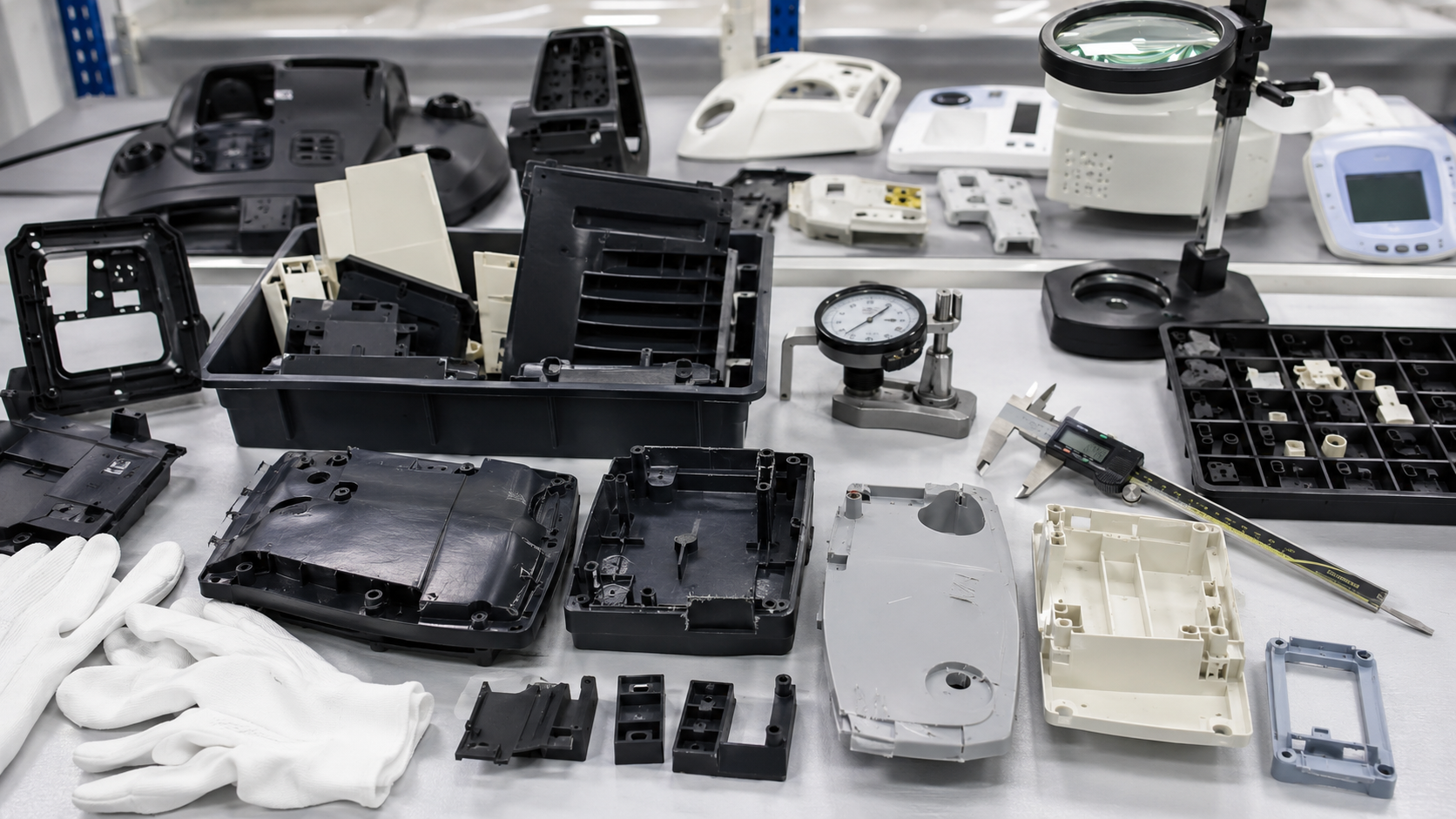
The wrong plastic material can cause quality problems even if the mold is well made.
OEM plastic parts may require strength, flexibility, heat resistance, impact resistance, chemical resistance, dimensional stability, surface appearance, flame resistance, or bonding compatibility. If the selected resin does not match the final application, the part may fail inspection or fail during assembly.
Common material-related problems include:
| Problem | Possible Material Cause |
|---|---|
| Warpage | Material shrinkage or poor stiffness |
| Weak clips | Resin lacks toughness or flexibility |
| Surface defects | Poor material flow or contamination |
| Cracking | Material too brittle for assembly stress |
| Poor adhesive bonding | Plastic surface not compatible with tape |
| Dimensional instability | Material not suitable for temperature or humidity |
| Color variation | Poor material batch control or pigment mismatch |
For example, an automotive electronic housing may need dimensional stability and heat resistance. A consumer electronics cover may need good surface appearance. A battery-related plastic component may need insulation support and stable fit with PET films or foam pads.
Material selection should not be based only on price. It should be based on function, environment, tolerance, assembly method, and long-term reliability.
Mold Design and Tooling Issues
A large number of injection molding defects start from mold design.
A mold must support proper material flow, cooling, ejection, shrinkage control, surface finish, and dimensional stability. Poor tooling design can create repeated inspection failures even when the molding machine is correctly set.
Common mold-related problems include:
- Uneven cooling
- Poor gate location
- Weak venting
- Difficult ejection
- Unbalanced filling
- Parting line flash
- Poor surface texture
- Incorrect shrinkage compensation
- Tool wear after repeated production
If gate location is wrong, the part may show flow marks or weld lines in important areas. If cooling is uneven, the part may warp. If venting is poor, the cavity may not fill properly. If ejection is not controlled, the part may have stress marks or deformation.
Before mold opening, a good OEM supplier should review wall thickness, ribs, bosses, clips, holes, draft angles, shrinkage, gate position, and assembly features.
Dimensional Tolerance Failures
Injection molded plastic parts often fail inspection because the final dimensions do not match the drawing or assembly requirement.
Tolerance problems may include:
- Hole position shift
- Screw boss mismatch
- Clip deformation
- Housing gap variation
- Cover not closing properly
- Gasket groove not matching foam thickness
- PET insulation film holes not aligning
- Rubber pad contact pressure too high or too low
Plastic parts shrink after molding. The shrinkage rate depends on material, mold temperature, part thickness, flow direction, cooling, and processing conditions. This is why tolerance should be reviewed realistically before production.
For OEM projects, critical dimensions should be identified early. These may include screw holes, positioning posts, gasket grooves, sealing surfaces, connector openings, clips, and areas where die cut components will be applied.
Warpage and Deformation
Warpage is one of the most common reasons injection molded plastic parts fail inspection.
Warpage can happen when cooling is uneven, wall thickness is not balanced, material shrinkage is not controlled, or the part design creates internal stress.
Common causes of warpage include:
- Uneven wall thickness
- Poor rib design
- Unbalanced mold cooling
- Excessive packing pressure
- Poor material flow
- Early ejection
- Incorrect storage or packaging
- Large flat surface design
Warpage can create serious assembly problems. A warped cover may not close. A housing may not seal with a foam gasket. A PET film may not sit flat. A protective film may not apply smoothly. A rubber pad may not contact the correct area.
To prevent warpage, engineers should review part geometry, wall thickness, rib structure, material shrinkage, cooling design, and packaging method before mass production.
Surface Defects and Appearance Problems
For many OEM plastic parts, surface quality is part of the inspection standard.
Common surface defects include:
| Surface Defect | Possible Cause |
|---|---|
| Sink marks | Thick sections or poor packing |
| Flow marks | Material flow instability |
| Weld lines | Flow fronts meeting in weak areas |
| Burn marks | Poor venting or excessive temperature |
| Scratches | Handling or packaging damage |
| Gloss variation | Mold surface or process instability |
| Color difference | Material or pigment variation |
| Black spots | Material contamination |
For visible parts such as appliance panels, medical device shells, consumer electronics covers, and automotive interior components, appearance defects may cause rejection even if the part is functional.
For hidden parts, surface defects may still matter if they affect bonding, sealing, insulation, or assembly fit.
Short Shots, Flash, and Burrs
Short shots happen when the mold cavity is not fully filled. Flash happens when material escapes between mold surfaces, around inserts, or near parting lines.
Both can cause inspection failure.
Short shots may create missing corners, incomplete clips, weak structures, or poor sealing surfaces. Flash may interfere with assembly, block holes, affect appearance, or create sharp edges.
Common causes include:
- Incorrect injection pressure
- Poor material flow
- Low melt temperature
- Poor venting
- Tool wear
- Poor mold clamping
- Inaccurate mold fit
- Improper gate design
For parts that must work with foam gaskets, adhesive tape, PET films, or rubber pads, flash and burrs can create fit issues or bonding problems.
Assembly Fit With Die Cut Components
In many OEM projects, injection molded parts are assembled with flexible die cut components.
Examples include:
- Foam gaskets installed into molded grooves
- Double-sided tape bonded to plastic housings
- PET insulation films aligned with screw posts
- Rubber pads positioned on plastic covers
- Protective films applied to molded surfaces
- Non-woven felt strips used for anti-rattle contact
- Light-blocking films used around sensors or displays
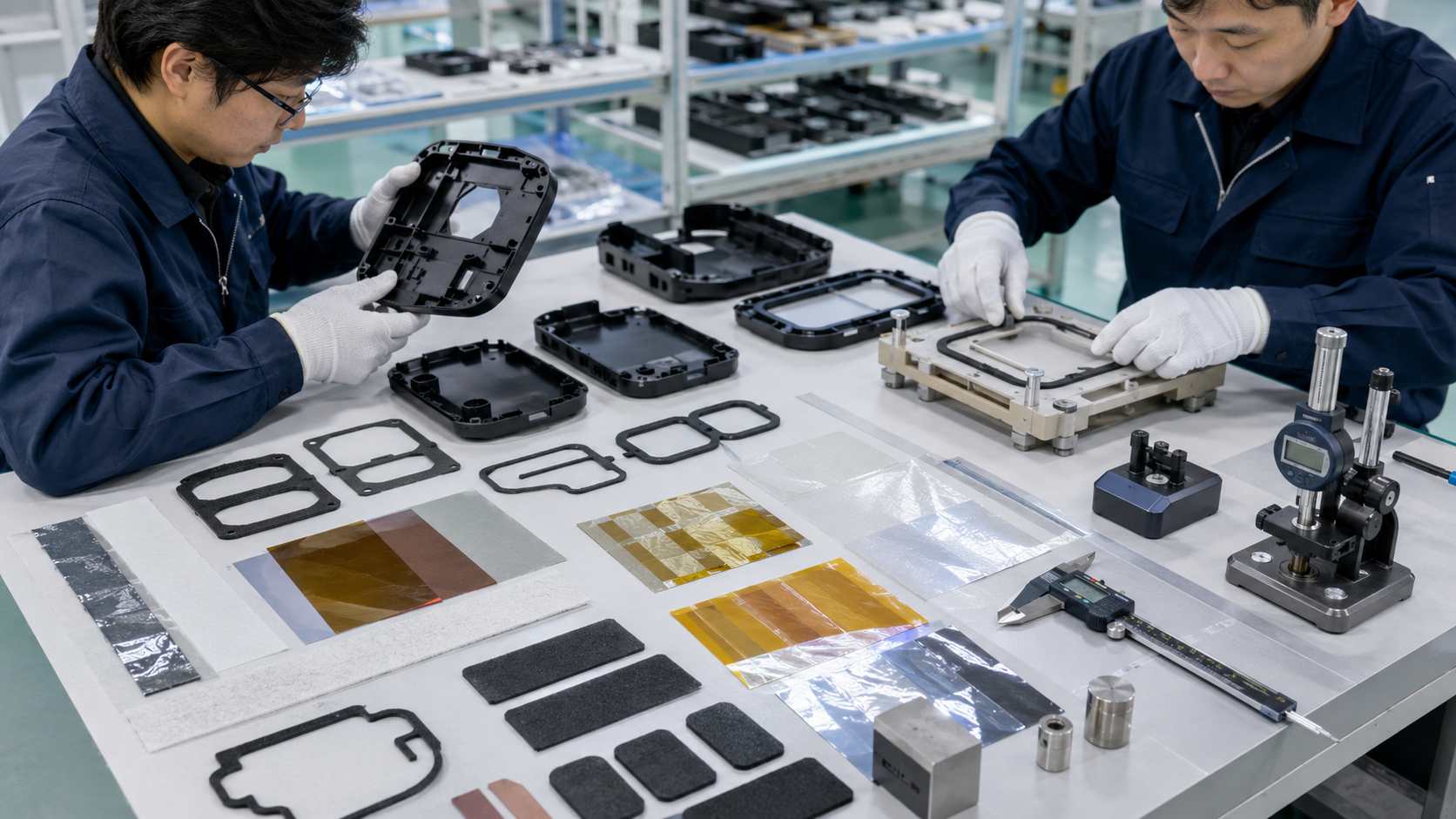
If the molded part is not controlled, related die cut parts may fail even if they are produced correctly.
For example, a foam gasket may not seal if the plastic groove is warped. A tape part may lift if the plastic surface is textured, oily, or incompatible with the adhesive. A PET film may not align if posts or holes shift. A protective film may bubble if the molded surface has dust or roughness.
This is why molded parts and die cut components should be reviewed together during development.
Process Parameter Instability
Injection molding quality depends heavily on process control.
Important molding parameters include:
- Melt temperature
- Mold temperature
- Injection speed
- Injection pressure
- Holding pressure
- Cooling time
- Screw speed
- Back pressure
- Ejection timing
- Drying condition for resin
If these parameters are unstable, part quality may change from batch to batch.
A reliable supplier should set and control a stable process window. First article inspection, in-process checks, and final inspection should confirm that the molded parts remain consistent.
Packaging and Handling Damage
Some molded plastic parts pass production inspection but fail customer incoming inspection because of poor handling or packaging.
Packaging problems can cause:
- Scratches
- Deformation
- Surface dust
- Stress marks
- Bent clips
- Damaged corners
- Mixed parts
- Poor counting
- Protective film damage
Packaging should match the part shape, surface requirement, and assembly method. Visible surfaces should be protected. Clips and thin walls should not be compressed. Parts that require protective films, foam pads, or adhesive components should be packed to avoid contamination and deformation.
How to Prevent Injection Molded Part Inspection Failures
The best way to prevent quality failure is to review the complete production system before mass production.
| Prevention Step | What It Controls |
|---|---|
| Material review | Strength, shrinkage, heat resistance, bonding compatibility |
| DFM review | Wall thickness, ribs, bosses, clips, draft angles |
| Mold design review | Gate, venting, cooling, ejection, shrinkage |
| Sample validation | Fit, appearance, dimensions, assembly function |
| Process control | Stable molding parameters |
| First article inspection | Confirms tooling and process readiness |
| In-process inspection | Prevents batch drift |
| Assembly fit testing | Confirms compatibility with foam, tape, film, rubber parts |
| Packaging review | Prevents scratches, warpage, and transport damage |
Inspection should not only check dimensions. It should also check function, surface quality, assembly fit, packaging, and related components.
What Buyers Should Provide Before Mold Opening
To reduce inspection failure, buyers should provide complete project information before tooling starts.
Useful details include:
- 2D drawing
- 3D model
- Material requirement
- Surface appearance requirement
- Color requirement
- Critical dimensions
- Assembly location
- Mating components
- Foam gasket or adhesive tape requirement
- PET film or insulation part position
- Rubber pad contact area
- Testing requirement
- Packaging preference
- Production quantity
The more clearly the supplier understands the final application, the easier it is to prevent mold and production problems.
How Sanken Helps Prevent Quality Problems
Sanken Manufacturing Co., Ltd. supports OEM customers with custom injection molded plastic parts and related die cut auxiliary components.
For injection molded parts, we review material selection, plastic part structure, tooling feasibility, dimensional tolerance, surface quality, shrinkage risk, assembly fit, and packaging.
For related die cut components, we review foam thickness, adhesive backing, PET and PI film alignment, rubber hardness, protective film coverage, liner release, edge quality, and assembly format.
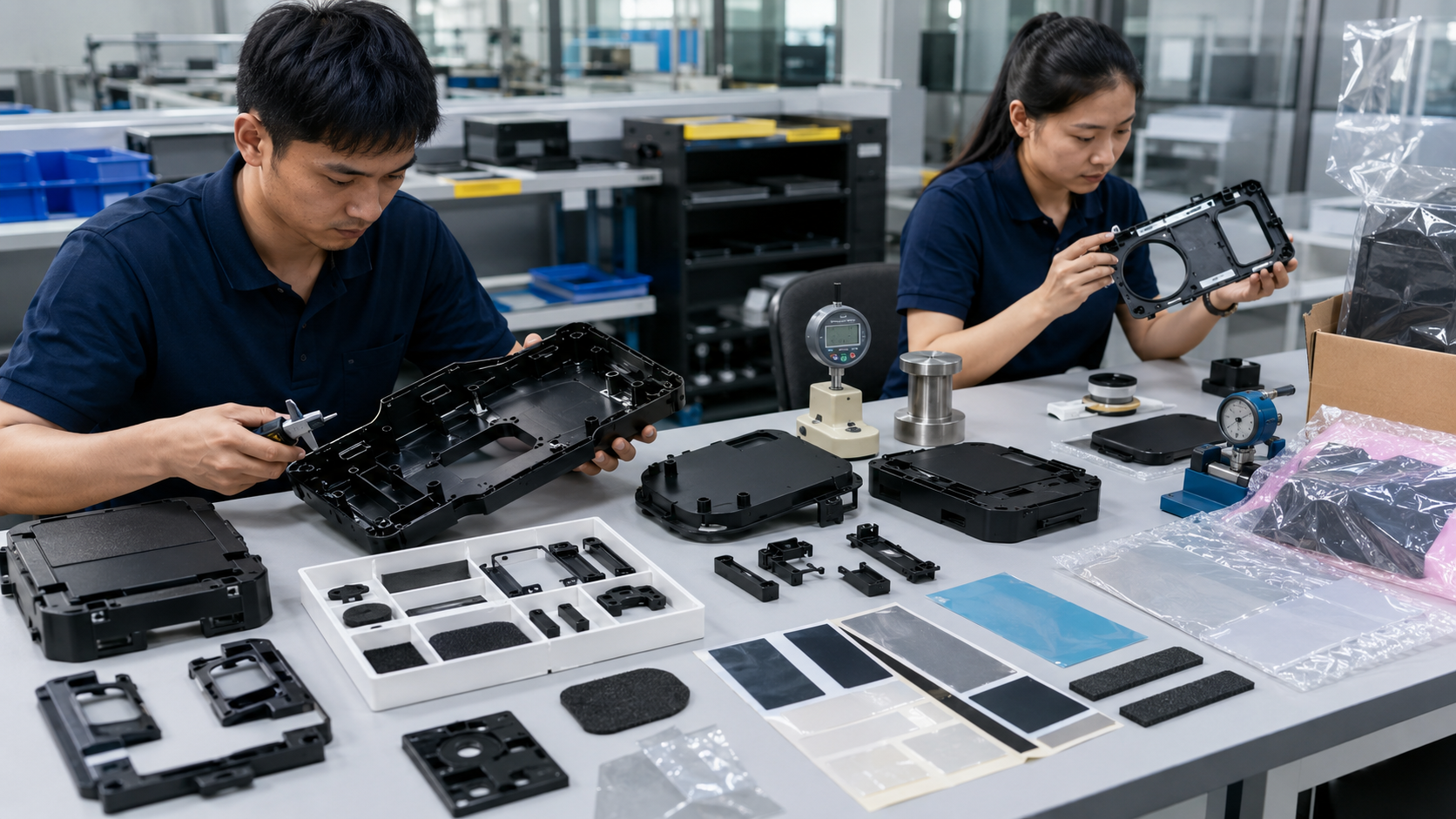
This combined review helps customers reduce problems such as gasket mismatch, adhesive lifting, insulation film misalignment, rubber pad interference, protective film bubbles, repeated sampling, and final assembly failure.
Our goal is to help OEM customers move from design review to mass production with cleaner parts, better fit, fewer inspection failures, and more stable supply.
FAQ
Why do injection molded plastic parts fail quality inspection?
They may fail because of wrong material, poor mold design, shrinkage, warpage, sink marks, flash, short shots, surface defects, dimensional variation, weak clips, poor assembly fit, or packaging damage.
How can warpage in injection molded parts be prevented?
Warpage can be reduced by improving wall thickness balance, rib design, cooling control, material selection, mold design, process parameters, and packaging method.
Why do injection molded parts have sink marks?
Sink marks often appear when sections are too thick, cooling is uneven, or packing pressure is insufficient. Better part design and process control can reduce this problem.
Why is assembly fit important for molded plastic parts?
Molded plastic parts often work with screws, clips, foam gaskets, adhesive tapes, PET films, rubber pads, and protective films. If the molded part is not stable, related components may not fit or function correctly.
Can adhesive tape fail because of the plastic molded surface?
Yes. Adhesive tape may lift or bond poorly if the plastic surface has low surface energy, texture, contamination, release agents, dust, or unsuitable surface treatment.
What should buyers confirm before injection mold tooling?
Buyers should confirm material, drawing, tolerance, surface finish, critical dimensions, assembly components, testing requirements, and packaging expectations before mold opening.
Can Sanken support both injection molded parts and die cut components?
Yes. Sanken supports custom injection molded plastic parts, precision die cut foam gaskets, adhesive tape parts, PET and PI films, rubber pads, protective films, non-woven felt parts, and multilayer OEM components.
Conclusion
Injection molded plastic parts fail quality inspection when material, mold design, dimensional tolerance, process parameters, surface quality, assembly fit, or packaging is not properly controlled. Most problems can be prevented with early engineering review, suitable material selection, proper tooling design, stable molding process, clear inspection standards, and real assembly testing.
For OEM projects, molded plastic parts should also be reviewed together with related die cut components such as foam gaskets, adhesive tapes, PET films, rubber pads, protective films, and felt parts.
At Sanken, we help customers develop custom molded plastic and die cut components that are accurate, clean, assembly-ready, and stable from sample development to mass production.