
What Are Die Cuts Used For? A Buyer’s Guide to Hidden Parts That Prevent Bigger Problems
Die cuts are used for far more than making materials into custom shapes. In real manufacturing, die-cut parts are often the small hidden components that prevent larger product problems: rattling panels, loose seals, scratched surfaces, shifting batteries, poor bonding, dust leakage, packaging damage, and slow assembly.
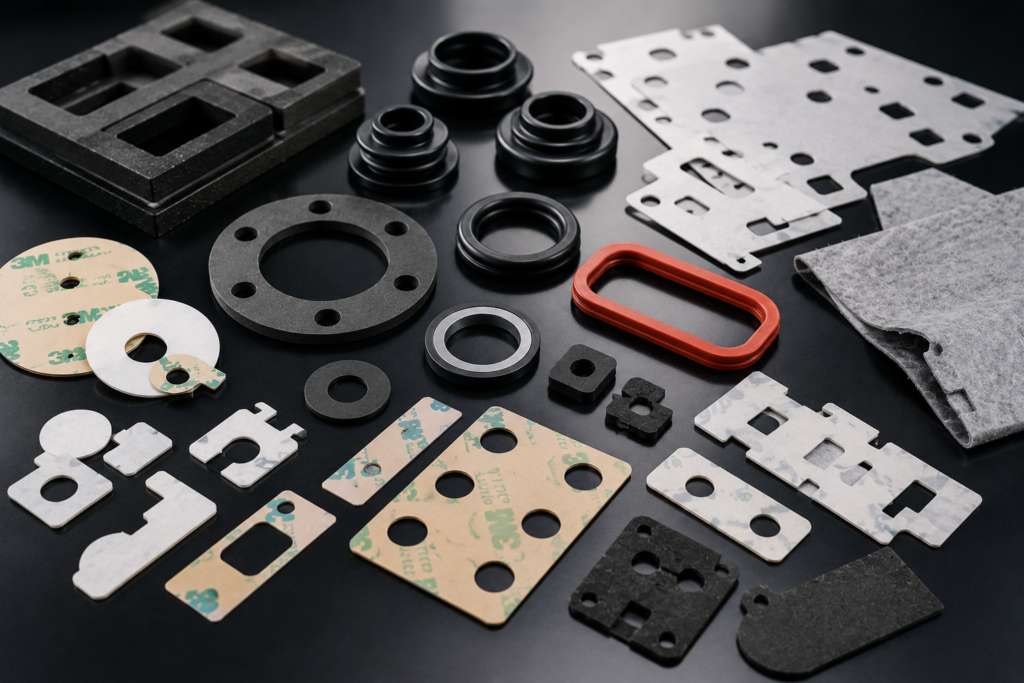
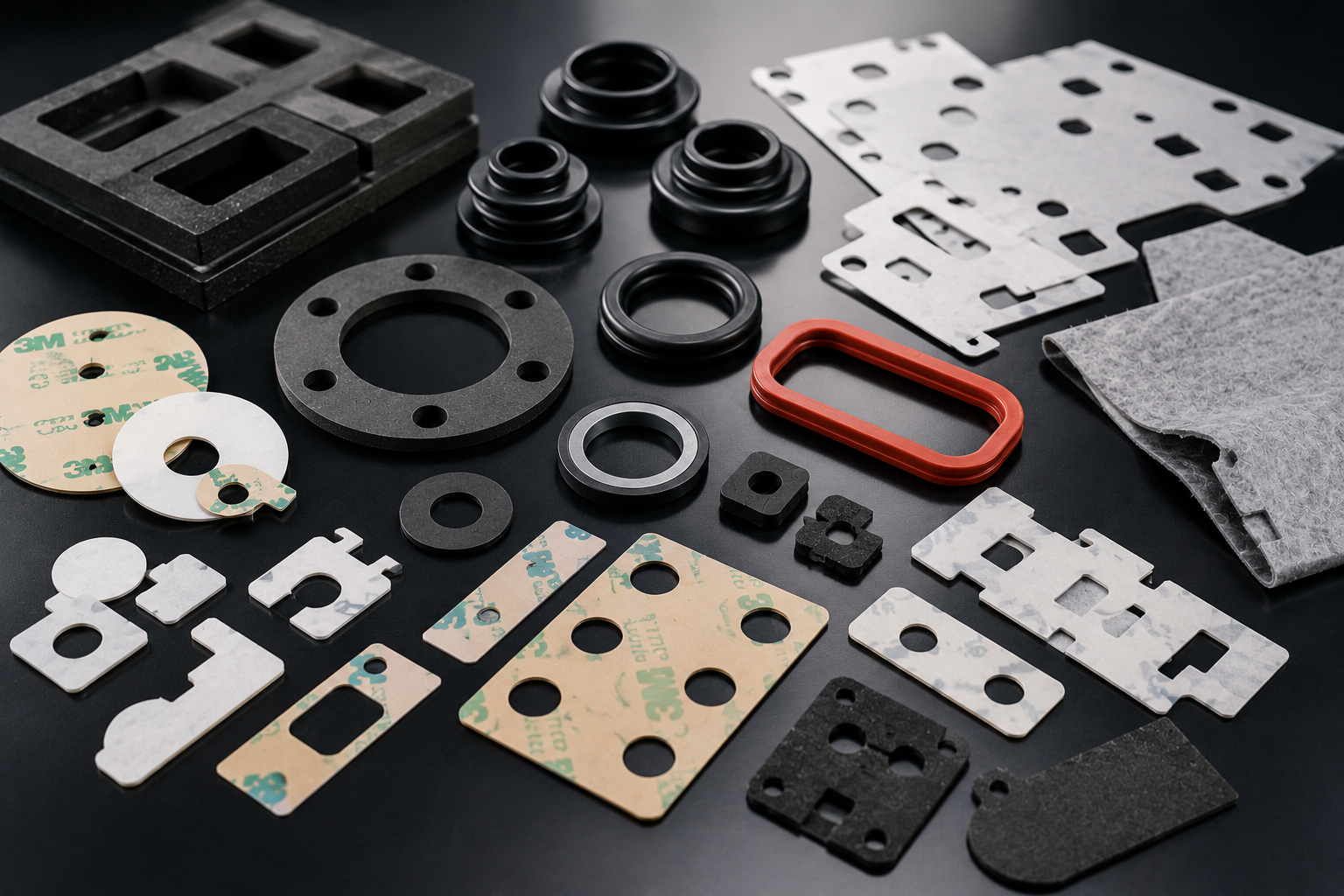
A die cut can be a foam pad, rubber gasket, adhesive tape shape, non-woven filter layer, protective film, insulation sheet, or multilayer spacer. It may cost very little compared with the final product, but if it fails, the cost can be much higher than the part itself.
For OEM buyers, the real value of die cuts is not simply “custom cutting.” The value is making materials easier to assemble, more reliable in use, and more consistent in mass production.
Die Cuts Are Used to Solve Assembly Problems
Many products fail not because the main structure is wrong, but because small contact points are not controlled.
A plastic cover may vibrate against a housing.
A wire harness may rub against a metal edge.
A display film may shift during assembly.
A battery pack may need controlled cushioning.
A door trim panel may create noise after months of use.
Die-cut parts are used to solve these practical problems before they become customer complaints.
Common assembly functions include:
| Die-Cut Function | Problem It Solves |
|---|---|
| Cushioning | Prevents impact damage and pressure marks |
| Sealing | Blocks dust, air, light, or limited moisture |
| Spacing | Controls gaps between components |
| Bonding | Helps parts attach quickly and cleanly |
| Protection | Prevents scratches, friction, and surface damage |
| Insulation | Separates electrical or thermal contact areas |
| Sound control | Reduces rattles, squeaks, and vibration noise |
A good die-cut part does not just fit the drawing. It fits the real assembly condition.
Die Cuts for Automotive Parts
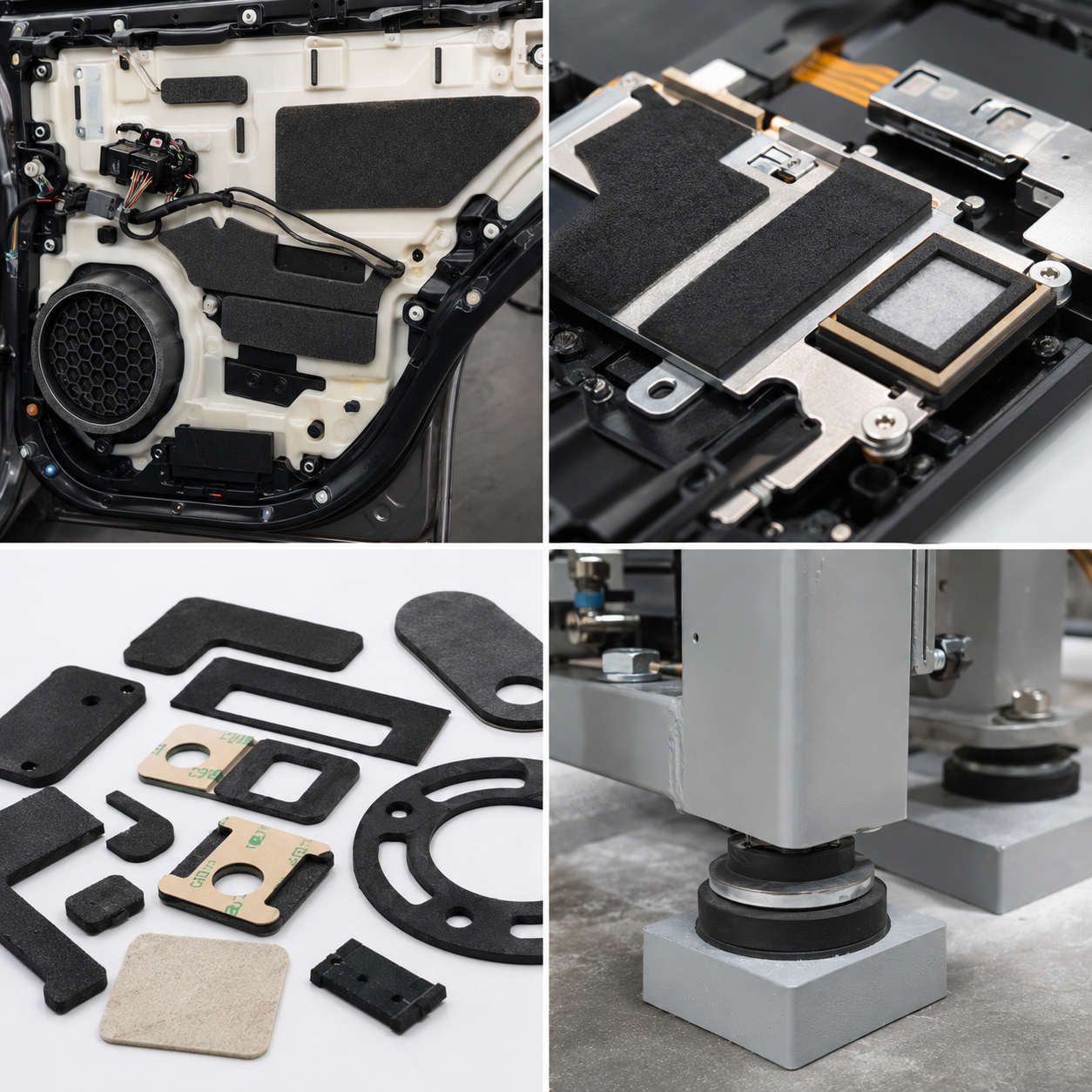
Automotive products use many die-cut components, especially in hidden areas. These parts are rarely seen by the driver, but they strongly affect comfort, noise level, and long-term quality.
Typical automotive die cuts include:
- Foam anti-rattle pads
- Rubber sealing gaskets
- Non-woven acoustic insulation
- Adhesive-backed spacers
- Door trim cushioning strips
- Dashboard foam pads
- Wire harness protection pieces
- EV battery insulation layers
- Trunk liner support pads
A small die-cut foam pad can stop a door panel from buzzing. A non-woven acoustic pad can reduce cabin noise. A rubber gasket can prevent dust and air leakage. An adhesive spacer can make assembly faster and more repeatable.
For automotive buyers, the key question is not only whether the part can be cut. The part must also survive heat, humidity, vibration, compression, odor requirements, and aging conditions.
Die Cuts for Electronics
Electronics products are getting thinner and more compact. This makes die-cut accuracy more important.
A small dimensional error may press against a battery, create display marks, block a speaker opening, or make assembly difficult.
Common electronics die cuts include:
- Battery insulation films
- Speaker damping pads
- Camera module foam cushions
- Dust-proof non-woven layers
- Display protective films
- Double-sided adhesive tape shapes
- Thermal management pads
- PET insulation sheets
- Conductive or shielding support materials
In electronics, die cuts often need clean edges, stable thickness, low particle risk, and accurate adhesive positioning.
A buyer may think a small foam or film part is simple. But in production, small parts can cause big delays if they are hard to peel, hard to place, or inconsistent in size.
Die Cuts for Packaging Protection
Die cuts are widely used in packaging because they help products survive storage, shipping, and handling.
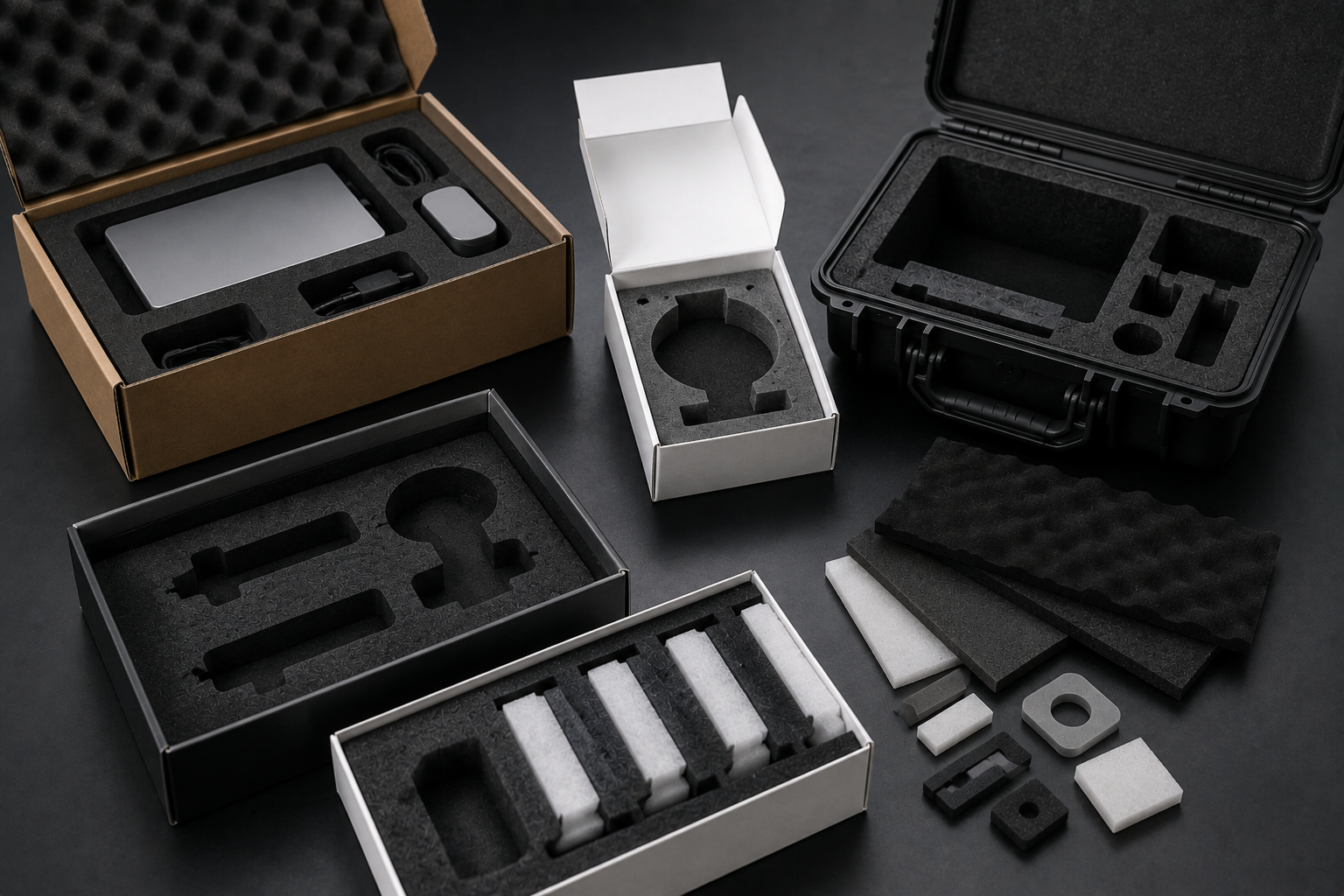
Custom foam inserts, liners, and trays are used for:
- Electronics packaging
- Medical device packaging
- Tool case inserts
- Precision instrument protection
- Automotive component packaging
- Luxury product packaging
- Reusable transport trays
A good packaging insert does two things: it protects the product and improves the customer’s first impression.
If the cavity is too loose, the product moves during shipping.
If it is too tight, the customer struggles to remove it.
If the foam is too soft, it collapses.
If the edge is rough, the packaging looks cheap.
This is why custom die-cut foam inserts are often better than generic foam blocks.
Die Cuts for Medical and Healthcare Products
Medical and healthcare products often need die-cut parts for protection, comfort, filtration, absorbency, and clean assembly.
Typical applications include:
- Medical device pads
- Adhesive-backed non-woven layers
- Absorbent components
- Protective liners
- Filter materials
- Cushioning pads
- Sealing components
- Disposable product layers
For medical-related applications, the challenge is not only shape accuracy. Buyers often care about cleanliness, traceability, edge quality, material safety, adhesive performance, and consistency.
A rough edge, loose fiber, unstable adhesive, or poorly matched material can create serious quality concerns.
This is why material selection and converting control should be reviewed early, not after mass production starts.
Die Cuts for Sealing, Gaskets, and Gap Control
One of the most common uses of die cuts is gasket production.
Die-cut gaskets can be made from rubber, foam, adhesive materials, non-woven fabric, films, or multilayer composites.
They are used to:
- Fill gaps
- Reduce air leakage
- Block dust
- Reduce vibration
- Prevent direct contact
- Improve assembly stability
- Support light moisture resistance
However, not every die-cut gasket seals the same way.
Foam is useful for compression and cushioning. Rubber is better for stronger sealing and rebound. Non-woven fabric is useful when breathability or filtration is needed. Adhesive-backed materials help with fast placement.
The best gasket material depends on the real working condition, not only the drawing.
Die Cuts for Optical Films and Displays
Optical and display applications need high precision because visual defects are easy to notice.
Die cuts may be used for:
- Protective PET films
- TPU films
- Optical clear adhesive layers
- Spacer films
- Anti-glare films
- Display module auxiliary materials
- Camera module cushions
- Touch panel support layers
In optical film converting, small defects can cause bubbles, edge lifting, scratches, dust marks, haze, or misalignment.
For buyers, this means the process must control more than shape. It must also control cleanliness, thickness tolerance, release liner quality, adhesive wet-out, and material shrinkage.
A film part that looks correct before assembly can still fail after lamination if the material or adhesive structure is not stable.
Die Cuts for Noise and Vibration Reduction
Noise problems are often caused by small movements between parts.
Die-cut foam, rubber, and non-woven materials are used to reduce:
- Rattling
- Squeaking
- Buzzing
- Panel vibration
- Contact noise
- Impact noise
This is especially important in vehicles, appliances, electronics, machines, and equipment housings.
For example, in an electric vehicle, the cabin is quieter because there is no engine noise masking small sounds. A tiny foam pad between two trim parts can prevent a noticeable rattle.
The right die-cut acoustic part depends on the noise source. Foam may reduce contact noise. Non-woven felt may absorb sound. Rubber may help isolate vibration. A multilayer structure may be needed when one material is not enough.
Die Cuts for Adhesive Assembly
Many die cuts are adhesive-backed because manufacturers want faster assembly without screws, clips, or liquid glue.
Adhesive die cuts are used as:
- Mounting pads
- Bonding strips
- Double-sided tape parts
- Protective film tabs
- Foam tape spacers
- Assembly positioning aids
- Peel-and-stick gaskets
- Labels and nameplates
The benefit is simple: workers can peel, place, and press.
But adhesive-backed die cuts can also fail if the adhesive is not matched to the surface. Problems may include edge lifting, peeling, residue, poor aging, or liner separation.
For this reason, buyers should evaluate the complete structure: base material, adhesive, liner, bonding surface, temperature, pressure, and application method.
Common Mistakes Buyers Make With Die Cuts
Treating the Part as “Just a Shape”
A die cut is not only a shape. It has a function. If the function is unclear, the wrong material may be selected.
Choosing the Cheapest Material
A cheaper foam, film, or adhesive may create higher scrap, poor assembly, and customer complaints.
Ignoring How Operators Apply the Part
If a die-cut part is hard to peel or position, assembly time increases.
Setting Unrealistic Tolerances
Foam, rubber, adhesive tape, and non-woven fabric do not behave like metal. Tolerance must match material behavior.
Testing Too Late
A sample may look fine on the table but fail after compression, aging, lamination, or real assembly.
How to Decide What Type of Die Cut You Need
Before ordering die-cut parts, buyers should ask:
- What problem should this part solve?
- Does it need sealing, cushioning, bonding, insulation, protection, or noise control?
- What material will contact the part?
- Will it face heat, humidity, compression, vibration, or chemicals?
- Does it need adhesive backing?
- Will workers apply it by hand or machine?
- What tolerance is functionally necessary?
- Does the edge need to be clean or low-particle?
- Is this for prototype testing or mass production?
- Can the supplier help review material, lamination, and die-cut design together?
These questions help prevent the most common die-cut failures before tooling begins.
Why the Right Die-Cut Partner Matters
A buyer does not only need someone who can cut material.
The buyer needs a partner who can explain why a foam pad may collapse, why adhesive may lift, why non-woven fabric may shed fibers, why film may shrink, and why a simple-looking gasket may fail after assembly.
At Sanken Manufacturing, we support customers with material selection, precision die cutting, adhesive lamination, foam converting, rubber processing, non-woven converting, film converting, injection molding support, and custom assembly.
The goal is not to show how many processes are available. The goal is to reduce the customer’s real risks: poor fit, unstable bonding, high scrap, slow assembly, and inconsistent quality.
Conclusion
Die cuts are used for sealing, cushioning, protection, bonding, insulation, spacing, filtration, sound control, packaging, and assembly support. They appear in automotive interiors, electronics, medical devices, optical displays, industrial equipment, packaging systems, and consumer products.
The best die-cut part is not simply the one with the correct shape. It is the one that solves the product’s real problem and performs consistently in production. For OEM buyers, die cuts can reduce assembly risk, improve product reliability, and make mass production more stable when the right material, adhesive, tolerance, and converting process are chosen from the beginning.