
What Does Die-Cut Mean? Understanding the Process for Industrial Applications
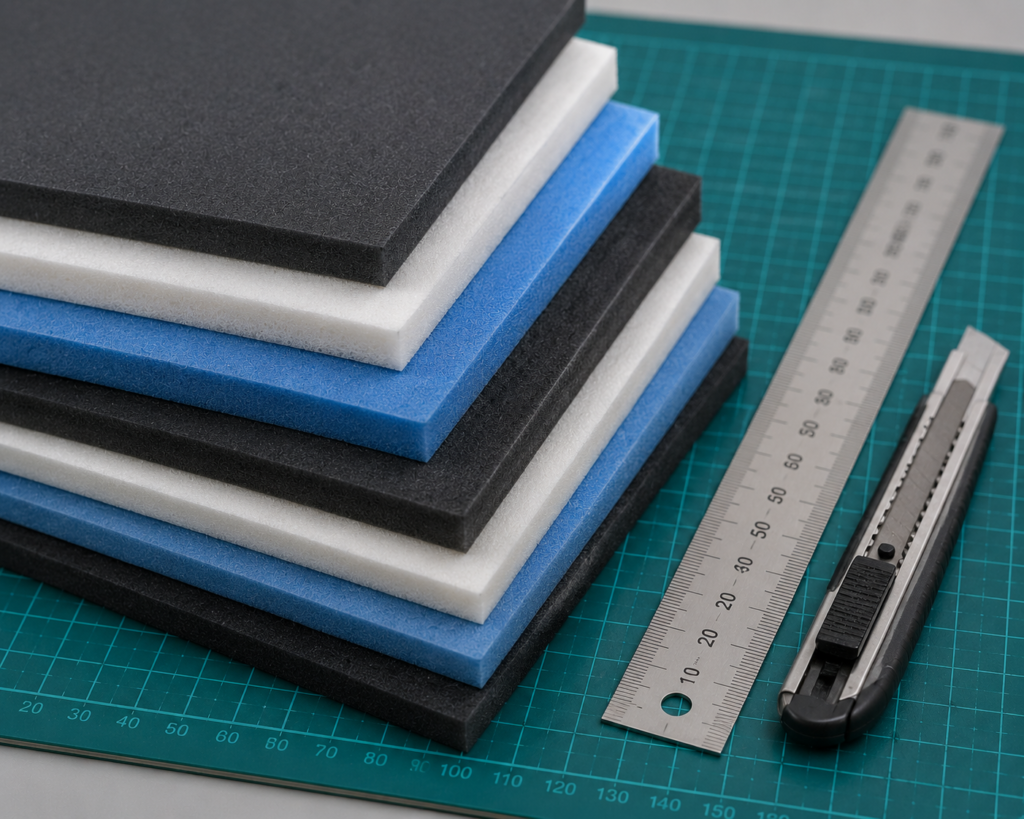
Die-cutting is a manufacturing technique where materials such as foam, rubber, adhesive, non-woven fabric, or thin plastics are cut into precise, repeatable shapes using a specialized cutting tool called a die. For engineers, OEM buyers, and industrial designers, die-cutting is not just a cutting method—it is a solution for ensuring consistent fit, reducing assembly errors, and improving part functionality.
How Die-Cutting Works
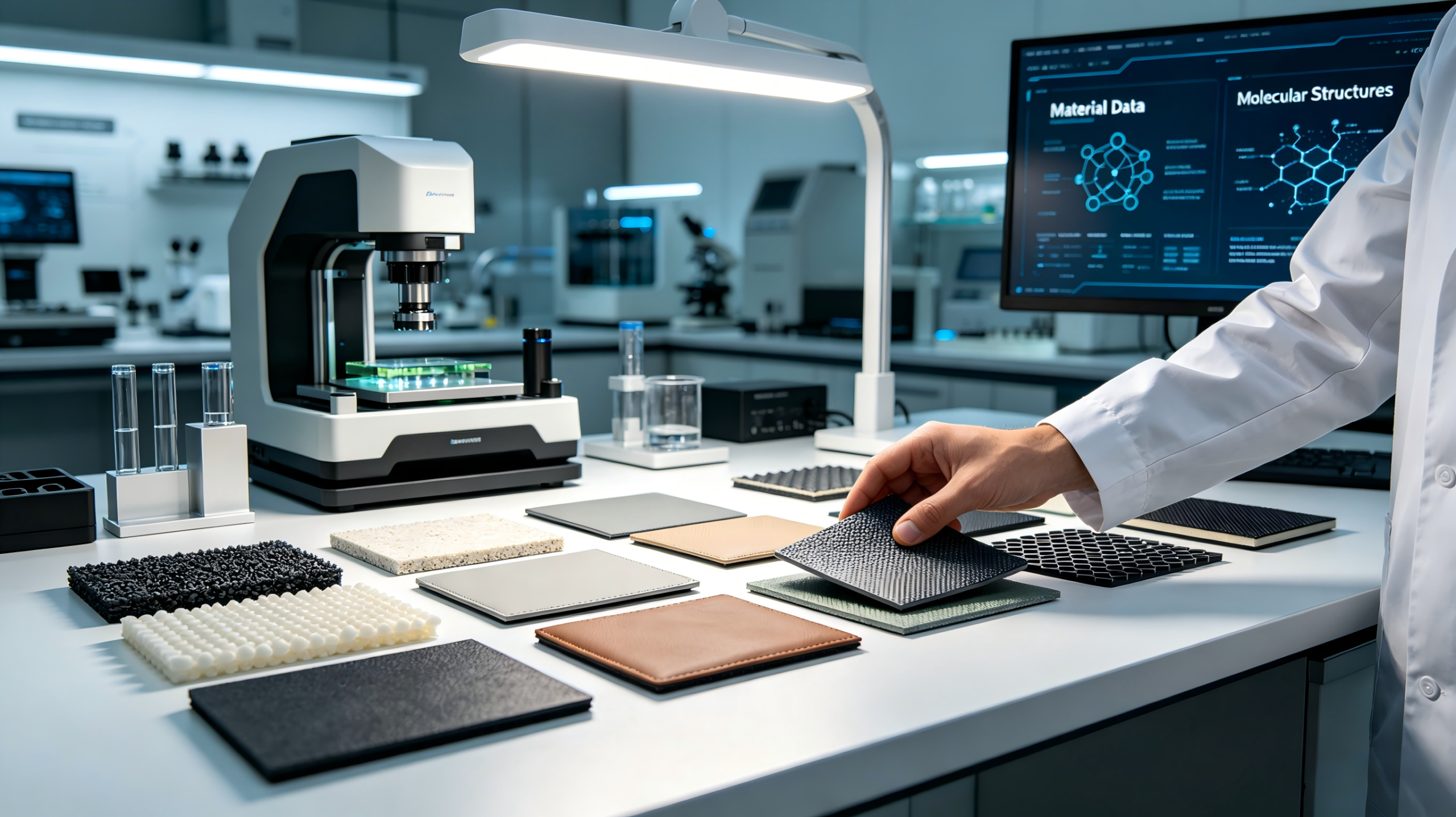
- Material Selection: The first step is choosing the right material based on flexibility, density, thickness, and application requirements.
- Die Design: A die is custom-made to match the desired shape and tolerance, which can include complex curves, holes, and multilayered structures.
- Cutting Process: Material is pressed, rolled, or stamped against the die to cut out the parts.
- Lamination or Adhesive Application: Some components require adhesive backing or laminated layers for bonding and durability.
- Waste Removal and Inspection: Excess material is stripped away, and parts are inspected for precision and quality.
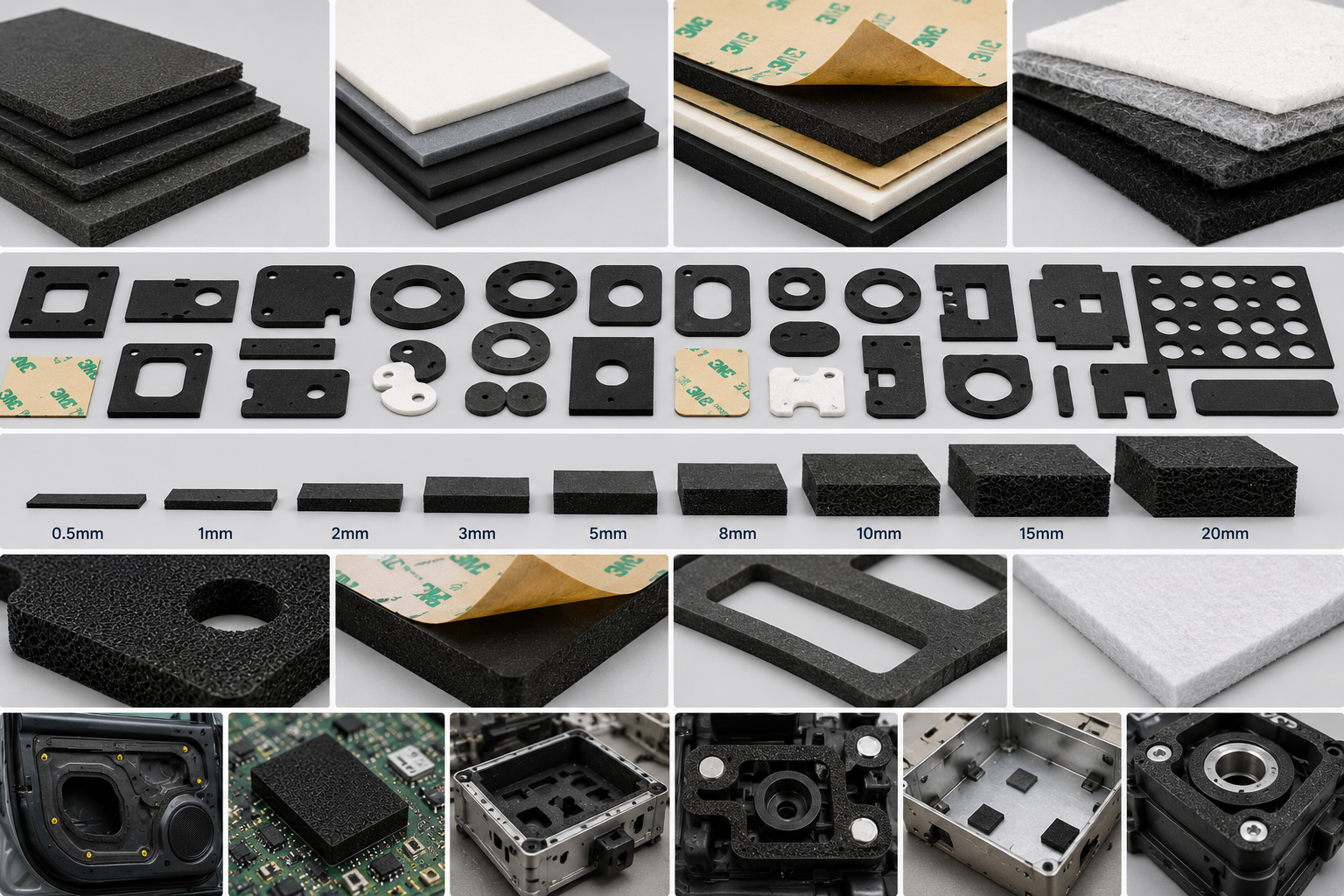
Die-cutting is widely used in automotive, electronics, packaging, industrial, and medical applications where accuracy is crucial.
Advantages of Die-Cutting
- Precision: Each part meets tight dimensional requirements.
- Repeatability: Large production runs yield identical parts.
- Efficiency: Saves time compared to manual cutting.
- Complex Shapes: Can produce intricate designs, slots, and layered materials.
- Material Versatility: Suitable for soft, semi-rigid, or laminated composites.
Common Applications
Automotive
- Foam anti-vibration pads
- Gaskets and seals
- Non-woven acoustic insulation
- Adhesive-backed cushioning strips
Electronics
- Die-cut protective pads
- Insulation layers
- Thermal or vibration damping components
Packaging
- Protective inserts
- Custom-shaped foam liners
- Die-cut cardboard or composite parts
Medical
- Foam or non-woven cushioning pads
- Sealing components for devices
- Adhesive-backed multilayer layers
Types of Die-Cutting
| Type | Description | Typical Application |
|---|---|---|
| Steel-Rule Die Cutting | Traditional method with sharp blades | Foam, rubber, non-woven sheets |
| Rotary Die Cutting | Continuous roll-to-roll cutting | Adhesive tapes, films, rolled materials |
| Kiss Cutting | Cuts top layer, leaves backing | Labels, adhesive-backed foams |
| Custom Multi-Layer Die | Complex geometry, laminated materials | Automotive pads, electronics, industrial sealing |
Die-Cut Tolerance Considerations
- Soft materials like foam or non-woven fabric compress or stretch.
- Adhesive-backed materials may shift during processing.
- Tolerances should align with material properties and functional requirements.
- Tight tolerance ensures proper assembly, reduces waste, and prevents misalignment in final products.
Why Die-Cut Parts Are Critical
Die-cut parts reduce assembly errors, improve fit, reduce noise or vibration, and ensure consistent quality. Even small dimensional variations can compromise:
- Seals in automotive or industrial applications
- Cushioning performance in electronics
- Protective packaging integrity
- Medical device safety and comfort
How Sanken Manufacturing Helps
At Sanken, we specialize in:
- Precision die cutting for foam, rubber, non-woven fabrics, adhesives, and laminated materials
- Multi-layer and composite material processing
- Prototype and mass production support
- Adhesive lamination and backing
- Quality inspection for dimensional accuracy, edge clean-cutting, and material integrity
We focus on solving customer problems, such as:
- Misaligned parts
- Adhesive failures
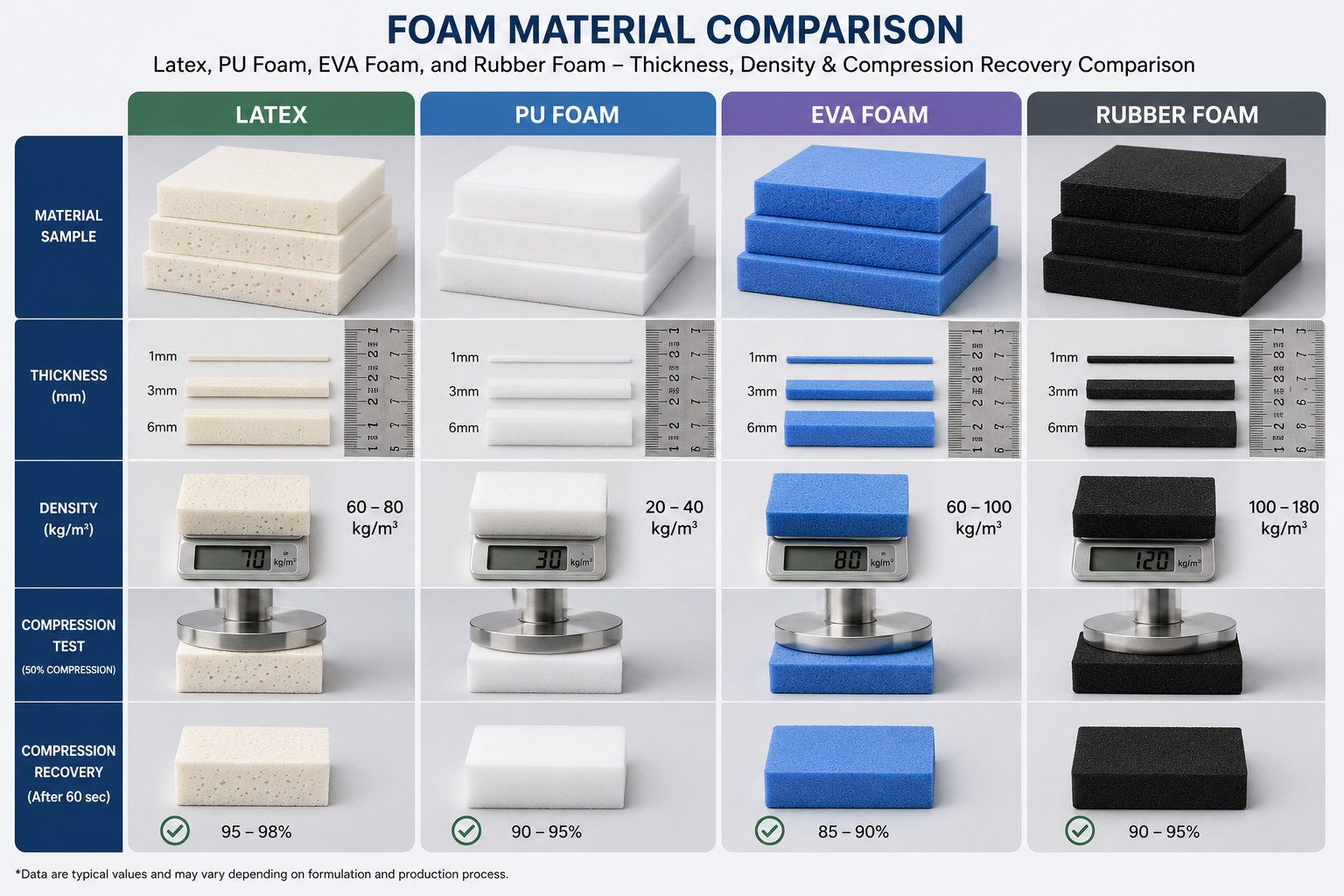
- Foam compression or rebound issues
- Fiber shedding from non-woven layers
- Poor assembly fit
Conclusion
Die-cutting is a key manufacturing process for producing precise, repeatable, and functional components. For OEM and industrial applications, die-cut components improve assembly efficiency, ensure part reliability, and reduce production risk. Choosing an experienced supplier like Sanken ensures consistent quality across automotive, electronics, medical, and industrial applications.