

How to Select Ideal Flexible Custom Die-Cut Foam Inserts
Flexible die-cut foam inserts are essential for protecting, cushioning, and organizing components in automotive, electronics, medical, and industrial applications. Selecting the right foam insert is crucial to ensure product protection, assembly efficiency, and material longevity.
At Sanken Manufacturing, we provide OEM and industrial customers with custom foam solutions that balance material performance, die-cut precision, and functional design.
Understand Your Application Requirements
Before choosing a foam insert, identify the specific function it must perform:
- Cushioning: Will the foam absorb shock or vibration? Consider density and resilience.
- Sealing: Does it need to prevent dust, air, or water ingress? Closed-cell foam or laminated layers may be required.
- Organizing Components: Will it hold delicate parts in place during shipping or assembly? Precision die-cut cavities may be necessary.
- Durability: Will it be subjected to repeated compression or environmental exposure? Select foams with high tear strength and aging resistance.
Choose the Right Foam Material
Different foam materials have distinct properties:
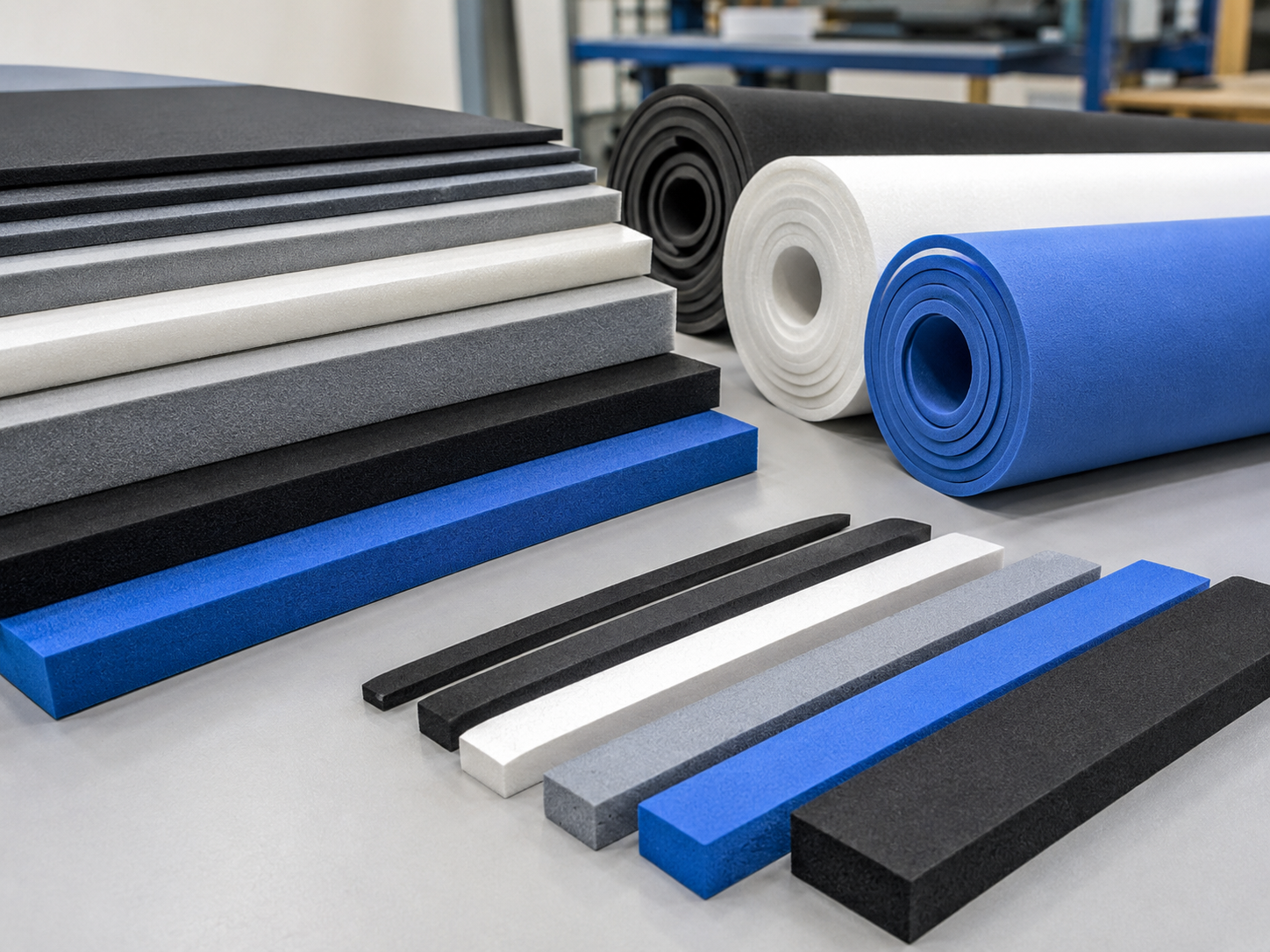
- EVA Foam: Lightweight, resilient, water-resistant, and ideal for automotive and electronics cushioning.
- PU Foam: Soft and flexible; commonly used for protective inserts and packaging.
- PE Foam: Excellent for vibration damping and heavy-duty protection.
- Rubber Foam: High resilience for sealing, gaskets, and vibration control.
- Non-Woven Fabric: Soft, lightweight, and suitable for acoustic insulation or delicate component support.
Die-Cutting Considerations
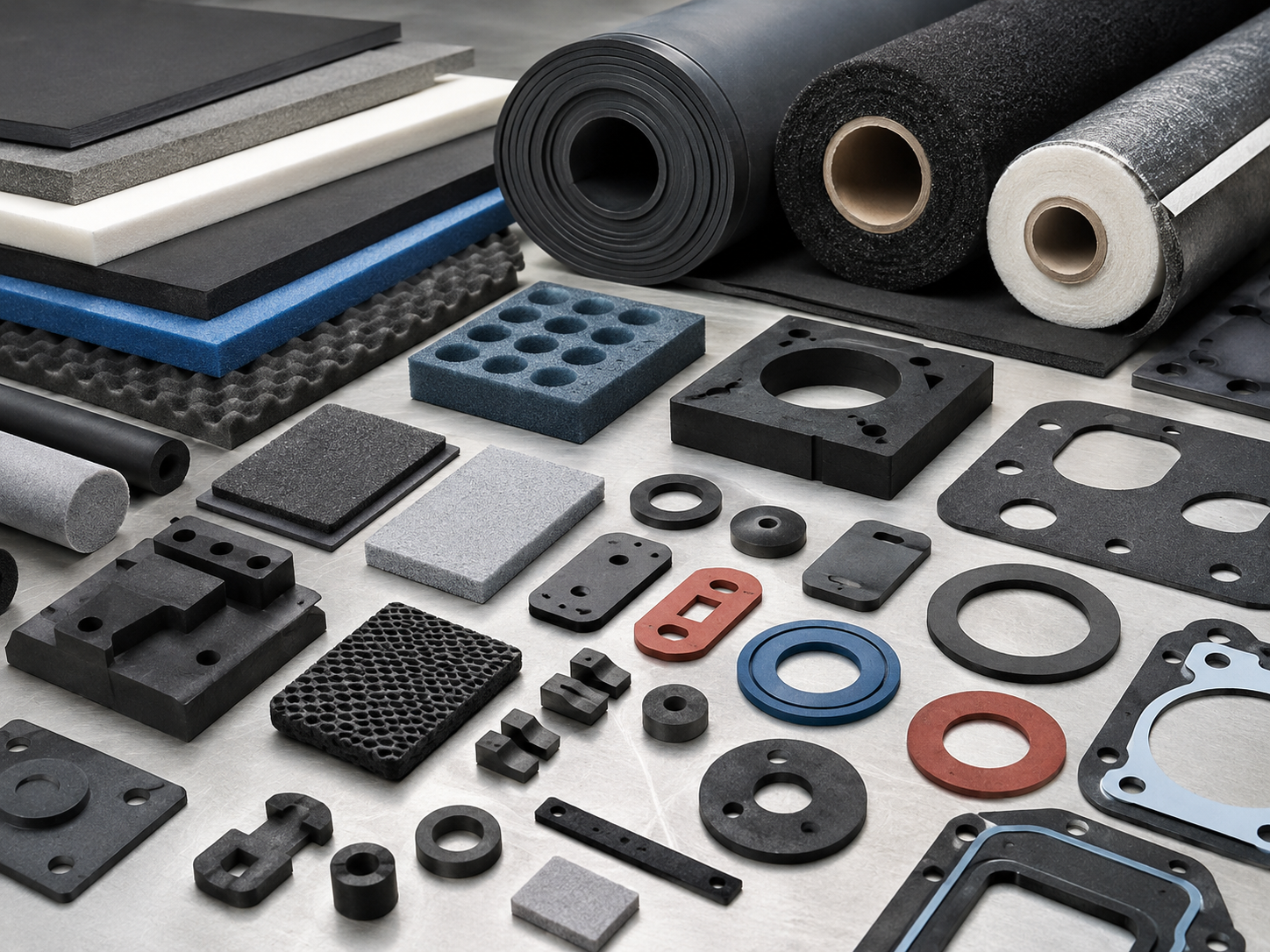
Precision die-cutting ensures that each foam insert meets the dimensional and functional requirements:
- Tolerance: Ensure the foam maintains the required shape and fits the components snugly.
- Edge Quality: Smooth edges prevent fiber shedding and maintain adhesive bonding.
- Layer Alignment: Multi-layer foam or laminated inserts must align precisely for proper function.
- Cutting Method: Choose between steel-rule, rotary, or kiss cutting depending on material and volume.
Customization for Specific Needs
When selecting or designing foam inserts:
- Cavity Design: Each part can be individually shaped to match the geometry of the protected component.
- Adhesive Backing: Optional adhesive layers simplify installation.
- Laminated Layers: Combine foam with films, non-woven fabrics, or rubber for added functionality.
- Thickness and Density: Adjust according to the level of shock absorption, support, and environmental resistance required.
Quality and Testing
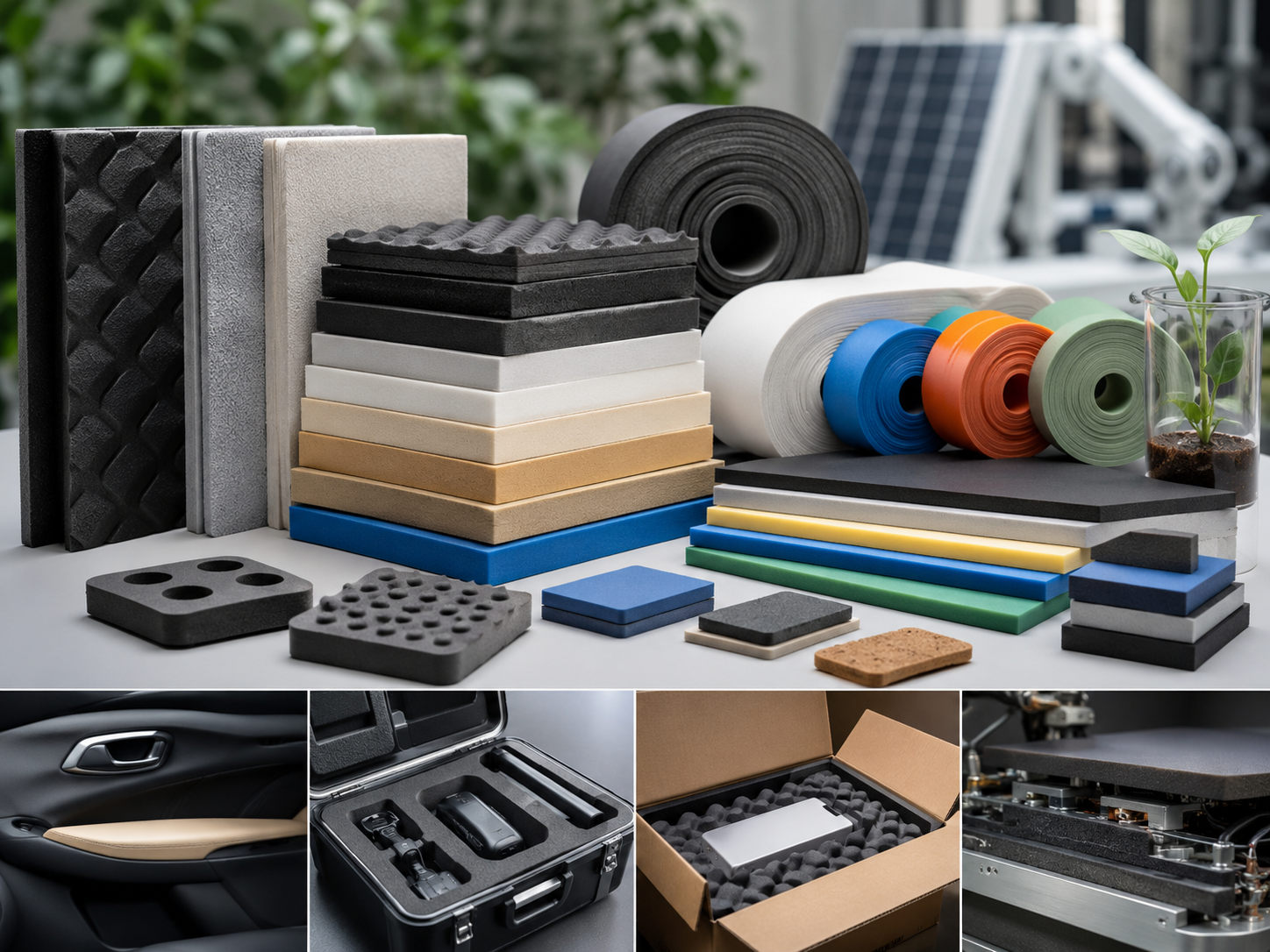
For high-volume production, verify:
- Material consistency across batches
- Compression and rebound characteristics
- Dimensional stability
- Aging resistance and environmental performance
These tests ensure the foam insert performs reliably in its intended application.
Conclusion
Selecting the ideal flexible die-cut foam insert involves understanding application requirements, choosing the right material, planning precision die-cutting, and implementing functional customization. At Sanken Manufacturing, we combine material expertise, precision processing, and customer-focused design to provide foam inserts that protect components, improve assembly efficiency, and ensure long-term performance.